The Night Israel's Weeping Locked the Ninth of Av
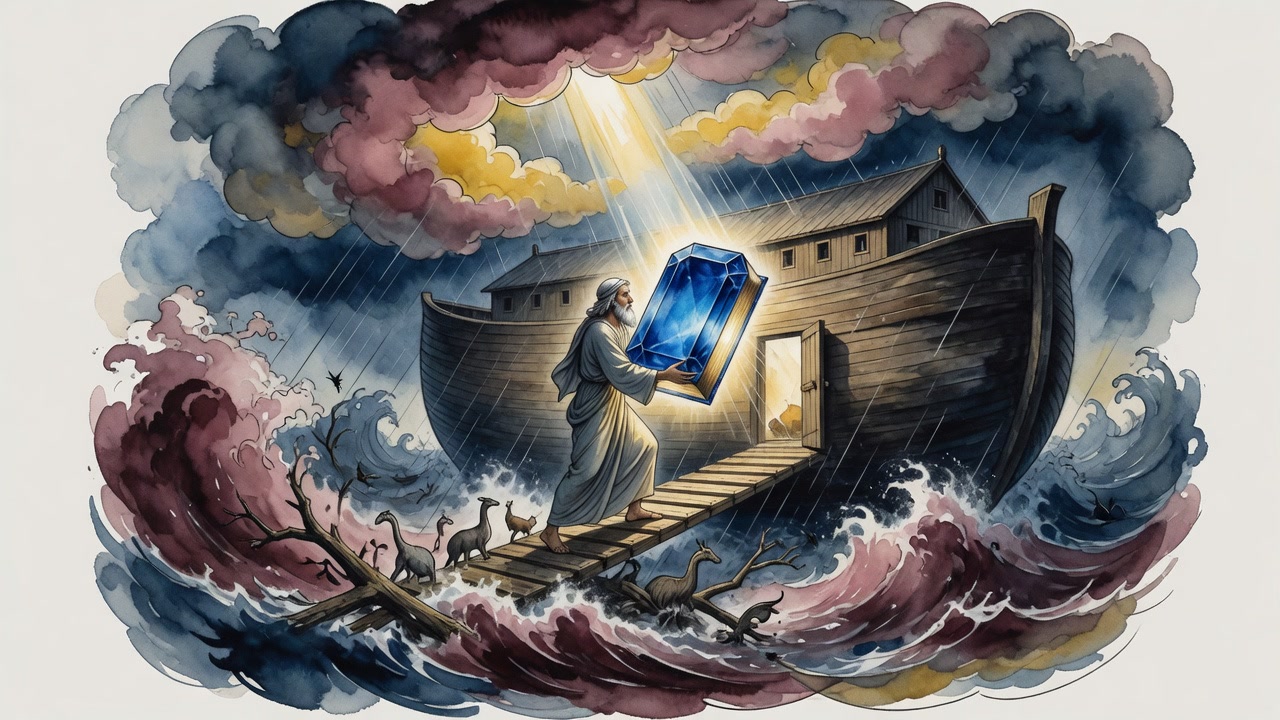
The scouts came back talking about giants, and six hundred thousand men cried all night over a land none of them had seen. That night was the ninth of Av.
Table of Contents
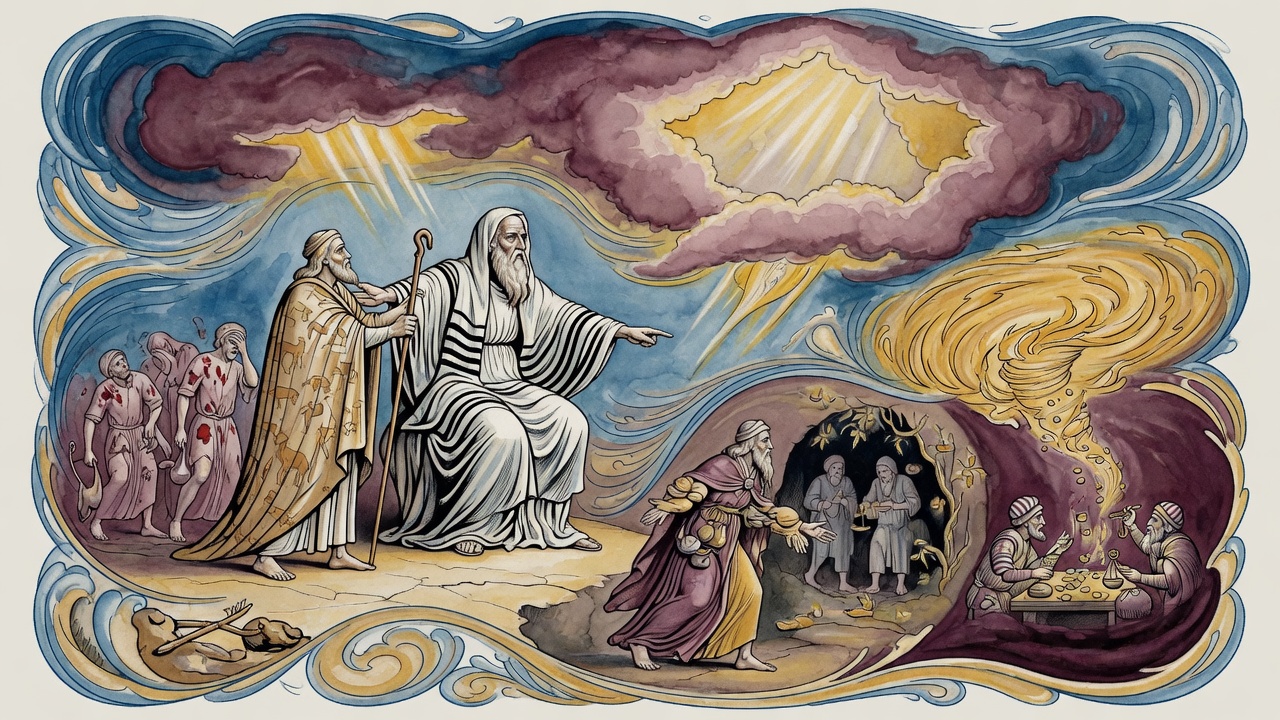
The scouts came back late in the day carrying one cluster of grapes on a pole between two men, and the whole camp came out to look at it. The man from the third row of tents got close enough to touch the fruit. It was heavier than any grapes he had ever seen and the skins had split under their own weight, so his fingers came away sticky, and he was still smelling his own hand when the scouts started talking about the walls.
 Click for full size
The Tent Where It Started
Walled cities. Men so big that the scouts had felt like insects standing under them. The report went down the rows the way water goes downhill, and because every tent put something of its own into it, by full dark it had reached the last row and started coming back worse.
He said his piece inside his own tent, with the flap down, which is where a man says the thing he would not say by the fire. He had told his wife in Egypt that there would be a house at the end of this, with a door of their own and a fig tree in front of it, and he had said it in the voice of a man who knows. So he needed the land to be bad. If the land was good and they were afraid of it anyway, then the desert was their own doing and the fig tree was his own fault. He went looking in the report for the ugliest thing in it, and he found it, and he brought it out and set it in front of his family. "We were brought out here to be handed over," he said.
He was not the only one hunting that night. Up and down the rows, men were combing a good land for something rotten to throw back.
The Sound the Camp Made
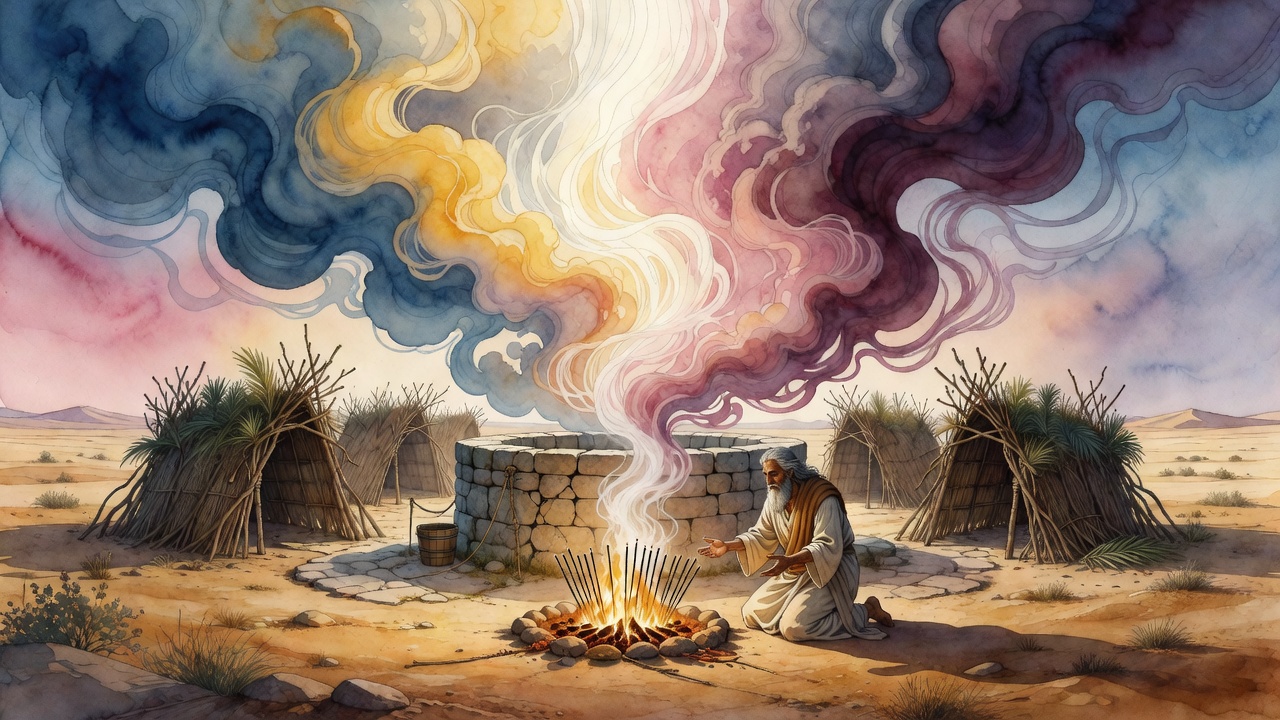
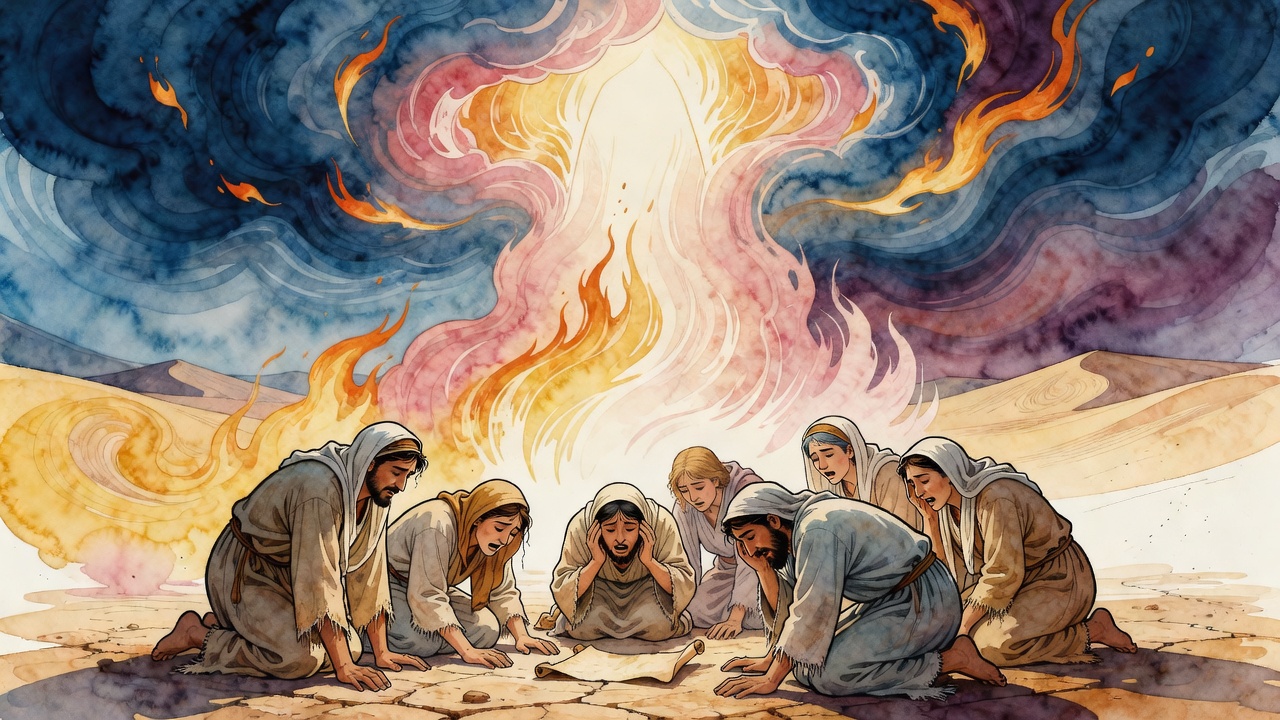
The weeping started somewhere near the front and took the camp in about an hour. It was not the crying of people who have been struck, but a sound with a swing to it, a rising and falling that whole families could join, and once he joined it the relief went through him like cold water on a burn. Nobody had died, and nothing had been taken from anyone, though six hundred thousand men wept the night through over a country none of them had seen with their own eyes, and the sound carried out past the last tents into the open desert.
He wept until his throat was raw, and it felt earned, and he slept better than he had slept in months.
A Weeping Set for the Generations
The answer came down before morning, and it came in the same measure as the offense. "You wept a gratuitous weeping before me," God said. "Then I will set this weeping for you, for the generations."
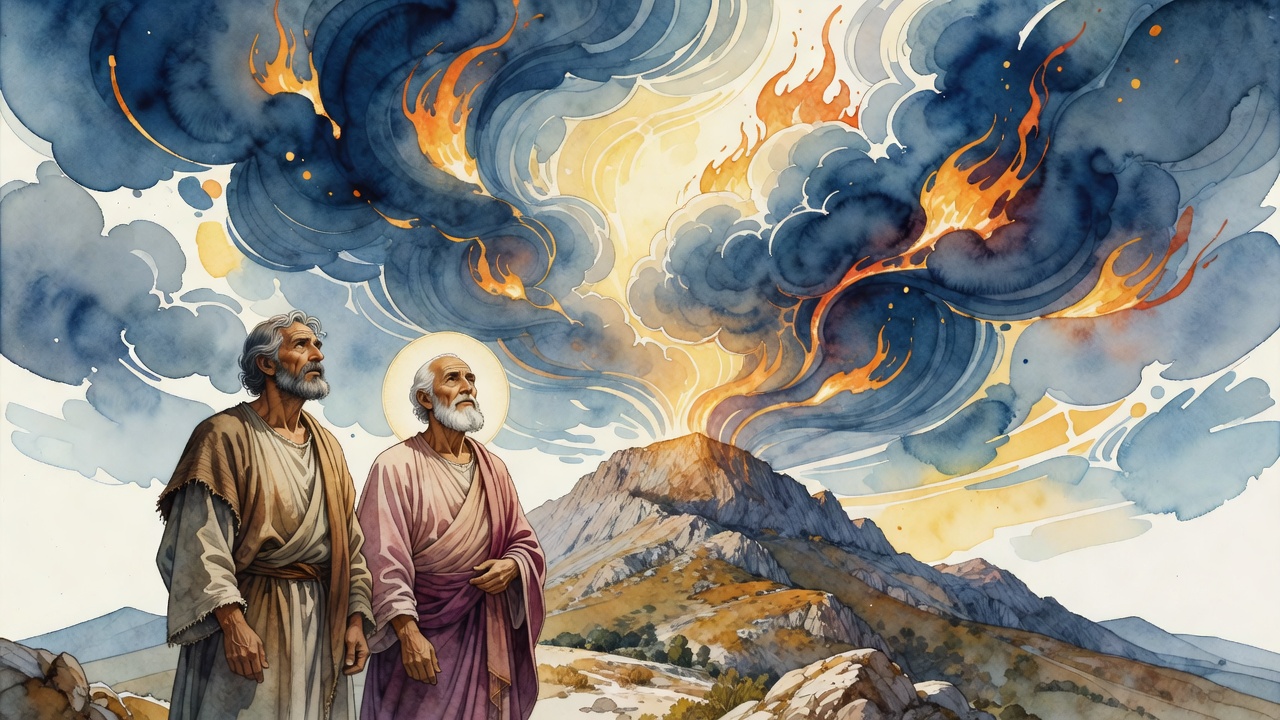
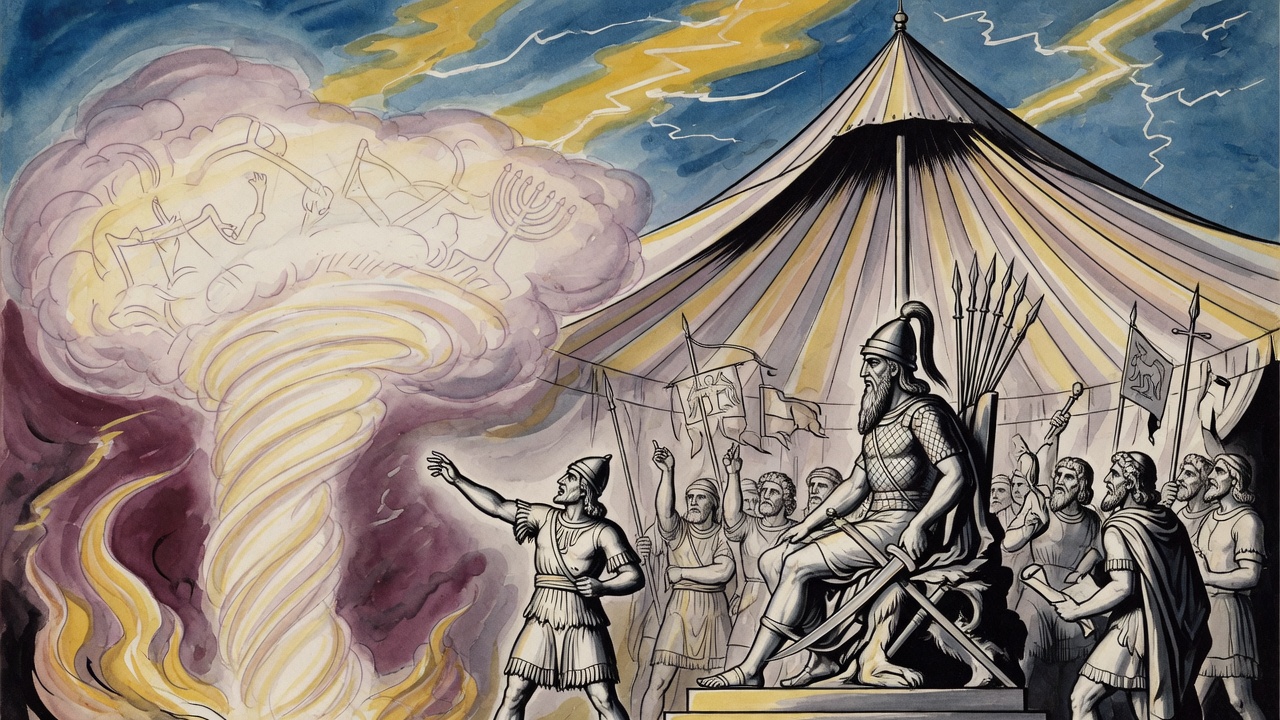
The night itself was taken and fixed. Because that night was the ninth of Av, the ninth of Av stopped being a date and became a door that opens on schedule. Centuries later the Babylonians would come through the walls of Jerusalem in that same month, and after them the Romans would put the Temple to the torch on that same night, and every one of those fires was lit in a camp in the wilderness by people who had cried for nothing.
"On the day I meant to plant you in the ground," God said, "you turned to dross in my hand." He raised his hand over them and swore to bring them down in the wilderness and scatter their children among the lands, and the raising of the hand answered the raising of the voice, gesture for gesture.
The Morning After
He came out of the tent at first light with his face stiff and salted and the ordinary noises of the camp starting up around him, goats, a quern, someone arguing about a strap. His boy was sitting outside with the ash from last night's fire in his hair.
The arithmetic took him about as long as it takes to fasten a sandal. The boy would cross. He would not. He had spent one night's crying to buy the right to be correct about Egypt, and the price came due in a currency he had not been told about, which was every year he had left. He stood there with his hand on the tent rope until his wife asked him what was wrong, and he found he could not say it out loud in the same tent where he had said the other thing.
He lived nineteen more years. They buried him under stones on a stretch of gravel with no name worth giving it, and by then his son was a grown man with sons of his own who had never seen a brick kiln.
The First Ram in the Land
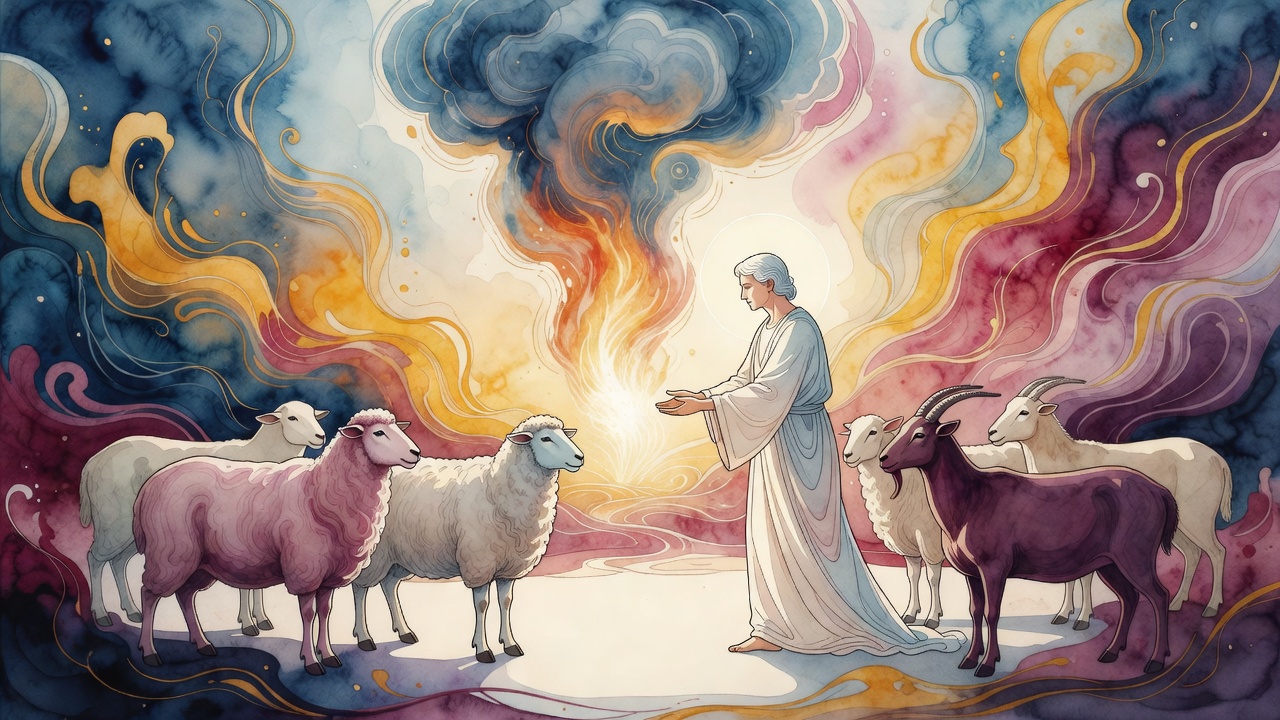
The son crossed with the rest of them, and in the land he brought a ram.
The law for a ram is not only the animal. It is a meal offering of fine flour mixed with oil, and wine for a libation, a third of a hin, measured and poured. He carried all of it up himself. The flour was ground from grain that had grown in ground he had walked on, which was a thing his father had described to him once and gotten wrong in every particular.
He put his hand on the ram's head, and when the priest had finished his part of it he lifted the wine and poured it out along the base of the altar, and it ran down the stone and disappeared into it. Nobody in the courtyard was crying, since God had already accepted what they had done. The smell that came up off the fire was flour and oil and wine, which is the smell of a table where people are about to sit down and eat.
← All myths