5 min read

The Officers Released the Man Who Built a House

Before battle officers spoke their own words, not the priest's. A man with a new roof beam walked home as the army learned which fears God will not draft.

Curated by Arthur · Told by Maggid ·
Table of Contents
  1. The Roof Beam Still Smelling of Sap
  2. Words That Belong to Officers
  3. What Must Not Be Forced Back Together Wrong
  4. Dedication

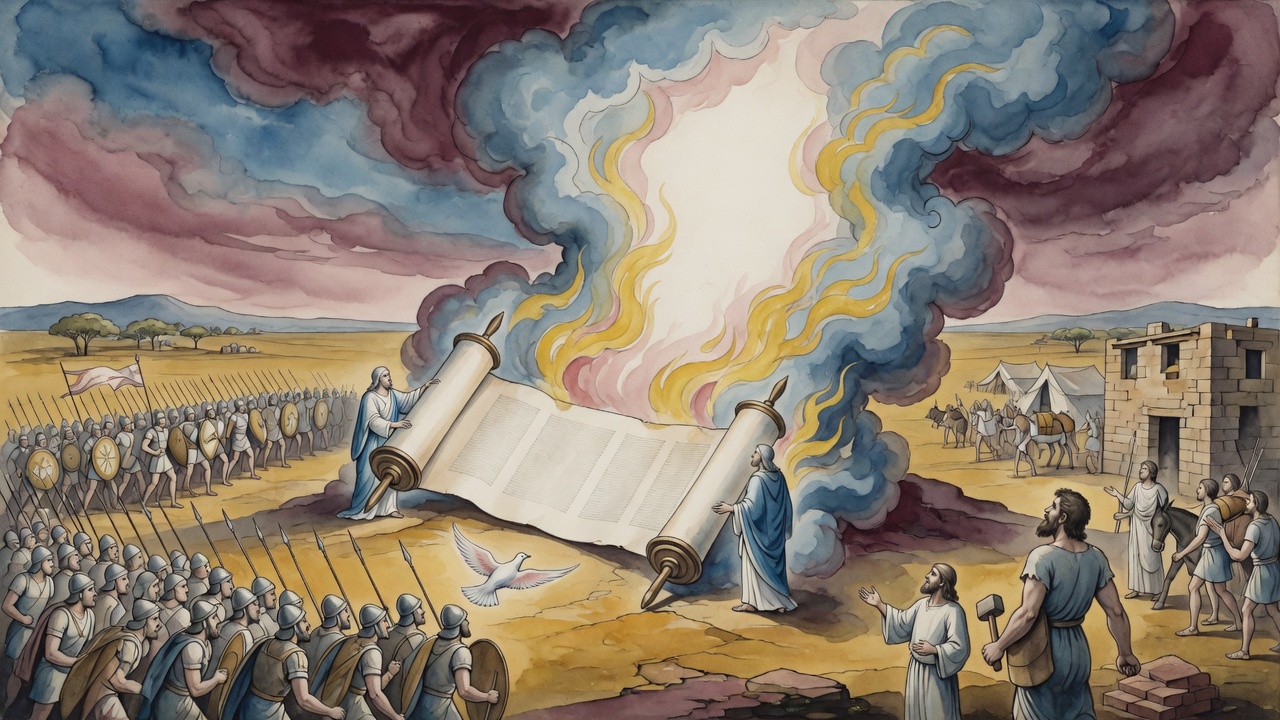
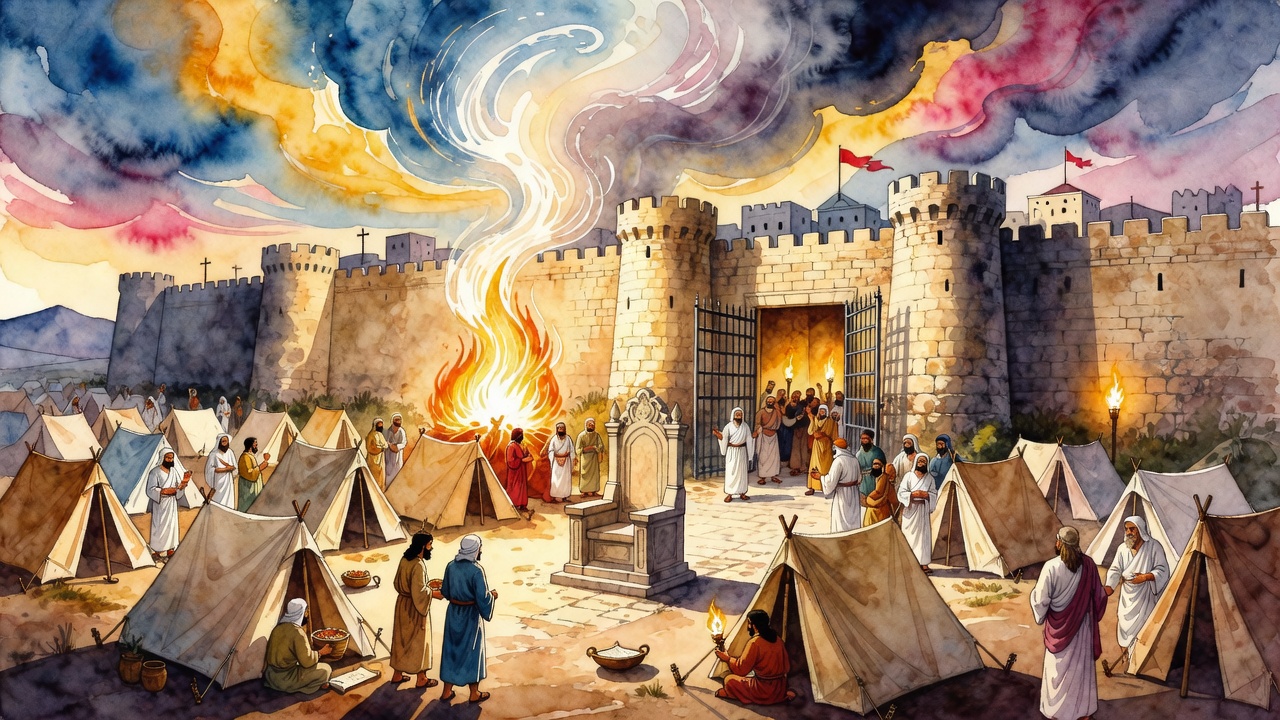
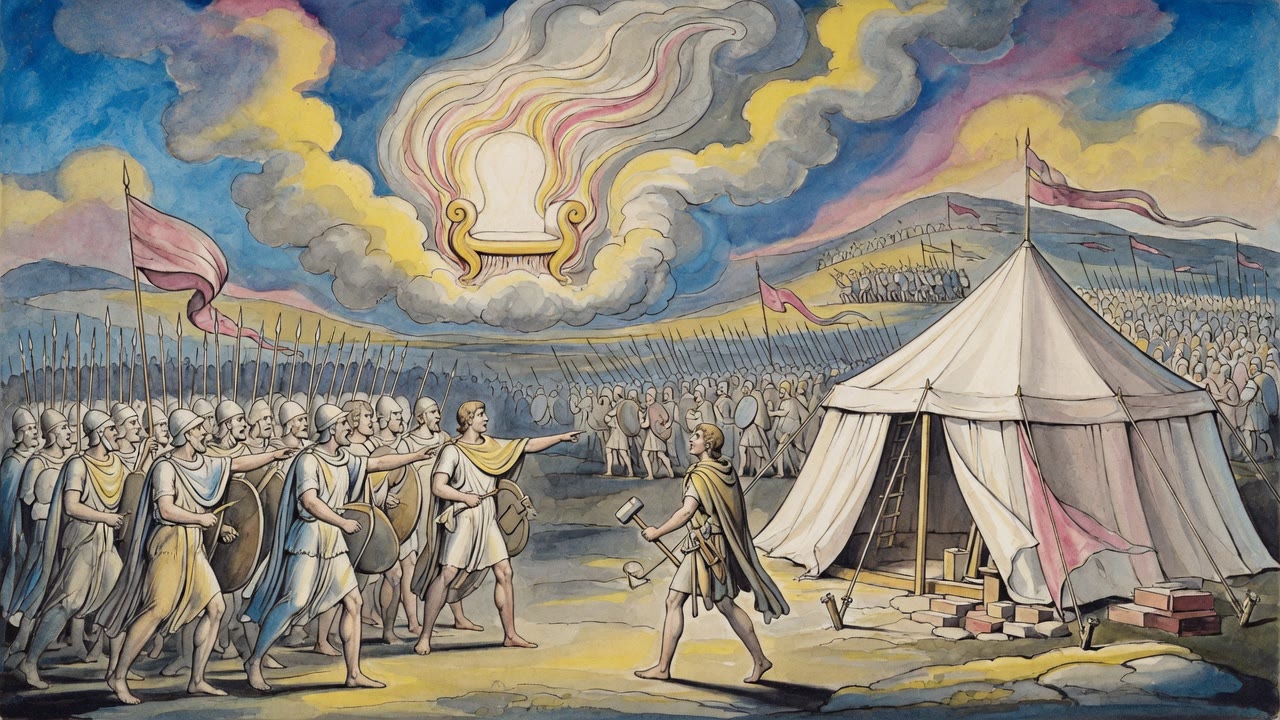
The army stood in ranks that looked solid until the officers opened their mouths. This was not the priest's speech about holy war. These were the officers' own words, plain as a doorframe, aimed at men whose private lives had just grown too heavy to carry into a charge.
The Officers Released the Man Who Built a House Click for full size

The Roof Beam Still Smelling of Sap

"Who is the man who has built a new house and not dedicated it?" The question traveled the line like a hand on every shoulder. Dust hung. Spears tilted. Somewhere a horse stamped as if it also wanted the answer.

One man felt the words land in his ribs. Three weeks earlier he had set the last beam. The house still smelled of cut wood. His wife had hung nothing on the walls yet. Dedication was a joy he had postponed for the muster horn.

He stepped out of rank. No one mocked him. The Torah had already imagined his face. A man who dies in battle before he tastes his own doorway leaves a wound in the camp that victory cannot bandage. The officers were not soft. They were precise about which absences destroy morale.

Inheritance, purchase, gift. The sages press "Who is the man?" until it covers more than the hands that hammered every nail. New possession, new joy, same release. The feeling of a threshold is not only for carpenters. The builder's kit banged his hip as he walked. Shame and relief shared his mouth.

Words That Belong to Officers

The priest had spoken earlier of the God who walks with Israel. That speech belonged to holiness. The officers spoke of houses, vineyards, wives, and fear, the human inventory of unfinished life. Their authority was not lesser. It was different. War needs both the Name and the permission to send a trembling man home before his trembling infects the line.

Another man left for a vineyard unharvested. Another for a betrothal incomplete. The ranks thinned and hardened at once, like metal losing dross in fire. Cowards who only wanted escape still had to hear the later call about fear itself, a different gate. This gate was for unfinished joy, not for invented terror.

An officer watched the house-builder go and did not smile. Releasing a man is also a command skill. Keep everyone, and you keep every private disaster as a secret passenger in the charge.

Far up the column, drums tested the air. The war had not become gentle. It had become honest about which stories it was allowed to interrupt.

What Must Not Be Forced Back Together Wrong

Rabbi Yehudah, reading the hard law of a returned divorcée, drew a line people flinch from. The renewed union can be called abomination, yet the child of that union is not abomination. Act and offspring are not the same moral object. The world is not healed by smearing one verdict across every nearby life.

On the road home, the builder did not think of divorce. He thought of distinctions. The officers had distinguished unfinished joy from cowardice. Yehudah's teaching, elsewhere in the same midrashic world, distinguishes a forbidden reconnection from the innocence of a child. Both refuse blunt instruments.

Israel's God drafts soldiers and also drafts mercies that look, to empire, like inefficiency. Empire wants every body in the field. Torah wants the right bodies, with the right hearts, under the right words spoken by the right mouths.

The builder paused at a rise and looked back. The army was a dark shape under noon. He raised a hand, not in farewell to courage, in acknowledgment that courage had let him go.

Dedication

At dusk the man put his hand on his own doorpost. Inside, the empty rooms waited like a held breath. He whispered a dedication that was not fancy. "This house is entered." His wife laughed at the simplicity and then cried because he was not a name on a casualty list.

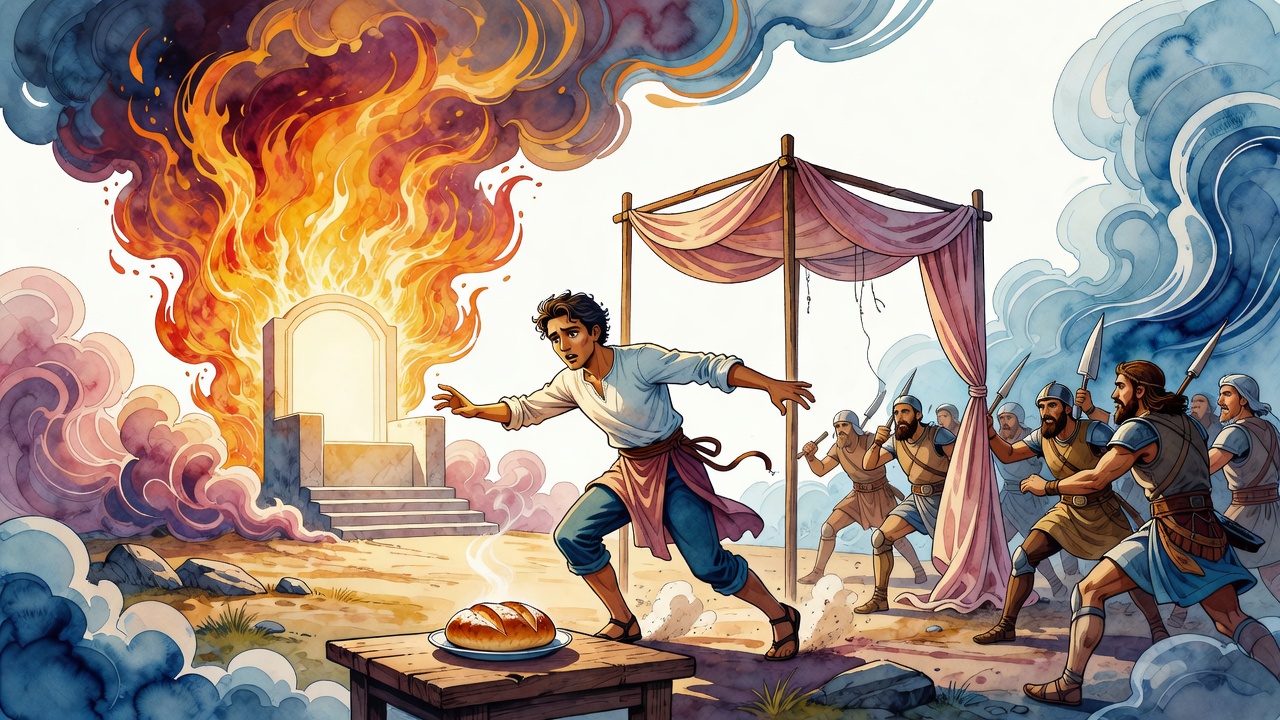
They ate bread standing up, too restless to sit, as if sitting were for people who had not almost died of timing. He told her about the officers' voices, how they were not the priest's and how that difference had saved his life without shaming it.

Far away the thinned army slept harder. Fear had been partly sent home, and what remained could stand without lying about its courage.

The officers' words had done their work. Not every battle is won by keeping every body in the field. Some are won by telling the truth about which bodies are already fighting a different war at their own thresholds. The new house took its first night of ordinary sleep, which is a kind of victory no drum records.


← All myths
From the tradition

Sources

2 sources

The texts behind this telling. Some cards carry a translation of the source; others are our own retelling of it, and each card says which. Every card links out to the original.

Sifrei Devarim 194:1Sifrei Devarim

Retold in our words. Read the original at the link below.Sifrei by Rabbi Shraga Silverstein · CC-BY

Like you've finally built that dream house, and then… boom! Duty calls. Well, Jewish tradition has something to say about that feeling, and it all starts with a verse in Devarim, the Book of Deuteronomy.

Specifically, Devarim 20:5. It talks about a man who has "built a new house." But the Rabbis of old, masters of interpretation, weren't content with the surface level. They wanted to dig deeper, to understand the nuances of the text. And what they found is pretty insightful.

The verse seems to be about someone who physically constructed a house. But what about someone who inherits a house? Or acquires one through a business deal? Or even receives it as a gift? Do they get the same consideration, the same potential exemption from certain obligations, as the person who hammered every nail and laid every brick?

That's the question posed in Sifrei Devarim 194, a halakhic (legal) Midrash on the Book of Deuteronomy. It's a text dedicated to unpacking the laws and principles found within the Torah.

The Rabbis, in their wisdom, didn't think the verse should be limited to just the act of building. They argued that the phrase "Who is the man?" – which is intentionally vague – broadens the scope. It implies that anyone who comes into possession of a new house, regardless of how they got it, is included in the law. The joy, the excitement, the sense of accomplishment… these feelings aren't exclusive to those who build with their own two hands. Whether you inherited a family home, shrewdly negotiated a property purchase, or were generously gifted a place to call your own, the emotional impact is still significant. You're still settling in, making it your own, building a life within its walls.

So, what’s the takeaway? Perhaps it's a reminder that Jewish law isn't always about the literal. It's often about the spirit, the intention, and the underlying principles. It's about recognizing the human experience, in all its varied forms. And it’s about understanding that sometimes, the most profound lessons are hidden in the simplest of verses.

Full source
Sifrei Devarim 271:1Sifrei Devarim

Retold in our words. Read the original at the link below.Sifrei by Rabbi Shraga Silverstein · CC-BY

The ancient texts are full of surprising takes.It tackles the complex and often painful topic of divorce and remarriage.

The verse reads, "for she (a returned divorcée) is an abomination before the L-rd." It immediately begs the question: Why? What's so wrong with a couple trying again? The text itself provides a clue, referencing (Jeremiah 3:1): "If a man divorces his wife, and she goes and marries another man, can he return to her again?" This verse highlights the perceived disruption to the natural order, the breaking of a bond that was meant to be permanent.

Even within this seemingly harsh judgment, we find nuance. Rabbi Yehudah offers a crucial distinction: "She is an abomination, but her child (of the renewed union) is not an abomination." Even if the remarriage itself is viewed negatively, the child born from that union is not tainted by it. This suggests a focus on the act of remarriage itself, rather than a blanket condemnation of everyone involved. The child is innocent, a new beginning untainted by the past.

Then comes a warning: "And you shall not make sinful the land." This isn’t just about individual morality. It's about the responsibility of the Beth-din, the Jewish court, to uphold the sanctity of marriage and prevent situations that could lead to societal disruption. The court, according to this passage, has a duty to ensure that these complex situations are handled with sensitivity and justice, preventing the land from becoming "sinful", meaning, perhaps, morally corrupted or destabilized.

The text then shifts focus slightly, exploring the implications of (Deuteronomy 24:5): "If a man take a new wife." Initially, this seems to refer only to a virgin. But the text asks, what about a widow or a divorcée? The answer lies in the phrase "and he shall rejoice his wife" – which the text argues applies "in any event," regardless of her previous marital status.

So, if "he shall rejoice his wife" applies to everyone, why the word "new"? That’s where the concept of the "returned divorcée" comes back into play. The text explains that "new" refers to someone who is "new" to him – excluding a woman he previously divorced. The idea here is that the joy and excitement associated with a new marriage are diminished or even inappropriate when the partners have already been married and divorced. This isn't about denying happiness, but about acknowledging the complexities and potential pain of revisiting a failed relationship.

What are we left with? A complex and nuanced understanding of divorce and remarriage, one that balances societal stability, individual happiness, and the well-being of children. And perhaps, a call for us to think deeply about the choices we make, and the ripple effects they have on the world around us.

Full source