The Captive Woman Who Mourned a Full Month First
A soldier brought a captive into his house, cut away her war beauty, and watched desire cool while she sat and mourned her father and mother.
Table of Contents
She entered the house without looking at the man who had chosen her from the captives. Dust from the march still marked the hem of the dress that had once been meant to catch eyes across a market, not across a field of broken spears and shouting.
 Click for full size
Clothes of Capture Cut Away
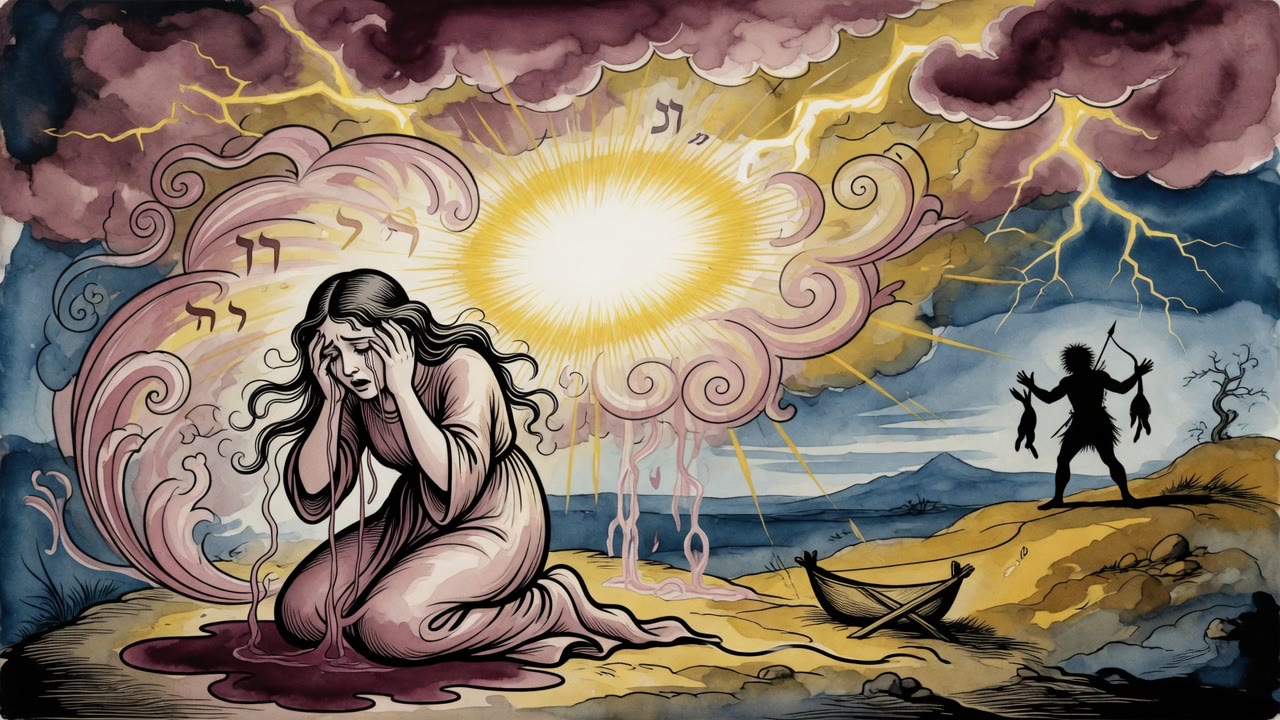
The law did not let desire keep its costume. "She shall remove the garment of her captivity," the verse said, and the midrash heard more than a change of fabric for neatness (Deuteronomy 21:13). The alluring dress of her former world came off. Widows' weeds went on. The practice of dressing daughters to pull strangers after them, so the teachers said of the Canaanite custom, was stripped from her body in a single hard morning while the soldier stood too close and then stepped back as if burned.
He watched and felt the first small crack in the heat that had driven him through the selection of captives. Beauty is easy in smoke and triumph, when every face is lit by winning. Beauty is harder when a woman stands in plain cloth with grief still unspent and no music left in the room.
He told himself he was merciful for bringing her indoors rather than leaving her to the road. The law told him he was restrained. Those are not the same claim, and the house knew the difference by how carefully he avoided her eyes.
She folded the old dress once, then again, as if folding could put a world away. Her hands did not shake. His did.
A Month of Sitting Where He Walked
"She shall sit in your house," the text continued. The midrash made the house a trap for fantasy rather than a prize room. She would pass him in ordinary hours, hair unarranged for display, face swollen from crying, hands busy with work that did not flatter. He would stumble on her coming and going until the first shine dulled against the grind of real days.
She mourned her father and her mother for a full month. The days were counted on a stick near the door, notches that looked like a child's game and were not. No canopy waited at the end of a week. No feast erased the dead. She sat, and the house learned the sound of a stranger's grief in its own rooms, a sound that made the soldier's friends stop visiting by the second Sabbath.
Sometimes he left early and returned late so he would not hear her. The house held the sound anyway. Wood absorbs weeping better than men do, and releases it at night when the fire sinks.
Once he almost spoke a soft word and found he had no language that was not ownership. He closed his mouth and mended a strap that did not need mending.
The Prophecy Inside Desire
Then the Torah spoke a line that is almost cruel in its clarity: "And it shall be, when you do not desire her" (Deuteronomy 21:14). The midrash refused to soften it into a polite "if." Scripture, it said, apprises you that you are destined to hate what conquest first called love, to watch the war-heat die and leave a stranger under your roof.
The soldier felt the turn on an ordinary afternoon. She set down a jug. Light from the doorway cut her profile into something plain and human. He looked and felt no lift in the chest, only the weight of a decision made in blood-heat when the camp still smelled of smoke. The law had seen this coming better than he had, and had written the cooling into the future tense like a warning stamped on desire.
If he sent her away, he could not sell her as a slave for profit on a second market. She had already been forced through enough scales of power. Freedom, when it came, had to be real, not another trade dressed as mercy.
He said the words of release as if reciting a debt. She did not thank him. Thanks would have been a lie shaped for his comfort.
What the Month Was For
The month was not romance and not a gentle courtship invented by later soft tellings. It was a brake on a man's hands and a shelter for a woman's mourning. It forced a soldier who had won a body in war to live with a person in peace long enough for the war-glamour to die. It forced a woman torn from parents to finish a piece of grief before anyone claimed her future as a prize.
On the last evening of the count, before the release, she stood in the doorway and looked at the road that led nowhere she still owned. He stood behind her and did not touch her shoulder. The heat that had started the story was gone. What remained was law, and the thin dignity law can still give when desire has already done its damage and begun to rot.
Outside, a dog barked at nothing. Inside, two people who had never chosen each other waited for the next required word. When it came, it was short. The door stayed open long enough for her shadow to leave the threshold, and then the house was only his again, emptier than victory had promised.
← All myths