6 min read

The Priest Who Ordered Fearful Soldiers Home

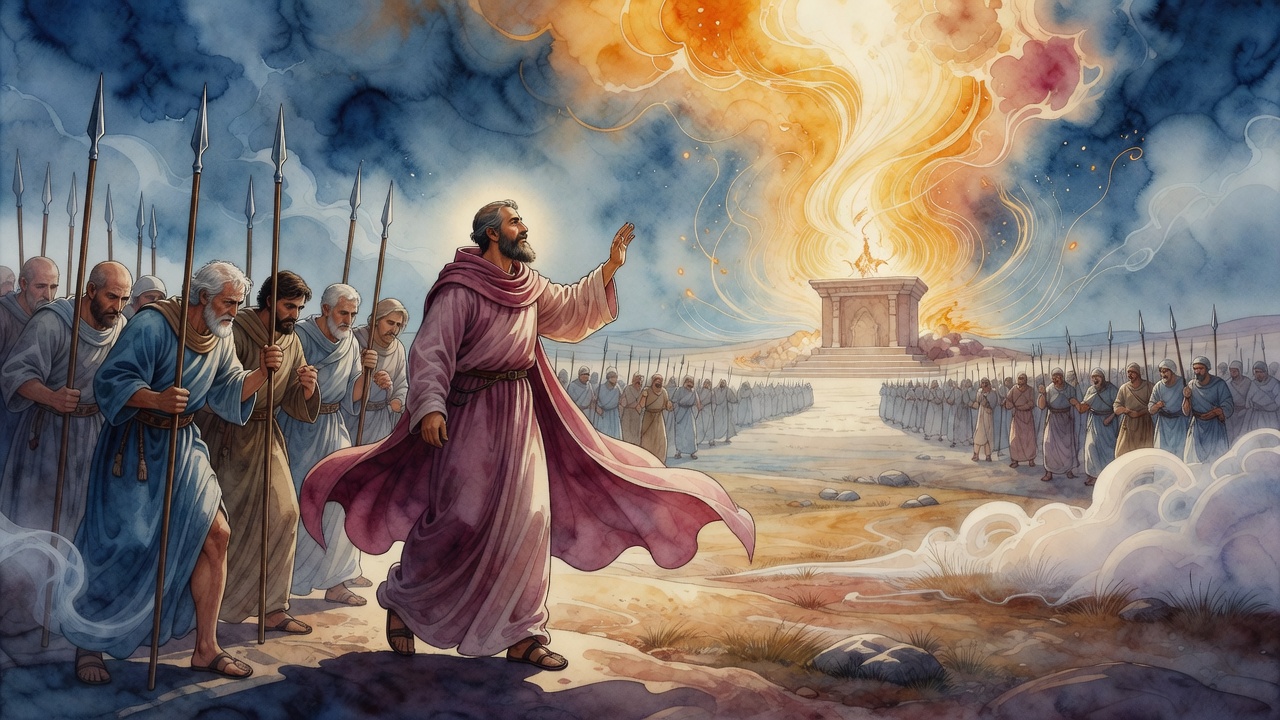
Before the first spear lifted, an anointed priest walked the ranks and sent home the men whose fear would melt the hearts beside them.

Curated by Arthur · Told by Maggid ·
Table of Contents
  1. Words Before Iron
  2. The First Men Sent Away
  3. The Fear That Contaminates
  4. Iron at the Back of the Line

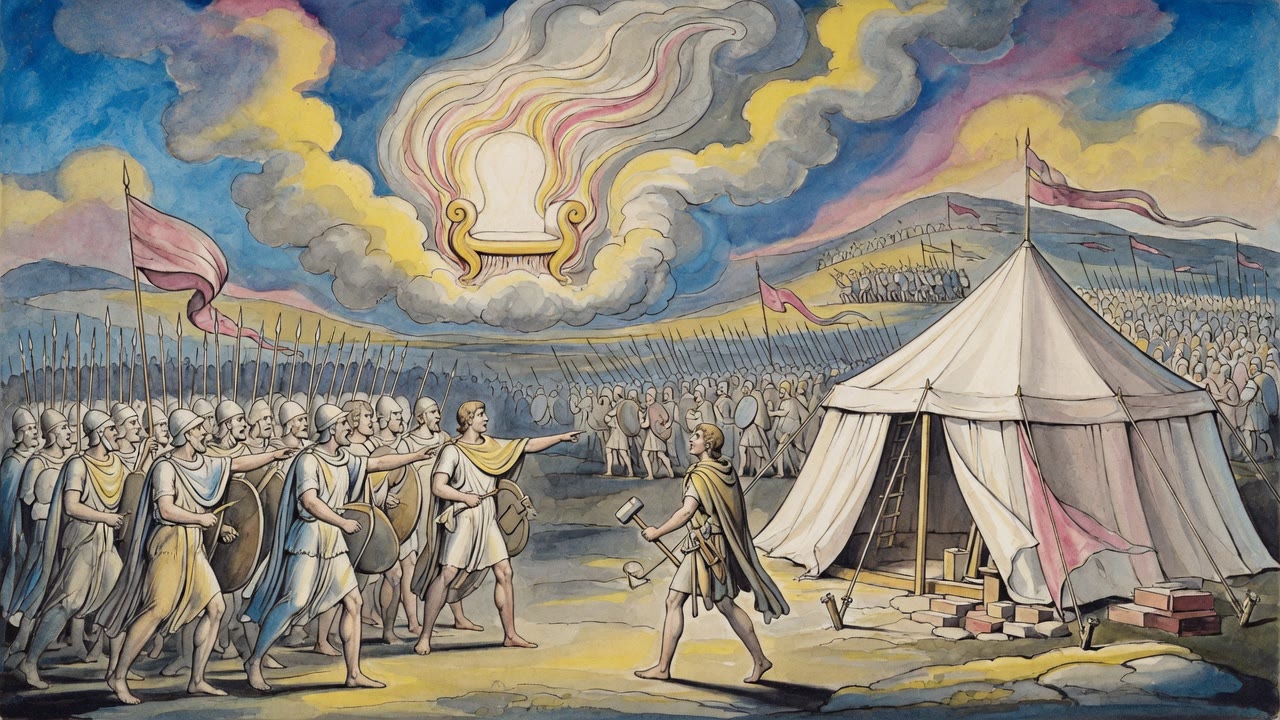
Dust rose from a thousand sandals and hung in the morning light like a second sky. The army faced a line of hills that looked too still. Horses of the enemy stamped somewhere beyond the ridge, and the sound came thin across the dry air, a promise of iron that had not yet shown its edge.
The Priest Who Ordered Fearful Soldiers Home Click for full size

Words Before Iron

The kohen mashuach milchamah, the priest anointed for war, stepped to the front without a sword. Oil still lived in the memory of his hair. His work was not to cut flesh. His work was to cut fear before fear cut the line into a thousand private panics.

"Hear, O Israel," he called, and the ranks tightened as if a rope had been pulled through every shoulder (Deuteronomy 20:3). He named the enemy as foes, not brothers. Not Judah against Simeon. Not kin who might pity if a man fell into their hands and remembered shared blood. These faces across the ridge would not soften. That truth was meant to stiffen spines, not to feed the kind of dread that makes a man drop his shield before the first arrow.

He promised more than slogans. He spoke of rescue from snakes under stones, scorpions in boots, and winds that turn against a marcher until the desert itself seems enlisted. The men listened with their mouths slightly open, as if the words themselves were water after a dry march.

This war, the midrash reminded through the opening verse, was the kind you go out to fight, not the kind that comes to the door and leaves no choice (Deuteronomy 20:1). Choice made the next dismissals possible. Choice made fear more honest.

The First Men Sent Away

Then the officers took the voice from the priest and made it practical, house by house of unfinished life. A man who had built a house and not yet dedicated it was told to go home. A man who had planted a vineyard and not yet eaten of it was told to go home. A man who had betrothed a woman and not yet taken her under the canopy was told to go home (Deuteronomy 20:5-7).

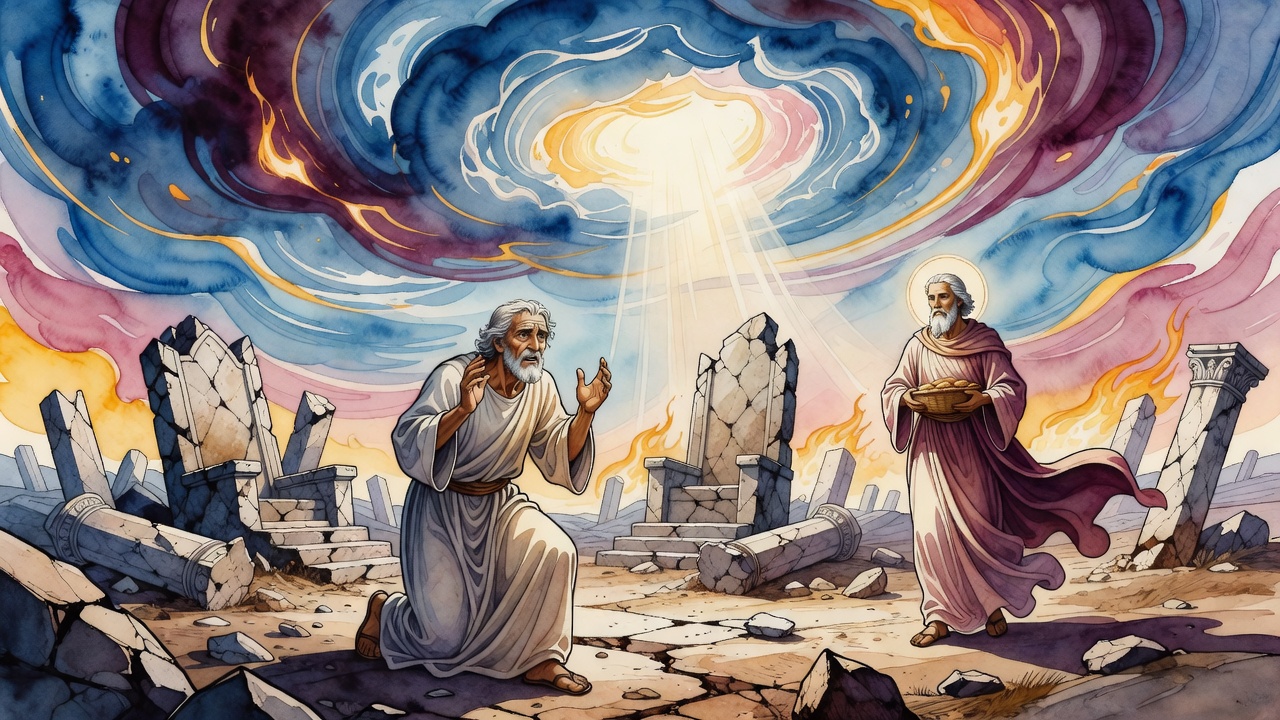
One soldier gripped his spear and shook his head. "I will stay," he said, chin high with a courage that smelled like stubbornness. The officer looked at him as if looking at a man already half dead. The teaching was blunt in the old midrash: the one who refuses the release can die in the battle he was not meant to fight. Yearning for an unfinished house, an untasted vine, an unwed bride is not weakness. It is a rope that pulls the heart backward while the body walks forward into spear-range.

Three men peeled out of the ranks and walked toward the road with faces that mixed shame and relief. No one mocked them. Mockery would have been another kind of melting, a social fear laid on top of the fear of death. A fourth man almost followed, then stopped, then followed after all when he remembered the raw beams of a roof still waiting for its first meal of blessing.

The line looked thinner. It also looked less haunted by men whose minds were already at a doorway far behind the camp.

The Fear That Contaminates

Last came the hardest dismissal. The officers spoke of the man whose heart was soft with dread, "lest his brothers' hearts melt like his heart" (Deuteronomy 20:8). Rabbi Shimon pressed the point harder in the old midrash: if a man hears the priest's words and still refuses to leave when fear owns him, the whole camp will suffer his presence like a sickness in shared bread.

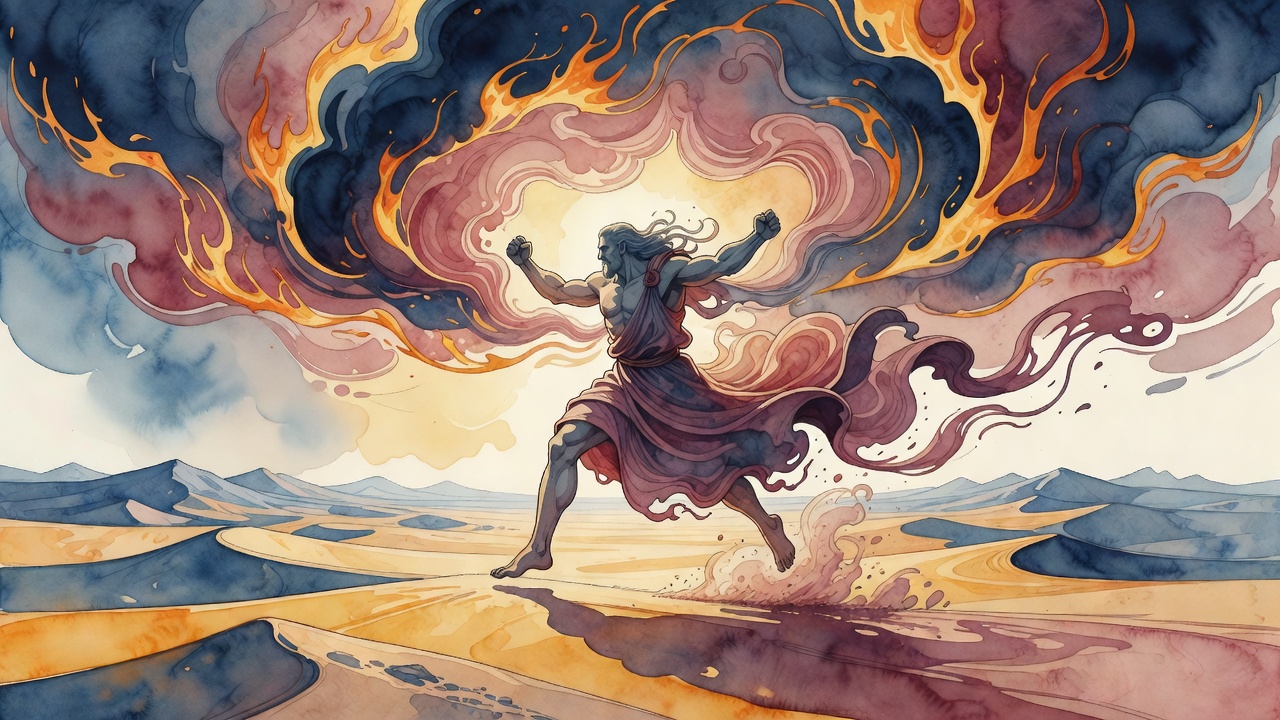
Fear is a liquid. It runs along shoulders. It enters the wrists that hold shields. One shaking pair of hands can teach a hundred pairs to shake until the shield wall becomes a rumor of wood.

A young fighter tried to lock his knees. His spear tip jittered against the dry ground and left a scribble in the dust, a private writing of terror. The officer nearest him did not insult him. Insult would have nailed the fear deeper. He pointed him toward the rear road. "Go," he said. "Do not make your brothers drink what is in your chest."

The young man went. Behind him someone exhaled as if a weight had stepped off his own ribs. Contagion works both ways. Courage also travels, but only after the infected leave the circle.

Iron at the Back of the Line

When the speaking ended, commanders were set at the head and at the rear. The midrash adds a hard image for the moment after choice: sentinels with iron tools, ready to strike the legs of anyone who tried to flee once the battle had begun. The camp that had just released the fearful now refused the cowardice of desertion after the decision had been owned.

The remaining men looked smaller and cleaner. The line was thinner. It was also less likely to break from the inside, which is the break no tactic can fully mend.

Across the ridge a chariot wheel flashed once and vanished. Someone whispered a line of psalm under his breath and stopped, ashamed of the sound of his own hope, then whispered it again more quietly, as if God preferred low volume in a field of spears.

The priest raised his hands once more. The officers closed their mouths. The dust began to move with feet again, slower now, toward the hills that would not stay still forever. Behind them, on the homeward road, the released men did not run. They walked like people carrying fragile jars, careful not to spill the life the law had handed back.


← All myths
From the tradition

Sources

5 sources

The texts behind this telling. Some cards carry a translation of the source; others are our own retelling of it, and each card says which. Every card links out to the original.

Sifrei Devarim 193:6Sifrei Devarim

Retold in our words. Read the original at the link below.Sifrei by Rabbi Shraga Silverstein · CC-BY

What could possibly offer comfort?

The ancient text, Sifrei Devarim, specifically section 193, gives us a glimpse into just such a moment. It describes the role of the Kohen (a priest) Meshucha Milchamah (כהן משׁוח מלחמה) – the "anointed priest for war" – and the officers in preparing the Israelite army, not just physically, but emotionally, before going into battle.

The Kohen Meshucha Milchamah wasn't there to swing a sword. His job was to speak words of encouragement, reminding the soldiers that God was with them, protecting them "to save you: from snakes, scorpions and adverse winds. It's about facing down more than just physical enemies. It's about overcoming fear itself.

Here's where it gets interesting. Sifrei Devarim tells us that the Kohen Meshucha Milchamah speaks first. But then, the officers take over. And it's here we get to the real heart of the matter.

These officers weren't just repeating the priest's words verbatim. They had their own role to play. The text specifies certain exemptions from military service: a man who has recently built a house, planted a vineyard, or betrothed a woman. These men were given the chance to return home.

But what about a man who had betrothed a virgin, or even a widow? What about one awaiting yibbum (יבום), levirate marriage, a specific Jewish law? What if he had even heard that his brother died in the war? According to this text, even he was allowed to return.

This is profound. It's not just about physical fitness or readiness. It's about the emotional and spiritual state of the soldier. It's recognizing that a man with unfinished business, a man with new responsibilities, or a man burdened by grief, might not be in the right headspace for battle.

And what did these returning men do? Did they simply disappear? No. The text says, "All of them (the returnees) heed the words of the Kohein at the battle formation and return and supply water and food for their brothers and repair the roads." They continued to contribute, supporting the war effort in other ways.

So, how do we understand the interplay between the Kohein and the officers? Sifrei Devarim anticipates this question. One might think the officers speak their own, independent words. But the text clarifies, "'Then the officer shall speak further' already speaks of their own words." So, how are we to understand, "Then the officers shall speak"? As referring to the words of the Kohein appointed for war. The Kohein spoke, and an officer relayed what he said.

The officers amplified the message. They made it personal. They applied the general principles of compassion and justice to specific situations. They ensured that the army was not just a fighting force, but a community. The Kohein provides the overarching message of hope and divine protection. The officers translate that message into concrete actions, ensuring that those who are not ready to fight are still valued and supported. It is a system that recognizes the complexity of human emotion, of individual circumstance, even in the face of collective crisis.

What does this ancient text tell us today? Perhaps it's a reminder that true strength isn't just about physical power, but about empathy, compassion, and the courage to acknowledge our own vulnerabilities. And maybe, just maybe, it's a reminder that even when facing our own "snakes, scorpions, and adverse winds," we are not alone.

Full source
Sifrei Devarim 196:1Sifrei Devarim

Retold in our words. Read the original at the link below.Sifrei by Rabbi Shraga Silverstein · CC-BY

Sifrei Devarim turns to Who Was Sent Home from War for Personal Reasons.

The scene: The Israelite army is lined up, ready for battle. The Cohein, the priest, steps forward to address the troops. But this isn't just a pep talk. This is a moment where lives will be quite literally redirected, as the Sifrei Devarim, a legal commentary on the Book of Deuteronomy, reveals.

The verse in Deuteronomy (20:5) speaks of a man who has built a new house but hasn't yet dedicated it. He gets to go home. Why? Because he needs the chance to enjoy the fruits of his labor, to truly settle in. But what if he ignores the call of the Cohein and stubbornly stays? The Sifrei Devarim warns us: he might very well die in battle if he doesn't heed the priest's words. It’s almost as if ignoring that deep, personal need – that yearning for home and stability – dooms him.

Then there's the man who has planted a vineyard but hasn't tasted its first fruits. He, too, gets a pass. The joy of the harvest, the satisfaction of seeing something you nurtured come to fruition – these are powerful, life-affirming experiences. War can wait.

But it’s the next exemption that really gets interesting. (Deuteronomy 20:6) mentions a man who has betrothed a woman but hasn’t yet married her. He, too, is sent home. According to Sifrei Devarim, this applies whether she’s a virgin, a widow, even one awaiting yibbum – levirate marriage, the ancient practice where a brother is obligated to marry his deceased brother's widow. Even if he thinks his brother has died in battle, he still gets to return home to his bride. The anticipation of building a life together, that promise of love and family, takes precedence over the call to arms.

Now, the Sifrei Devarim then introduces a fascinating detail regarding another verse in Deuteronomy (20:7) which speaks of a man who has purchased land, but hasn't yet redeemed it. Who is this "another man" who might redeem it? One might assume, perhaps a son or a brother? But no! The text clarifies by drawing a parallel to another instance of the word "another" found in (Deuteronomy 28:30). There, "another" refers to a gentile. So here, "another" also means a gentile! This suggests that the man's claim to the land is not yet secure, not yet fully his. He needs to solidify his connection to it.

What’s striking about all these exemptions is their emphasis on the sanctity of personal milestones: building a home, cultivating the land, starting a family. These aren't just practical considerations; they speak to the very core of what it means to be human. They remind us that life isn't just about grand battles and heroic deeds. It's about the quiet moments, the personal connections, the anticipation of joy.

So, what can we learn from this ancient text? Perhaps it's a reminder to cherish those seemingly small moments, to prioritize the relationships that sustain us, and to recognize that sometimes, the most courageous act is choosing life, love, and the promise of a future over the call to war. Maybe, just maybe, that’s the kind of wisdom that can save us all.

Full source
Sifrei Devarim 198:1Sifrei Devarim

Retold in our words. Read the original at the link below.Sifrei by Rabbi Shraga Silverstein · CC-BY

Jewish tradition definitely thinks so, especially when it comes to matters of communal responsibility, like war. to a fascinating passage from Sifrei Devarim, a collection of early rabbinic legal interpretations on the Book of Deuteronomy. It's talking about how a soldier's fear can demoralize an entire army. The verse reads, "..and not melt the heart of his brothers as his own heart." (Devarim 20:8).

Rabbi Shimon takes this a step further. He says that if someone hears the words of the Kohen (priest) – words meant to address and reassure those who are fearful or have legitimate reasons to avoid battle – and that person still doesn't return home when they should, ultimately, everyone will suffer because of their presence. Their fear, their reluctance, will spread like a contagion. Fear is contagious. If someone beside you is panicking, aren't you more likely to feel anxious yourself? This isn't just about physical safety; it's about the collective spirit, the shared resolve that binds a community together, especially in times of crisis.

So, what measures were in place to prevent this? (Deuteronomy 20:9) tells us, "And it shall be, when the officers finish speaking to the people, they shall appoint commanders at the head of the people," and at the rear of the people." But it doesn't stop there. The Sifrei Devarim adds a rather… forceful detail. It says that sentinels armed with iron staves are posted before and behind the soldiers, with the authority to "cripple" all who desire to flee.

Whoa.

Why such a drastic measure? Because, the text explains, "the beginning of defeat is flight." It even cites I (Samuel 4:17) as proof: "Israel fled before the Philistines, and a great 'plague' overtook the people." Flight isn’t just a personal choice; it's a crack in the foundation of the entire army's morale, a plague that can spread and bring everyone down.

Now, here’s a crucial distinction. When does all this apply? The Sifrei Devarim clarifies: This applies to an optional war (milchemet reshut). But what about a mandatory war (milchemet mitzvah) – a war of self-defense, a war commanded by God? In that case, everyone goes. EVERYONE. Even a groom is pulled from his chamber, a bride from her bridal canopy. No exceptions.

Why the difference? In a mandatory war, the stakes are simply too high. The survival of the community is on the line. There's no room for individual reservations or fears. It’s an all-hands-on-deck situation.

This passage from Sifrei Devarim isn't just a historical account of ancient warfare. It forces us to confront difficult questions about individual rights versus collective responsibility, and the potential consequences of fear and inaction. It’s a sobering thought: are we willing to stand together, even when it's difficult, or will our individual anxieties undermine the strength of the whole?

Full source
Sifrei Devarim 192:3Sifrei Devarim

Retold in our words. Read the original at the link below.Sifrei by Rabbi Shraga Silverstein · CC-BY

Also imagine the faith, the conviction, the unwavering belief that something greater was on your side.

Our text today, from Sifrei Devarim, a collection of legal interpretations on the Book of Deuteronomy, gives us a glimpse into just that moment. Specifically, it's unpacking (Deuteronomy 20:3), where the priest addresses the Israelite army before they go to war.

"And he shall say to them "Hear, O Israel… against your foes." But who exactly are these "foes"? The text is quick to clarify: "…and not against your brothers: not Yehudah against Shimon and not Shimon against Yehudah, in which instance if you fell into their hands they would pity you…" for a second. This isn't just a pep talk; it's a profound reminder of kinship. A battle against another tribe of Israel, even in conflict, is fundamentally different. There's a shared history, a shared humanity. As the text points out, referencing II (Chronicles 28:8-15), even in war, there's the possibility of mercy amongst brothers.

Against your foes, against those who don't share that bond? That's a different story altogether. "It is against your foes that you are going, who, if you fall into their hands, will not pity you!" The stakes are incredibly high.

So, how do you face such an enemy? How do you overcome that fear? That's where the rest of the verse comes in: "Let your hearts not faint. Do not fear, and do not tremble, and do not break before them."

These aren't just empty words of encouragement. The text beautifully breaks down each phrase, connecting it to specific elements of ancient warfare. It's a fascinating look into the psychological warfare of the time.

"Let your hearts not faint" at the whinnying of the horses and the flashing of the swords. The terrifying sounds and sights meant to instill panic.

"And do not fear" the clashing of the shields and the tramping of the shoes. The relentless advance of the enemy, the wall of shields, the earth shaking beneath their feet. A coordinated display of power designed to crush your spirit.

"And do not tremble" at the blaring of the trumpets. The trumpets weren't just for signaling; they were weapons in themselves, meant to disorient and terrify.

"And do not break" before the cries (of battle). The raw, visceral screams of men engaged in combat. The sheer brutality of it all. It's enough to make anyone want to flee.

But then comes the ultimate reassurance: "For the L-rd your G-d goes with you." This isn't just about superior tactics or weaponry. It’s about faith. It's about something larger than themselves fighting alongside them.

The text concludes with a powerful contrast: "They come with the "triumph" of flesh and blood, and you come with the triumph of the L-rd." Their strength is finite, earthly. Yours, however, is connected to the infinite, the divine.

We may not be facing literal armies, but we all face battles – internal struggles, external challenges, moments where fear threatens to overwhelm us. Sifrei Devarim reminds us that even in those moments, we are not alone. We have a source of strength, a connection to something greater, that can help us overcome even the most daunting obstacles.

Remember the clashing shields and blaring trumpets. And remember: you come with the triumph of the L-rd.

Full source
Sifrei Devarim 190:20Sifrei Devarim

Retold in our words. Read the original at the link below.Sifrei by Rabbi Shraga Silverstein · CC-BY

The Sifrei Devarim, a collection of legal midrashim (rabbinic interpretive commentary) on the Book of Deuteronomy, tackles this very feeling in a fascinating way.

It starts with the verse from Deuteronomy (20:1): "When you go out to war against your foes…" Seems straightforward. But the Sifrei Devarim immediately points out that this isn't talking about a mandatory war, a milchemet mitzvah, but rather an optional one. A war you choose to fight.

Then comes a powerful reminder: "against your foes": (Remember that) it is against your foes that you are warring." It’s a subtle but crucial point. Don’t get lost in the grand strategy, the fear, the noise of battle. Remember who you're fighting and why.

The real depth comes with the line, "and you see horse and chariot." The Sifrei Devarim doesn't just gloss over this detail. It dives into it. "Just as they go out against you with horse and chariot, so, you go out against them with horse and chariot." Okay, makes sense. Fight fire with fire. But then it gets… weird. "Now do they have only one horse? Is it not written 'a great host'?" The text seems to be saying: don't take the words literally. The enemy doesn't have just one horse. They have legions! So what’s going on here?

The Sifrei Devarim offers a stunning interpretation: "when Israel do the L-rd's will, they are all reckoned as one horse."

Wow. Let that sink in.

When the people of Israel are unified, when they are aligned with the Divine will, they become… one. A single, powerful force. It’s not about the number of soldiers, the sophistication of the weaponry, or the size of the enemy's army. It's about unity and purpose.

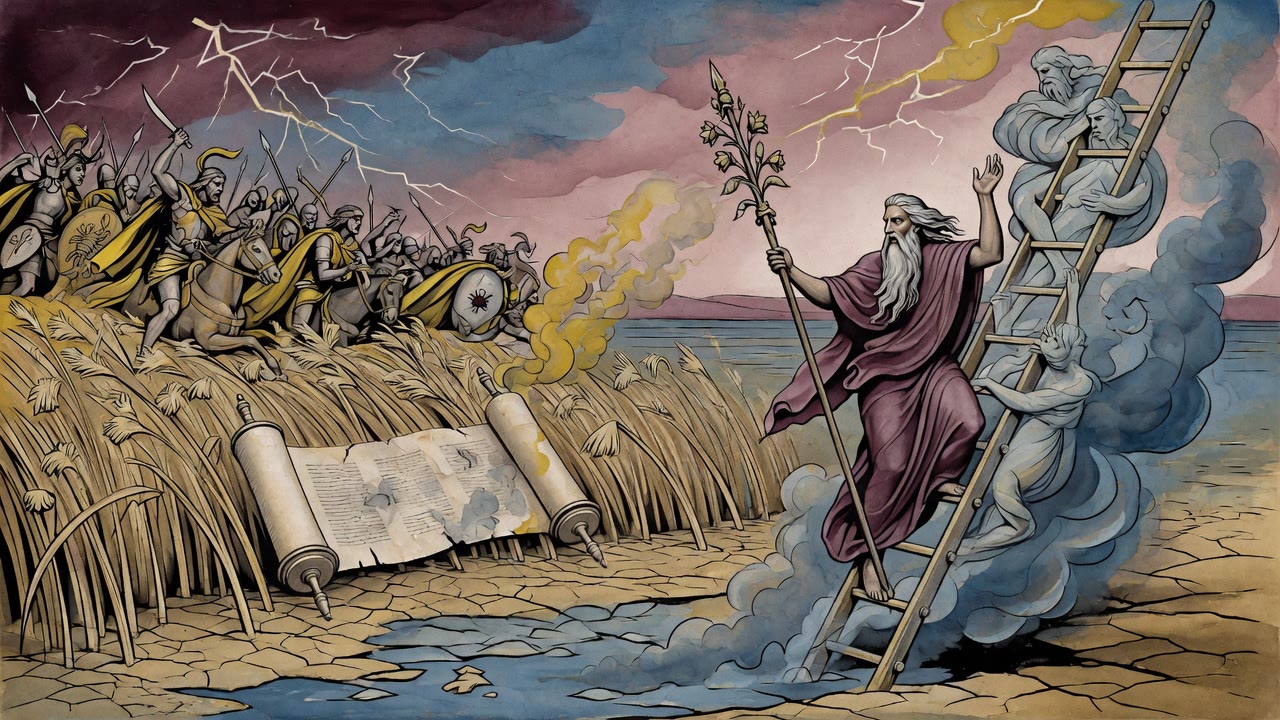
The text reinforces this with another example, referencing the splitting of the Red Sea. "Horse and its rider He has cast into the sea." (Exodus 15:1). Was there only one horse? Of course not! As it says in (Exodus 14:7), "And he (Pharaoh) took six hundred choice chariots…" Again, the point is that when Israel is united and following God's will, they are seen as one entity, a force to be reckoned with, even against overwhelming odds.

We may not be facing literal wars with horses and chariots. But we face challenges – internal and external – that can feel overwhelming. Perhaps the Sifrei Devarim is reminding us that our strength isn't just in our individual abilities, but in our unity, our shared purpose, and our connection to something larger than ourselves. When we act in accordance with what's right, when we strive for justice and compassion, we, too, can become "one horse," a force capable of overcoming seemingly insurmountable obstacles.

Full source