Two Days of Peace Before the City Was Closed
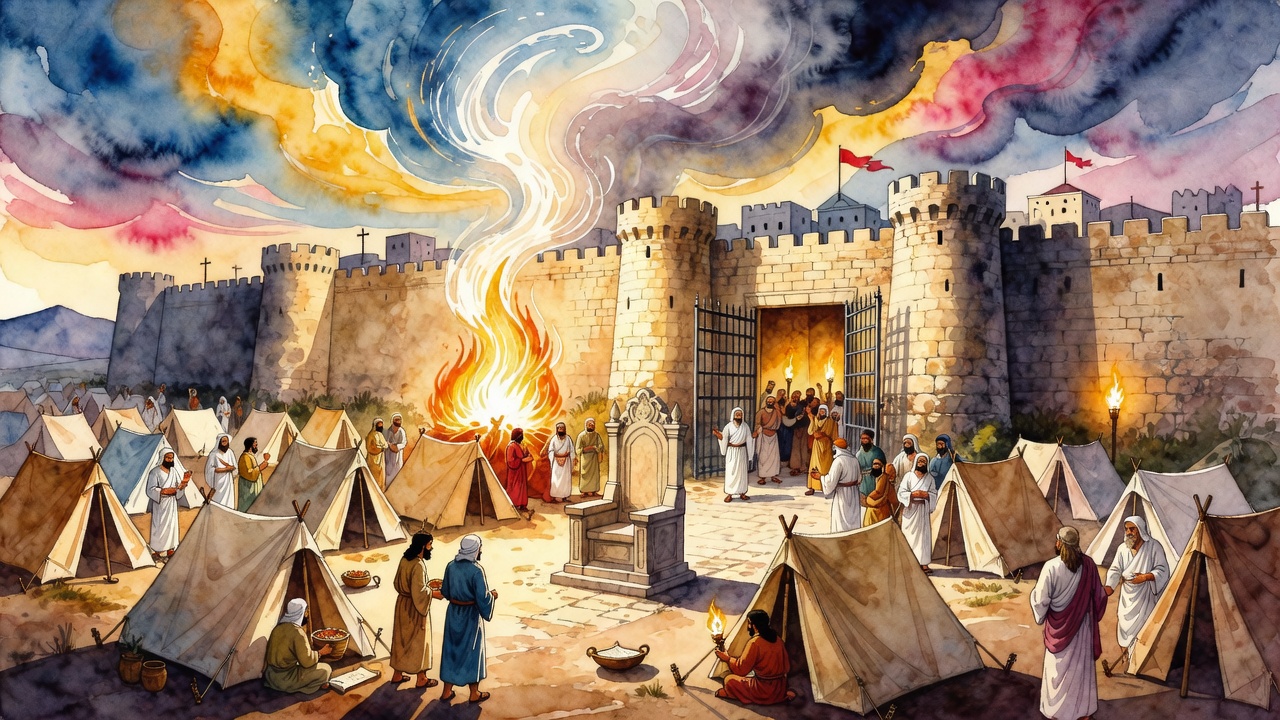
Israel camped before a walled city and spent two days offering terms, while inside the gates men argued whether tribute and service were better than the sword.
Table of Contents
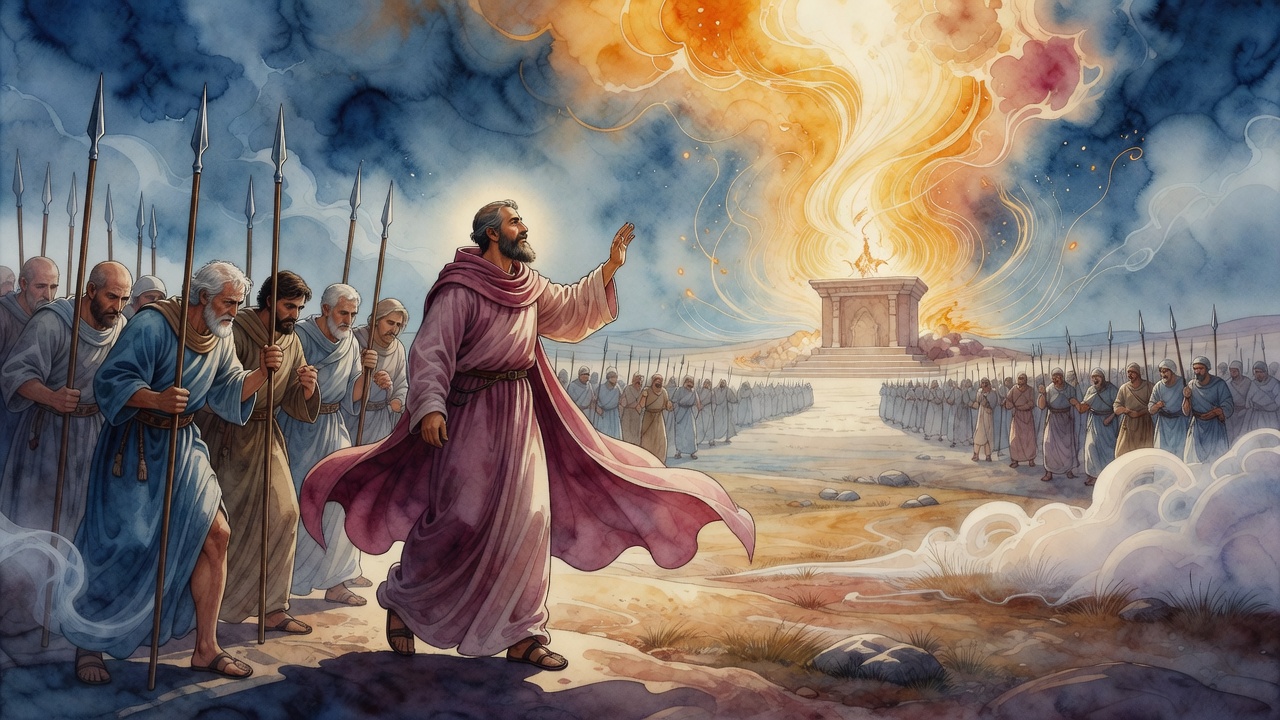
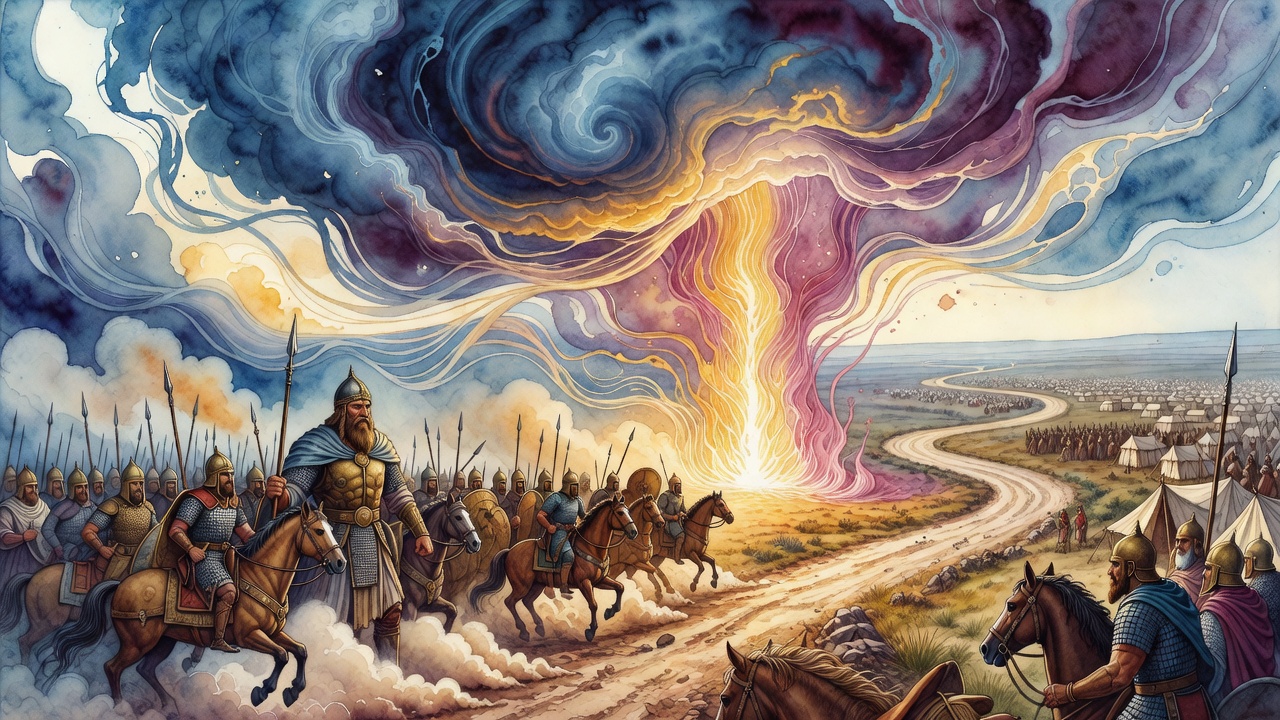
Heralds walked toward the closed gates with no armor on their chests and dust on their tongues. Behind them the Israelite camp waited with ladders still unstrapped and horses nosing empty feed bags. The city wall threw a long shadow across the road like a second army lying down to rest before it stood again as stone.
 Click for full size
Many Days Mean Two, Then a Third
"When you approach a city to wage war on it, you shall call out to it for peace" (Deuteronomy 20:10). The midrash turned "many days" into a count a soldier could feel in his bones and complain about in the heat: two days for the offer, and on the third the siege may begin. The teachers admitted the count was an intimation more than an iron proof text, and still they held it, pointing toward David's arrival at Ziklag on the third day as a narrative echo that made the number feel older than their debate (I Samuel 30:1).
On the first day the heralds spoke terms until their voices went rough. On the second day they spoke again while dust settled on the same words and a crow walked the wall as if bored. Inside, men argued in a language the camp could not hear, hands cutting the air, elders shaking heads, young fighters spitting toward the road.
No stone was thrown yet. Waiting was its own weapon, and also its own test of whether Israel could obey a pace that felt slower than rage.
A boy in the camp asked why they did not simply climb. His uncle said, "Because the law climbs first with a mouth, not a ladder."
Tribute and Service, Not Half a Peace
Even Canaanites inside a city, the midrash insisted, could be found among "all the people" who might accept terms. The phrase did not let hatred erase the possibility of a bargain. If they made peace, they would be tribute and they would serve. One without the other was not peace. Tribute without service, or service without tribute, was a bargain the camp was told not to trust, a half-yoke that would slip when the season changed.
A merchant on the wall spat when he heard both demands. A father of three closed his eyes and calculated grain against the lives of sons who liked to talk of glory. Peace under a yoke is still not a sword in the street. The calculation hurt and remained real, more adult than the songs the young men wanted.
If the city refused, the text warned, war would come, and the warning itself was part of the ethics: do not pretend surprise when the gates stay shut after two days of open speech. Scripture, the midrash said, apprises you of the refusal before the first ladder touches stone.
In the camp a runner waited for a signal that did not come on the first evening. He slept badly with his hand on a strap.
Victory with a Condition
"The Lord your God will deliver it into your hands," the verse promised, and the midrash stapled a condition to the promise like a seal on a deed: if you do what was instructed. Divine help was not a blank check written for any cruelty that called itself Israel and waved a banner. Conduct first. Delivery second. The same condition followed into the laws of captives and the limits that still bound the winner's hands.
A young fighter wanted the third day immediately, cheeks hot with the insult of waiting. An older officer held him by the strap until the leather creaked. "Two days," he said. "You do not get to be hungrier than the law."
Sabbath edges entered the same teaching like a second clock. Do not start a siege so close to Shabbat that holy time is forced into the first chaos of assault. A long sea voyage had a similar caution in the midrash's widening of "many days." War and travel both had to respect the calendar that made Israel more than a pack of winners with good aim.
The young fighter sat down hard enough to raise dust. Hunger for battle is also a kind of fear, dressed in forward motion.
The Third Morning
On the third morning the gates stayed closed. The heralds walked back without their earlier patience, shoulders tighter, mouths done with courtesy. Ladders came off the carts. The wall looked the same and felt different, as if stone could sense when speech had ended and only weight remained.
Inside, some had wanted terms. They lost the argument to pride, or to fear of their own kings, or to a bet that the camp would tire and leave. The camp did not tire in the way they hoped. It had been ordered to wait, and waiting had become part of its discipline rather than a leak in it.
What followed belonged to the hard laws of capture and the limits that still bound Israel even in victory, including who could be taken and how a captive woman would later sit in a house and mourn. The two days of peace remained in the story as a ridge the army had to climb before it was allowed to become only force.
At dusk of the second day, before that third morning, a child on the wall had watched the heralds and asked whether the men outside preferred talking to winning. His father said, "They prefer winning the way they were told to win." The child did not understand. The midrash does, and keeps the two days so later camps cannot skip the mouth and go straight to the ladder without feeling the skip as a sin against their own instruction.
← All myths