God Entered the War Camp That Still Needed Peace
Israel marches to war and the Torah stops the column. Remember the desert, send home the man with an unfinished house, offer peace before drawing a sword.
Table of Contents
 Click for full size
The Desert God Marched With the Army
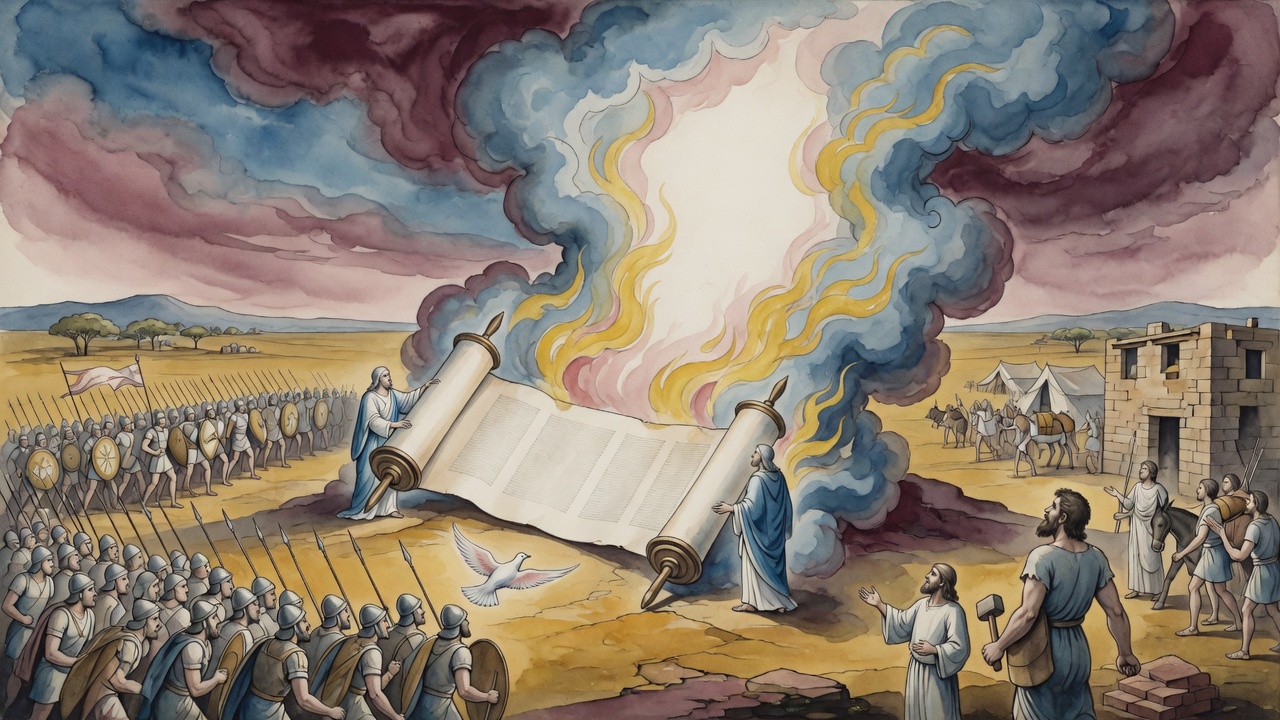
The men of war gathered and the trumpet was ready and the officers took their positions at the edge of the column. Before the advance began, the Torah spoke a reminder. The God who goes with you to war is the same God who walked with Israel through forty years in the desert. Sifrei Devarim, the tannaitic midrash on Deuteronomy, hears memory inside Deuteronomy's promise. The desert was not a clean triumph. It was hunger and thirst, rebellion and manna, water from rock and graves in the wilderness. Israel had learned in the desert that survival did not come from its own resources. The cloud moved and the people followed. The manna arrived each morning. The water came when it was struck from stone. An army that forgot that history and marched with only its own strength was already in danger before the first enemy appeared. The God who went with them to war was not the God of victories alone. He was the God of forty years in the wilderness, which meant He was the God who kept an exhausted and difficult people alive when they could not keep themselves alive.
The Man With an Unfinished House Went Home
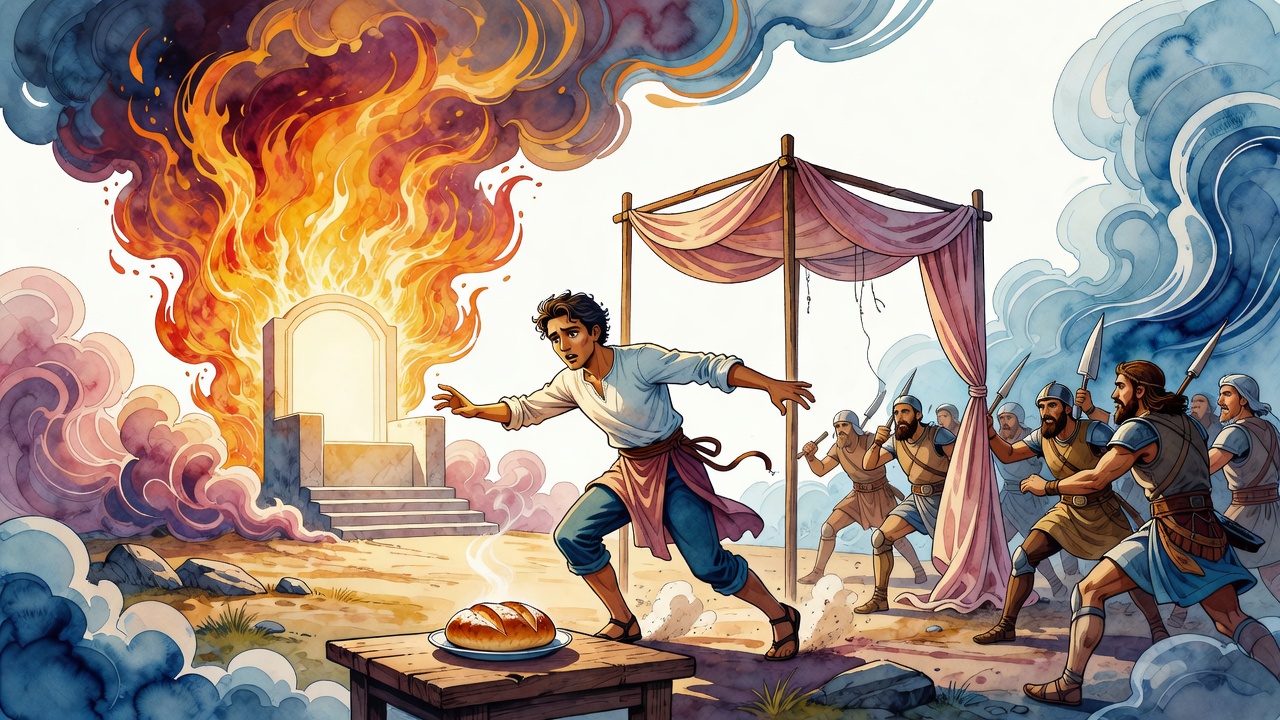
Before the battle line was set, the officers called out to the assembled men. Who has built a new house and not dedicated it? Let him go and return to his house, lest he die in battle and another man dedicate it. Who has planted a vineyard and not yet eaten from it? Let him go. Who has betrothed a woman and not yet married her? Let him go. The exemptions accumulate into a principle. The army that God enters must make room for unfinished life. A man who has a house without a mezuzah, a vine he has not yet blessed, a woman he has not yet stood beneath the wedding canopy with, that man has obligations that the army cannot absorb. Sifrei Devarim reads the exemptions not as military pragmatism about morale but as theological insistence that war cannot claim every dimension of human life. Life in its ordinary forms, building, planting, marrying, has a claim that even the army must respect. The camp cannot become a world where the ordinary has no standing.
A City That Answered for Peace Was Not to Be Destroyed
When Israel approached a city to fight against it, they were commanded to proclaim peace first. If the city answered with peace and opened its gates, all the people would become conscripted laborers and the city would be spared. If it refused and war followed, every male would be killed, but the women, children, livestock, and plunder would be taken alive. The law draws a sharp line between the city that answers and the city that refuses. Sifrei Devarim extends the logic: the offer of peace was not a formality or a diplomatic gesture before inevitable destruction. It was a real offer. The city that accepted it survived. The tradition asked why peace was offered even to the enemy, and the answer was that the same God who commanded the camp to stay ritually pure also commanded the camp to offer its adversary a way out of death. Justice did not require destruction when surrender was possible. The army that God entered was still bound by the terms God had set.
Guard Yourself Against Every Evil Thing
And you shall guard yourself against every evil thing. Sifrei Devarim read that verse carefully, because its scope was unusual. In the camp of war, where standards of conduct loosened, where proximity to death made the ordinary categories feel suspended, the Torah reasserted the ordinary categories. A man who had a nocturnal emission left the camp and did not come back until evening, when he had washed with water. A person with a skin condition had its rules in wartime just as at home. The prohibition on eating certain things did not pause for a military campaign. The holiness that the camp had been commanded to maintain was not holiness reserved for the Temple court or the Shabbat table. It was holiness that had to hold together even in the most extreme human situation, precisely because that was where it was most likely to be abandoned.
Washing Toward Evening Was the Last Boundary
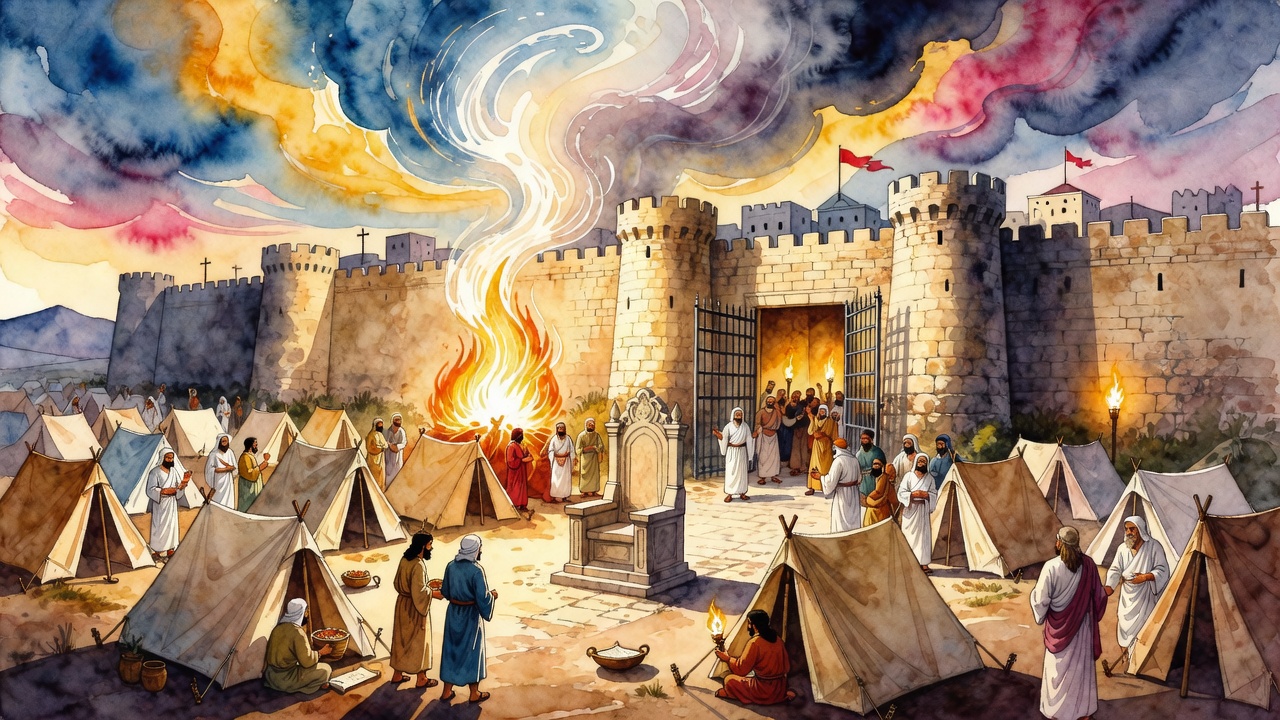
You shall wash yourself toward evening and return to the camp at sunset. The man who had become impure went outside the camp, remained there through the day, and at evening washed and returned. The day's boundary was the water. The camp's boundary was the evening. Sifrei Devarim finds in this small regulation the myth of the whole section: that a camp of war is holy ground because God is present in it, and holy ground requires boundaries. The ark that traveled with the army, the priests who administered the camp's purity, the exemptions for unfinished houses and unplanted vines and unbetrothed women, all of it served the same principle. God had entered the camp. The camp had therefore become a place where the full weight of covenant law applied. The warrior who went out in the morning was obligated not only to fight but to return clean toward evening, because the camp he was returning to had a holy presence inside it that could not be profaned without cost.
← All myths