5 min read

The Old Man Planted Figs for Hadrian and His Heirs

Near Tiberias a hundred-year-old man digs holes for trees he may never taste. Hadrian mocks him, then fills his fig basket with gold when fruit arrives.

Curated by Arthur · Told by Maggid ·
Table of Contents
  1. A Hundred Years and a Spade
  2. A Basket at the Palace Gate
  3. The Neighbor Who Copied the Wrong Half
  4. What Kings Build, What Old Men Plant
The Old Man Planted Figs for Hadrian and His Heirs Click for full size

A Hundred Years and a Spade

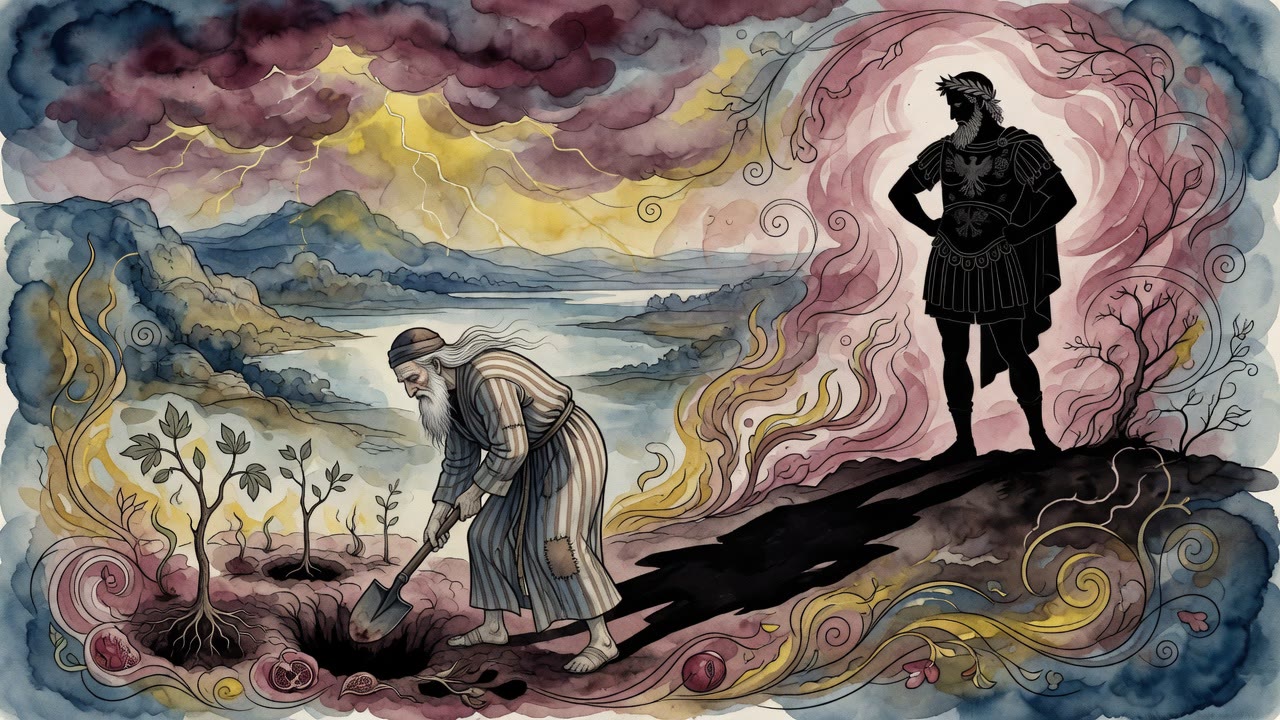
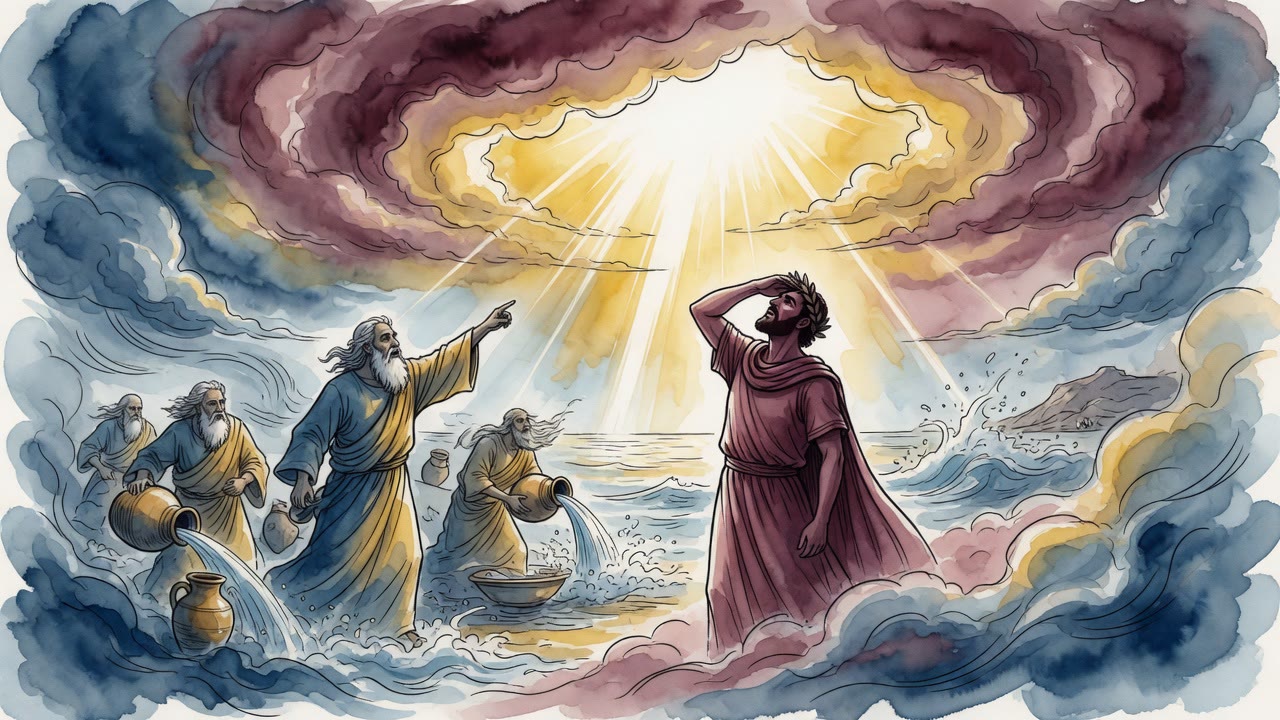
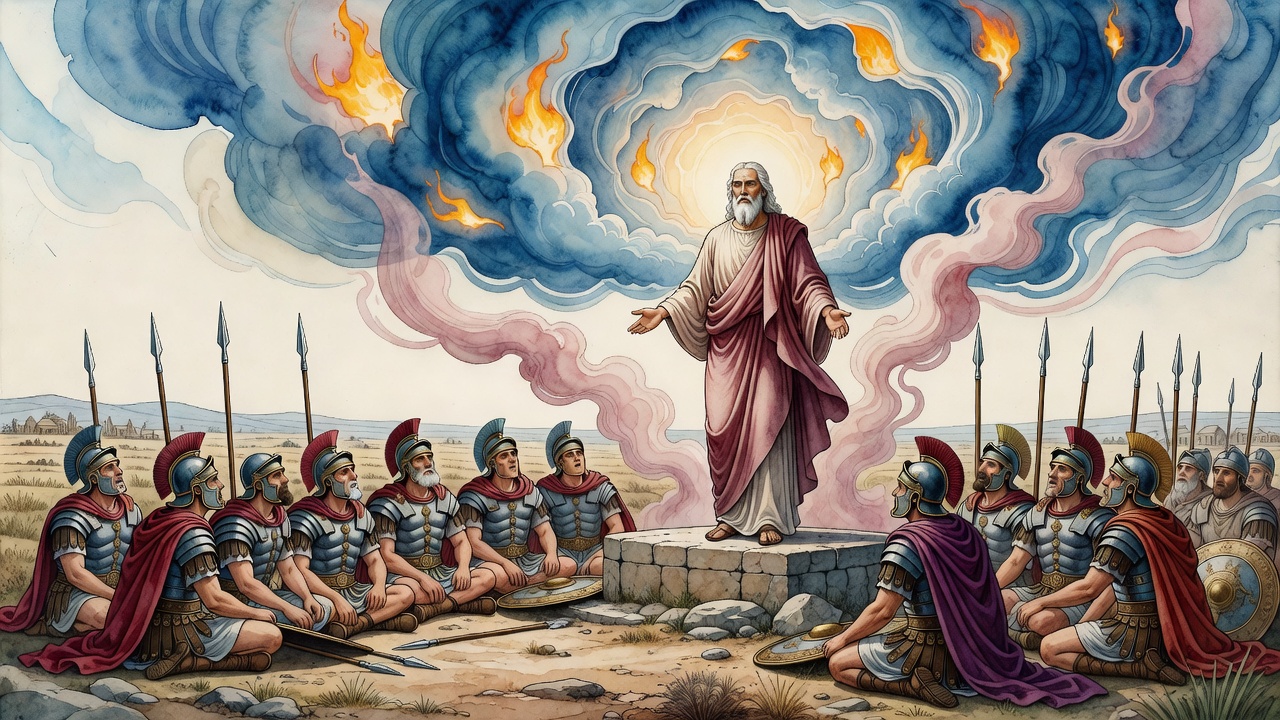
Near Tiberias an old man bent over rocky soil and set trees. Roots sought cracks. His back made a shape like a question mark the empire could not answer. Hadrian, may his bones be crushed, stopped his train and asked the planter's age. One hundred years. The emperor laughed the practical laugh of men who measure only their own mouths. "You plant at a hundred? Do you think you will eat their fruit?"

The old man did not straighten into a speech. Dirt stayed under his nails. "If I merit it, I will eat. If not, then just as my ancestors toiled for me, so I toil for my children." Hadrian, still half amused, told him to report if the trees ever paid. The horses moved on in a glitter of metal. The spade kept biting stone as if the conversation had been weather.

Neighbors shook their heads. Rome had mocked. The old man planted another row.

A Basket at the Palace Gate

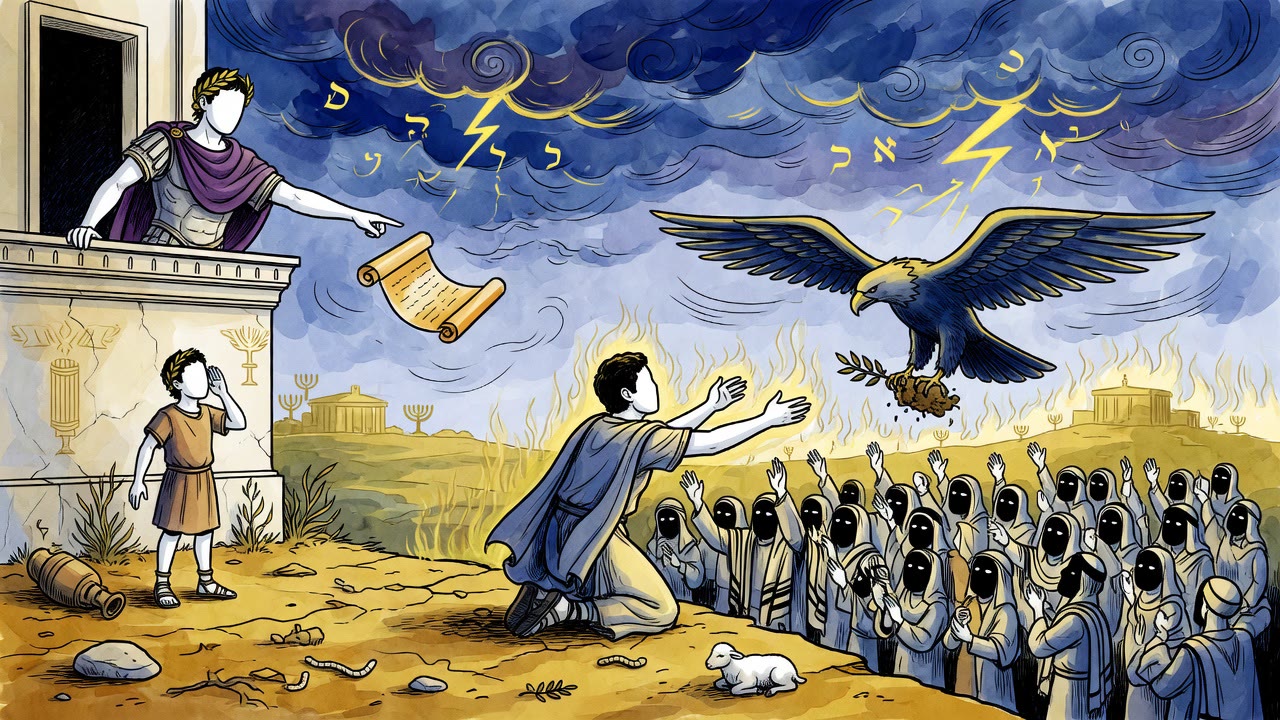
Seasons turned. Rain found the roots. Figs came soft and dark. The old man filled a basket and walked to the palace because a promise, even to a mocker, is still a promise. Servants stared. An elderly Jew with fruit in his hands asking for the emperor looked like a joke that had forgotten its punchline. Hadrian remembered. He ordered the basket emptied of figs and filled with dinars until the weave strained.

His court objected to the honor as if gold were a theology they guarded. Hadrian answered without textbooks. "His Creator honors him; will I not honor him?" Gold rode home where figs had ridden out. The planting had fed both heirs and the planter's own late mouth. He tasted the fruit first, then spent the coins without needing to explain the joke to anyone who had not held a spade at a hundred.

The Neighbor Who Copied the Wrong Half

A neighbor's wife heard gold for figs and shoved her husband into the same market with a greedy load, figs thrown together without a story. He arrived without a hundred years, without a vow kept across seasons, only with fruit and appetite. Hadrian set him at the gate. Everyone who entered or left threw figs at his face until the pulp ran into his collar. He went home sticky with the wrong kind of honor, complaining to the wife who had sold him a shortcut.

The midrash loves the slapstick because it sharpens the first man. Legacy is not a trick that works for copycats. It is a long debt paid forward, then sometimes, surprisingly, paid back in metal and sweetness to the one who never treated either as the point.

Children watched both men and learned two lessons: plant for those who come after you, and do not mistake an emperor's purse for a vending machine.

What Kings Build, What Old Men Plant

Solomon once increased actions, built houses, planted vineyards in Baal Hamon, raised an ivory throne that made lesser kings feel short. Kohelet still asks what the worker gains from toil under the sun when thrones empty and silver stacks like stones that cannot love you back. Palaces answer with weight and fame. The Tiberias planter answers with a hole in hard ground and a child who will someday taste what a dead hand set in motion.

Hadrian could crush bones and still recognize a Creator's stamp on a stubborn gardener. The old man could die between planting and harvest and still call the work successful. Between empire and orchard, the myth chooses the orchard, then lets empire briefly bow when the figs come in on time.

Years later someone still picks fruit from those lines of trees and does not know the name of the man who dug. That anonymity is part of the harvest. The spade's true crop is a future mouth, not a plaque.

He watered when the rains delayed. He staked a sapling the wind tried to twist. On market days he sold other goods and came home to check the young bark for pests, as if Rome's mockery had been fertilizer. His children learned the rows by walking them. His grandchildren would argue over which tree was the first, and no one would quite agree, which is how living memory prefers to work.

When the basket of gold came home, he did not plant coins. He planted more trees. The emperor had understood one half of the lesson: honor the man heaven honors. The old man kept the other half: the point of the fruit is the mouth that is not yet born.

Travelers on the Tiberias road still saw him in the early years after the gold, bent again, as if wealth were only another weather to plant through.


← All myths
From the tradition

Sources

3 sources

The texts behind this telling. Some cards carry a translation of the source; others are our own retelling of it, and each card says which. Every card links out to the original.

Kohelet Rabbah 2:20Kohelet Rabbah

Retold in our words. Read the original at the link below.The Sefaria Midrash Rabbah, 2022 · CC-BY

"I turned my heart to despair regarding all the toil that I toiled under the sun," it says (Ecclesiastes 2:20). It's a sentiment that resonates even today.

Kohelet Rabbah, a collection of rabbinic interpretations of Ecclesiastes, offers a powerful counterpoint to that despair. It suggests that even when we feel like throwing in the towel, we should remember that we're part of a chain, a legacy of effort that extends far beyond our own lives.

How, you ask? With a story, of course!

The Roman Emperor Hadrian – may his bones be crushed, as the text pointedly adds – is traveling near Tiberias when he sees an old man digging in the rocky soil, planting trees. Hadrian, ever the pragmatist, asks the man how old he is. "One hundred years old," comes the reply.

Hadrian is incredulous. "You, a hundred years old, are planting trees? "

The old man's answer is profound. "If I merit it, I will eat. If not, then just as my ancestors toiled for me, so I toil for my children."

What a powerful statement about intergenerational responsibility! It's a concept deeply embedded in Jewish thought. We see it echoed throughout our texts, from the stories of our patriarchs and matriarchs to the laws concerning inheritance and legacy. We are planting seeds for a future we may not see ourselves.

Hadrian, clearly intrigued, tells the old man, "If you do get to eat of them, let me know."

Time passes, and the trees bear fruit. The old man, true to his word, fills a basket with figs and goes to the palace to greet the emperor. Now, can you imagine this scene? An old Jewish man, approaching the most powerful ruler in the world with a basket of figs? The audacity!

Hadrian is impressed, perhaps even touched by the man's integrity. He orders the basket to be emptied and filled with dinars – gold coins! His servants are shocked. "Are you really going to give so much honor to this old Jewish man?" they ask.

Hadrian’s reply is telling: "His Creator honors him; will I not honor him?" He recognizes the inherent worthiness and dignity of this man, a man who embodies the spirit of perseverance and dedication to future generations.

But here's where the story takes a comedic, almost farcical turn. The old man's neighbor's wife, described as an "imbecile," gets wind of this transaction. She convinces her husband that the king loves figs and exchanges them for gold. So, the husband fills a container with figs and heads to the palace, hoping to strike it rich.

Of course, it doesn't go as planned. Hadrian, recognizing the man's greed and lack of genuine intention, orders him to be placed at the palace gates, where everyone entering and exiting throws figs at his face. Ouch!

The humiliated man returns home, complaining to his wife about the "honor" he received. Her sarcastic reply? "Go and boast to your mother that they were figs and they were not citrons, that they were ripe and were not unripe!" (Kohelet Rabbah 2:20). The implication, as the text explains, is that ripe figs are softer than citrons or unripe figs, making the experience all the more unpleasant.

What does this tale from Kohelet Rabbah ultimately tell us? It’s more than just a funny anecdote about figs and emperors. It's about the value of selfless work, about contributing to something larger than ourselves, and about the importance of intention. The first old man toiled with a vision for the future. The second just wanted a quick buck. Guess who got the gold?

As we go about our day, let’s remember the old man planting trees. Let's remember that even the smallest act of kindness, the most seemingly insignificant effort, can have a lasting impact on generations to come. And maybe, just maybe, we too will merit to taste the sweet fruits of our labor.

Full source
Kohelet Rabbah 4:1Kohelet Rabbah

Retold in our words. Read the original at the link below.The Sefaria Midrash Rabbah, 2022 · CC-BY

King Solomon, the wisest of all men, certainly grappled with that question. And in the book of Ecclesiastes, or Kohelet, he gives us a glimpse into his own striving.

The verse Simple enough The first reading. But within those words lies a whole world of ambition, legacy, and the search for meaning. Kohelet Rabbah, the rabbinic commentary on Ecclesiastes, unpacks this verse with a deep dive into Solomon's motivations.

"I increased my actions," Solomon declares. Now, what does that even mean? According to the Rabbis in Kohelet Rabbah, Solomon wasn't just puttering around. He was actively trying to outdo his ancestors. He saw himself as building upon their foundations, reaching for something even grander. It's like he was saying, "My accomplishments will be greater than those who came before me." Pretty ambitious, wouldn't you say?

What was the proof of this increased action? Well, think of that magnificent ivory throne described in (1 (Kings 10:1)8): "The king crafted a great ivory throne." This wasn't just any old chair. It was a symbol of power, of artistry, of unparalleled craftsmanship. It represented Solomon's desire to create something truly awe-inspiring.

Then comes the line, "I built myself houses." And the commentary points us to (1 (Kings 9:1)0): "It was at the end of twenty years, when Solomon had built the two houses." Now, these weren't just any houses either. We're talking about the Temple in Jerusalem, the house of God, as well as his own royal palace. Talk about leaving your mark on the real estate market! He wasn't just building structures; he was building a legacy, evidence of his reign.

And finally, "I planted myself vineyards." Ah, vineyards. The source for wine, for celebration, for life! (Song of Songs 8:11) mentions: "Solomon had a vineyard in Baal Hamon." Baal Hamon, a place known for its abundance. This detail tells us that Solomon wasn't content with just a small garden. He wanted vast, fruitful lands, symbolizing prosperity and the good life. These vineyards weren't just about grapes; they were about cultivating a flourishing kingdom.

So, what do we take away from all of this? Solomon, in his wisdom (and perhaps his vanity), was striving for greatness. He wanted to build, to create, to leave behind a legacy that would last for generations. But did all this building and planting ultimately bring him happiness? That's a question for another time, and another explore Kohelet. But for now, let's consider: what are we building? What kind of legacy are we hoping to leave behind? Are we increasing our actions in a way that truly matters?

Full source
Kohelet Rabbah 9:1Kohelet Rabbah

Retold in our words. Read the original at the link below.The Sefaria Midrash Rabbah, 2022 · CC-BY

The rabbinic commentary on it, Kohelet Rabbah, digs even deeper.

" (Ecclesiastes 3:9). It's a question King Solomon, traditionally believed to be the author of Ecclesiastes, poses. If everything has its appointed time, what good is a craftsman's skill, or an upright person's integrity? Are we just subject to random good or bad fortune, regardless of our efforts?

One answer offered by Kohelet Rabbah suggests something more profound. It's not about random chance, but about alignment. "Each and every person is situated only with those whose actions are like his." In other words, birds of a feather flock together – both in this world and in the World to Come. People whose righteousness is similar receive a similar portion in the afterlife.

This idea is then beautifully illustrated with a quote from Habakkuk: "The righteous one will live by his faith" (Habakkuk 2:4). Rabbi Yitzḥak ben Rabbi Maryon takes this a step further, saying that even the eternal Righteous One, meaning God, is sustained by His faithfulness. The Midrash (rabbinic commentary) then interprets God's words: "Initially, I killed the Egyptian firstborn... so, too, every firstborn that will be born to you, you shall consecrate to me... due to My faithfulness." (Exodus 12:29, 13:2). It’s a powerful connection between divine faithfulness and our own actions.

Rabbi Pinḥas, citing Rabbi Reuven, shares a parable to further illuminate this point. He invites guests, but with a catch: each guest must bring something to recline on. Some bring rugs, others mats, blankets, pillows, even chairs. But some bring only logs and stones! The king, seeing this motley assortment, decrees that each guest must recline on what they brought.

Naturally, those stuck with logs and stones are unhappy. They complain, "Is this befitting the honor of a king, that we should be sitting on logs and stones?" But the king responds, "Is it not enough that you tarnished the palace with [your] logs and stones… but you are also impudent to me…? Your 'honor' was achieved only by you, yourselves."

The parable then connects to the future judgment. The wicked, sentenced to Gehenna (hell), will complain, "We were anticipating the salvation of the Holy One blessed be He, and this befell us?" But God will retort, "When you were [alive] in the world, were you not quarrelsome, slanderers, and evildoers?" As it says in (Isaiah 50:11), "go in the flame of your fire, and among the firebrands that you kindled." Don't blame God for your fate, the Midrash emphasizes; you brought it upon yourselves.

Finally, the text shares a story about Rabbi Shimon ben Lakish, a scholar engrossed in Torah study in the forest of Tiberias. A local potter faithfully brings him water each day. One day, the potter sits with the Rabbi, reminiscing about their childhood when they studied Torah together. He laments that while the Rabbi has achieved spiritual greatness, he has not. He pleads, "Pray for me that my portion will be with you in the World to Come."

But Rabbi Shimon's response echoes the central theme: "What will I pray for you that you should have it? You will come with people whose actions are like yours. Each and every person is situated only with those whose actions are like his."

So, what does it all mean? Kohelet Rabbah, through these stories and interpretations, suggests that our actions have consequences, not just in this world, but in the world to come. It's not about random luck, but about the choices we make and the kind of people we become. We create our own "reclining place," so to speak. What are you bringing to the feast? What kind of company are you keeping, and what kind of company are you becoming?

Full source