5 min read

The Philosopher Who Asked If Idols Anger God

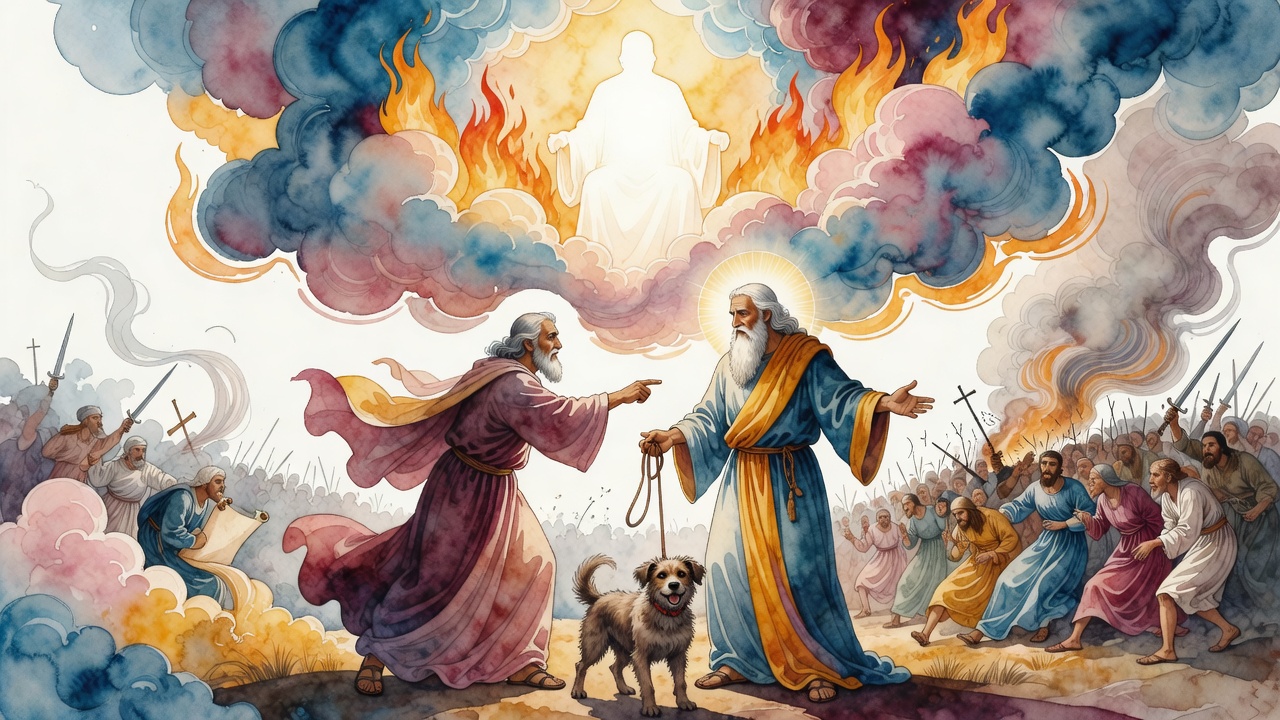
A fire burned a whole province and left the idol house standing. The philosopher thought that settled it. Rabban Gamliel asked him about a dog.

Curated by Arthur · Told by Maggid ·
Table of Contents
  1. The Philosopher Came to Argue
  2. The Son Who Named a Dog After His Father
  3. The Fire That Spared the Idol House
  4. Then Why Not Wipe Them Out
  5. The King Who Went Looking for Saplings
The Philosopher Who Asked If Idols Anger God Click for full size

The Philosopher Came to Argue

A philosopher came looking for Rabban Gamliel with a line from somebody else's book ready in his mouth. It is written in your Torah, he said, that the Lord your God is a jealous God.

Then he laid out the trap, and he laid it out well. Jealousy runs between equals. A sage envies a sage. A rich man envies a rich man. Nobody envies what is beneath him. So if your God burns with jealousy over a carved log, he said, the log must be worth something to Him. Admit that much and the whole of your Torah tilts.

Students had stopped to listen. Gamliel did not go up into the heavens for an answer. He told a story small enough to carry home from the market.

The Son Who Named a Dog After His Father

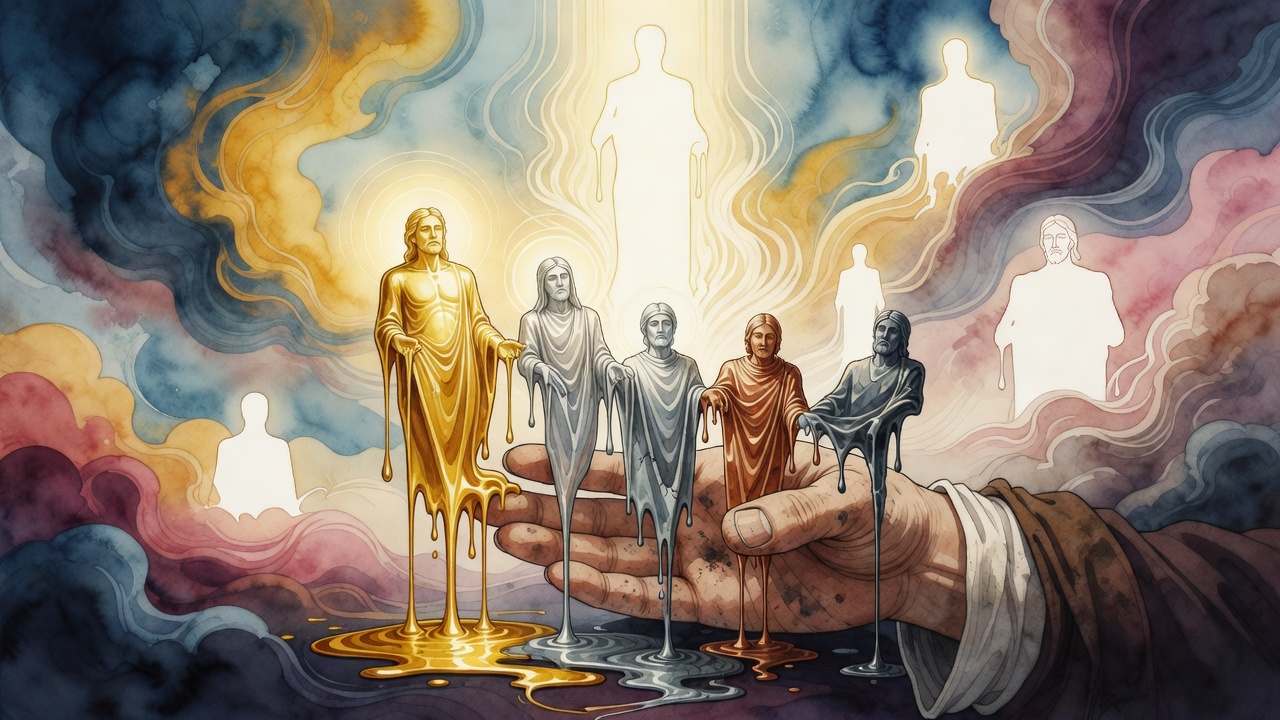
A man has a son, and the son takes the family dog and gives it his father's name. Then he bows down in front of the animal in the courtyard where the neighbors can see, and swears an oath on it. By the life of this dog, my father.

Gamliel let that sit.

Now, he said, when the father comes out and finds them, who is he angry with? The dog, or the son?

The philosopher had come to give the idol a role, even the role of a rival. Gamliel would not give it a role at all. Anger needs somebody who understood the insult. Wood does not understand. The boy bowing in the courtyard does.

The Fire That Spared the Idol House

"You call it a dog?" the philosopher said. "Is there no need at all for the thing?"

"What did you see that makes you say so?"

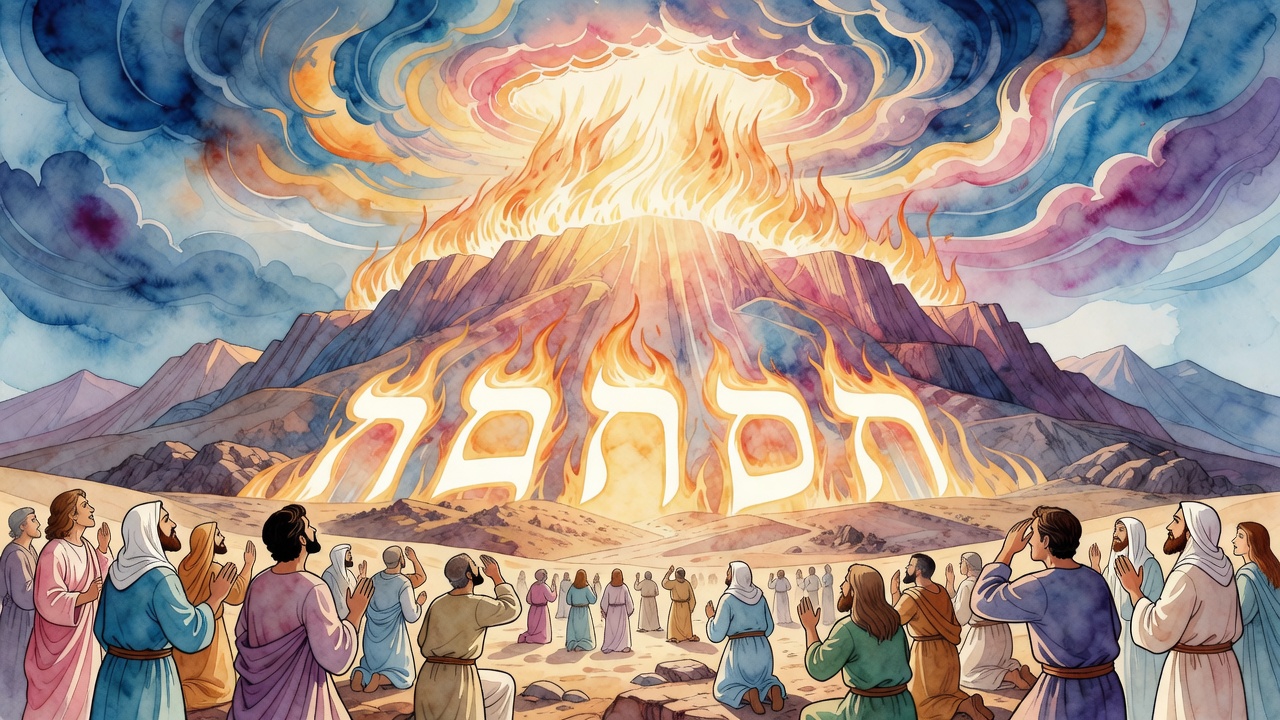
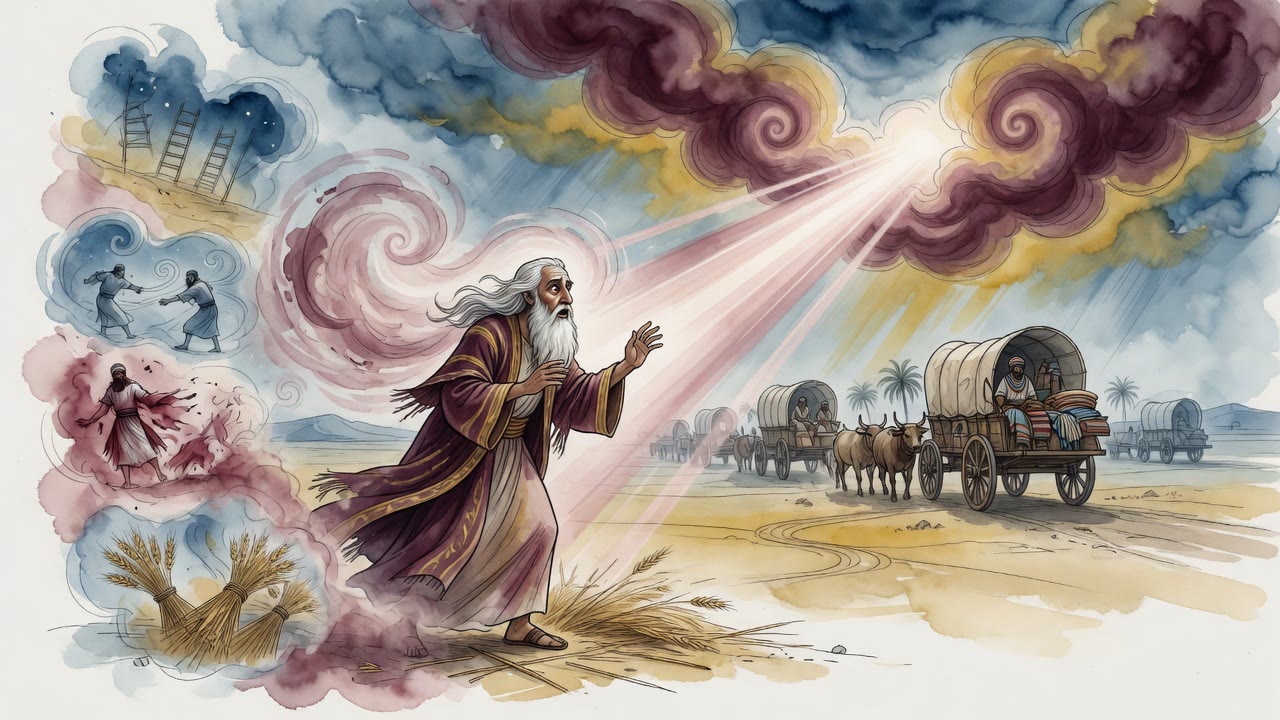
He had seen it, that was the answer. A fire had gone through a whole province, house after house down to ash, and when the smoke cleared the temple of the idol was still standing there untouched. Did the idol not stand up for itself? Did it not save its own house?

Gamliel came back with a king. A king of flesh and blood goes out to war. Who does he fight, the living or the dead?

"The living."

That was the whole answer, handed to the philosopher in his own voice. Heaven does not march against timber. A shrine left standing in a burnt field proves nothing about the god inside it. Corpses also survive battles they were never in.

Then Why Not Wipe Them Out

The philosopher shifted his ground. If God has no use for these things, why does He not destroy them? Break the statues, split the shrines, and the argument ends.

Gamliel asked him whether he worshipped only one thing.

Because it was not only statues, and both of them knew it. Men bowed to the sun and to the moon. They bowed to the stars and to the shapes the stars make. They bowed to mountains and hills, to streams and to the ravines cut by water, and they bowed to other men who let them do it.

Burn all of that and there is no world left. Shall God destroy His world, Gamliel asked, because of fools?

The philosopher had nothing to put after that.

The King Who Went Looking for Saplings

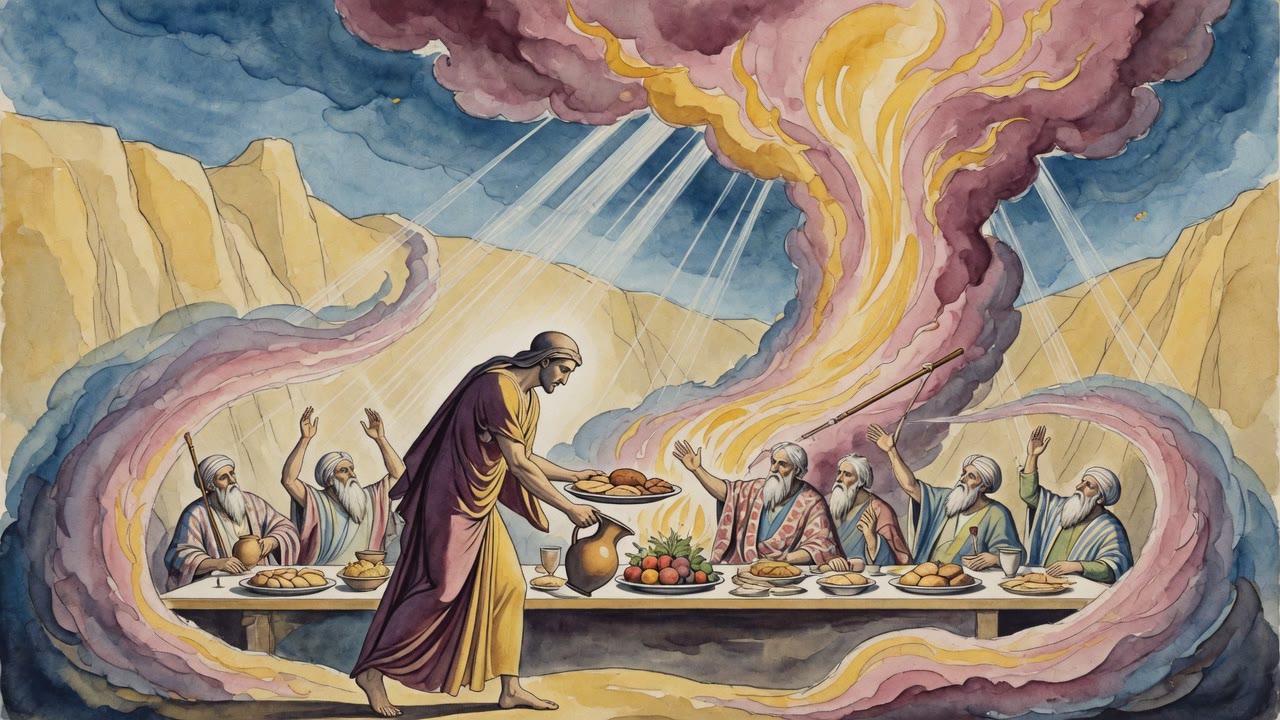
What God does instead is closer to gardening. A king plants an orchard, rows of nut trees and apple trees and pomegranates, and hands it to his son. While the son works the ground properly, the king walks the wider world looking for one beautiful sapling somewhere else, digs it up, and carries it back to plant among his son's trees. When the son lets the orchard go, the king walks into the rows and takes the finest tree out.

Yitro was one of the transplanted ones. He had been a priest in Midian, standing in front of altars of his own, and then word reached him about a sea that opened and a people that walked out of Egypt, and he came into the wilderness camp and said out loud that now he knew the Lord was greater than all the gods.

Rahab was another. She lived in the wall of a city under sentence, hid two spies under the flax drying on her roof, sent the king's men off down the wrong road, and tied a scarlet cord in her window while everything around her came down.

Neither of them was a shrine that survived a fire. Both of them were living, and both of them turned. That is the war God fights, house by house, while the statues keep the one power they ever had, which is silence.


← All myths
From the tradition

Sources

2 sources

The texts behind this telling. Some cards carry a translation of the source; others are our own retelling of it, and each card says which. Every card links out to the original.

Mekhilta Tractate Bachodesh 6:21Mekhilta DeRabbi Yishmael

Retold in our words. Read the original at the link below.Mechilta, translated by Rabbi Shraga Silverstein · CC-BY

A certain philosopher asked R. Gamliel: It is written in your Torah "for the L–rd your G–d is a wrathful G–d." Now is there power in idolatry to arouse wrath (in G–d)? One here is envious of another; one sage is envious of another, one man of wealth is envious of another. But is there power in idolatry to arouse wrath (in G–d)? He answered: If a son called a dog by his father's name, and when he bowed, he did so "by the life of this dog" ("father'), against whom will the father's wrath be aroused? Against the son or the father? He (the philosopher) then said to him: Do you call it (idolatry) "a dog"? Is there not a need for some of it? He answered: What did you see (that makes you think so)? He answered: A fire once consumed a certain province except for their house of idolatry. Is it not that it (the idolatry) stood up for itself? R/ Gamliel: I will give you an analogy. A king of flesh and blood, when he goes out to war, with whom does he fight? With the living or with the dead? The philosopher: With the living. The philosopher (asks further): If He does not need some of it (i.e., those things which are the object of idolatry), why does He not destroy them? R. Gamliel: Do you serve only one thing? You serve the sun, the moon, the stars, the constellations, the mountains, the hills, the water courses, the ravines, and even men! Shall His world go lost because of the fools?

Full source
Shir HaShirim Rabbah 2:3Shir HaShirim Rabbah

Retold in our words. Read the original at the link below.The Sefaria Midrash Rabbah, 2022 · CC-BY

Jewish tradition often uses metaphors to help us understand our place in the world, our relationship with God, and the destinies of nations.

Take this story, as told by Rabbi Shmuel bar Naḥman in Shir HaShirim Rabbah, a collection of rabbinic interpretations of the Song of Songs. It paints a vivid picture using the image of a king and his orchard.

A king, a powerful ruler, who owns a beautiful orchard. This isn't just any orchard; it's filled with rows of nut trees, fragrant apple trees, and vibrant pomegranate trees. He entrusts this precious orchard to his son, placing upon him the responsibility to care for it.

Here’s the interesting part. The king isn't just passively observing. He’s actively involved. When his son acts in accordance with the king's will – when he cultivates the orchard with care and dedication – the king searches the entire world for the most beautiful sapling he can find. He uproots it from its original location and lovingly replants it in his son’s orchard. It's a reward, a blessing, an infusion of new life and beauty.

But what happens when the son strays from the path, when he neglects the orchard or acts against his father's wishes? The king's actions take a different turn. Now, he looks within the orchard itself. If he sees a sapling that is particularly beautiful, strong, and promising, he uproots it and removes it from the orchard.

What does this mean? Rabbi Shmuel bar Naḥman explains that this is a metaphor for the relationship between God, the Jewish people, and the rest of the world. As long as Israel fulfills the will of HaKadosh Baruch Hu, the Holy One, Blessed be He, He seeks out righteous individuals from among the nations. Think of figures like Yitro, the father-in-law of Moses, or Rahab, who helped the Israelite spies in Jericho. God brings these individuals and attaches them to the people of Israel, welcoming them into the fold.

But when Israel doesn't fulfill God’s will, when they stray from the path of righteousness, God takes righteous individuals from them. He sees who among them is upright, proper, and God-fearing, and He removes them.

The story in Shir HaShirim Rabbah presents a dynamic relationship, one that's constantly shifting based on our actions. Our choices have consequences that ripple outwards, affecting not only ourselves but also our connection to the Divine and our relationship with the world around us.

What does this story tell us about our responsibility? About the importance of striving to live a life of meaning and purpose? Perhaps it’s a call to look inward, to cultivate our own "orchard" with care and intention, so that we may merit the blessings of growth and connection.

Full source