Akiva Told Pappus to Stop Before He Ruined the Verse
Pappus read Adam as an angel and the calf as a star. Akiva would not let either verse climb off the ground where the sin happened.
Table of Contents
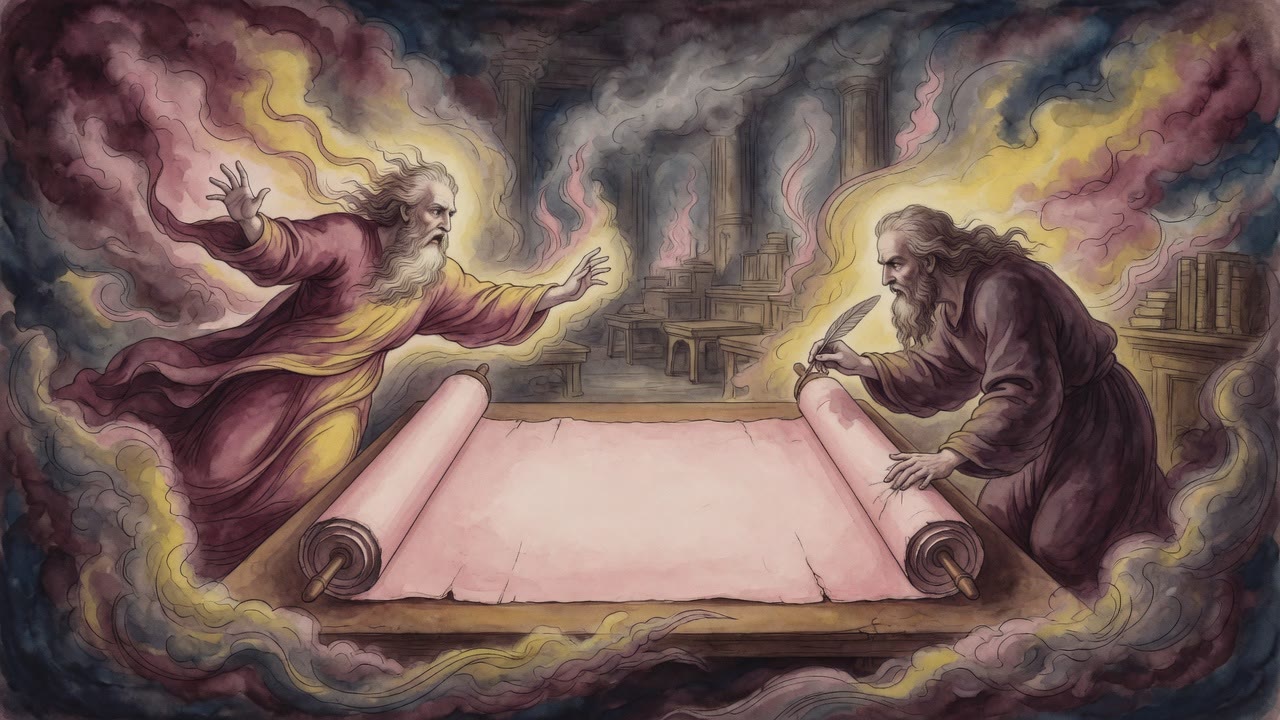
Pappus was already on his feet before the last man sat down. He had been holding the verse all week. It showed in the way he waited, jaw set, until the benches stopped scraping.
 Click for full size
"Behold, the man has become like one of us" (Genesis 3:22).
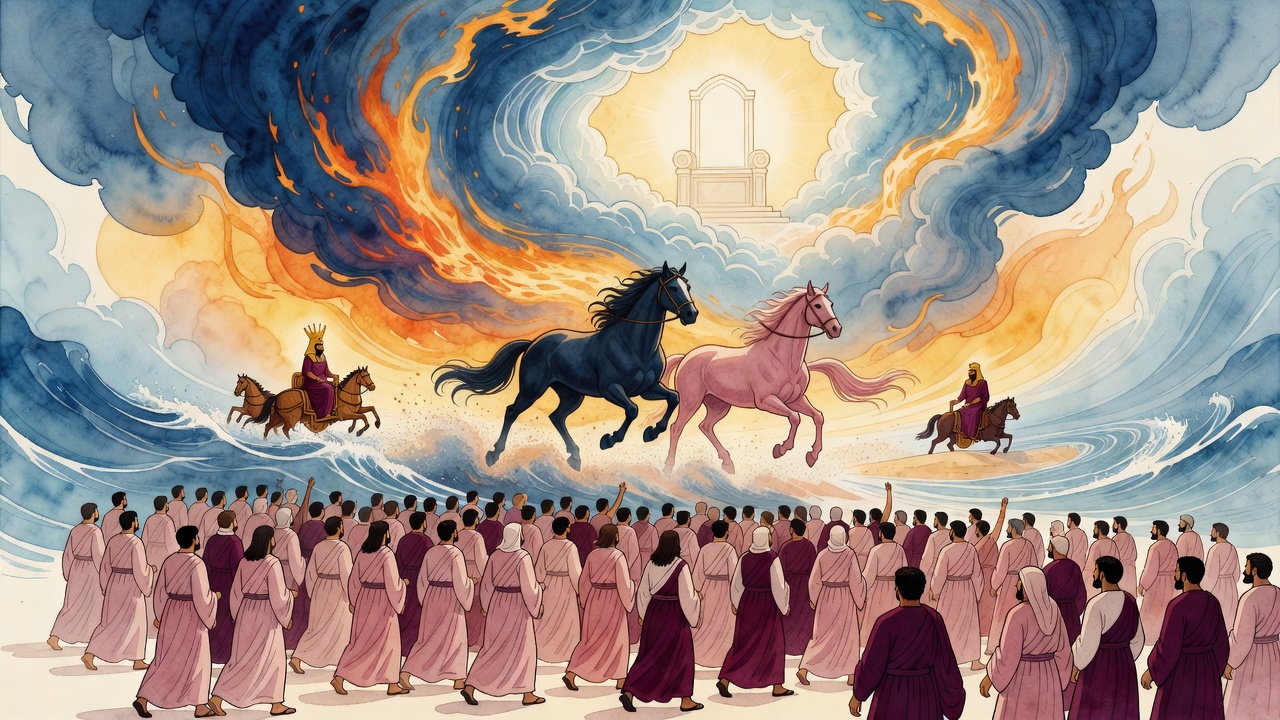
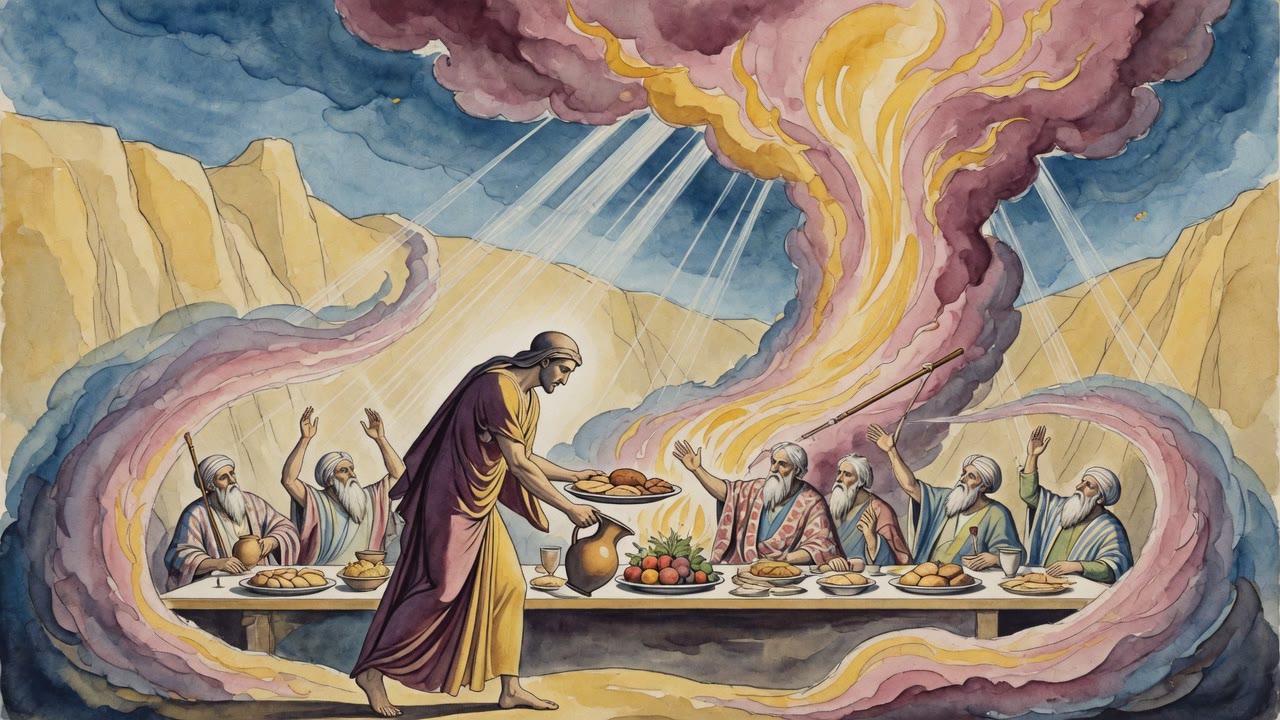
He let the line hang. Then he pressed it. The fruit had worked. Adam reached, ate, and came up changed, and not into some vague new cleverness. He came up into the rank of the ministering angels, the ones who stand inside the fire and know exactly what they are looking at. Like one of us. Like one of them. A promotion, Pappus told it. Eden had a locked shelf. The man reached the shelf. Heaven admitted, in its own voice, that the distance had closed.
Rabbi Akiva sat near the wall. He did not stand.
"Dayekha, Pappus. Enough for you. Stop."
The room went quiet the way a room goes quiet when two men who both know the whole Torah stop agreeing.
Pappus turned toward the wall. "Then how do you expound it?"
Two Roads in the Garden
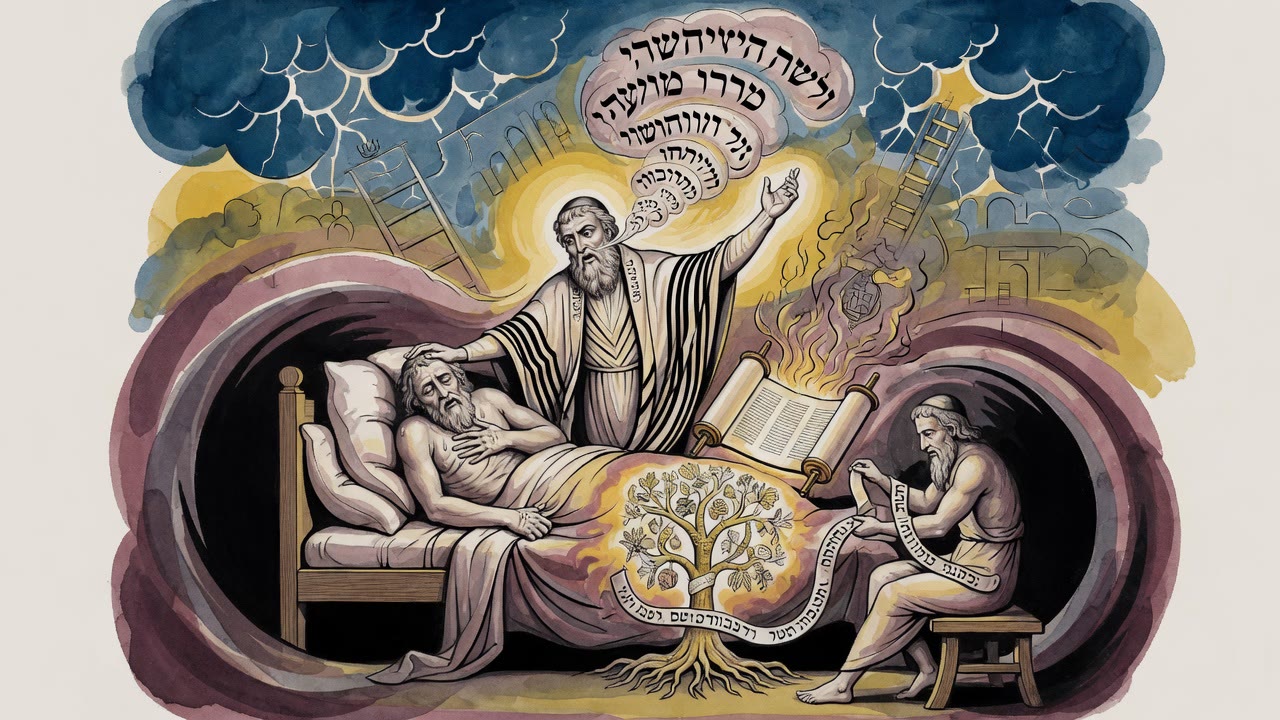
Akiva carried the verse back to the tree and set it down in the dirt. God had laid two roads before the man, he said. One road was life. The other was death. Both were marked. Both were open. Nothing was hidden and nothing was stolen.
"Like one of us" does not say the man climbed. It says the choice put in front of him was the kind the angels understand, a road whose end is visible from the first step. He looked down both. He walked the one that finishes in dust.
No wings came out of his back. No secret came off the shelf into his hands. A man stood between two marked roads and took the wrong one, and every grave since has been dug at the far end of it. Pappus sat down. The verse was not ruined yet. Akiva had pulled it off the ladder Pappus had built and left it on the ground where Adam had stood.
Pappus Tried the Ox in the Sky
He rose again another day, and this time he came with the calf.
"And they exchanged their glory for the image of an ox that eats grass" (Psalms 106:20).
Pappus wanted to lift the shame off the camp. Israel had bowed, yes, but consider what they might have bowed toward. There is an ox on high, the great sign that wheels over the desert at night with the other constellations, and a people fresh out of Egypt might have mistaken a heavenly power for the Power itself. That is a stumble a person can picture. Bowing to a host in the sky is still a catastrophe, but it is a catastrophe with some height in it.
Then he conceded that the verse would not let him keep it. "That eats grass." No star grazes. Nothing hanging in the sky puts its head down into a field. He said so plainly, and he still wanted the reading heard.
"Dayekha, Pappus. Stop before you ruin the verse."
Akiva Pulled the Calf into the Field
Akiva would not let an idol borrow a constellation, not even for the length of an argument, not even when the borrowing was meant to make Israel look better.
"Then how do you expound it?" Pappus asked, and there was less patience in it this time.
An ox, said Akiva. A common ox out of somebody's field. Nothing above, nothing burning, nothing turning in the night sky. A beast with mud dried on its legs.
And because a man hearing that could still build the animal up in his own head, could still picture a prize bull with a heavy neck and a white blaze, the verse comes back and takes that away too. "That eats grass." Not the bull at the head of the herd. The one with its head down and its jaw working.
A Mouth Full of Grass
"There is nothing more revolting than an ox in the act of eating grass," Akiva said.
He held the picture there and made the benches look at it. The wet mouth. The green stalks hanging out either side. The dull grinding that stops for nothing.
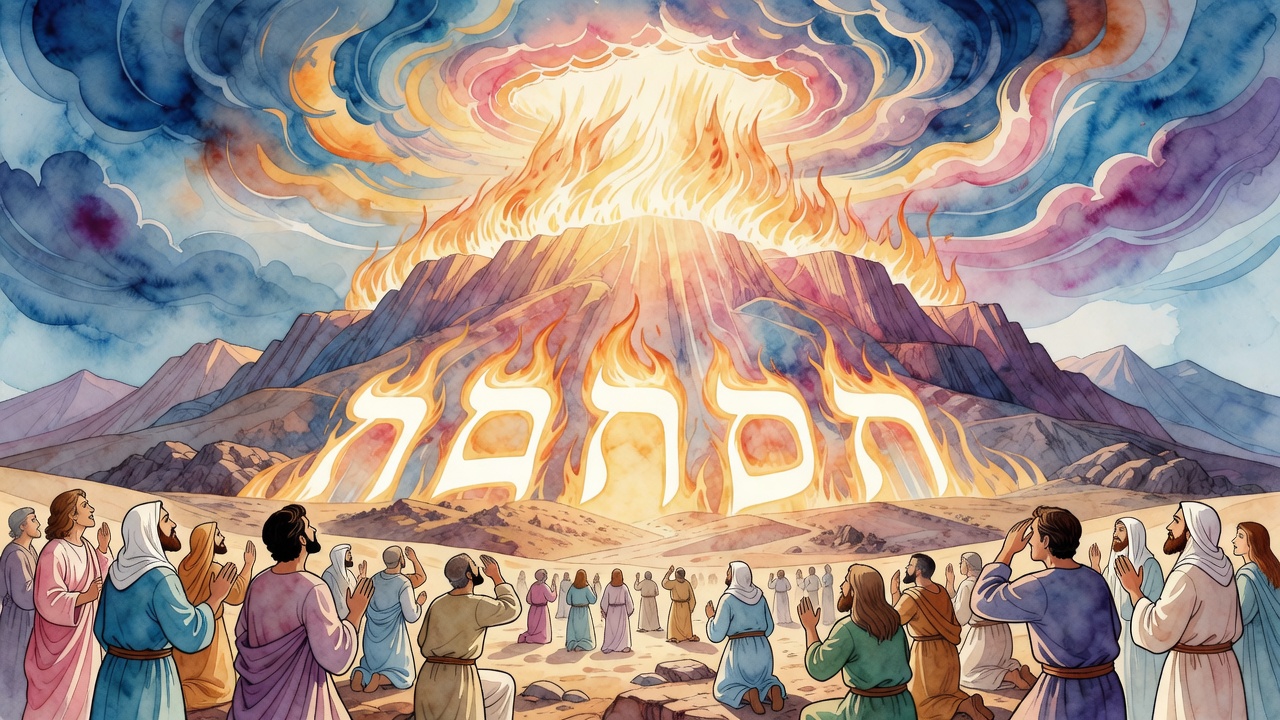
Against that he set what Israel had put down in order to pick it up. The God who had split the sea for them weeks before. The fire that walked in front of them at night. The wet still in the seams of their sandals from the far shore.
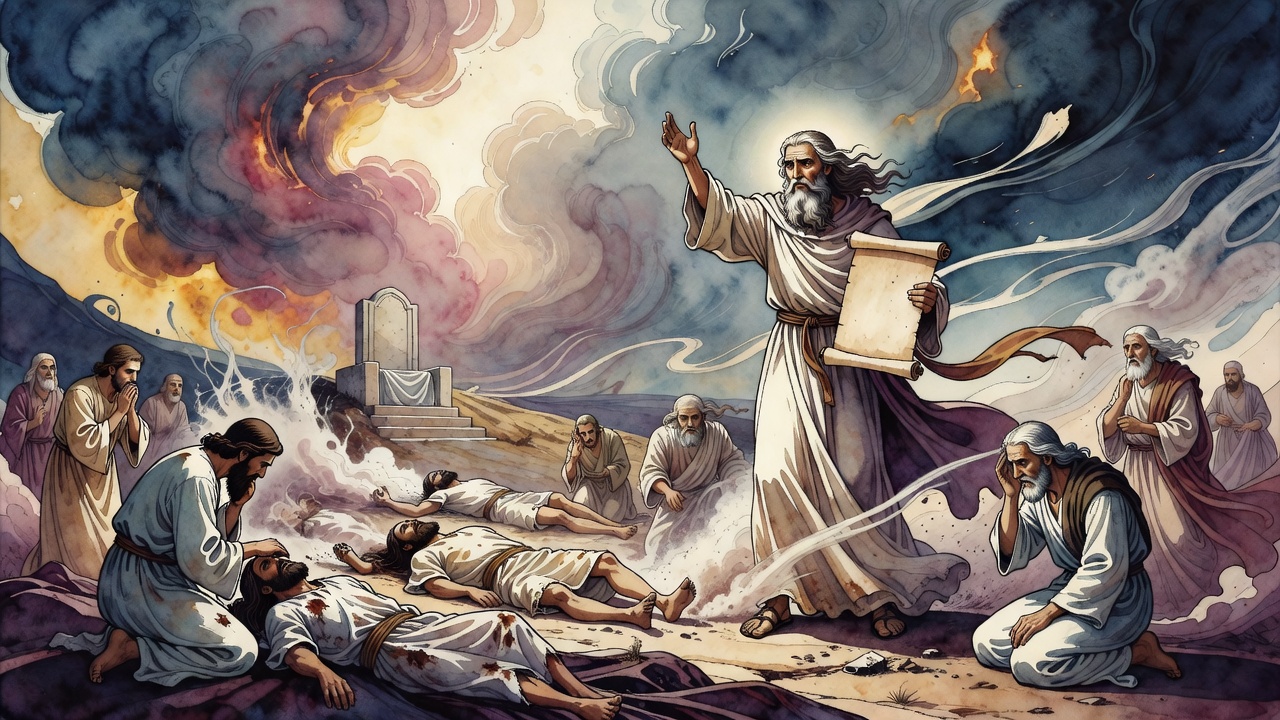
Pappus had come twice to lift a sin toward heaven, once with a man who climbed into the ranks of the angels and once with an ox that hung among the stars. Twice Akiva shoved it back down onto the ground where it happened. Adam was not promoted. The calf was not a constellation. Whatever Israel had done at the foot of the mountain, they had done it in exchange for a grazing animal, and Akiva would rather leave his own people standing in that shame than let anyone dress the idol in light.
The benches emptied. What walked out with them was not Adam among the ministering angels and not the great sign wheeling over the desert. It was a jaw grinding through a clump of grass, and the glory of the God of Israel handed over for it.
← All myths