5 min read

The Priest Who Came to Serve With Dirty Hands

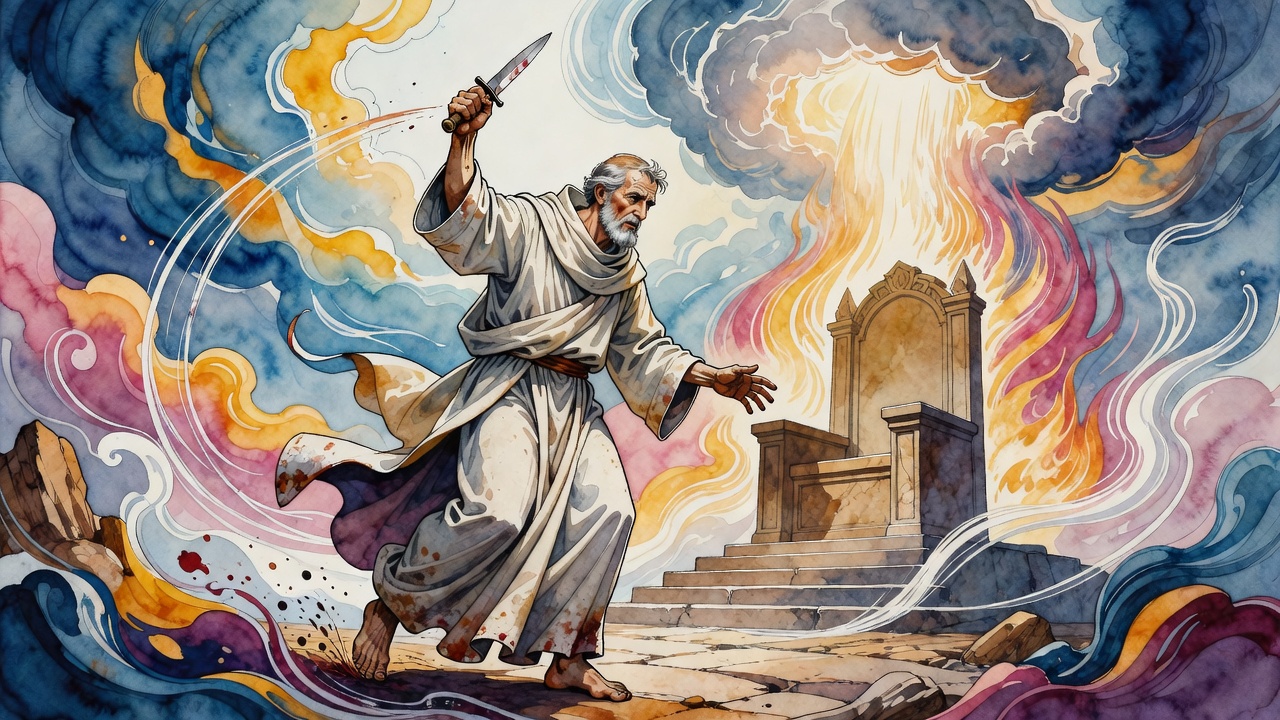
A priest rushed morning service with unwashed hands and feet. The blood rite tightened around him, right hand, raised knife, seven sprinklings none could skip.

Curated by Arthur · Told by Maggid ·
Table of Contents
  1. Water First, Then Glory
  2. Raise the Knife, Guard the Blood
  3. Seven That Cannot Be Skipped
  4. Right Finger, No Wiping Shortcut

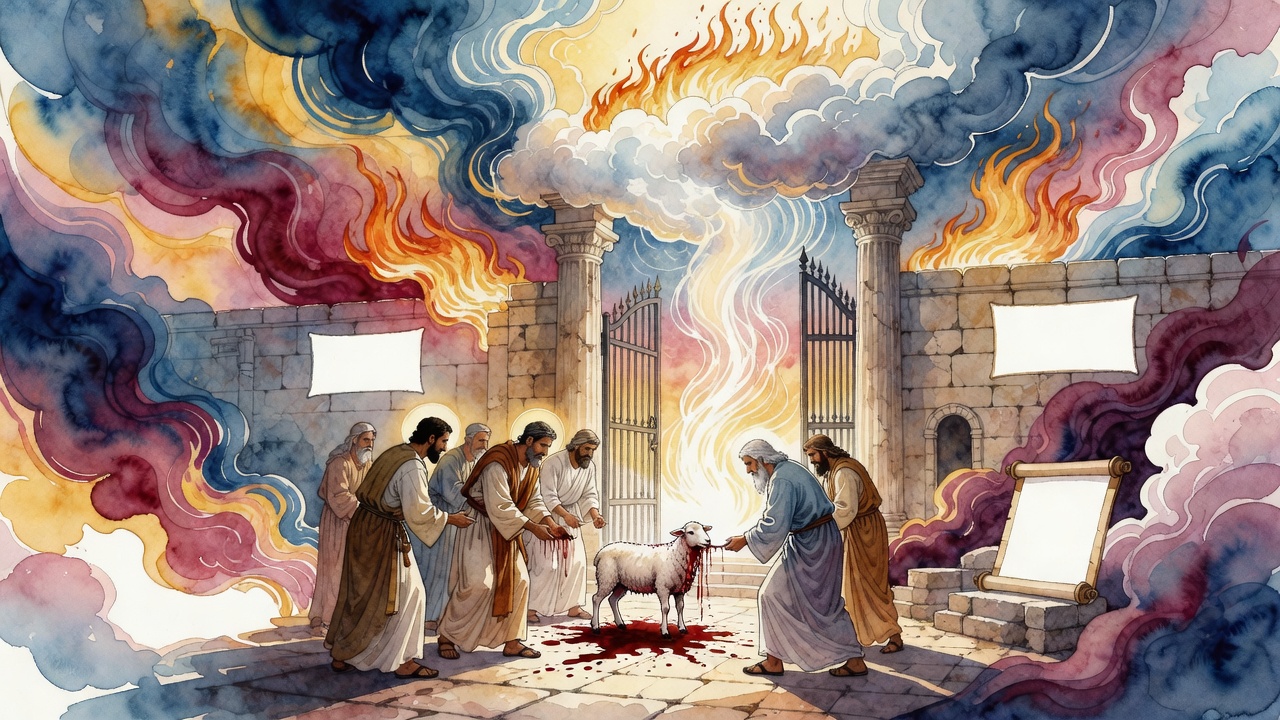
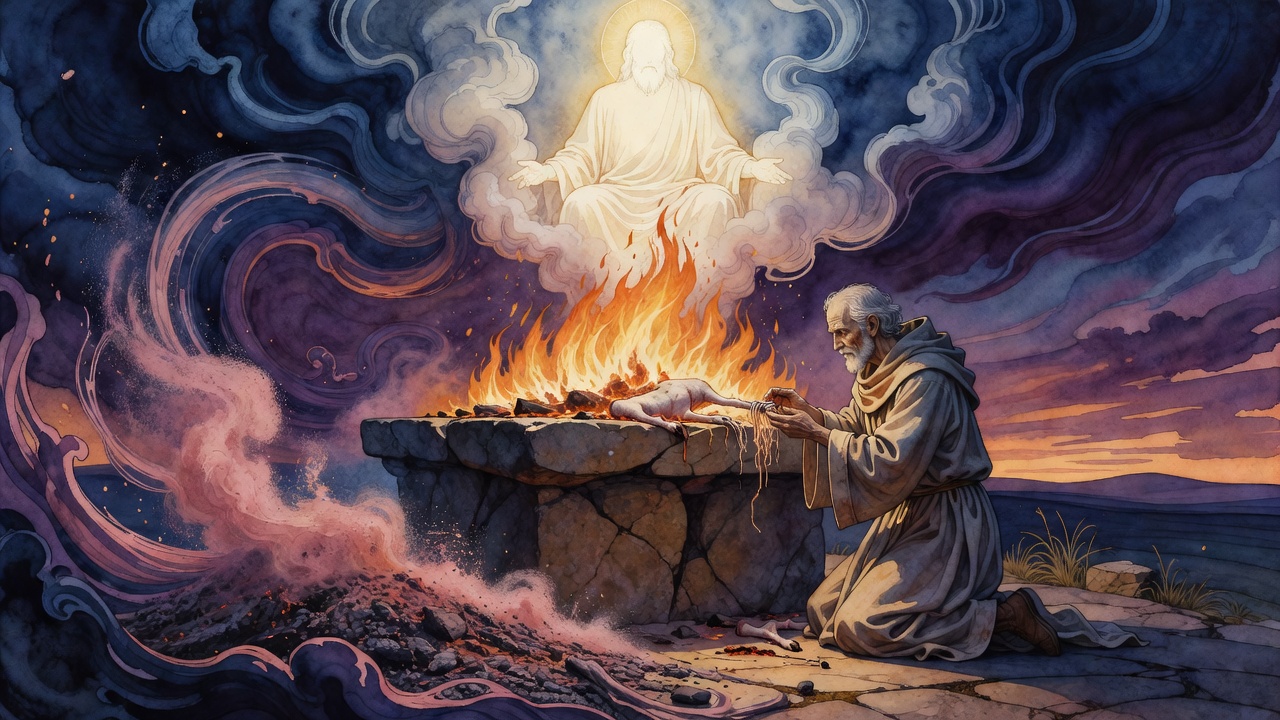
The basin was full. The priest walked past it. Sleep still stuck to the corners of his eyes, and the courtyard already held the animal, the vessel, the watching faces. He told himself the Holy One cared about the heart more than the knuckles. The law had not agreed to that bargain.

The Priest Who Came to Serve With Dirty Hands Click for full size

Water First, Then Glory

Blood received by unwashed hands and feet is a severity the sages draw from single words. Service can fail before the first prayer leaves a mouth, because the body that serves is part of the offering's truth.

He stopped. Turned. The water bit cold over wrists and ankles. Shame is also a kind of washing. When he returned to the animal, his hands looked the same to the crowd and different to the work.

Receiving blood belonged to a fit priest and a sacred vessel. Catching it off the floor after a spill was not a second chance. The rite had a narrow throat. Fit body, fit bowl, right side of the man preferred for taking and placing, finger named in Scripture for the placement that seals the act.

He flexed his right hand once, as if waking it for a contract. A younger priest watched and learned the expensive way, by seeing an older man almost lose the morning to hurry. "The basin is not optional furniture," the older one muttered, mostly to himself.

Raise the Knife, Guard the Blood

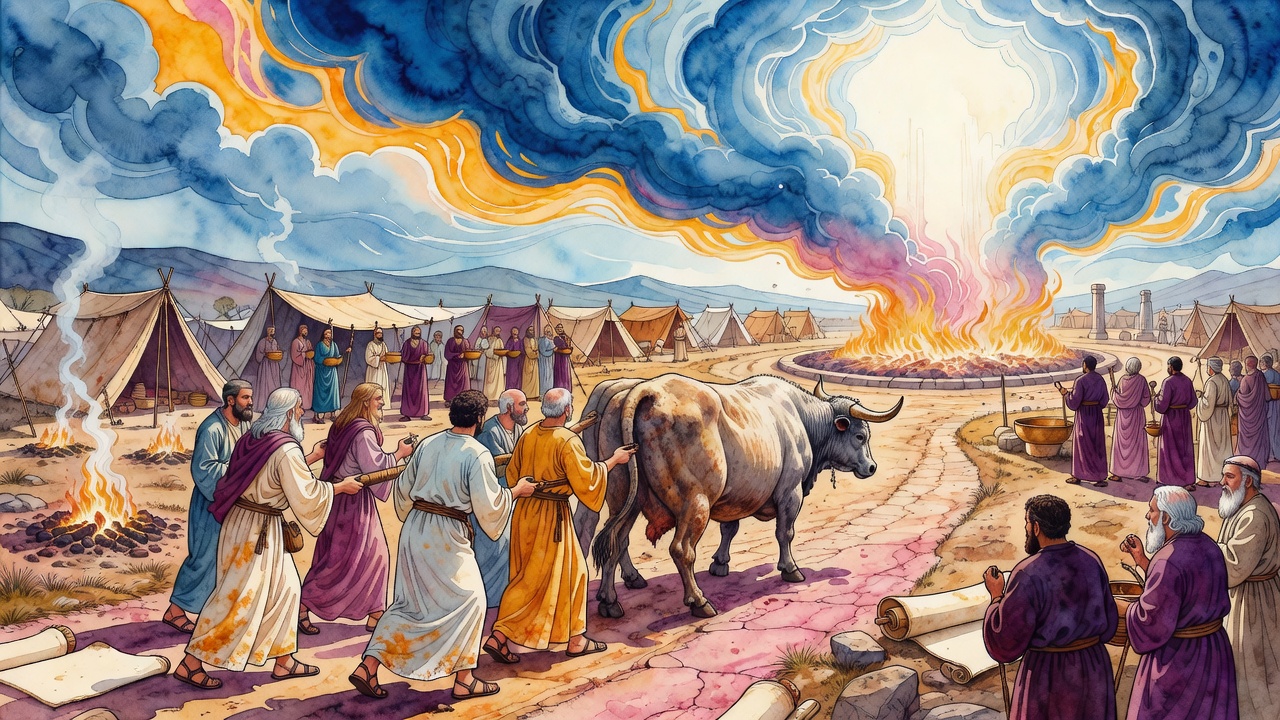
The bull's death was not a kitchen scene. Once the cut opened, the knife had to lift up and away so that only the bull's blood entered what the priest took. Foreign blood on the blade was a contamination of meaning. Even the metal needed a kind of honesty.

He raised the knife. The motion looked small. It kept the offering from becoming a stew of accidents. Guarding blood is the opposite of melodrama. It is attention so tight it feels like fear wearing work clothes.

The vessel filled with what the verse would allow to be called "of the blood of the bull." Nothing else. No storybook splatter. A measured red. The priest's shoulder remembered other mornings when fatigue had made him sloppy, and he thanked the cold water for interrupting that habit before it became identity.

A bird called from beyond the wall. Life went on in ordinary air while the courtyard practiced the opposite of ordinary carelessness.

Seven That Cannot Be Skipped

Toward the curtain the count began. One. Two. Three. The priest's shoulder burned with the monotony that protects holiness. Four. Five. Scripture's "so shall he do" for the second bull as for the first had been pressed by the sages into a stern rule. Leave out even one of the prescribed applications and the work is unfinished in a way no good intention can patch.

Six. His mind tried to leap to seven early. He forced the body to stay honest. Seven. The number sat in the air like a closed gate that had opened correctly.

Someone in the courtyard exhaled. The priest did not. He still had the wall of the altar, the base, the places where blood belongs low or high depending on the offering's kind. Today the map was clear because he had finally let water be the first ritual.

He thought of priests who serve with clever hearts and dirty wrists, and of how heaven is not impressed by cleverness that skips the basin. The thought kept his count clean.

Right Finger, No Wiping Shortcut

"Dip" did not mean wipe the finger along a vessel's rim and call it immersion. "In the blood" did not let a dry finger pretend. Each phrase blocked a different cheat. He dipped. He placed. The right hand did the work the left was not hired to do in this choreography.

When it ended, the unwashed morning felt like another man's life. The same priest, corrected mid-stride, stood under the weight of a service that had almost been empty theater and became, by water and count, an act heaven could recognize.

He did not boast. He walked back toward the basin as if greeting a friend he had nearly betrayed. The younger priest met him there, already rolling a sleeve, already choosing the cold on purpose.

"Tomorrow," the older one said, "we start wet." The younger one nodded. Somewhere above the smoke line, the work of hands had been accepted because the hands had finally agreed to be clean before they were bold. The basin remained full for the next man who would be tempted to believe his hurry was holier than water.

No speech repaired what the body already knew. The choice sat in the room like a third person, watching who would move first and who would refuse the easier lie.


← All myths

From the tradition

Sources

4 sources

The texts behind this telling. Some cards carry a translation of the source; others are our own retelling of it, and each card says which. Every card links out to the original.

Yalkut Shimoni on Torah 387:2Yalkut Shimoni on Torah

Translation of the source text.Torat Emet (Yalkut Shimoni) · CC-BY-NC

Any sacrifices whose blood was received by one whose hands and feet were not washed are invalid; this is derived through the [shared term] 'statute, statute' from the case of one lacking the proper garments. Our masters taught: a high priest who did not immerse and did not sanctify his hands and feet between one garment and the next, or between one service and the next, and performed the service, his service is valid. But whether a high priest or an ordinary priest, one who did not sanctify his hands and feet in the morning and performed the service, his service is invalid.

Rav Asi said to Rabbi Yohanan: now, the five immersions and ten sanctifications are biblical, and 'statute' is written concerning them, so let them be indispensable. He said to him: Scripture says 'and they shall put them on' (Exodus 29:30), teaching that putting on the garments is indispensable but nothing else is indispensable. His face lit up. Rav Asi said: a single vav has been written for you against a whole tractate. If so, the morning sanctification too should not be indispensable. Hezekiah said: Scripture says, 'and it shall be for them a perpetual statute, to him and to his offspring throughout their generations,' meaning a matter that is indispensable for his offspring is indispensable for him, and a matter that is not indispensable for his offspring is not indispensable for him. Rabbi Yonatan says: it is derived from here, 'and Moses and Aaron and his sons washed from it' (Exodus 40:31), meaning a matter indispensable for his sons is indispensable for him, and a matter not indispensable for his sons is not indispensable for him.

Why did Rabbi Yonatan not derive it from the first verse? He could say to you: that verse is written for the generations. And why did the other not derive it from this verse? He needs it for the teaching of Rabbi Yose son of Rabbi Hanina, who said: any basin that does not contain enough to sanctify four priests from it, they do not sanctify from it, as it is said, 'and Moses and Aaron and his sons washed from it.'

Full source
Yalkut Shimoni on Torah 469:5Yalkut Shimoni on Torah

Translation of the source text.Torat Emet (Yalkut Shimoni) · CC-BY-NC

Rav Yehudah said in the name of Shmuel: the slaughterer must raise the knife upward, as it is said, "And he shall take of the blood of the bull", and not of the blood of the bull together with something else. And with what does he wipe the blood of the knife? Abaye said, on the rim of the basin, as it is written, "basins of gold" (Ezra 1:10). Rav Chisda said in the name of Rav Yirmiyah bar Abba: the slaughterer must let the veins drip into the vessel. Rabbi Zeira said: one who notches the ear of the bull and afterward receives its blood, it is invalid, as it is said, "And he shall take of the blood of the bull", a bull that was already whole. We have found this for the most holy offerings; how do we know it for the offerings of lesser sanctity? Rava said, it is taught, "an unblemished lamb" (written at remez 195).

Full source
Yalkut Shimoni on Torah 469:20Yalkut Shimoni on Torah

Translation of the source text.Torat Emet (Yalkut Shimoni) · CC-BY-NC

"And he shall do to the bull as he did to the bull" and so forth, "the first bull": that it should be first to the bull of the congregation in all its rites. The bull of the anointed priest and the bull of the congregation stand together: the bull of the anointed priest takes precedence over the bull of the congregation in all its rites. Since the anointed one atones and the congregation is atoned for, it is fitting that the one who atones precede the one atoned for. And so Scripture says, "And he shall make atonement for himself and for his household and for all the assembly of Israel" (Leviticus 16:17). "And he shall do to the bull as he did", what does Scripture teach? To repeat regarding the sprinklings, to teach that if he omitted one of the applications he has accomplished nothing. And I know only of the application of seven, which is indispensable everywhere; from where the application of four? Scripture says "so shall he do." "To the bull", this is the bull of the Day of Atonement. "As he did to the bull", this is the bull of the anointed priest. "The sin-offering", these are the idolatry goats. One might think I should include even the festival goats and the new-moon goats; Scripture says "the sin-offering, so shall he do to it." And what did you see to include these and exclude those? After Scripture both included and excluded, I include these, which atone for a transgression of a known commandment, and I exclude those, which do not atone for a transgression of a known commandment. "And he shall make atonement", even though he did not lay on hands. "And it shall be forgiven", even though he did not pour out the remnants. And what did you see to invalidate regarding the sprinklings and to permit regarding the laying-on of hands and the remnants? You say: I invalidate regarding the sprinklings, which are indispensable everywhere, and I permit regarding the remnants and the laying-on of hands, which are not indispensable everywhere. Where is the application of seven that is indispensable everywhere? Rav Pappa said: by the [red] heifer and by the leprous marks. From where the application of four? Scripture says "so shall he do." What is the difference that the application of seven is written and repeated, the application of four is also written and repeated! Rabbi Yirmiyah said: it is needed only according to Rabbi Shimon, as it was taught: above it says "horn, horns," two; below it says "horn, horns" (above, verse 18), four, the words of Rabbi Shimon. Rabbi Yehudah says: it is not needed, for behold it says "upon the horns of the altar... which is in the tent of meeting," to include all the horns that are in the tent of meeting. And Rabbi Yehudah, this "so shall he do," what does he do with it? For what was taught: since we have not learned regarding the bull of the Day of Atonement the laying-on of hands and the remnants of blood, from where are they derived? Scripture says "so shall he do." And have we not learned about the bull of the Day of Atonement? You said: "to the bull", this is the bull of the Day of Atonement. It was necessary, for it might enter your mind to say these matters apply only to a rite that is indispensable for atonement, but a rite that is not indispensable for atonement, say not; it teaches us otherwise. And Rabbi Shimon, this "in the tent of meeting," what does he do with it? He needs it to teach that if the ceiling of the sanctuary were broken open, one would not sprinkle. And the other derives it from "which," and the other does not expound "which." Abaye said: according to Rabbi Yehudah too it is necessary; for it might enter your mind to say, just as with the laying-on of hands and the remnants of blood, which though written and repeated are not indispensable, so too the application of four should not be indispensable; it teaches us otherwise.

Full source
Yalkut Shimoni on Torah 384:2Yalkut Shimoni on Torah

Translation of the source text.Torat Emet (Yalkut Shimoni) · CC-BY-NC

"And you shall take of the blood of the bull and put it upon the horns of the altar with your finger" (Exodus 29:12). Our Rabbis taught: "with his finger, and he shall take" (Leviticus 4:34) teaches that receiving the blood may be done only with the right hand. "With his finger, and he shall put" (Leviticus 4:34) teaches that placing the blood may be done only with the right hand. Rabbi Shimon said: but was a "hand" mentioned in connection with receiving? Since no "hand" was mentioned regarding receiving, if he received with the left hand it is valid.

Abaye said: they disagree as to whether a verse is expounded in reference to what precedes it and what follows it. Abaye said: this ruling of Rabbi Elazar son of Rabbi Shimon contradicts both his father and the Rabbis, for it was taught: Rabbi Elazar son of Rabbi Shimon says: wherever "finger" is mentioned regarding receiving, if he deviated in the receiving it is invalid, but in the placing it is valid; and wherever "finger" is mentioned regarding placing, if he deviated in the placing it is invalid, but in the receiving it is valid. And where is "finger" mentioned regarding placing? As it is written, "and you shall take of the blood of the bull and put it upon the horns of the altar with your finger." He holds that a verse is expounded in reference to what precedes it, but not to what precedes that, nor to what follows it.

Rabbah said in the name of Rabbi Shimon ben Lakish: wherever "finger" and "priesthood" are mentioned, it means only the right hand. "Finger" does not require "priesthood," but "priesthood" requires "finger." Then why do I need "priest" mentioned at all? To teach that he must be in his priesthood [wearing the priestly garments].

Full source