6 min read

Passover Blood Stayed Inside the Temple Gates

On the fourteenth, between the evenings, Israel slaughters the lamb in the Temple courts or is cut off for missing the fixed season.

Curated by Arthur · Told by Maggid ·
Table of Contents
  1. Two Parts Light, One Part Evening
  2. The Man Who Lived Near the Gate
  3. Blood on the Threshold, Fat on the Fire
  4. Not Empty Handed
  5. After the Third Part of the Day
Passover Blood Stayed Inside the Temple Gates Click for full size

Two Parts Light, One Part Evening

The day was cut in three. Two parts of it belonged to the light and the third belonged to the evening, and the lamb had to die inside that last third, on the fourteenth of the first month, between the evenings. Nothing about the hour was left to a household's judgment.

Yoezer could hear the courts from his roof. He lived close enough that on a still afternoon the noise of the lines came up the hill to him, the bleating and the men calling each other by name and the long scrape of the gates, and close enough that he had never once in his life had to leave before dawn to get there.

His lamb was tied in the yard below. He had checked it that morning, and it was sound, and he was clean, and the gate was a short walk down through the Lower City.

The Man Who Lived Near the Gate

Nearness is what undid him, since a man who lives an hour away starts walking early and a man who lives ten minutes away does not start walking at all.

He let the first of the crowd go down without him because the press at the gate was bad and would thin. It did not thin. His brother's wife sent word about a jar and he dealt with the jar. A neighbor wanted a hand with a beam and he gave the hand, because the beam would take a moment and the beam took longer than a moment, and all the while the shadow of the wall was moving across his yard at the speed it had moved every day of his life.

The men who had argued all week about whether they could afford the road were already inside. A household that had walked six days from the far side of the hills was already inside. The ones with excuses had used them up in advance and gone early, so the court filled with people who had reason to be late and none who had reason to be near.

Yoezer looked at the light on the wall, and the light was wrong, and he untied the lamb and ran.

Blood on the Threshold, Fat on the Fire

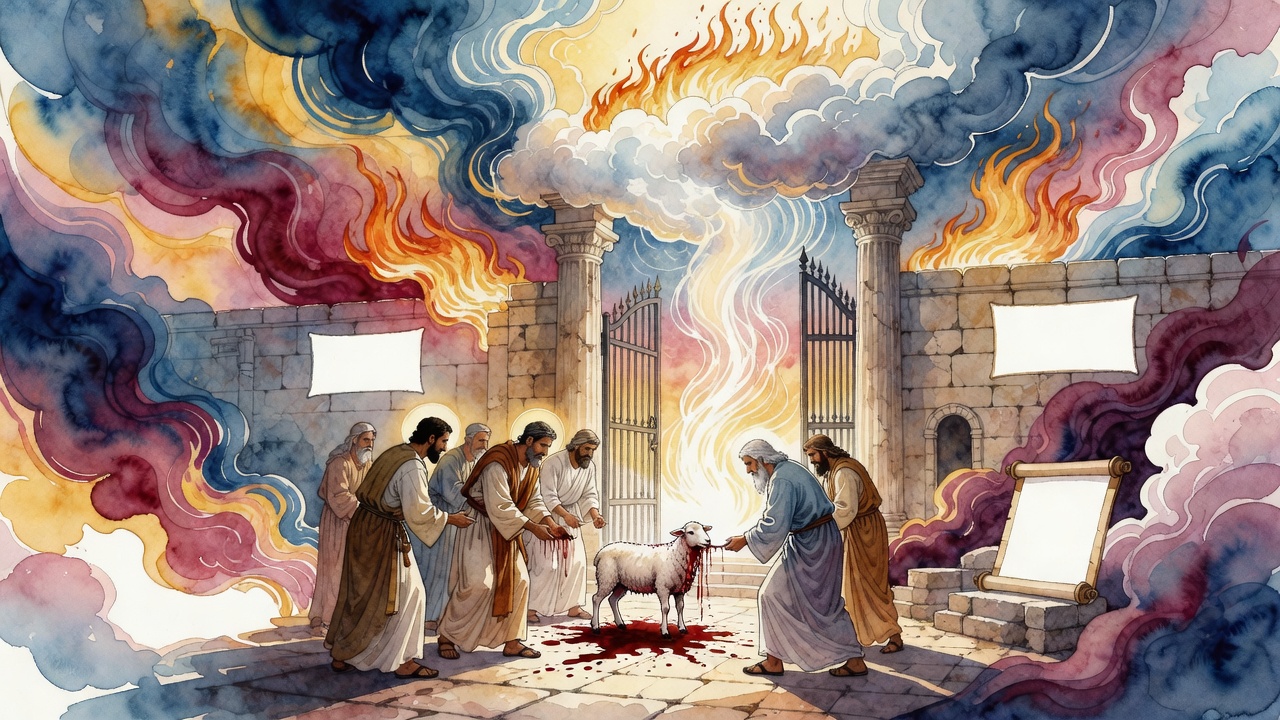
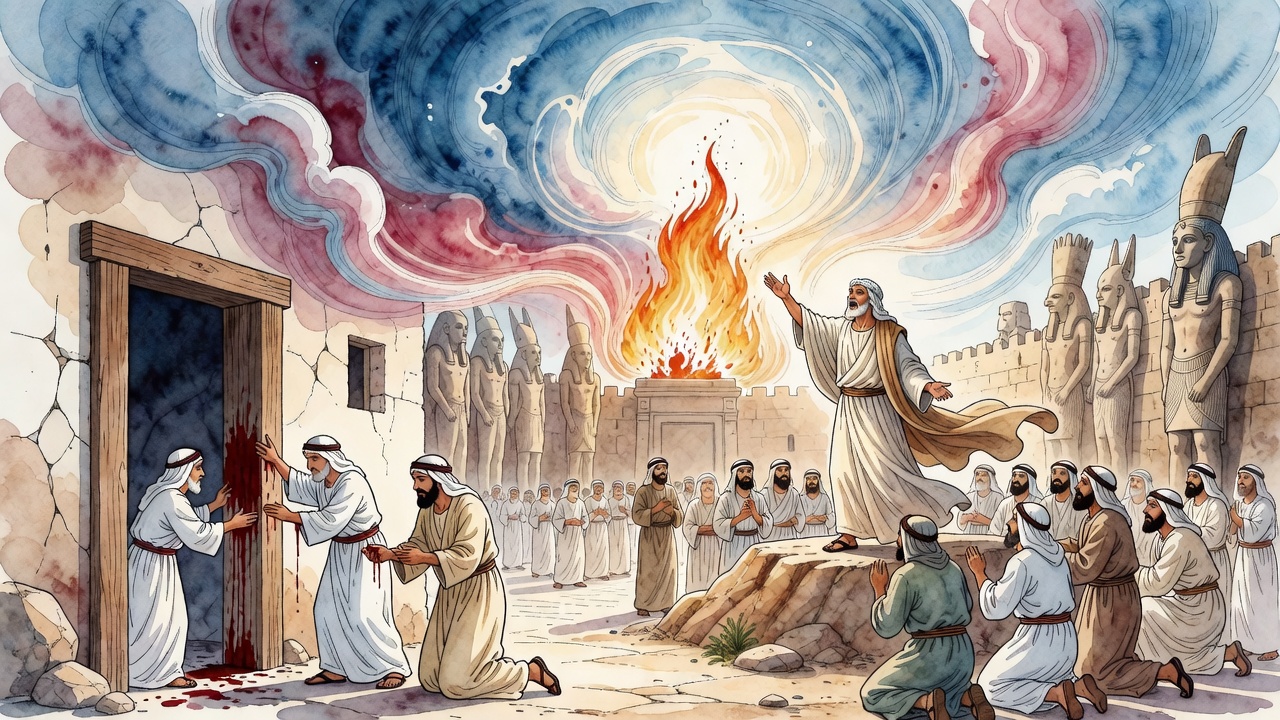
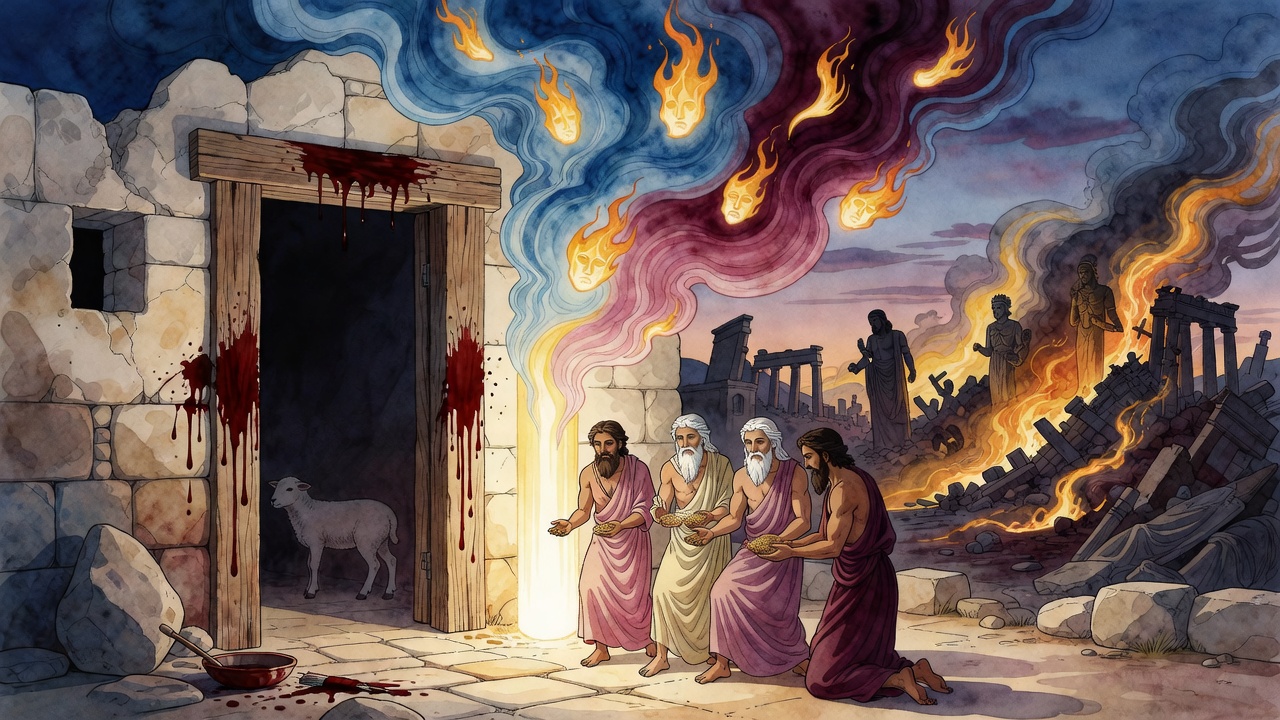
Inside, the thing was already well along. The blood went onto the threshold of the altar, the fat went onto the fire that was burning on it, and the flesh was roasted and eaten there in the court of the house that had been sanctified in the Name of the Lord. Smoke sat in a flat layer under the colonnades because the evening air would not lift it.

None of it could be carried out. A boy asked why the meat could not go home to his grandmother, and the man with him pointed at the gate and said that past the gate it stops being the Passover and starts being supper. They may not keep it in their cities, nor in any place but before the house where His name has dwelt, so that they will not go astray.

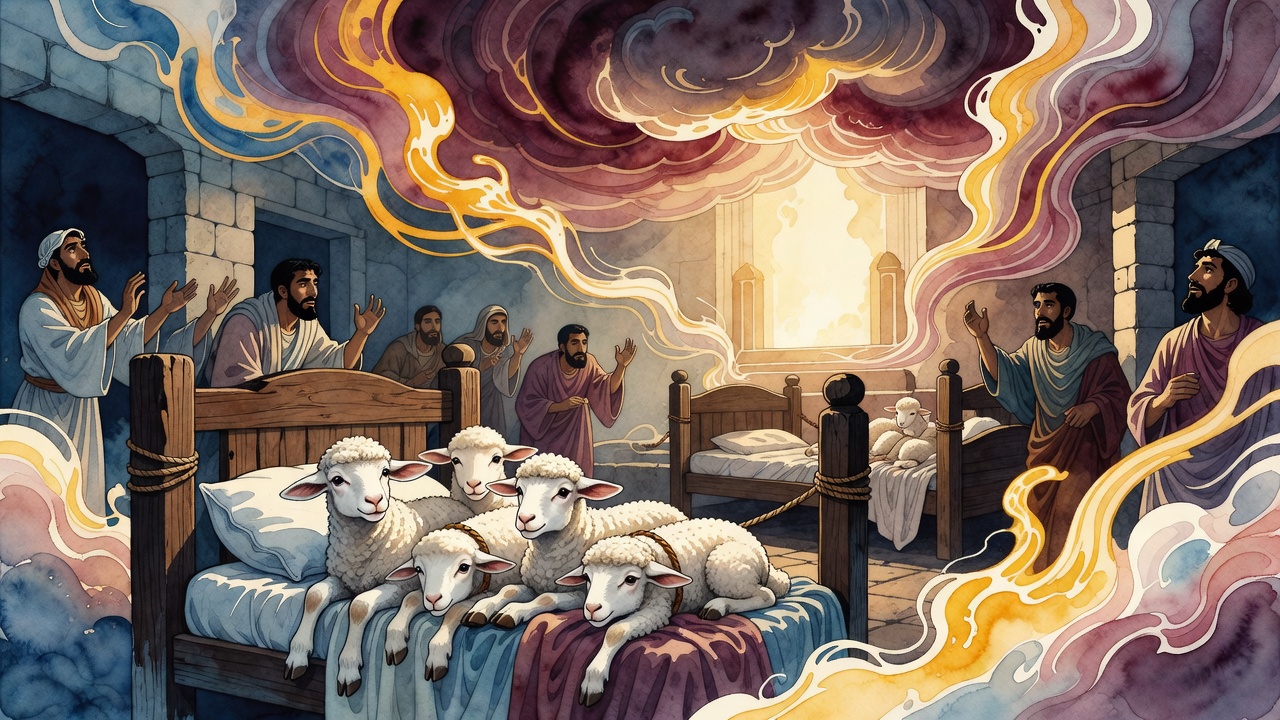
A man from the north and a man from the south sat on the same paving stones and ate the same commanded meat under the same smoke, not because anyone had preached unity at them, but because the rule had put every body in the country inside one wall on the same evening.

Not Empty Handed

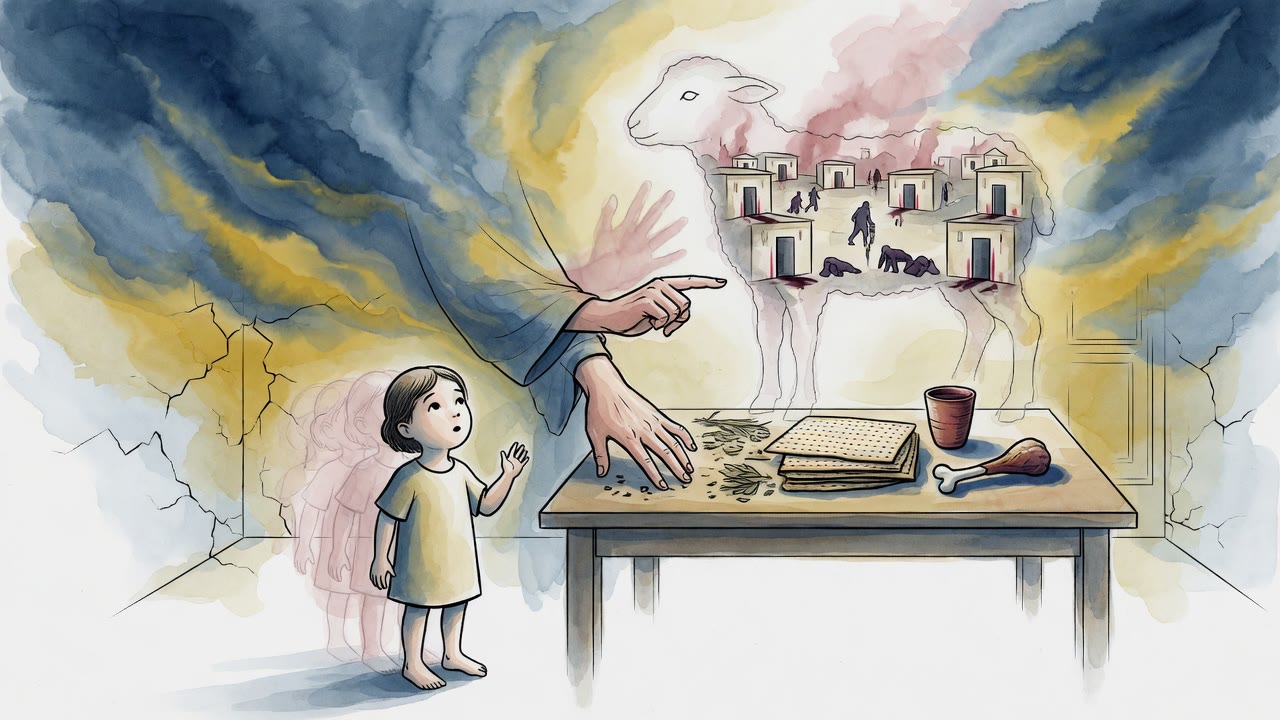
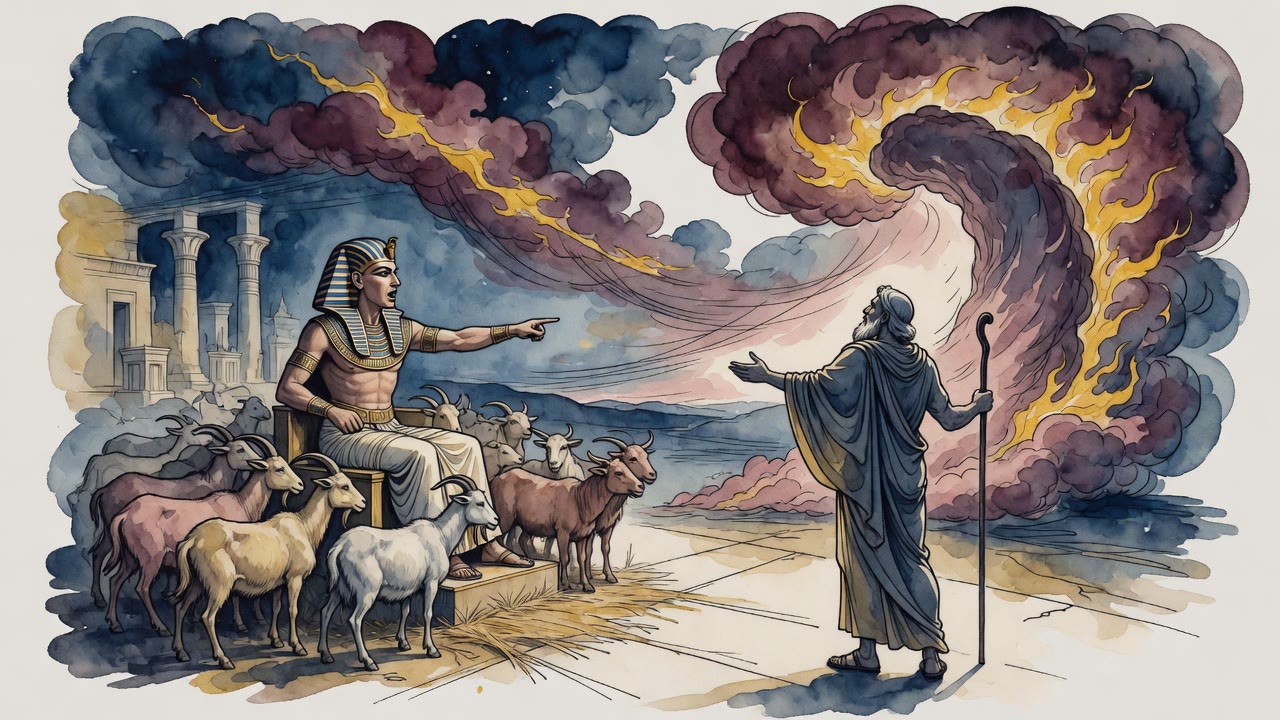
An old man was telling the reason to whoever was chewing near him, and the reason was not a miracle. They did not go out of Egypt empty handed. They went out carrying what was taken from the Egyptians in return for the bondage those same Egyptians had forced on them, generations of work with no wage at the end of any week of it.

So the night has a clock on it. Remember the commandment, and keep it in its season, on the fourteenth of the first month, and declare it every year and the day of its days. A people that was paid at last does not get to decide afterward when the accounts are read.

The old man said it with his mouth full, and the boy beside him was already asleep against his father's arm.

After the Third Part of the Day

Yoezer got to the gate with the lamb still pulling on the rope. The light was gone off the top of the wall.

He stood there while the smell came out at him, and the singing started somewhere inside, and nobody stopped him and nobody had to, because the season was over and the guilt was already his. Not a corpse in his house. Not a road too long. He was clean and he was near, and for the man who is clean and near and brings no offering in its appointed season there is no soft word anywhere. That man is cut off from his people and carries it himself.

He walked back up the hill with the rope in his hand and the lamb behind him, and in the morning the whole city smelled of a meal he had not eaten.


← All myths
From the tradition

Sources

3 sources

The texts behind this telling. Some cards carry a translation of the source; others are our own retelling of it, and each card says which. Every card links out to the original.

Book of Jubilees 49:31Book of Jubilees

Retold in our words. Read the original at the link below.Sefaria Community Translation · CC-BY

The Book of Jubilees, for those of you who aren’t familiar, is an ancient Jewish text. It's considered apocryphal by some, meaning it’s not included in the standard Hebrew Bible, but it's still a fascinating peek into the beliefs and practices of ancient Jewish communities. It’s like discovering a fascinating family secret tucked away in the attic.

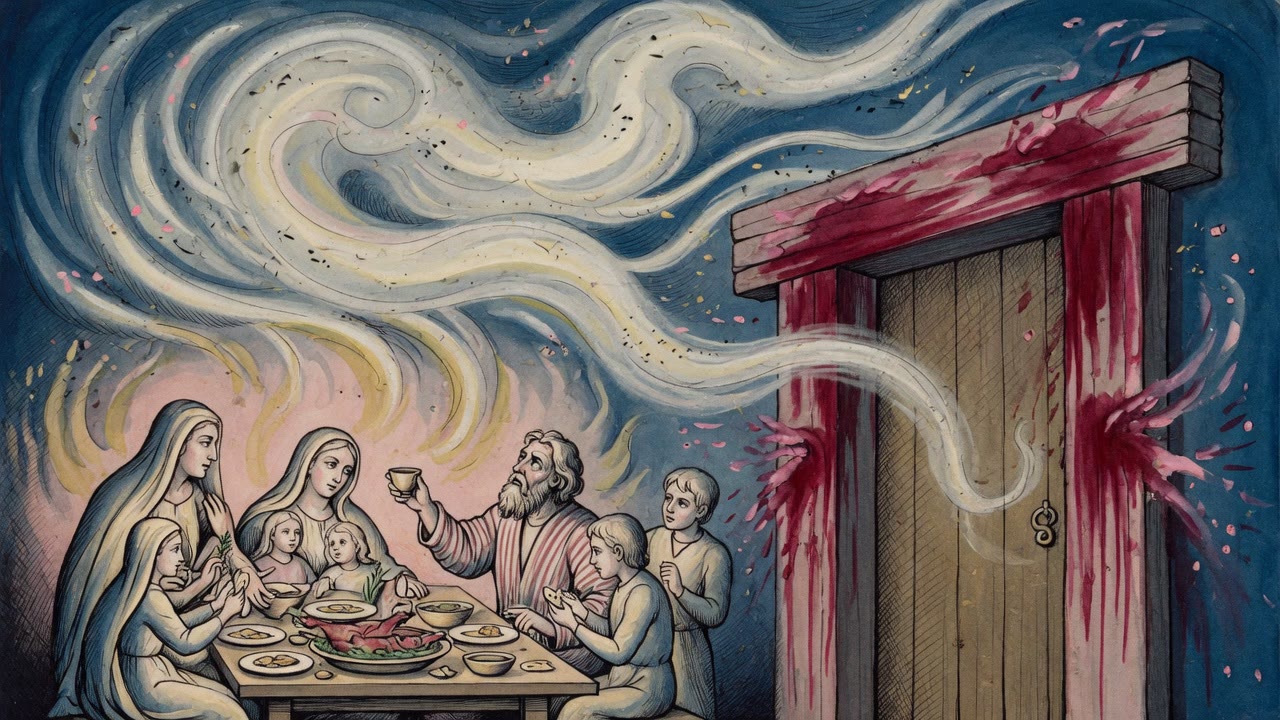
So, what does Jubilees have to say about Passover? Well, chapter 49 gives us some specific instructions. It paints a vivid picture: "And they will offer its blood on the threshold of the altar, and shall place its fat on the fire which is upon the altar, and they shall eat its flesh roasted with fire in the court of the house which hath been sanctified in the name of the Lord."

The scene. The Temple, a central place of worship. The aroma of roasting lamb filling the air. The community gathered together, participating in this sacred meal.

There's more to it than just a delicious barbecue. Jubilees emphasizes a critical point: centralization. "And they may not celebrate the passover in their cities, nor in any place save before the tabernacle of the Lord, or before His house where His name hath dwelt; and they will not go astray from the Lord." Passover wasn't just a private family affair. It was meant to be observed in a specific, designated location – the Mishkan, the Tabernacle, or later, the Beit Hamikdash, the Temple in Jerusalem. Why?

Well, centralization ensured uniformity. Everyone was celebrating the same way, at the same time, reinforcing a sense of collective identity and shared purpose. It also prevented the development of local variations or interpretations that might stray from the core meaning of the holiday. Remember, this was a time long before mass communication. Keeping everyone on the same page required a physical gathering.

Celebrating in a holy place like the Temple added a layer of solemnity and awe. It transformed the Passover meal from a simple family dinner into a powerful act of communal worship. It wasn't just about remembering the Exodus; it was about reaffirming their covenant with God.

And then comes the instruction to Moses: "And do thou, Moses, command the children of Israel to observe the ordinances of the passover, as it was commanded unto thee; declare thou unto them every year and the day of its days."

This isn’t just a suggestion; it's a commandment. It highlights the importance of consistent observance, year after year, to ensure the tradition is passed down faithfully to future generations. It emphasizes the role of leadership – in this case, Moses – in transmitting and preserving these essential rituals.

Now, of course, the Temple no longer stands. The central location for Passover observance is gone. So, what does this all mean for us today?

Well, even though we can't celebrate Passover in the Temple, the underlying principles still resonate. We can still strive for a sense of communal connection, even if it’s in our local synagogues or community centers. We can still approach the Seder with reverence and intention, recognizing its historical and spiritual significance. And we can still commit to passing down the story of the Exodus, and the values it represents, to our children and grandchildren.

Maybe, just maybe, understanding the original context of these ancient instructions can help us find deeper meaning in our own Passover celebrations today. How does this emphasis on centralization change the way you view the holiday?

Full source
Book of Jubilees 49:16Book of Jubilees

Retold in our words. Read the original at the link below.Sefaria Community Translation · CC-BY

The Book of Jubilees, an ancient Jewish text, speaks directly to that feeling, especially when it comes to sacred obligations.

It pulls no punches: "That man who is clean and close at hand will be cut off; because he offered not the oblation of the Lord in its appointed season, he will take the guilt upon himself." It's a stark reminder of the weight of responsibility, particularly concerning religious observances. It emphasizes that accessibility isn't an excuse; if you're able and present, fulfilling your obligations is paramount.

The question is what it talking about means. Let's zero in on the specific example given: Passover.

The text continues, "Let the children of Israel come and observe the passover on the day of its fixed time, on the fourteenth day of the first month, between the evenings, from the third part of the day to the third part of the night."

So, Passover, or Pesach as it's known in Hebrew, has a very specific time. The fourteenth day of the first month (Nissan), and even a particular time of day: "between the evenings." This phrase, "between the evenings," has been interpreted in different ways over the centuries. Is it the time between when the sun begins to descend and when it completely sets?

The Book of Jubilees clarifies: "for two portions of the day are given to the light, and a third part to the evening." It offers a very particular calculation. The Passover sacrifice, the oblation mentioned earlier, should be offered during that final third segment, during the 'evening' portion of the day.

"That is that which the Lord commanded thee that thou shouldst observe it between the evenings." It's a firm instruction, emphasizing the importance of precision and adherence to the divine command.

Why such meticulous detail? Why this seemingly harsh consequence for missing the mark? Perhaps it's about more than just timing. Maybe it's about the intention, the commitment, the willingness to prioritize the sacred amidst the everyday chaos of life. Missing a deadline at work might have consequences, but missing a divinely appointed time is seen as a far deeper failing – a severing of connection.

This passage from the Book of Jubilees isn’t just a historical record; it's a challenge. It asks us to reflect on our own commitments, our own responsibilities, and the weight we give to the things that truly matter.

Full source
Book of Jubilees 49:1Book of Jubilees

Retold in our words. Read the original at the link below.Sefaria Community Translation · CC-BY

The familiar version gives us about the plagues, the parting of the Red Sea, and the giving of the Ten Commandments. But what about the details that fill in the cracks, the "behind-the-scenes" moments that give the story even more depth?

That's where texts like the Book of Jubilees come in. It’s considered part of the Deuterocanonical books of the Bible. Jubilees retells the stories of Genesis and Exodus, but with some intriguing additions. to one little nugget from Jubilees 49.

The passage reminds us about the Exodus, specifically focusing on the Israelites leaving Egypt. But it highlights something often overlooked: "in order to despoil the Egyptians in return for the bondage in which they had forced them to serve. And we did not lead forth the children of Israel from Egypt empty handed." The Israelites weren't just escaping; they were taking back what was rightfully theirs, a form of compensation for generations of enslavement. It wasn't just about freedom; it was about justice.

We sometimes gloss over this aspect, focusing solely on the miraculous escape. But Jubilees brings the economic dimension of liberation into sharp focus. It was more than just a spiritual journey; it was a material one, too. The Israelites were reclaiming their dignity, not just as free people, but as people entitled to the fruits of their labor.

About what it truly means to redress historical wrongs. It's a complex issue, with no easy answers, but the Book of Jubilees throws it into the narrative of the Exodus itself.

And then the text pivots, reminding us, "Remember the commandment which the Lord commanded thee concerning the passover, that thou shouldst celebrate it in its season on the fourteenth of the first month."

The Passover, or Pesach in Hebrew, is inextricably linked to this act of liberation. It's not just a commemoration of freedom; it's a reminder of the economic and social context of that freedom. We retell the story every year at the Seder, but do we always remember this aspect? Do we consider the implications of leaving Egypt "not empty handed?"

The Book of Jubilees, even in this short excerpt, prompts us to consider the layers of meaning embedded within the Exodus narrative. It's not just about escape; it's about restitution, justice, and remembering the full context of our liberation. It’s a powerful reminder that freedom is never truly free, and that sometimes, reclaiming what was lost is an essential part of the journey.

Full source