Israel Tied Egypt's Sacred Lambs to the Bedposts
The lamb kicked the bedpost for four days. An overseer stood in the doorway with empty hands and could not cut the rope.
Table of Contents
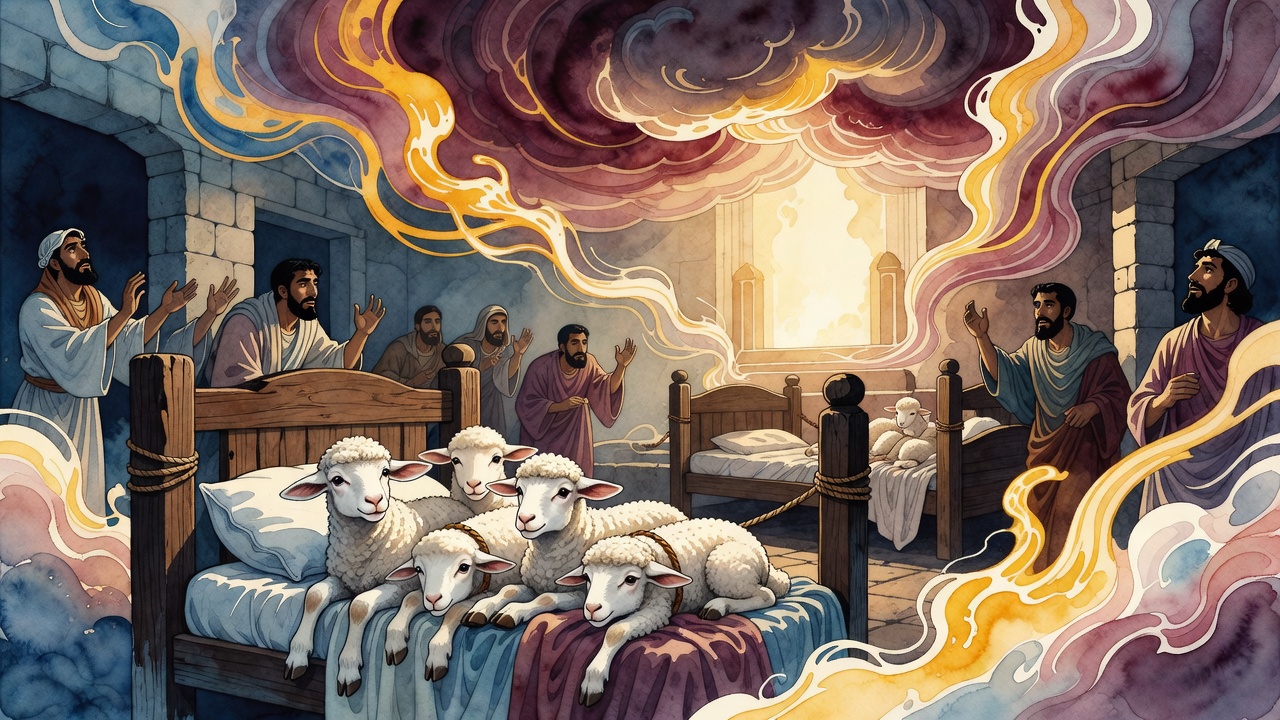
Rope scraped the bed leg. A lamb yanked, hooves knocking packed earth, and the knot a slave had tied held. Children sat up on the pallet. The animal Egypt called sacred was breathing in a Hebrew house, tied where feet landed in the dark.
 Click for full size
An overseer stopped in the doorway. He did not cross the threshold. His hands hung empty. The lamb bleated, and he flinched as if the sound itself were a crime he was no longer allowed to punish.
The Knot Held for Four Days
They had taken the animal on the tenth. The command was to keep it until the fourteenth. Four nights of wool smell in the room. Four mornings of an Egyptian walking past and seeing the rope.
Moses had already put the danger in Pharaoh's ear. "If we sacrifice the abomination of the Egyptians before their eyes, will they not stone us?" (Exodus 8:22). That warning had been a plea to go three days into the wilderness and kill the animal out of sight. Now the killing was scheduled in the house, in daylight, on a calendar Egypt could count on its fingers.
The lamb was not sent out to graze. It did not slip back into a flock and become one more anonymous back. It stayed marked. A girl stepped over the rope to fetch water. An old man slept with the smell of the animal in his beard. The bed shook when the lamb pulled, and nobody untied it.
On the second night an Egyptian neighbor came as far as the jamb, looked at the knot, and went away without a word. On the third he came again. The fourth morning he stood longer. His mouth was open. No stone left his hand.
Egypt Stood in the Doorway
Egypt had lived by signs. Star lore in the corners of houses. Craft that claimed to rule the river and the body. For generations Israel had learned which symbols made an overseer flinch. The lamb was one of those symbols, holy in the house of bondage, dangerous to touch.
What Egypt called holy, Israel bound to furniture. The overseer in the doorway felt his blood thin and could not raise a stick. Helplessness starts in the hands. He had struck these people for bricks. He could not strike them for this.
In the next house the same knot. In the next street the same bleating. Courtyard after courtyard learned the same hour. A people that had been crushed watched a master's face change and did not look away.
A Hebrew father kept his knife wrapped. Not yet. The waiting was the point. Terror grew in daylight, not only at midnight. Egypt could measure the hours left to its god and do nothing with the measurement.
Noon Brought the Knife
"Between the evenings" was not night and not dawn. Once the sun turned past midday, the hour opened. A lamb killed before noon would not count. Time itself was part of the dare. Egypt watched shadows shorten, then lengthen, and knew what the fourth afternoon would bring.
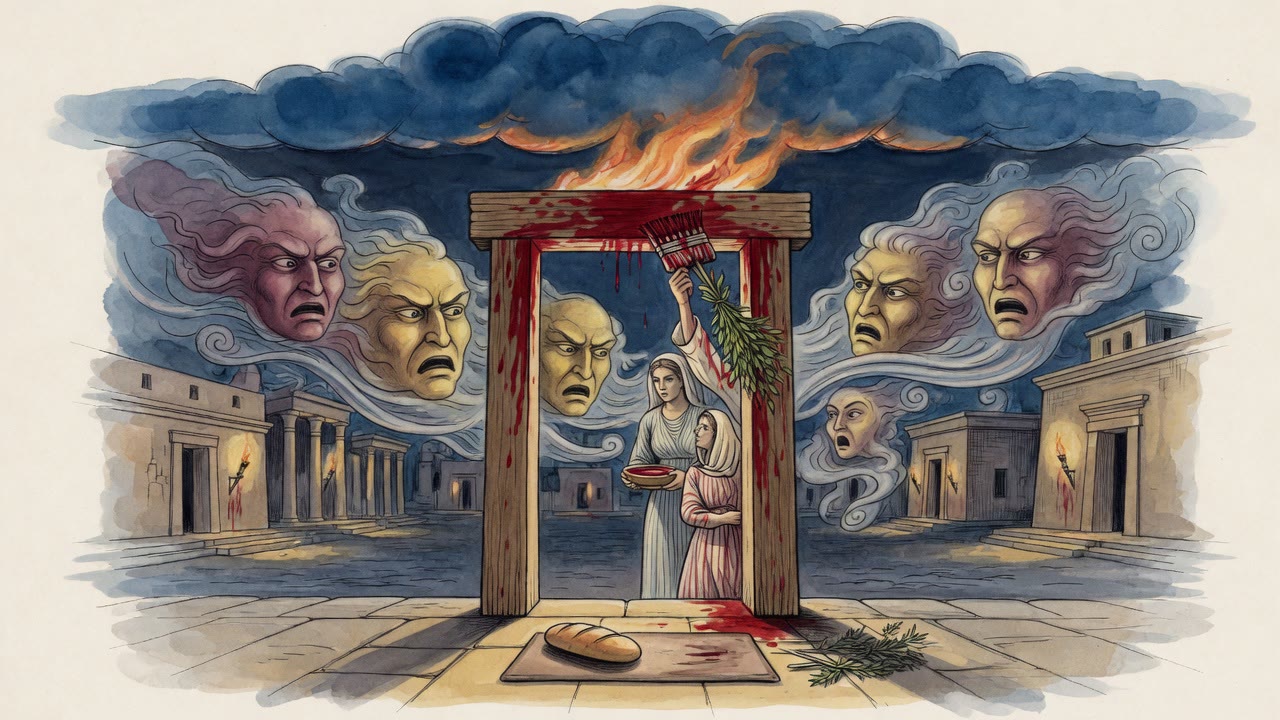
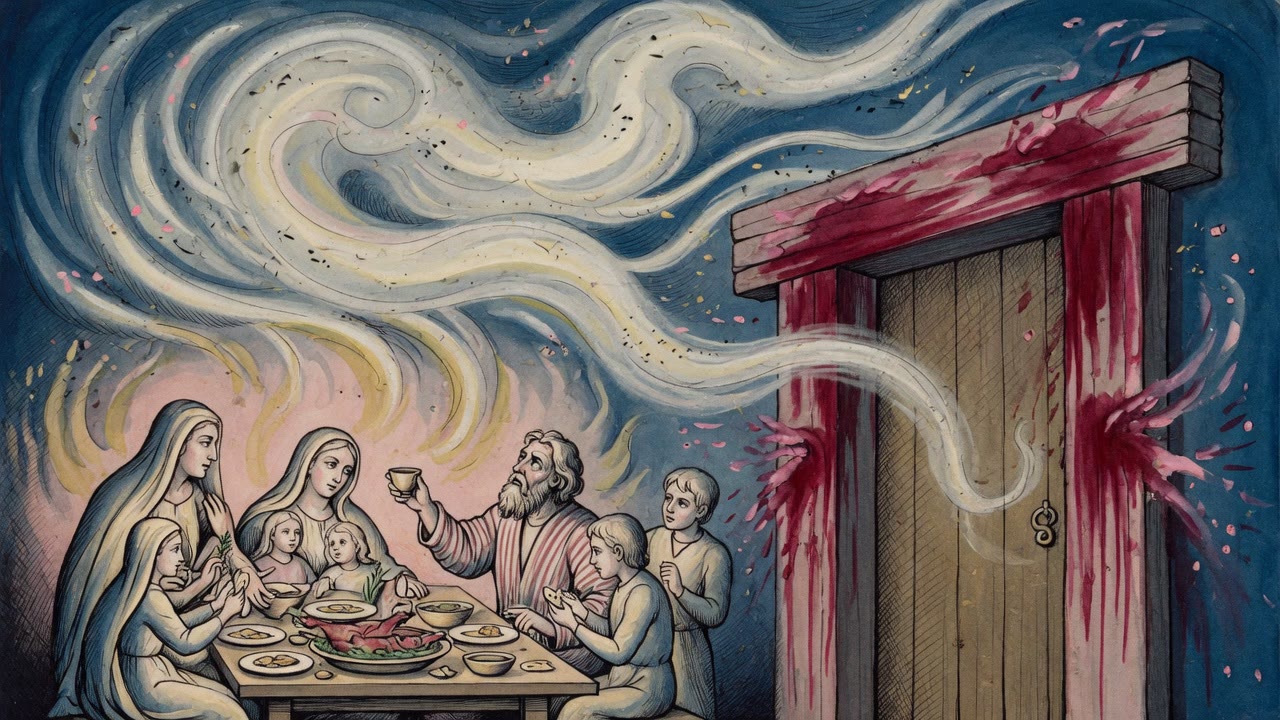
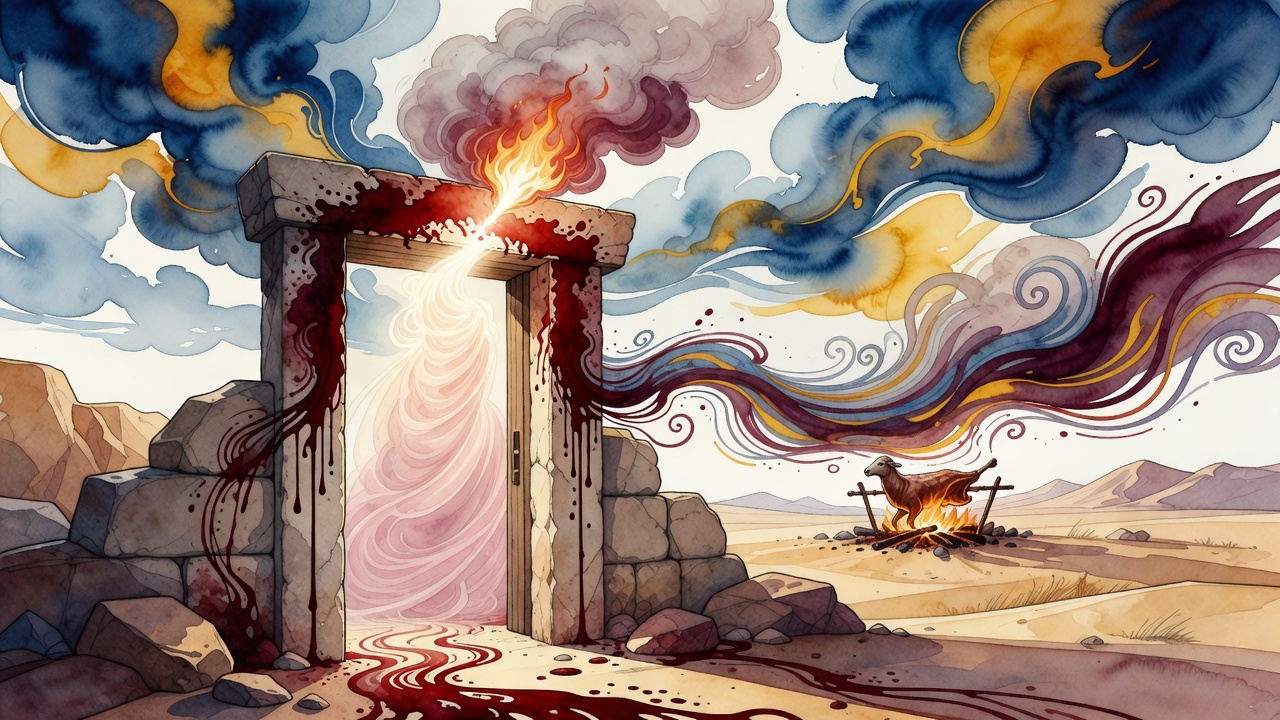
They slaughtered together. The nation moved in waves, three groups filling the courtyards until the ground went dark. Blood went on the doorposts and on the lintel. Flesh came off the fire. Loins girded. Staff in hand. They ate standing, as people eat when they do not plan to sleep in that room again.
The overseer was still in the street when the knife went in. He did not stone them. Moses' old warning had become a schedule, and the schedule had held. The animal twitched once against the scored bed leg and then did not twitch.
Children who had watched the rope for four days watched the blood next. Nobody told them to close their eyes. The house had already chosen a side.
The Unclean Land Still Underfoot
At the bush, years earlier, God had not spoken only of release from labor. He had spoken of extraction. Out of the unclean land, toward a good and wide land yielding milk and honey, toward the place of the Canaanite and the Hittite and the Amorite and the others named in the list. Egypt was bricks. It was also tumah (טומאה), a stain in the soil.
The lamb on the bed was the first border crossing. Before the Sea split, the house had already changed sides. Blood marked the door. Sandals waited. The unclean land was still under their feet, and they ate as people already leaving it.
On the road a man turned and spat toward the doorways they were quitting. The word that followed did not bless the spit. "You shall not despise an Egyptian, because you were a stranger in his land." Even a host who took Israel in for his own benefit is owed that restraint. God had stipulated a reward for Egypt anyway. Drowning closes a body in this world. Causing a person to sin closes this world and the next. The people who had tied Egypt's god to a bed were not released into contempt.
Milk and Honey Waited Beyond the Door
A mother stepped over the cut rope. The bed leg was still scored where the knot had been. The children who had heard the animal strain were already wearing their sandals. Staffs leaned by the door. The overseer had gone from the jamb at last, emptied.
The milk and honey still lay ahead on the map. Between that map and this room hung a rope, a bedpost, and ninety-six hours of a people standing in a house as if they were already free.
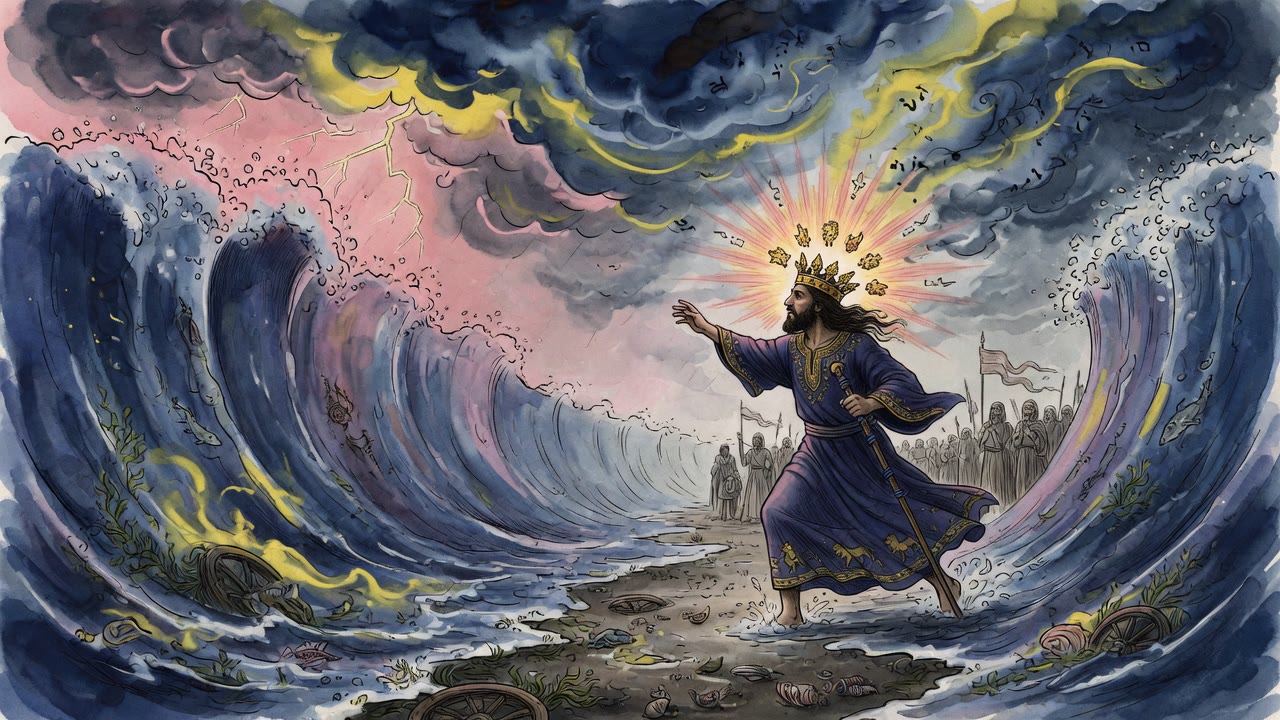
No staff had been raised over water yet. The first miracle in that room was an empty pair of Egyptian hands.
← All myths