Israel Cut a Hollow in Each Threshold to Catch the Lamb's Blood
On the night of the tenth plague, Israel carves blood into the threshold while neighbors keep twelve months of silence and trust.
Table of Contents
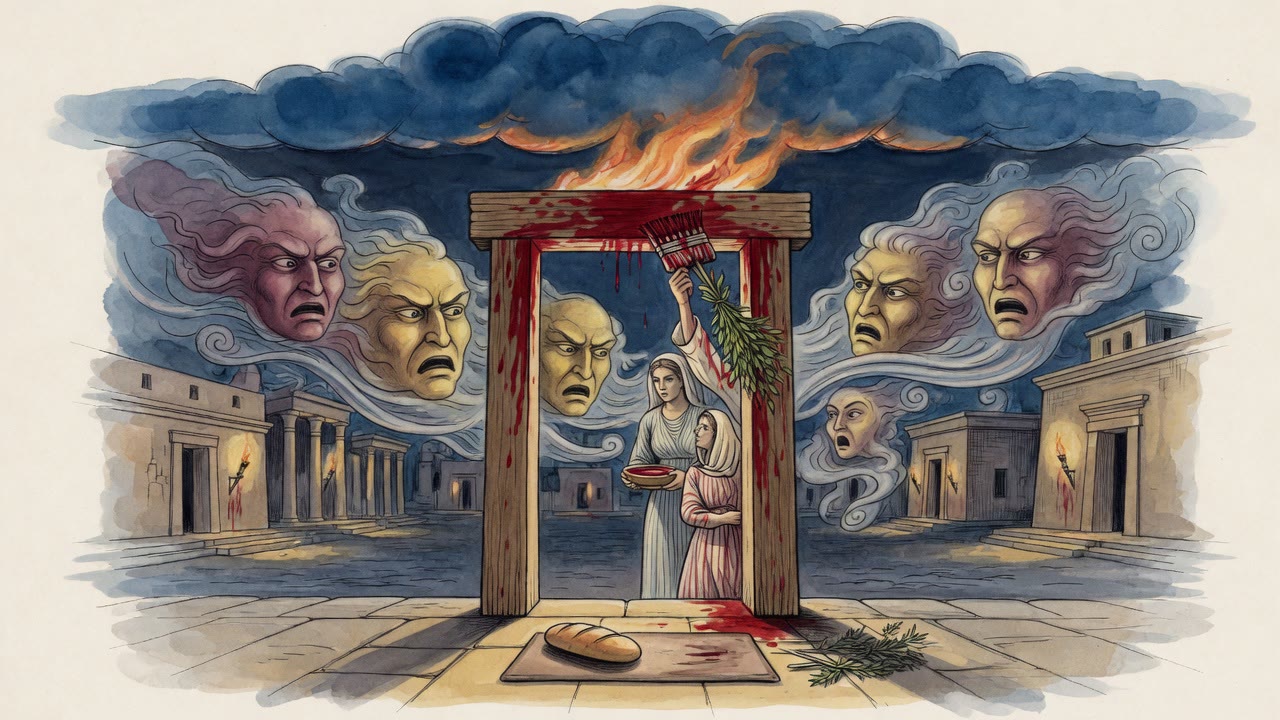
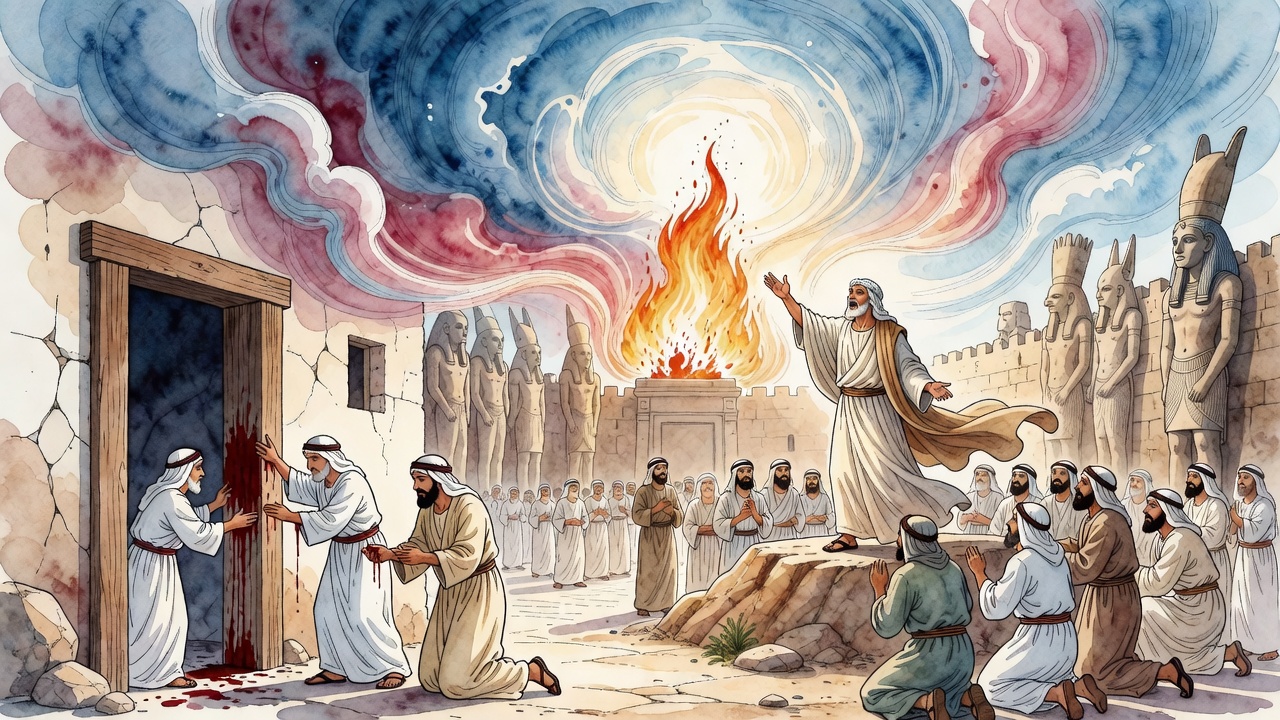
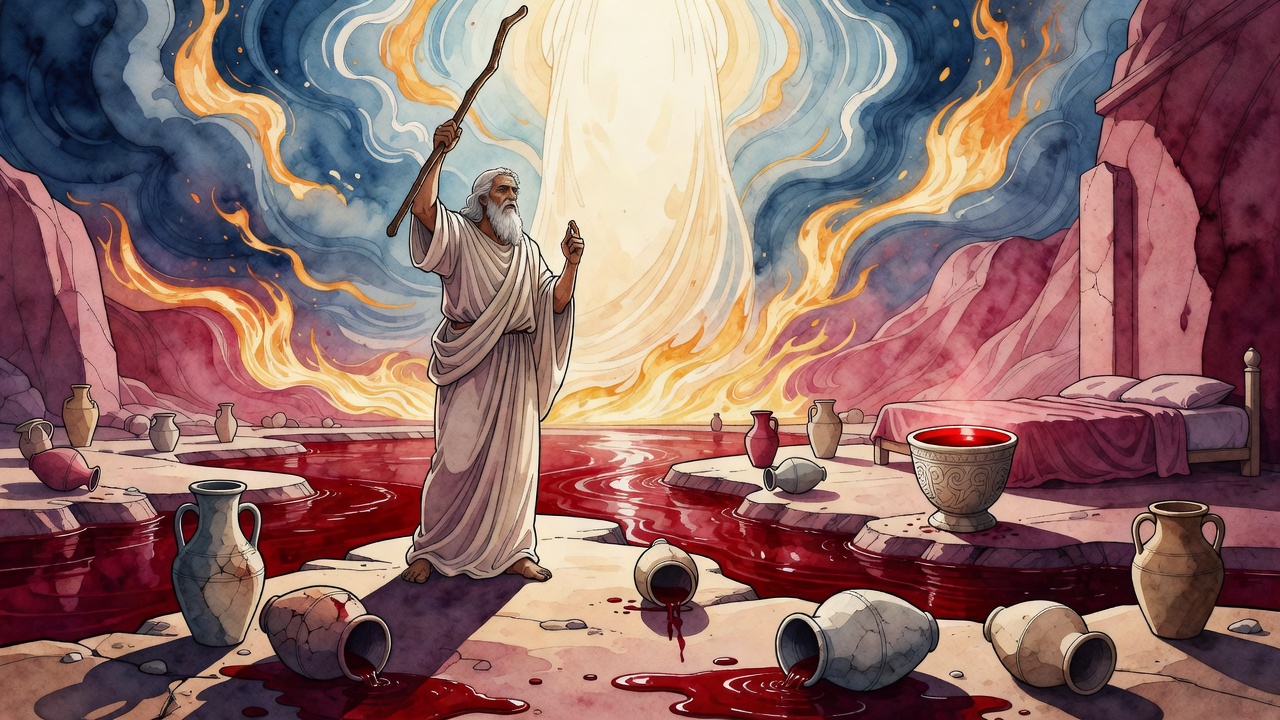
The lamb's blood ran into a hollow cut in the threshold. Not a bowl carried from the kitchen. The doorway itself held the pool. Each household had carved an indenture at the side of the entrance so the slaughter poured straight into stone and earth. Then a bunch of hyssop went down into that red water and came up wet for the lintel and the posts.
 Click for full size
Midnight was coming. Egypt's firstborn would not see morning. Israel worked in the dark with hands that still smelled of flock.
The Word Saf Means Threshold
Rabbi Yishmael would not let the verse soft-pedal the scene. The Torah says the blood is in the saf. Saf can mean basin. He insisted on threshold. Ezekiel speaks of thresholds set against thresholds. Isaiah hears the posts of the sippim shake. The combined force of the language puts the blood at the feet of every Israelite doorway, where the destroyer would have to pass.
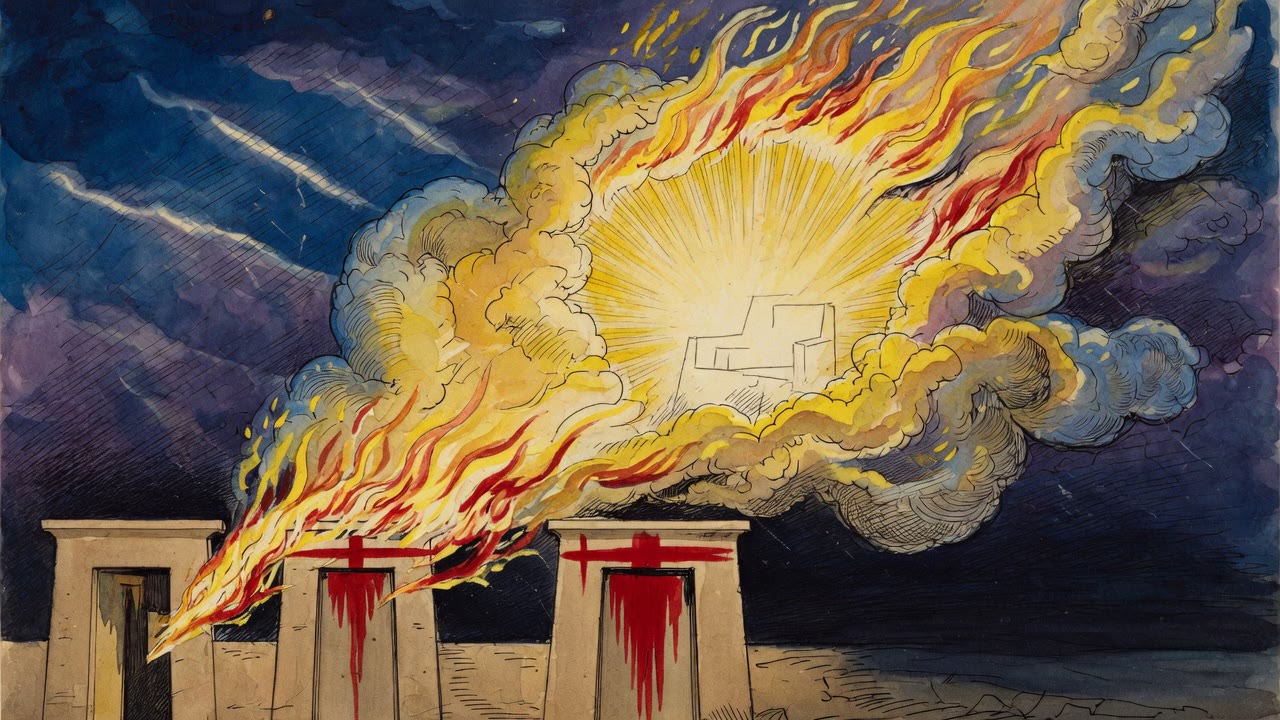
This was not a private kitchen rite. It was a public mark at the exact place a foot crosses from night into home. Anyone walking the street of Goshen could see which houses had obeyed. The lamb Egypt revered had been killed, and its blood sat in the ground like an open argument.
God Does Not Need the Sign
"And I shall see the blood, and I shall pass over you" (Exodus 12:13). On the surface the words sound as if the Holy One requires information. Rabbi Yishmael refused that reading. Darkness is not dark for God. He knows what is in the darkness, and light dwells with Him. The blood teaches nothing to the Knower of hearts.
It teaches Israel. The seeing is for their sake. They slaughtered what their masters honored. They painted the doorway at risk of discovery. In reward for that act, God said He would reveal Himself with compassion. Ufasachti, I shall pass over, is tied to a reaching that brings life, like birds that fly and shield, shielding and saving, paseach and rescuing (Isaiah 31:5). The blood became a door for mercy, not a memo for an uninformed God.
Where You Are, Not Only Where You Eat
Another verse narrows the paint job to "the houses in which they eat it." A cold thought follows. What of the rooms where people sleep? In many houses the meal and the bed are not the same space. On a night of death, a gap in coverage is not a legal curiosity. It is terror.
The wider verse answers: "upon the houses where you are." Wherever an Israelite is present, the mark covers. Eating, sleeping, simply breathing in a room, the shield follows the life, not the plate. God's protection that night was not a ward on architecture. It was a claim on persons who move between rooms while the destroyer walks the street.
Twelve Months Without a Traitor
The night did not stand alone. For twelve months after Moses first stood before Pharaoh, Israel lived inside the plagues' pressure. Each family knew where its neighbors kept silver and gold. God had already told them they would ask Egyptian neighbors for jewels at the end. The knowledge of hiding places sat in every slave quarter like dry tinder.
No one informed. Not for lighter labor. Not for better rations. Not for the brief safety of currying favor with an overseer. The community held a secret that could have bought personal relief, and the secret did not leak. From that silence the sages later named two qualities: they were not suspect of slander, and they loved one another. Holding the tongue for a year under slavery is not a soft virtue. It is daily refusal.
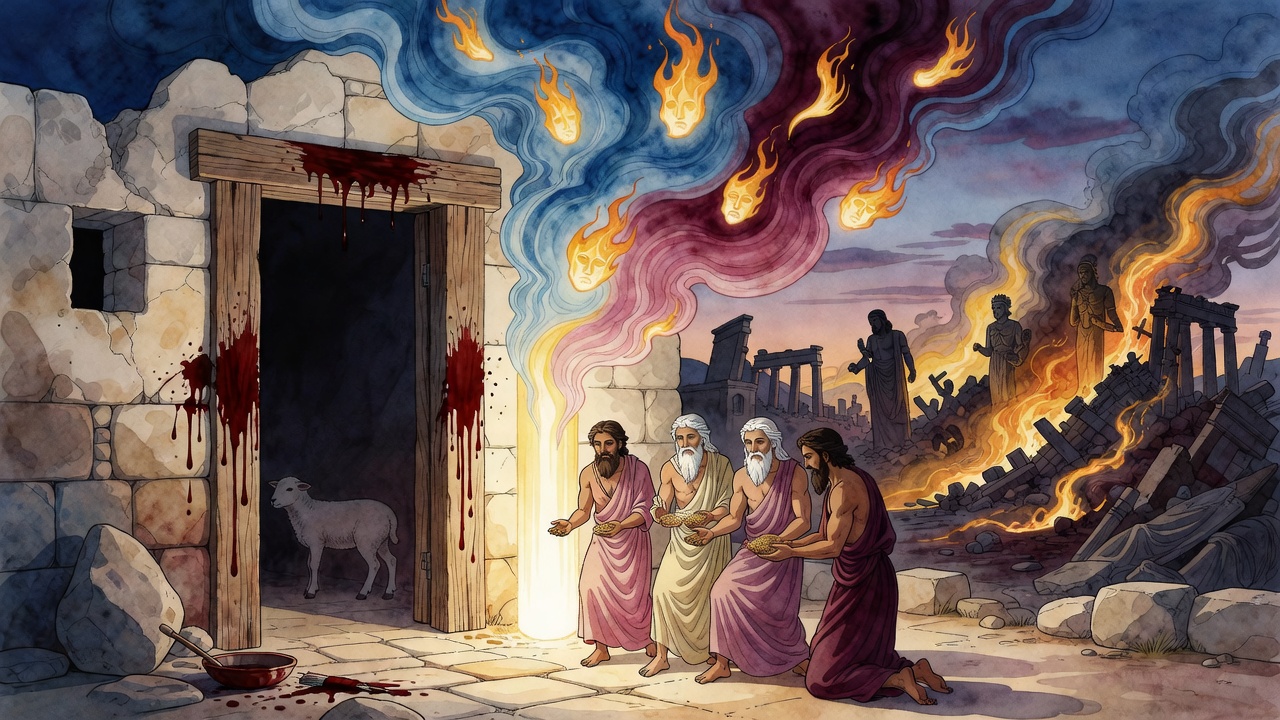
So when the hyssop rose from the threshold pool and the blood darkened the wood above, it was not only a ritual. It was the last mark on a people who had already practiced loyalty in the dark. The destroyer passed. The firstborn of Egypt did not. In the morning, the thresholds still held their hollows, sticky and quiet, while a nation walked out carrying dough that had no time to rise.
Children watched from the back of the room. Elders held the knife steady because a trembling hand on this night was more than nerves. It was a life on the wrong side of a door. Hyssop is a small plant, ordinary enough to grow where people live. The bunch bound together soaked up what the threshold held and carried it upward. Lintel. Doorpost. Doorpost. The house wore the mark at head height and at foot height, as if the whole frame had agreed to speak one word.
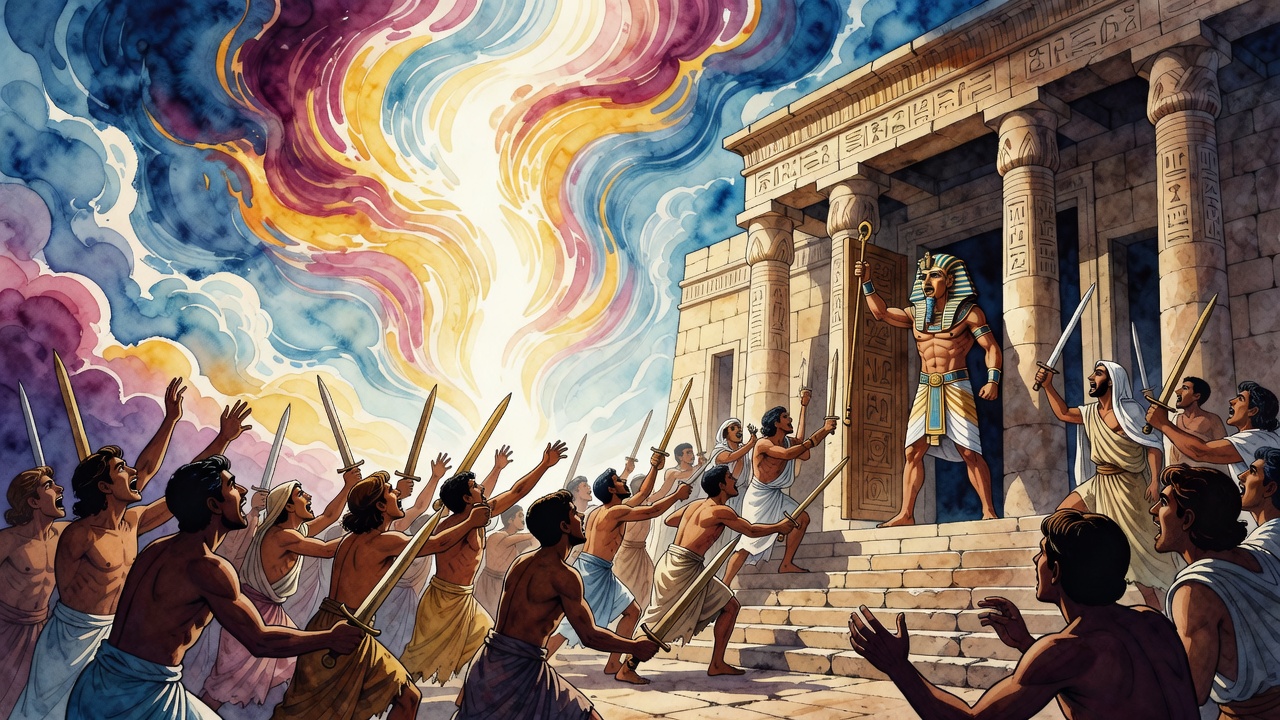
A human king needs banners to know which city surrendered. God needs no banner. He still commanded one, so that the people who risked the paint would feel the mercy land where their courage had already landed. A child asleep in a back room should not be less covered than a father at the table. So a family could finish the roasted lamb, lie down, rise to pack dough, and still be under the same sign. Behind them in the morning, empty doorways of Goshen kept the red proof of a night when mercy had an address.
← All myths