Parshat Bo5 min read

Blood on the Doorposts When Egypt Finally Broke

At twilight they slaughtered the lamb and painted both posts. One command of blood bought mercy while Egypt's idols melted and favor filled Israelite hands.

Curated by Arthur · Told by Maggid ·
Table of Contents
  1. Twilight Knives
  2. One Command, Mercy Out of Proportion
  3. From Passover Blood to the Mezuzah
  4. Idols Melted, Hands Filled
  5. Morning After the Blood
Blood on the Doorposts When Egypt Finally Broke Click for full size

Twilight Knives

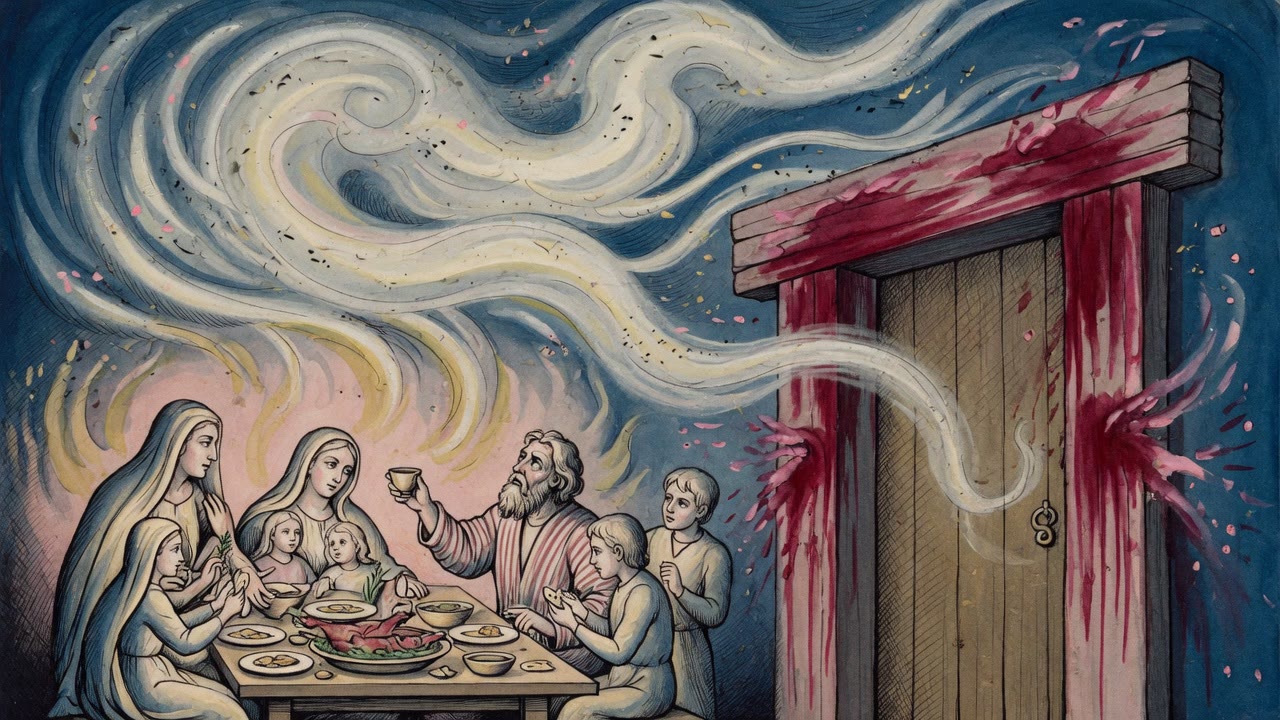
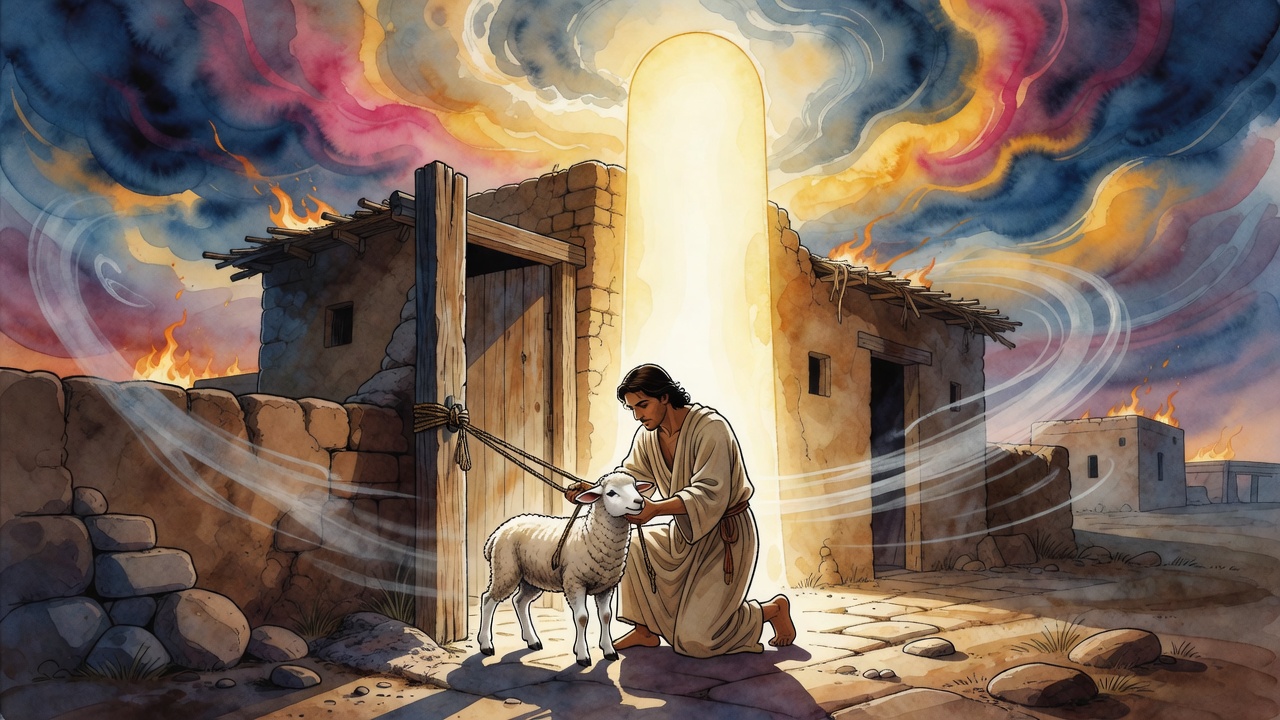
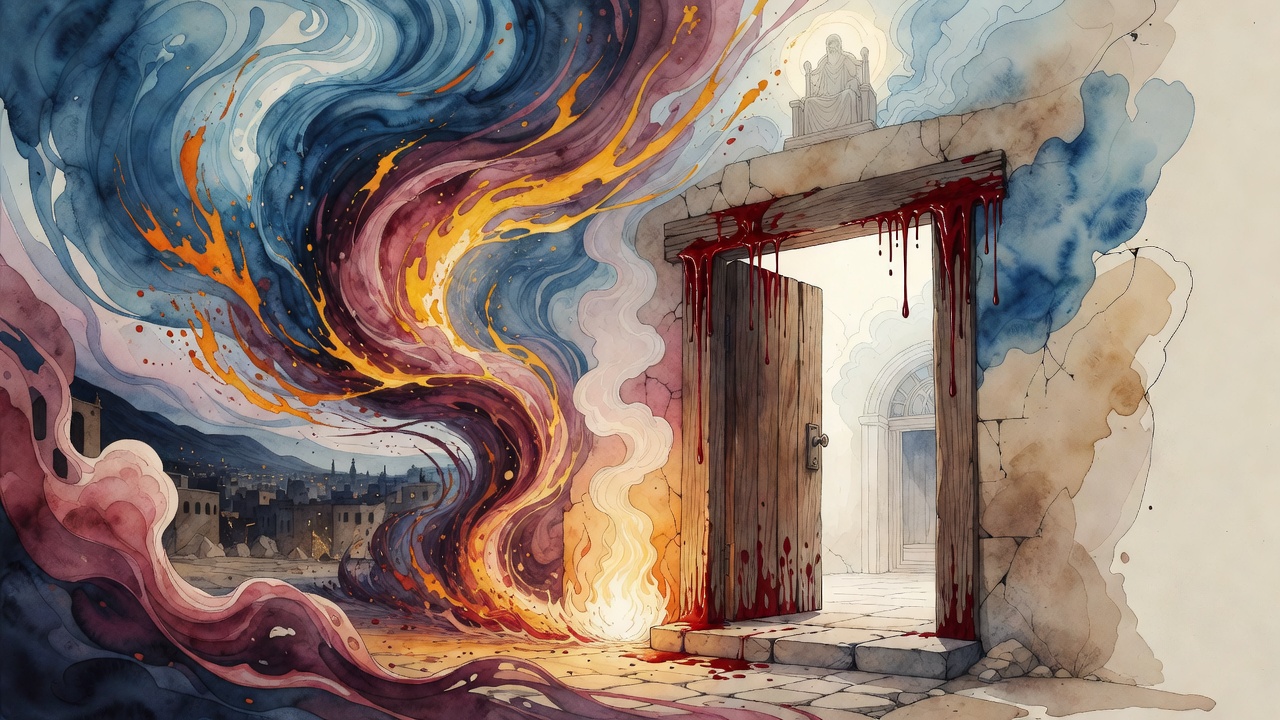
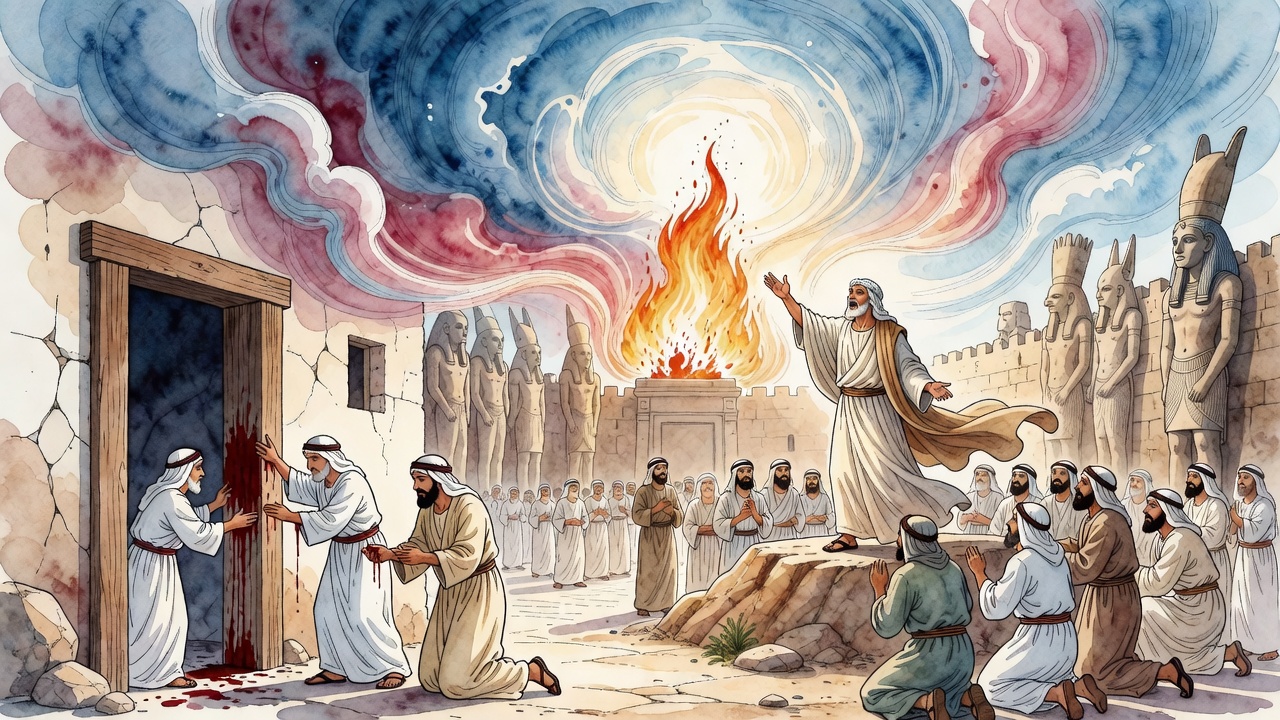
In Egypt the light thinned and the lambs died at the appointed edge of day. Israel slaughtered the Passover at twilight and took the blood to the doors. They struck it on both doorposts and on the lintel, a wet sign for a night that would not treat every house the same (Exodus 12).
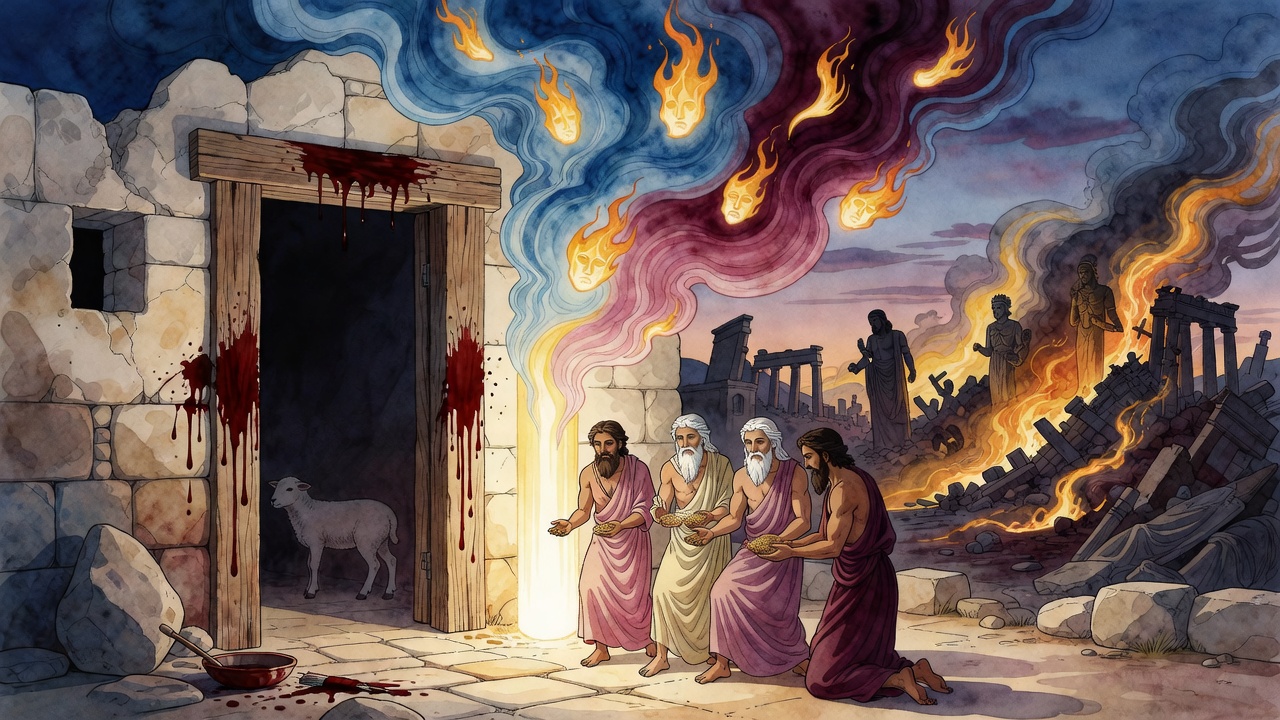
Inside, families stood ready with staff in hand and sandals on. Dough without leaven waited in bundles. Outside, a firstborn darkness moved through the streets where dogs had already begun to howl. The blood was not decoration. It was a claim that this house belonged to the Lord and not to the gods of the land that held them in brick and river.

A father dipped hyssop and painted. A mother watched the wet line dry and crack slightly in the heat still left in the wood. A child asked if the Destroyer could read Hebrew. No one laughed. Someone said only, paint it thick, and keep the door shut when the night starts speaking.

One Command, Mercy Out of Proportion

The sages pressed the verse that the blood was a sign for you. The sign was not for God, who needs no paint to know His own. It was for Israel, so their hands would do one hard thing in public twilight and heaven would answer with more mercy than the act seemed to buy on any human scale of trade and reward.

One mitzvah done with full weight can open a door larger than itself. The midrash treats that night as proof. A stripe of blood on wood, and an empire's grip slipped. The reward of one command outran the size of the command the way a key outruns the weight of the iron it turns in a lock that seemed forever sealed.

That is not an invitation to do less forever. It is a warning that small obedience at the right hour is never small in heaven's arithmetic, and that a house that refuses the stripe has already chosen another master for the night that is coming down the street.

From Passover Blood to the Mezuzah

The same blood logic does not die when the night ends and the sea has closed. The midrash draws a line from the blood of Passover to the mezuzah (the small parchment scroll fixed to a doorpost) that guards the home in later generations. A doorway remains a place of claim. Words on parchment replace the wet stripe, but the house still announces whom it serves when a hand touches the case on the way out to the road.

A Jew who kisses the mezuzah (a doorpost scroll) is not performing a charm against random luck. He is repeating, in quieter ink, the night when blood said this threshold is not Egypt's and the Destroyer must pass over what God has marked for life.

The Destroyer of that night has a long shadow. Guarding the door remains a practice of memory as much as of law, a small daily return to twilight knives and wet wood and the sound of a child asking a question no one wanted to answer too loudly.

Idols Melted, Hands Filled

While Israel painted, Egypt broke in other ways. The Lord gave the people favor in the eyes of the Egyptians, and they asked for silver and gold and clothing. What had been withheld for generations poured into Israelite hands on the way out, heavy and strange and suddenly free of the overseer's count.

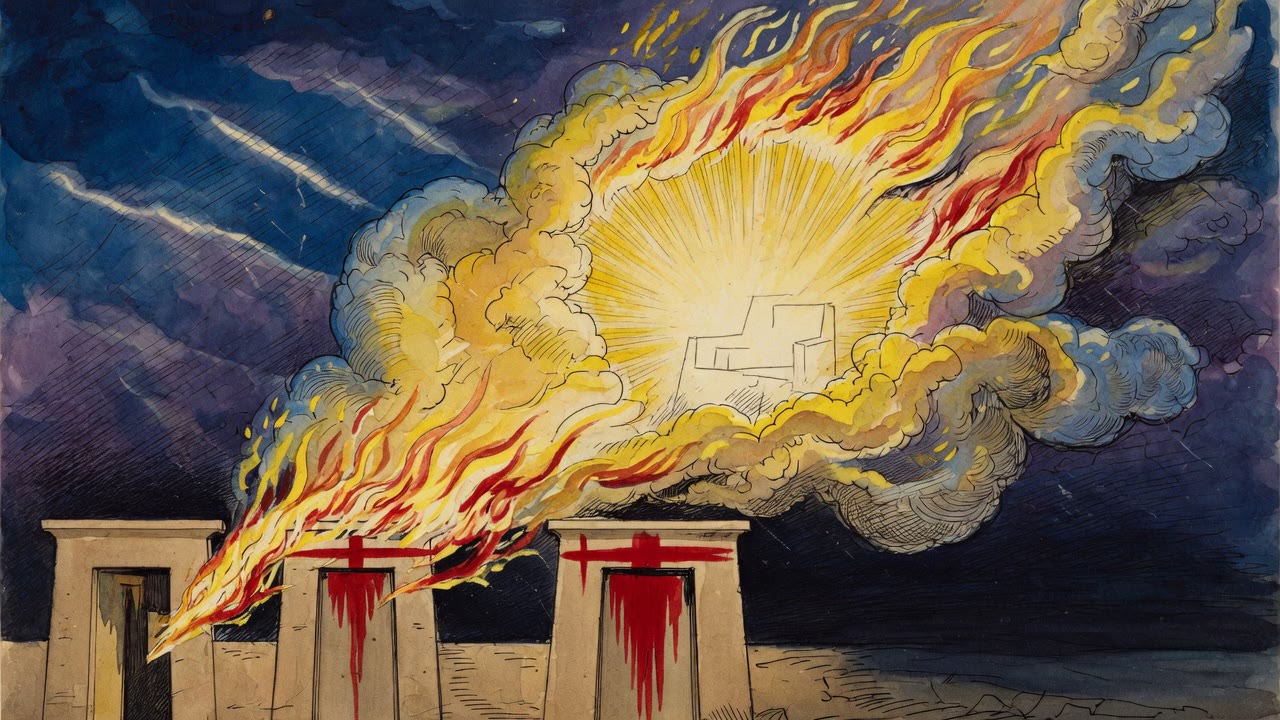
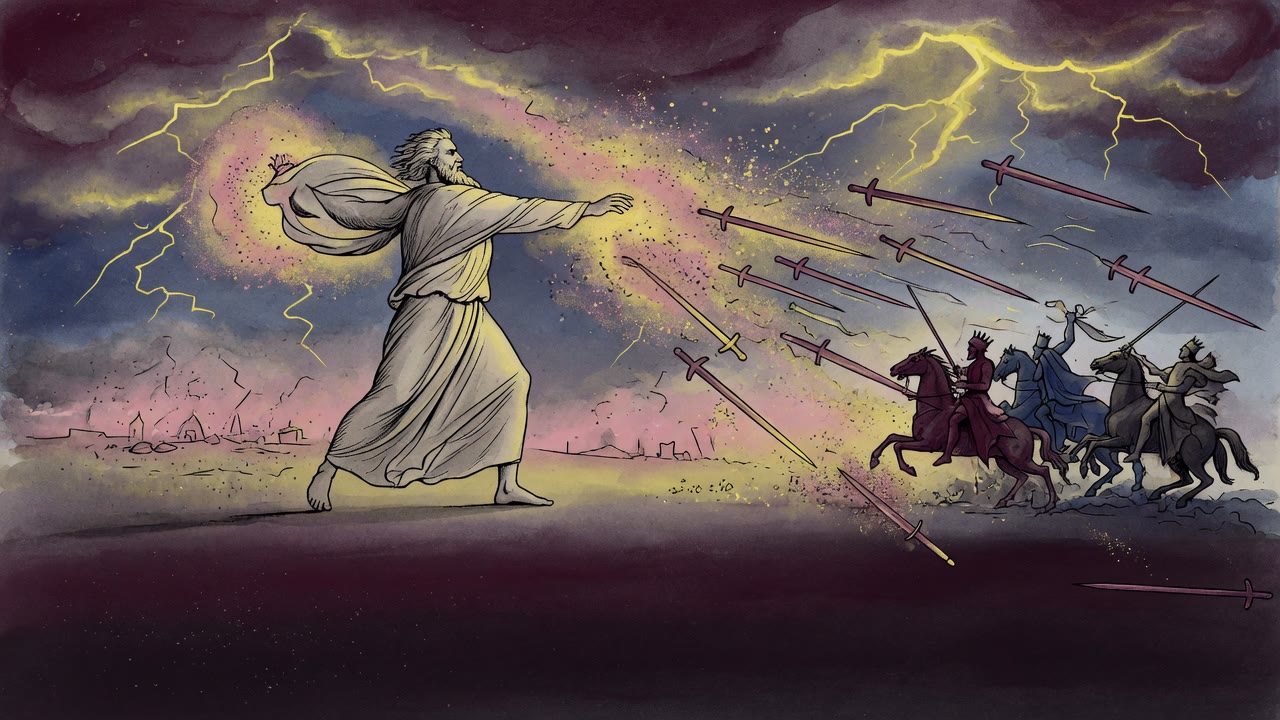
The idols of Egypt melted away. The gods that had watched brick quotas and river drownings lost their faces in the same crisis that took the firstborn. Favor and collapse traveled together down the same streets. Israel left heavy with goods and light of the fear that those gods were real rivals to the Name that had claimed the doors.

A woman carried a borrowed earring that would never be returned. A man carried a cloak that once hung in an Egyptian house and still smelled of another family's smoke. The wealth was not theft in the midrash's framing. It was back wages under a decree, and a sign that the land's power had cracked from top to bottom in a single night.

Morning After the Blood

Dawn found doors still marked and streets full of wailing that was not Israel's. The camp moved. Unleavened dough on their shoulders. Staffs in their hands. Behind them, a kingdom that had trusted brick and river and image sat gutted of its heirs and its gods, while marked lintels stood like quiet witnesses that needed no speech.

One twilight of obedience. One stripe of blood. One night of favor and melting idols. The mezuzah will keep the doorway speaking long after the hyssop is dry and gone. Egypt's lesson stays painted in every generation that still knows how a door can save a house when the night finally chooses sides and walks past the blood.


← All myths

From the tradition

Sources

4 sources

The texts behind this telling. Some cards carry a translation of the source; others are our own retelling of it, and each card says which. Every card links out to the original.

Yalkut Shimoni on Torah 197:1Yalkut Shimoni on Torah

Translation of the source text.Torat Emet (Yalkut Shimoni) · CC-BY-NC

"Between the evenings" (Exodus 12:6). I might hear it means at the fading of the sun; Scripture teaches "in the evening" (Deuteronomy 16:6). If "in the evening," I might think after dark; Scripture teaches "as the sun goes down" (Deuteronomy 16:6). If "as the sun goes down" -- "and you shall cook and eat" -- that is from after dark. Rabbi [Yehudah HaNasi] says: it says, "there you shall slaughter the Passover in the evening" (Deuteronomy 16:6); I might hear it as its plain sense; Scripture teaches "at the season of your going out from Egypt." When did Israel go out of Egypt? From the sixth hour and onward, as it says, "and it came to pass on the very day" (Exodus 12:41). Rabbi Natan says: from where do we know that "between the evenings" is from the sixth hour and onward? Though there is no proof for the matter, there is a remembrance of the matter: "for the day has turned, for the shadows of evening stretch out" (Jeremiah 6:4). Rabbi Shimon ben Yochai says: Scripture comes to equate the first with the last and the last with the first -- "the season of your going out" for its slaughter, "as the sun goes down" for its roasting, "in the evening" for its eating.

"Between the evenings." Ben Beteira says: between the evenings, slaughter it -- give an evening for slaughtering and an evening for eating. "And they shall take from the blood" (Exodus 12:7). I might hear it whether by hand or with a vessel; Scripture teaches "which is in the basin (saf)" (Exodus 12:22). Scripture tells that a hollow was carved beside the threshold and they slaughter into it, for "saf" means nothing other than threshold, as it is written, "in their placing their threshold (sippam) by my threshold" (Ezekiel 43:8), and it is written, "and the posts of the thresholds (sippim) shook"; these are the words of Rabbi Yishmael. Rabbi Akiva says: "saf" means nothing other than a vessel, as it is said, "and the basins (sippot), and the snuffers, and the bowls" (1 Kings 7:50).

"And they shall place it on the two doorposts" (Exodus 12:7): from the inside. Or perhaps only from the outside? Scripture teaches, "and I shall see the blood" (Exodus 12:13) -- what is seen by Me and not by others; these are the words of Rabbi Yishmael. Rabbi Yonatan says: from the inside. Or perhaps only from the outside? Scripture teaches, "and the blood shall be for you for a sign" (Exodus 12:13) -- for you for a sign and not for others for a sign. Rabbi Yitzchak says: always from the outside, so that the Egyptians would see and their innards be cut up with anguish.

"And they shall place it on the two doorposts and on the lintel" (Exodus 12:7): I might hear that if one put this before that he has not fulfilled the duty; Scripture teaches, "and you shall touch the lintel and the two doorposts" (Exodus 12:22) -- thus if one put this before that, he has fulfilled it. We find ourselves learning that our ancestors in Egypt had three altars: the lintel and the two doorposts. Rabbi Shimon says: there were four -- the threshold, the lintel, and the two doorposts.

Full source
Yalkut Shimoni on Torah 200:1Yalkut Shimoni on Torah

Translation of the source text.Torat Emet (Yalkut Shimoni) · CC-BY-NC

(Exodus 12:13) "And the blood shall be for you a sign" - for you a sign, and not for Me a sign. "For you a sign" - and not for others a sign. "On the houses." Why is this said? Has it not already been said, "on the houses in which they shall eat it" (Exodus 12:7)? From that I would know only the houses in which they eat it; from where the houses in which they sleep? The verse states, "on the houses where you are" - in any case. "And I will see the blood." Rabbi Ishmael used to say: But is not everything revealed before Him, as it is said, "He knows what is in the darkness, and the light dwells with Him" (Daniel 2:22), and it says, "Even the darkness is not too dark for You" (Psalms 139:12)? Then why does the verse say, "And I will see the blood"? Rather, as the reward of one commandment that you perform, I reveal Myself and have compassion upon you, as it is said, "And I will pass over you" (Exodus 12:13). "Passing over" means nothing but sparing, as it is said, "As birds flying, so will the LORD of hosts protect Jerusalem; He will deliver it as He passes over and rescues it" (Isaiah 31:5).

Full source
Yalkut Shimoni on Torah 206:6Yalkut Shimoni on Torah

Translation of the source text.Torat Emet (Yalkut Shimoni) · CC-BY-NC

Another interpretation: "I place My wrath (evrah) and My terror upon Egypt" - evrah means nothing other than fury, and so on. "And He will see the blood" - is not everything revealed before Him? And so on. "And the LORD will pass over the door" (Exodus 12:23).

And these matters are an argument from minor to major: if the blood of the Passover in Egypt, which is the lighter case - for it lasted only for the moment, and does not apply by day and by night, and does not apply for the generations - yet of it is written, "He will not allow the Destroyer to enter," then the mezuzah, which is the weightier case - for it contains the special divine Name ten times, and applies by day and by night, and applies for all generations - how much more so that He will not allow the Destroyer to enter. And what brought it about (that protection should ever fail)? Our iniquities, as it says, "Your iniquities have turned these away" (Jeremiah 5:25). And it says, "But your iniquities have separated" (Isaiah 59:2).

"And you shall keep this matter" (Exodus 12:24) - to bring the Passover of the generations, that one shall bring it only from the lambs and from the goats. It is written, "as a statute for you and for your children forever." Why is this said? Because it says, "and they shall take of the blood," I might hear that even the women are included; therefore Scripture teaches, "as a statute for you and for your children" - the men, but not the women.

Full source
Yalkut Shimoni on Torah 208:10Yalkut Shimoni on Torah

Translation of the source text.Torat Emet (Yalkut Shimoni) · CC-BY-NC

"And the LORD gave the people favor" and so forth, "and they lent them" (Exodus 12:36). According to its plain meaning: a man had no sooner said "Lend me" than the other brought it out and gave it to him; these are the words of Rabbi Ishmael. Rabbi Yose the Galilean says: they trusted them from the three days of darkness, for they would say, "If at the time when we were in darkness and they were in light, they were not suspected of theft, how much less now would they be suspected?" Rabbi Eliezer says: the Holy Spirit rested upon them, and an Israelite would say to an Egyptian, "Lend me your vessel that is laid up for you in such and such a place," and the other would bring it out and give it to him. And "favor" means nothing other than the Holy Spirit, as it is said (Zechariah 12:10), "And I will pour upon the house of David a spirit of favor and supplications."

Rabbi Nathan says: there is no need to say "and they lent them," but rather what they did not even ask for, the Egyptians would lend them; and thus an Israelite would say, "Give me a certain object," and the Egyptian would say to him, "Take this for yourself, and another like it."

"And they despoiled the Egyptians" (Exodus 12:36). This tells that their idolatry was melted down and annulled and reverted to its original raw state. And from where do we learn that the plunder at the Sea was greater than the plunder of Egypt? As it is said, "And you increased and grew great and came into excellent ornaments [adi adayim]" (Ezekiel 16:7). "Adi" is the plunder of Egypt, "adayim" is the plunder of the Sea. (Psalms 68:14) "The wings of a dove covered with silver," this is the plunder of Egypt; "and her feathers with yellow gold," this is the plunder of the Sea. (Song of Songs 1:11) "We will make you rows of gold," this is the plunder of the Sea; "with studs of silver," this is the plunder of Egypt.

Full source