The Night Israel Slaughtered the Gods of Egypt
God orders every Israelite household to bind Egypt's holy lamb at the doorpost and slaughter it the night the empire's firstborn die.
Table of Contents
 Click for full size
The Command That Made Moses Flinch
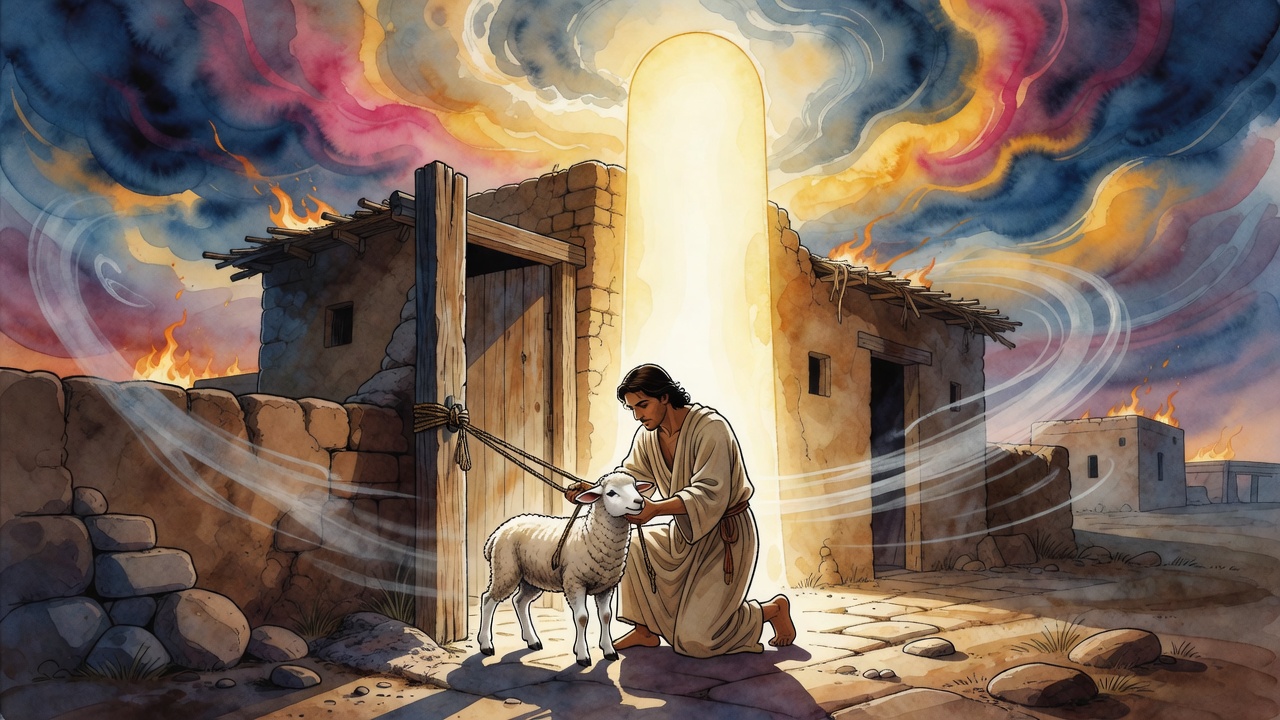
Four days before the last night in Egypt, God told Moses to send every household out after a lamb. Not to hide it in a back room. To take it, bind it, and tie it at the doorpost where the whole street could watch it breathe.
Moses knew what a lamb was to the men holding the whips. Not livestock. A god. The Egyptians bowed to the ram, carved it into the walls of their temples, would not eat it and would not let it be harmed. Now the slaves were to drag one home by a rope, lash it to the post, and let it bleat there for four days while their masters walked past on the way to work.
"Master of the universe," Moses said, "how can I do this? If we slaughter the abomination of the Egyptians in front of their eyes, will they not stone us?" He had raised the same fear once already, back when the plagues were still falling. It had not eased. This blow was heavier. God was not sending it down from the sky. God was putting a knife in the shaking hand of every Israelite and aiming it at the holiest thing in Egypt.
By Your Life, They Will Slaughter Their God
God did not soften it.
"By your life," He told Moses, "Israel will not leave this place until they slaughter the god of Egypt before the eyes of Egypt, so that I may show them their gods are nothing."
Freedom from Pharaoh was not the whole of it. A slave could walk out of Egypt still carrying Egypt inside him, still flinching at the ram on the temple wall, still half believing the masters had been right about who ruled the world. God wanted the lie killed first, out in the open, by the hands of the people who had been taught to fear it. The lamb at the doorpost was the test. Bind the god. Hold the knife. Wait four days, and do not look away.
Four Days at the Doorpost
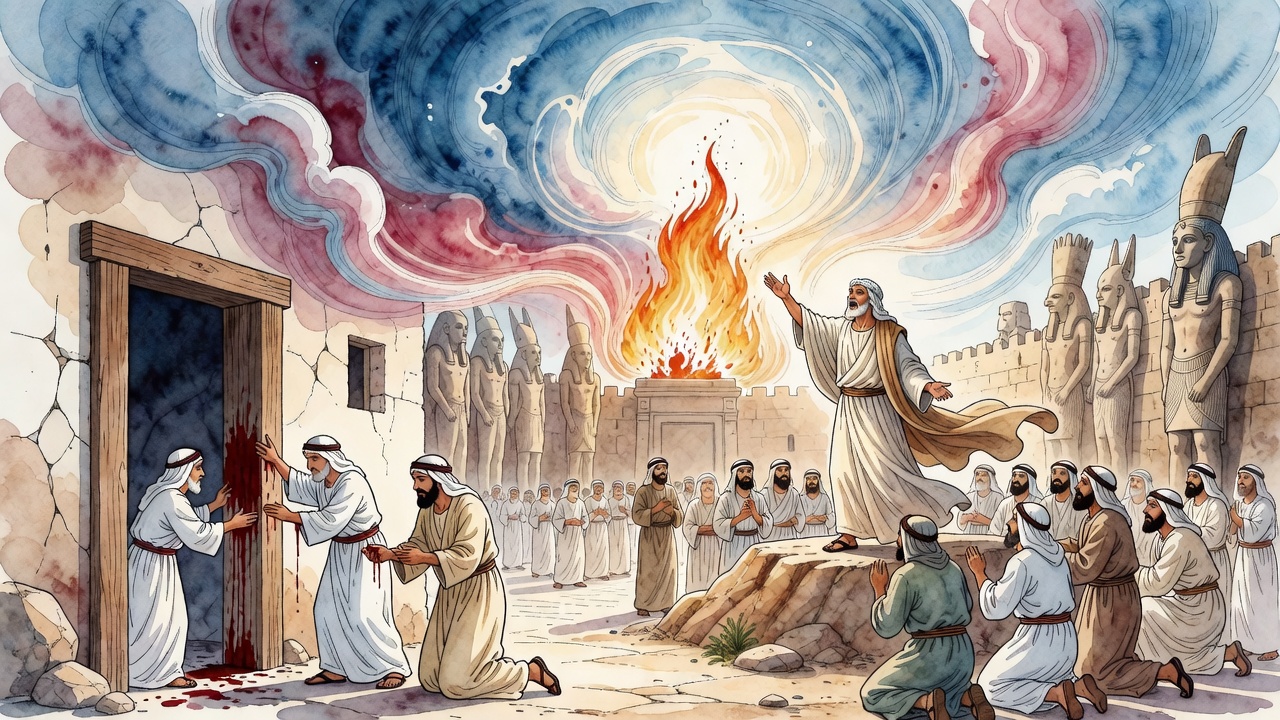
So they took the lambs. In every Israelite house the rope went around the neck, the animal was led to the front of the dwelling, and there it stayed. Egyptian neighbors saw it. Egyptian masters saw it. For four days the sacred beast of the empire stood tied at slave doorways, marked for a death nobody stopped, and no thunderbolt came.
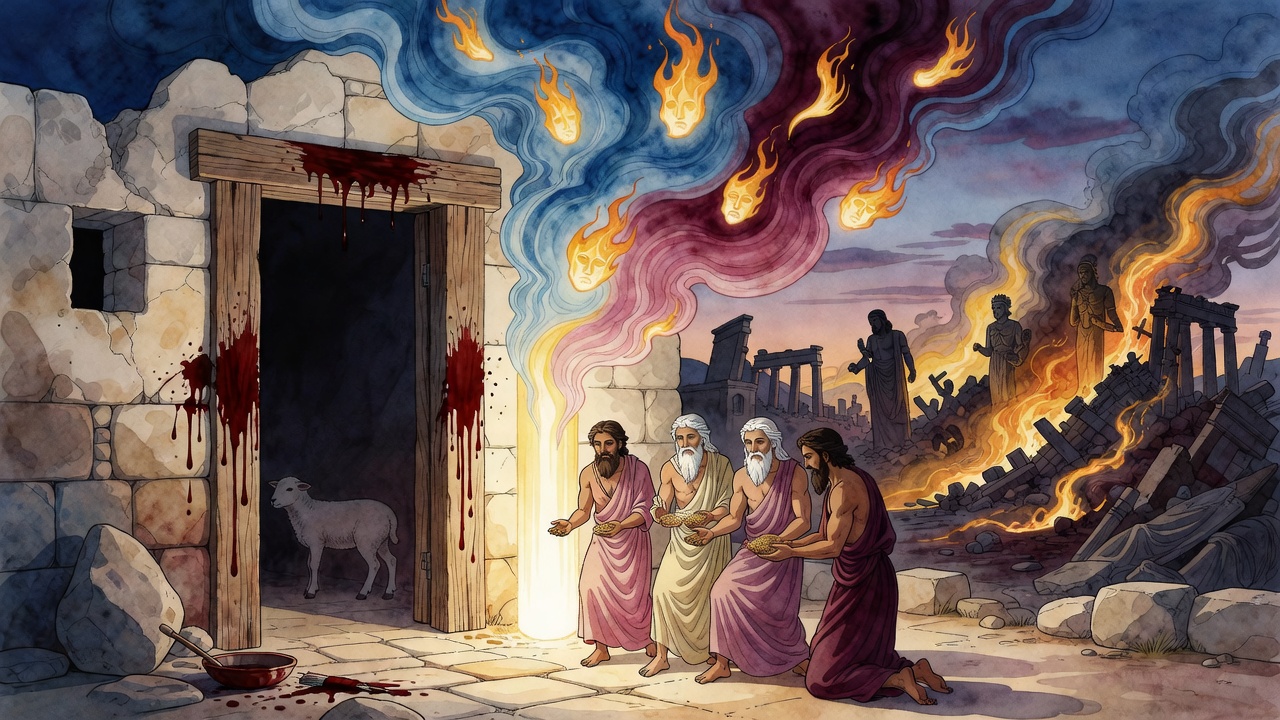
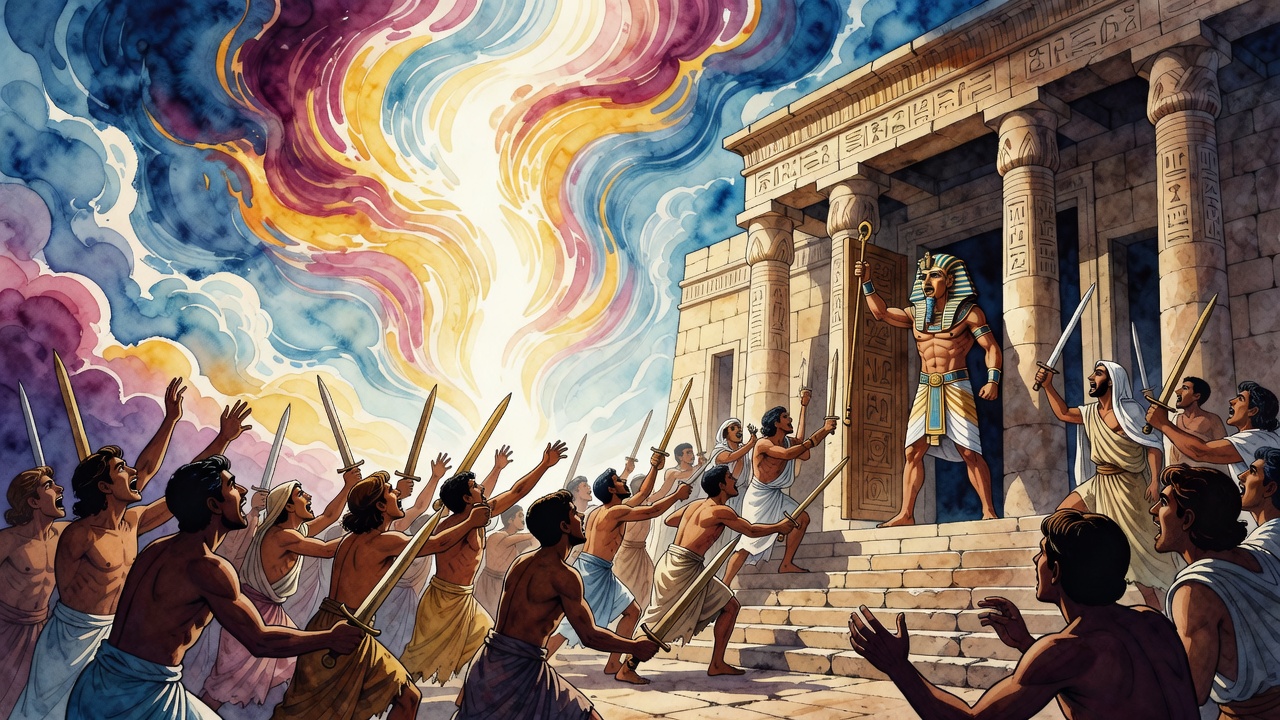
On the fourteenth day, as the sun went down, the knives came out across Goshen in the same hour. They slaughtered them all, one to a household, and caught the blood in basins. With hyssop they struck it across the lintel and down both doorposts, until the front of every Israelite house wore the blood of Egypt's god like a smeared banner. Then they went inside, barred the door, and roasted the thing they had killed. The smell of it must have carried down every street in the land.
The Night the Firstborn Fell and the Gods With Them
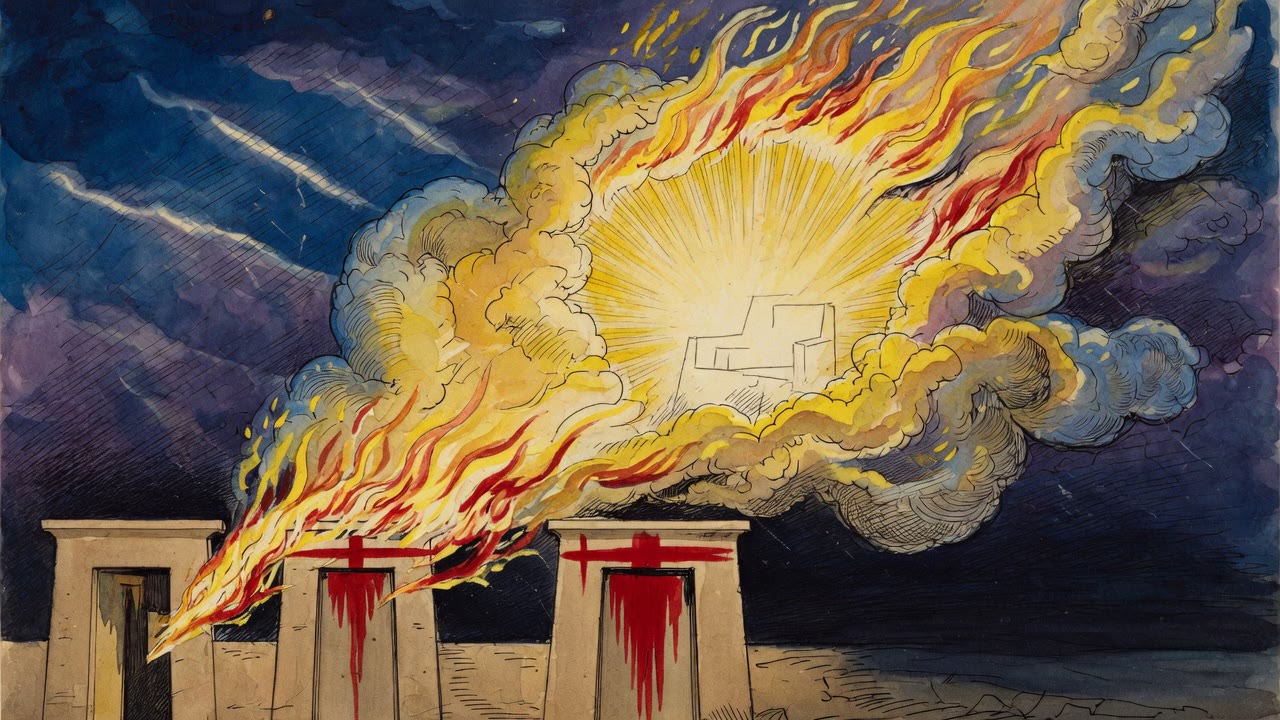
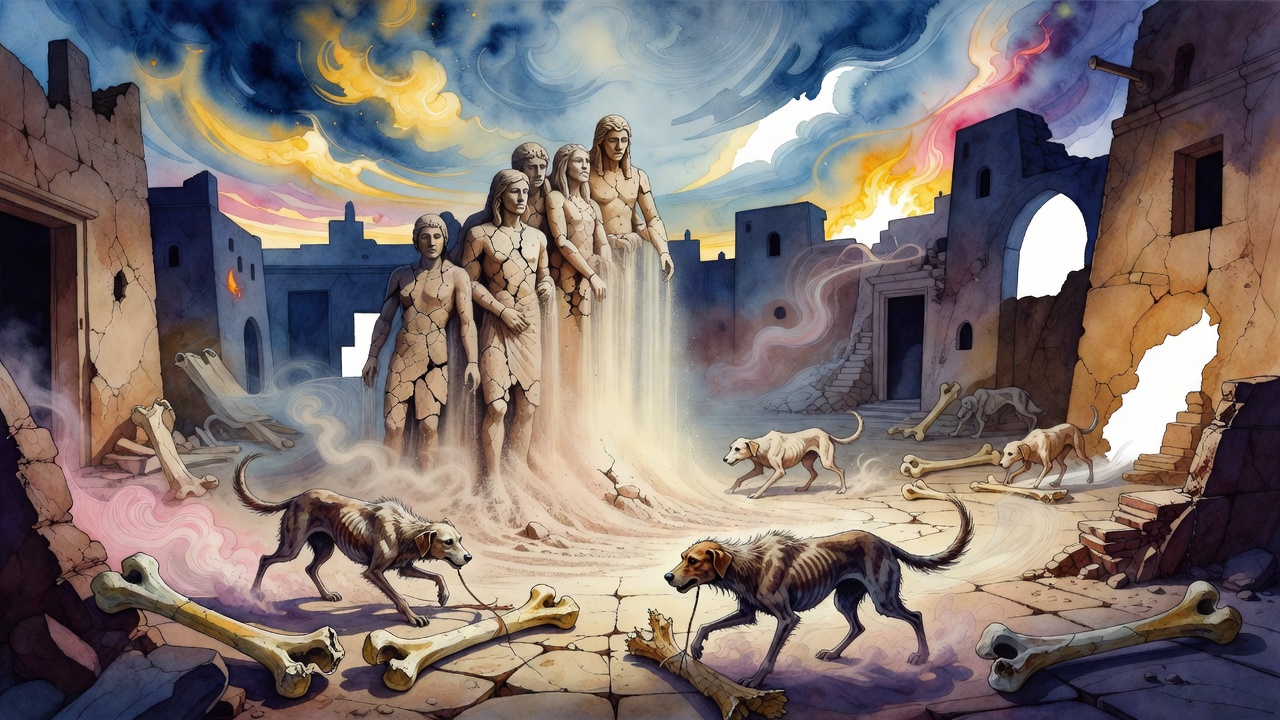
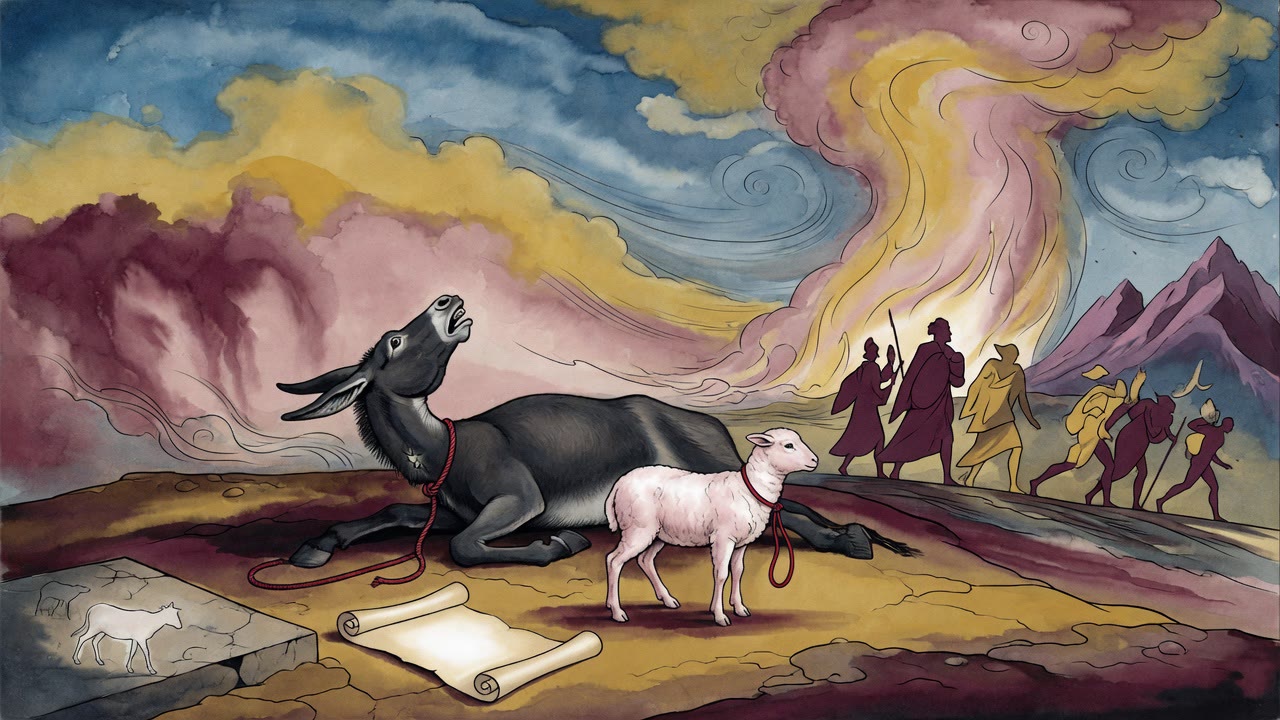
At midnight the other blow landed. God went through Egypt and struck every firstborn, from the son of Pharaoh on his throne to the son of the captive girl at the mill. And in the same hour the idols broke. Wooden gods rotted, stone gods split, molten gods ran down off their pedestals where they stood.
The Egyptians came out of their houses that night into a double ruin. They were burying their firstborn, and their gods lay shattered beside the fresh graves. Everything the empire had bowed to was proven hollow between dusk and dawn. All who serve carved images are put to shame, the psalm would say of it, and there it happened in the open, house by house, god by god, while the slaves ate roasted lamb behind bloodied doors.
The Firstborn God Kept for Himself
Before the dust settled, God spoke to Moses again, and this time about ownership. "Consecrate to Me every firstborn," He said. "Whatever opens the womb among the children of Israel, of man and of beast, is Mine." The firstborn of Egypt had died in the dark. The firstborn of Israel had lived, and God was claiming them by name, marking a whole people as His own on the strength of one night.
Then He reached past that night toward one still unborn. He had already called the nation His firstborn son. "As I made Israel My firstborn," He said, "so I will make the anointed king My firstborn." The small word "every" held a second firstborn inside it, a king at the far end of the generations, whom God would one day raise and name as His own. The night of blood was not only an ending. It was a birth certificate, and it pointed forward to a rescue that had not yet come.
So God told them to keep the day, and to keep the rescue in it, not the terror. Like a king whose bride crossed the sea to reach him and was almost lost in a storm on the way, and who said to her after, "Do not sit and count the waves that nearly drowned you. Mark instead the day you came through, and hold it every year." Seven days without leaven, once a year, for as long as there were children left to ask why the doorposts had once been painted red.
← All myths