5 min read

The First Seder Was Fire, Herbs, and Haste

On Nisan night Israel ate whole lamb from open flame with horehound and lettuce before midnight, loins girded, staff ready.

Curated by Arthur · Told by Maggid ·
Table of Contents
  1. The Menu of a People Leaving
  2. No Pot, No Wine, No Softening
  3. Leaven Gone Before the Knife
  4. Whole Lamb, Whole Empire
  5. Staff Against the Doorframe
  6. Twilight Knife, Midnight Finish
The First Seder Was Fire, Herbs, and Haste Click for full size

The Menu of a People Leaving

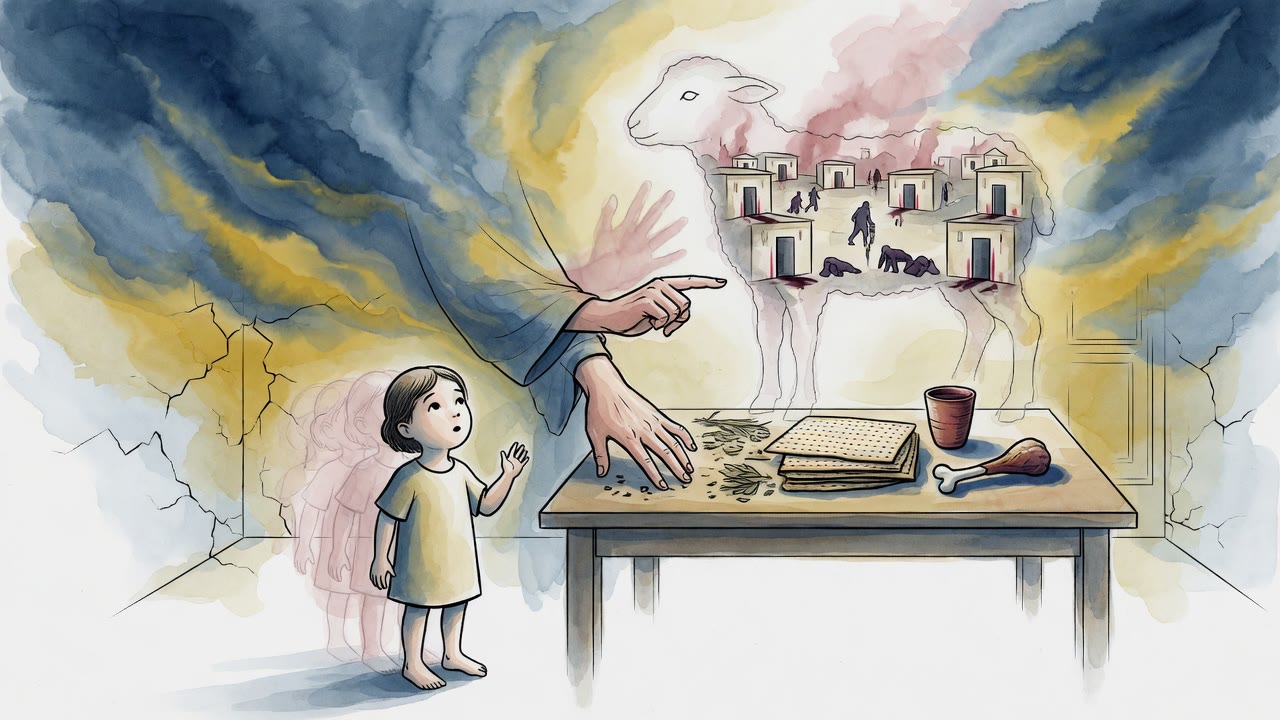
Israel did not sit down to symbols on the fifteenth of Nisan. The flesh of the lamb came off the spit with fire still in it. Beside it lay horehound and lettuce, marrubium and chasa, bitter enough to make the jaw tighten. No leaven. The meal had a hard stop: "until the dividing of the night," midnight, because the middle of the night was when the Destroyer would pass (Exodus 12:8).

After that hour the protection had already done its work. The food belonged to the hours of suspense, not to the relaxed feast of a free people already safe. Children chewed lettuce with sand still on their sandals. Mothers counted the minutes by the height of the flame under the spit.

No Pot, No Wine, No Softening

Do not eat it raw. Do not boil it in wine or oil or any fluid. Do not cook it in water. Roast it over fire, head, feet, and inward parts all on the spit (Exodus 12:9). Egyptian kitchens boiled and braised. The paschal lamb refused every technique that made meat tender and slow.

Boiling needs a pot large enough for the whole animal and hours a slave does not have on the night of departure. Roasting needs a spit and open flame. The whole creature had to be present. Choice cuts alone would have turned the night into dinner. The head and the feet kept the meal a rite. Every Egyptian habit at the table was broken so the habits of slavery would break with them.

Leaven Gone Before the Knife

Before any blood could be spilled for the korban pesach, the house had to be empty of leaven. A crust still hidden in a kitchen invalidated the slaughter. The fat on the altar could not smolder until morning. Passover moves at one speed: completion. Threshold after threshold. Leaven cleared. Blood drawn. Midnight crossed. Door marked.

A Jew could not stand at the altar on the fourteenth with yesterday's bread still breathing in the dark of a cupboard. Redemption, in this choreography, does not tolerate half-done rooms.

Whole Lamb, Whole Empire

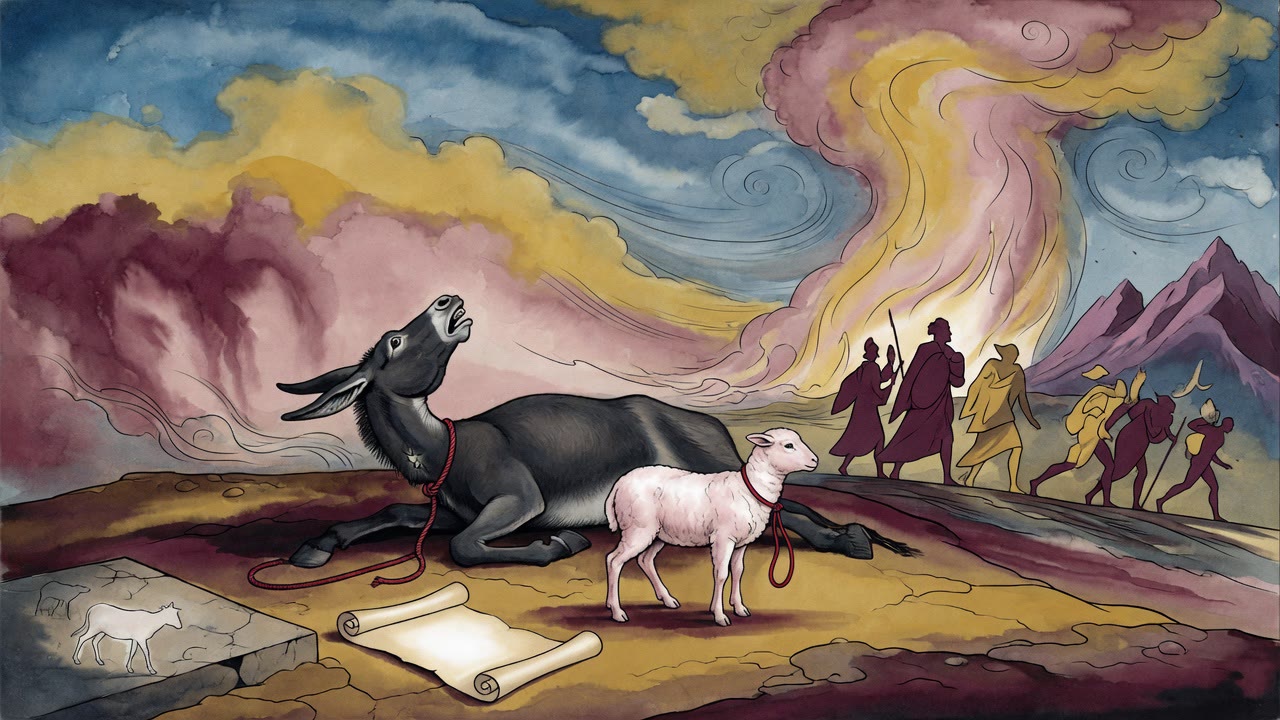
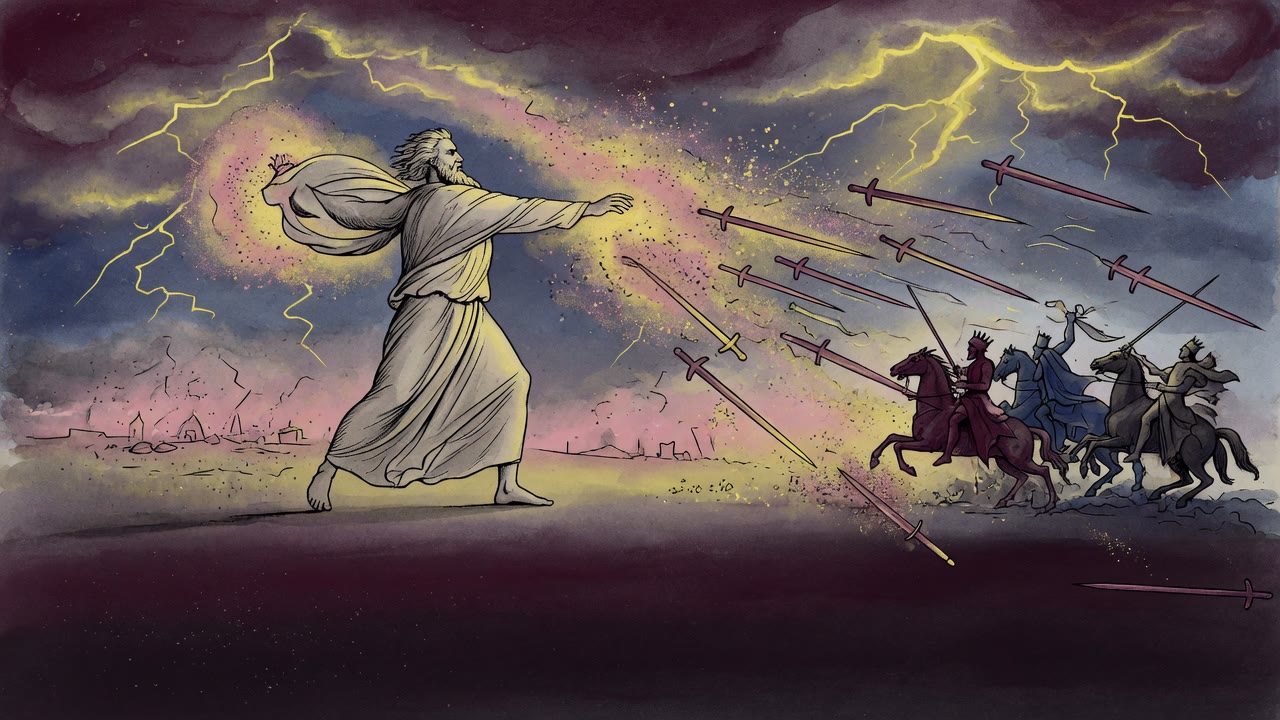
The sages heard more than cooking law in the whole roast. A lamb complete on the fire became a picture of a power brought low entire, dukes and mariners and warriors going down together. Those who abandoned Israel to cling to that doomed power would sink with it. The first freedom demanded haste: loins girded, sandals on, staff in hand (Exodus 12:11).

The redemption still ahead will not run that way. "You shall not go out in haste nor leave in flight, for the LORD goes before you and the God of Israel guards your back" (Isaiah 52:12). The first night was a frantic flight. The last will be a calm procession, escorted front and rear.

Staff Against the Doorframe

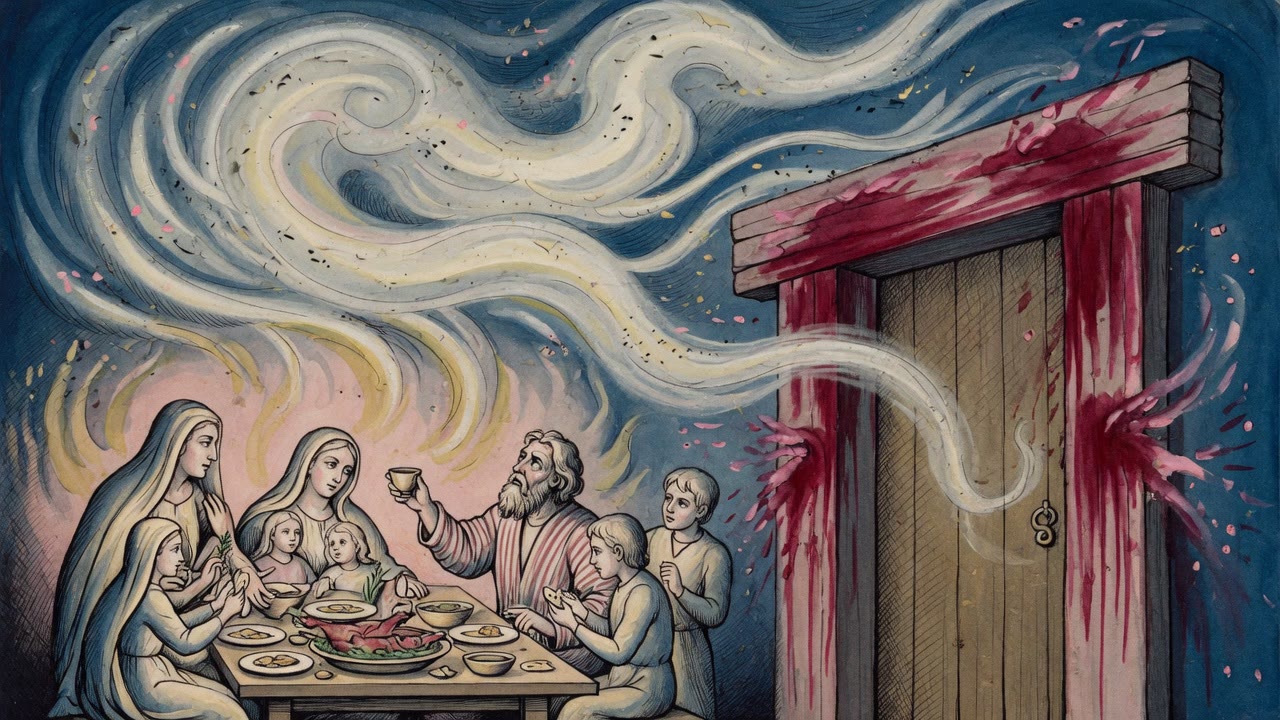
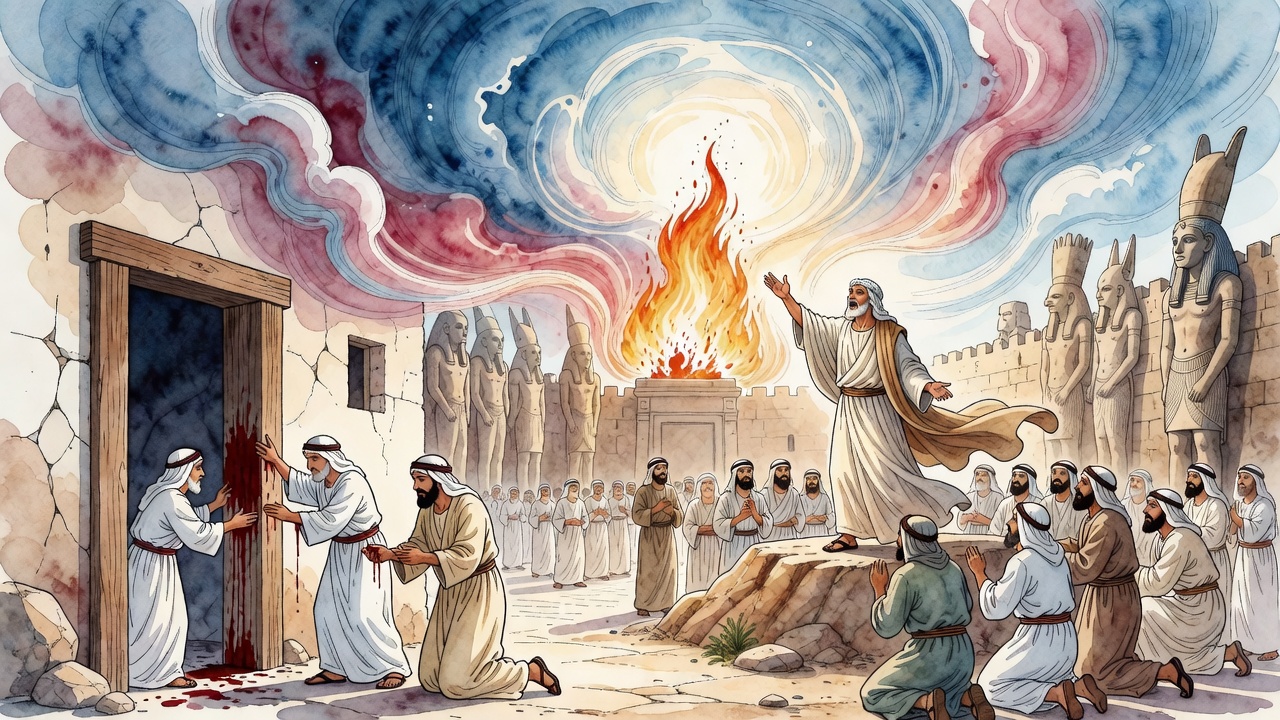
In the slave houses of Egypt, the lintel and the two doorposts became three altars before there was a Temple. Blood caught in a vessel, or in a hollow by the threshold, marked the wood. Some held the mark faced inward for the people who had obeyed under terror. Some held it faced outward so Egypt would see its slaughtered god on Hebrew doors and feel its stomach turn.

Either way, a family stood in a room that smelled of roast and bitter green, listening for the cry outside, finishing the meat before the night split in half. The plate was not invented later. It was prepared before dawn on the night that remade the calendar.

Twilight Knife, Midnight Finish

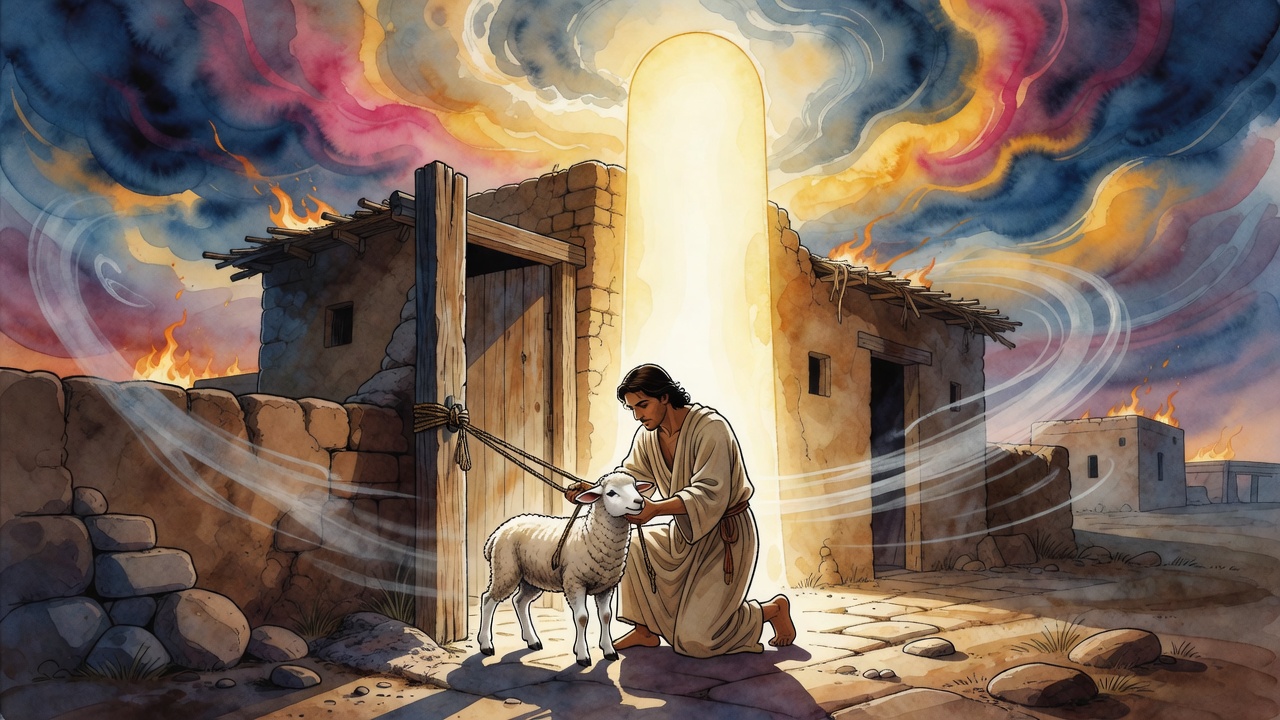
Between the evenings the knives moved. Not at the first fading of sunlight only, and not after full dark, but in the long afternoon decline that mirrors the going-out itself. Blood was caught in a vessel, or in a hollow beside the threshold. Some held the mark faced inward for the people who had obeyed under terror. Some held it faced outward so Egypt would see its slaughtered god on Hebrew doors and feel its stomach turn.

The blood was a sign for Israel, not a locator for a God who needs no marker. As the reward of one commandment performed under fear in the dark, compassion settled over the houses like a bird spreading wings over a nest. One act at the threshold drew down a canopy. Inside, the roast finished. The bitter greens bit the tongue. Staffs leaned against walls that still remembered Egyptian fists.

No one at that table knew the word seder plate. They knew fire, plant, clock, and door. They knew the fat must not linger on any altar of tomorrow's Temple imagination until morning. They knew leaven already gone. They knew that if they were still chewing after the night split, they had failed the speed of redemption. The meal trained the body for flight and the soul for trust in the same greasy, bitter hour.


← All myths
From the tradition

Sources

4 sources

The texts behind this telling. Some cards carry a translation of the source; others are our own retelling of it, and each card says which. Every card links out to the original.

Targum Pseudo-Jonathan on Exodus 12:8Targum Pseudo-Jonathan on Exodus

Retold in our words. Read the original at the link below.The Targum of Jonathan ben Uzziel, trans. J. W. Etheridge, London, 1862 · Public Domain

The original Passover meal was not symbolic. The bitter herbs on the first seder plate were real bitter herbs, eaten in a real hurry on a real night. Targum Pseudo-Jonathan on (Exodus 12:8) specifies the menu in exact terms: the flesh of the lamb, roasted with fire, eaten with horehound and lettuce, without leaven, on the night of the fifteenth of Nisan "until the dividing of the night."

Horehound and lettuce, marrubium and chasa, were two of the five species later listed in the Mishnah (Pesachim 2:6) as acceptable maror. The Targum's specificity reflects a tradition already in place by the time of the translation: Israel knew which plants the ancestors had actually eaten that night, and the rabbis preserved those names.

The phrase "until the dividing of the night" is striking. The Hebrew verse (Exodus 12:8) simply says the lamb must be eaten that night. The Targum gives a deadline: midnight. The paschal meal must be finished before the middle of the night, because the middle of the night is when the angel passed over. After that hour, the protection has already done its work; the meal belongs to the hours of suspense.

Roasted with fire, not boiled. Unleavened, not risen. Bitter, not sweet. Every feature of this meal refuses the comforts of a settled feast. It is food for people standing up to leave.

Takeaway: The seder plate was not invented later by the rabbis. It was prepared before dawn on the night that remade history.

Full source
Targum Pseudo-Jonathan on Exodus 12:9Targum Pseudo-Jonathan on Exodus

Retold in our words. Read the original at the link below.The Targum of Jonathan ben Uzziel, trans. J. W. Etheridge, London, 1862 · Public Domain

One reason the first Passover feels archaic to modern readers is that it was archaic even to the people eating it. Targum Pseudo-Jonathan on (Exodus 12:9) piles up the restrictions: do not eat it raw, do not boil it in wine or oil or any other fluid, do not cook it in water. Roast it over fire, with its head, its feet, and its inward parts all there on the spit.

This is not how Egyptians cooked meat. Egyptian cuisine boiled and braised. The Pesach offering had to refuse all of those techniques. The lamb is cooked whole, on an open flame, in a way that leaves no margin for disguise or elaboration. No sauce, no broth, no layering of flavors. Just fire and meat.

The rabbis read this as the meal of people who have no time. Boiling takes hours and a pot large enough to hold the bird. Roasting over fire is faster and requires only a spit. Israel was about to leave, and the meal was designed to be eaten at the speed of a departure.

The inclusion of the head, feet, and inwards is more theological than practical. The whole animal must be present on the plate because the whole sacrifice was being offered. To eat only the choice cuts would turn Pesach into a dinner. Eating the whole creature made it a rite.

Takeaway: The first Passover was not a menu, it was a refusal. Every Egyptian cooking technique was rejected, in order to break the habits of slavery at the table.

Full source
Pesikta DeRav Kahana 5:19Pesikta de-Rav Kahana

Translation of the source text.Pesikta de Rav Kahana according to an Oxford manuscript, Dov Mandelbaum ed., N.Y. 1987 · CC-BY

"Do not eat any of it raw [na]" (Exodus 12:9), do not demand it half-cooked. "Nor boiled at all in water, but roasted with fire, its head with its legs and its inner parts" (Exodus 12:9), it [Egypt] and its dukes and its governors and its commanders, "your wealth and your wares, your merchandise, your mariners and your pilots, those who repair your breaches and the dealers in your merchandise, and all your men of war who are in you, and all your assembly that is in your midst, shall fall into the heart of the seas on the day of your downfall" (Ezekiel 27:27).

Rabbi Shmuel bar Yitzchak said: even those who are from my assembly and came and attached themselves to your assembly, they too shall fall into the heart of the seas on the day of your downfall.

"And thus shall you eat it, your loins girded" (Exodus 12:11). Rabbi Shmuel bar Nachman said: because in this world "you shall eat it in haste" (Exodus 12:11), but in the time to come, what is written? "For you shall not go out in haste, nor go in flight, for the LORD goes before you, and the God of Israel is your rear guard" (Isaiah 52:12).

Full source
Targum Pseudo-Jonathan on Exodus 34:25Targum Pseudo-Jonathan on Exodus

Retold in our words. Read the original at the link below.The Targum of Jonathan ben Uzziel, trans. J. W. Etheridge, London, 1862 · Public Domain

The Passover sacrifice in the Temple had an exact choreography, and Targum Pseudo-Jonathan on (Exodus 34:25) preserves its two ironclad rules. First: you may not slaughter the korban pesach while leaven still sits in your house. Second: no fat of the paschal offering may remain on the altar until morning.

The Targum reads these as simultaneous demands. The purging of leaven and the spilling of the sacrificial blood are woven together, the chametz must already be gone by the time the knife is drawn. A Jew cannot stand at the altar on the fourteenth of Nisan with a crust of yesterday's bread still hidden in his kitchen. The sacrifice would be invalidated by what he failed to sweep out.

The second rule, about the fat, speaks to the altar's momentum. The Passover fire must not grow cold. Whatever is set upon it must be consumed the same night, a detail the rabbis later used to define the outer edge of the seder meal itself, which must be completed before midnight.

There is a deeper pattern here. Passover is a holiday of thresholds: the leaven threshold, the midnight threshold, the threshold of the door marked with blood on the night of the tenth plague (Exodus 12:7). Every transition must be crisp. Nothing half-done, nothing smoldering, nothing leftover.

The takeaway: redemption in Jewish time is never slow. It moves at one speed, completion. The Passover altar teaches that anything worth offering is worth finishing before the sun comes up.

Full source