Blood Held the Door While the Destroyer Passed
Israel stayed behind blood-marked lintels while Egypt screamed, because once the destroyer received leave he would not sort righteous from wicked in the street.
Table of Contents
Moses did not shout into the street. He called the elders into the shade of a courtyard wall and pressed a living animal into their hands while the sun still stood high over Egypt.
 Click for full size
"Draw out," he said. "Take for yourselves." The word cut two ways. Draw your hands off the clay gods of the brick pits. Draw a lamb or a kid from the flock, or from a neighbor who still has one, until every house has blood enough for the night that is coming. A poor man without a beast of his own was not to be left outside the rite. Gifted animals counted. Sheep and goats both qualified. No household was to face midnight empty-handed.
Four days the animals waited under Israelite roofs. Children watched them chew. Egyptians watched too, and some of them laughed at the strange hush falling over Hebrew lanes. The taking came before the slaughter on purpose. The people had stood naked of commandments, and the Holy One would not redeem empty hands. He gave them two bloods to hold: the blood of the paschal animal and the blood of circumcision. Between those red marks the redemption would pass.
Why the Elders Heard First
Elsewhere in the Torah the word runs from Moses straight to all Israel. Here he called the elders first. The change was not an accident of style. It was honor made visible. Long before, at the bush, God had already said, "Go and gather the elders." That charge still stood. The old men of the generation were to walk into the rite before the crowd, so that age and counsel stood at the front of the rescue.
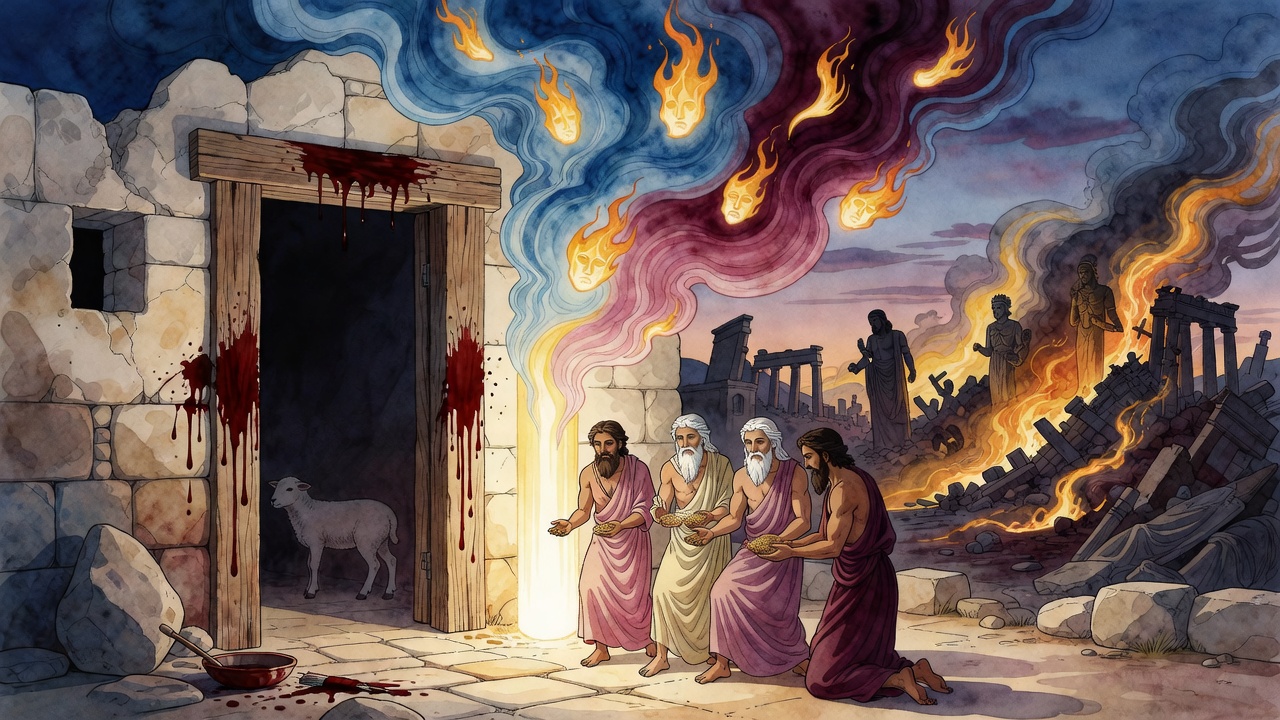
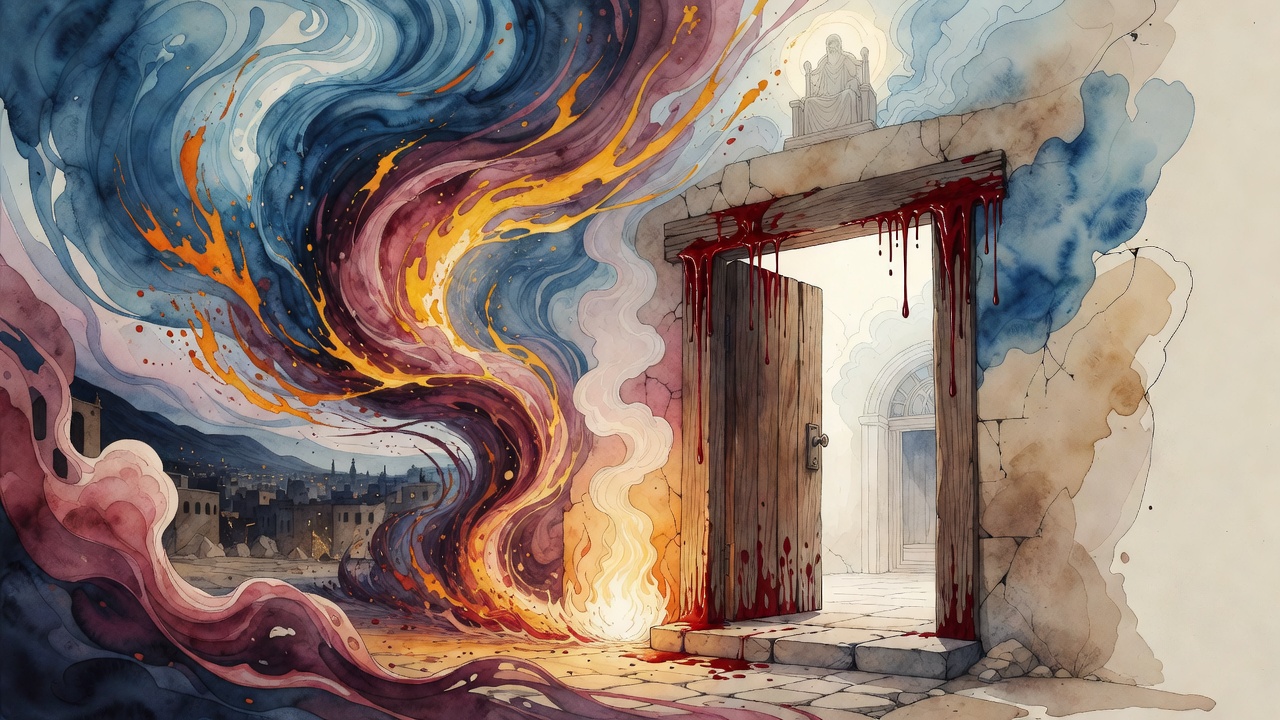
When the hour came, the knife moved. Blood went on the two doorposts and on the lintel. No one argued about perfect aim. The mark was a claim: this house is under a different rule tonight. Men who had mixed mortar for Egyptian store-cities now mixed a different sign into the wood of their own doors. Women who had hidden infants from river decrees now hid whole families behind a red line no soldier could see.
Do Not Step Past the Threshold
Then the hard line. "You shall not go out, a man from the door of his house until morning." The warning was not about manners. Once permission has been given to the destroyer to destroy, he does not sort. Righteous and wicked fall under the same stroke when the sword is drawn from its sheath. Isaiah had already said it in another key: go into your chambers, shut the door, hide a little moment until the wrath passes. Ezekiel heard the same voice promising to cut off righteous and wicked together when the blade is free.
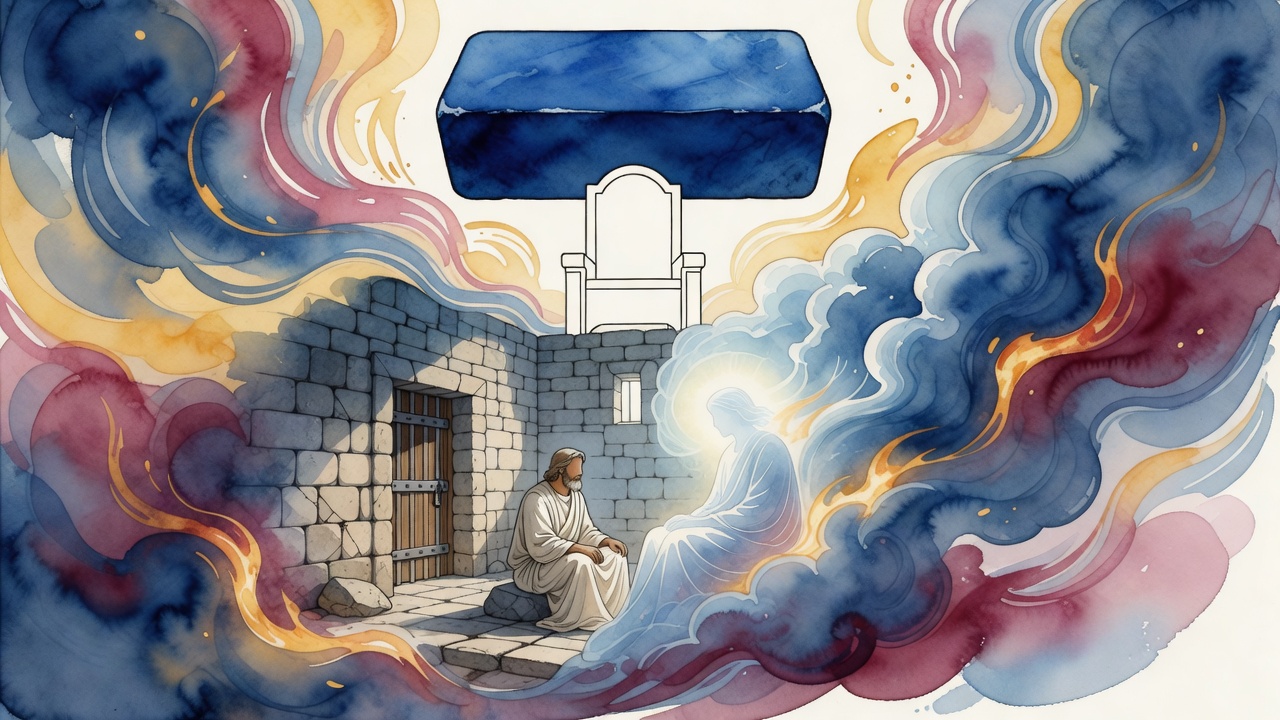
So Israel sat inside. Lamb meat in their mouths. Sandals on their feet. Staff in hand. The street outside was not a place for a curious look. Even the palm of God covering Moses in the rock cleft later would teach the same mercy: stay under cover until glory has passed. A neighbor's cry, an Egyptian plea at the door, a child's urge to see the sky, none of these opened the latch. The command was a wall thicker than mud brick.
When the Night Broke Open
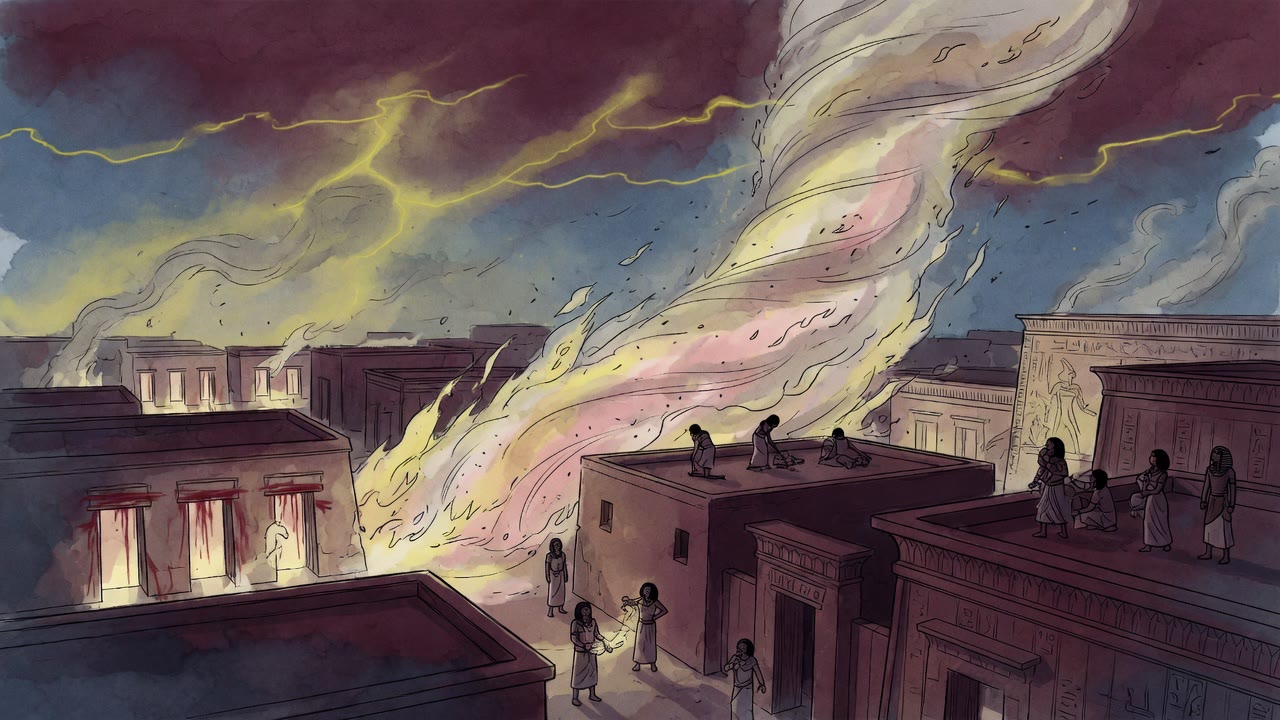
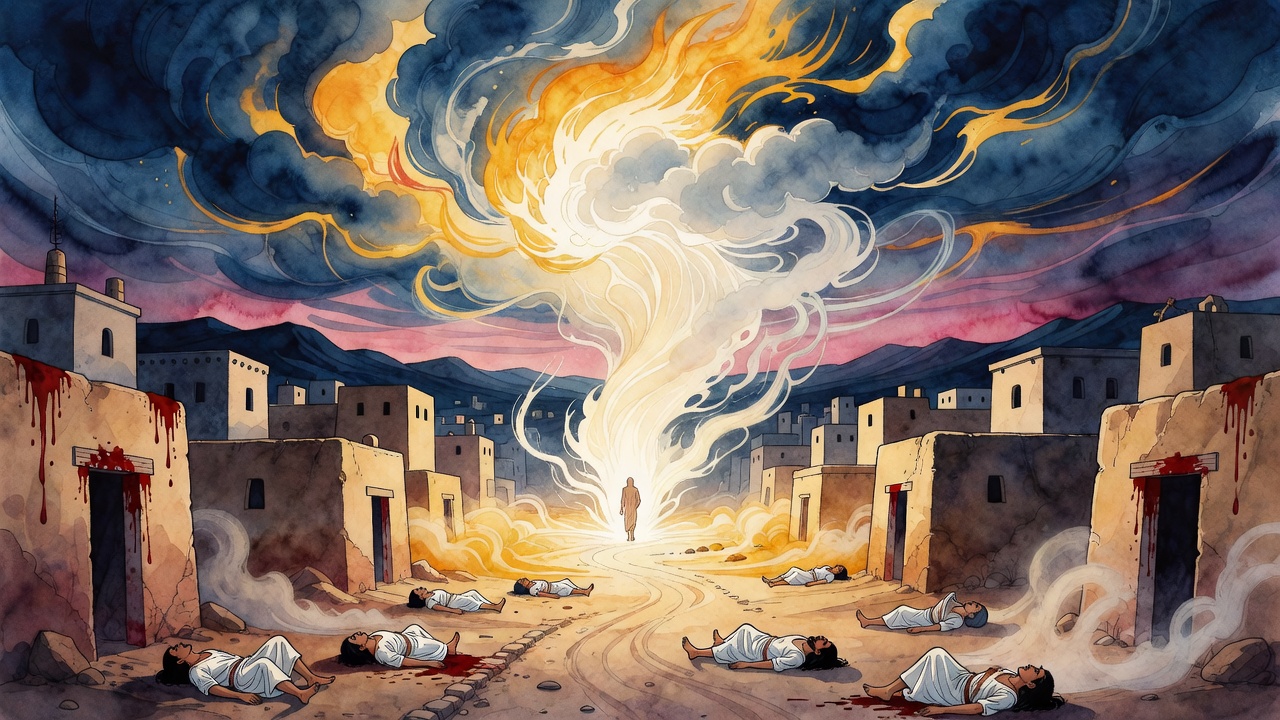
Midnight found Egypt. Firstborns went still in beds and stables. A cry rose that no brick yard had ever taught the Hebrews to answer. In the sealed houses the blood did its work without speech. The destroyer walked where leave had been given, and the marked doors held.
Some would later say the people should have run out at the first scream to see the judgment. The command forbade it. Morning was the hour of "ki tov," the light God once called good. Enter the road then. Leave the house then. Not while the wrath still had the street. The night belonged to a force that had been told to strike, not to interview, and Israel was told to treat that force the way a man treats a storm: indoors, under the mark, until the sky changes color.
Two Bloods and a Kept Animal
The four days of keeping had not been idle theater. Reward clings to deeds that cost time. An animal taken early is a public act. Circumcision is a private scar. Together they dressed a people who had been bare of mitzvot (commandments) and made them fit for the oath sworn to Abraham. "I passed by you and saw you steeped in your blood," the prophet would say of that love-time. The bound ones left the waterless pit by covenant blood.
When dawn finally thinned the sky, doors opened on a land already broken. Israel stepped out into the light that was good, not into the night that had sorted nothing, only obeyed the mark on the wood. Behind them, Egypt counted its dead. Ahead of them, a road waited that would test every house that had learned, for one night, how to stay inside when the destroyer had the street.
← All myths