The Shechinah Wore a Brick While Joseph Sat Locked
The door closed on Joseph with a sound that tried to be final. An Egyptian jailer counted keys and thought God stopped at the stone.
Table of Contents
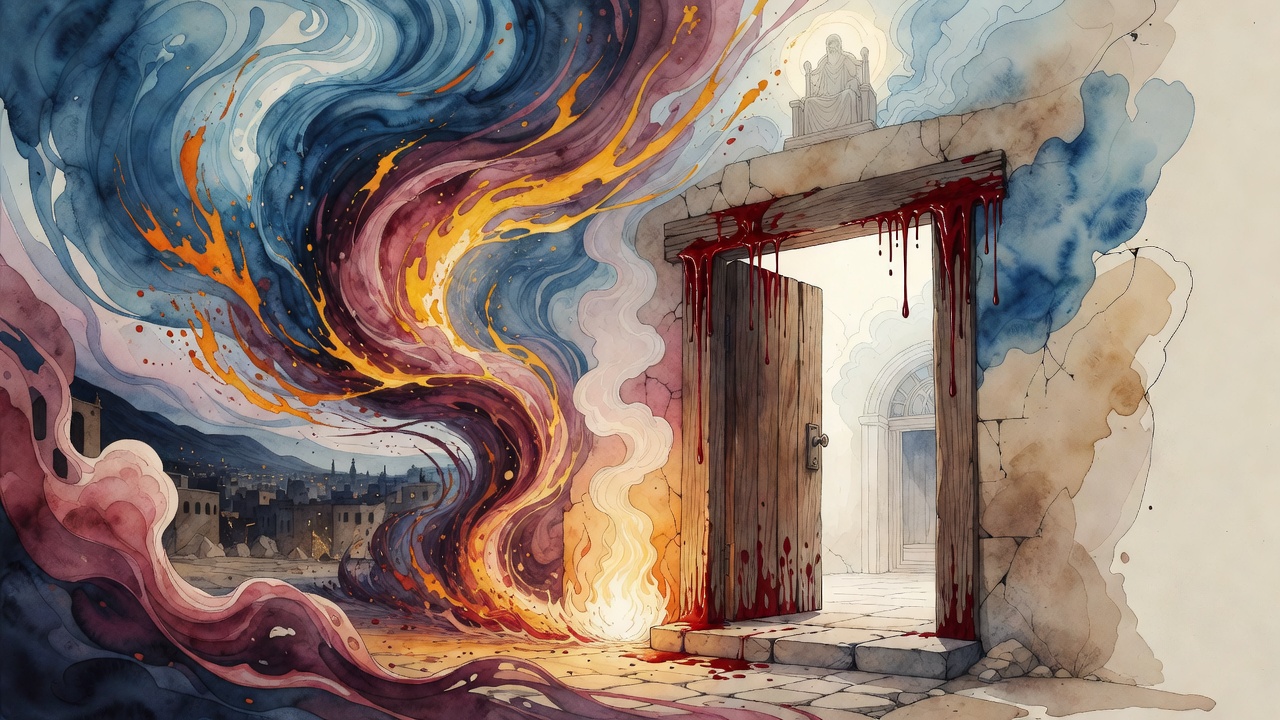
The door closed on Joseph with a sound that tried to be final. His master's hand had put him in the prison house, and the stone around him said what stone always says to a body. You end here.
 Click for full size
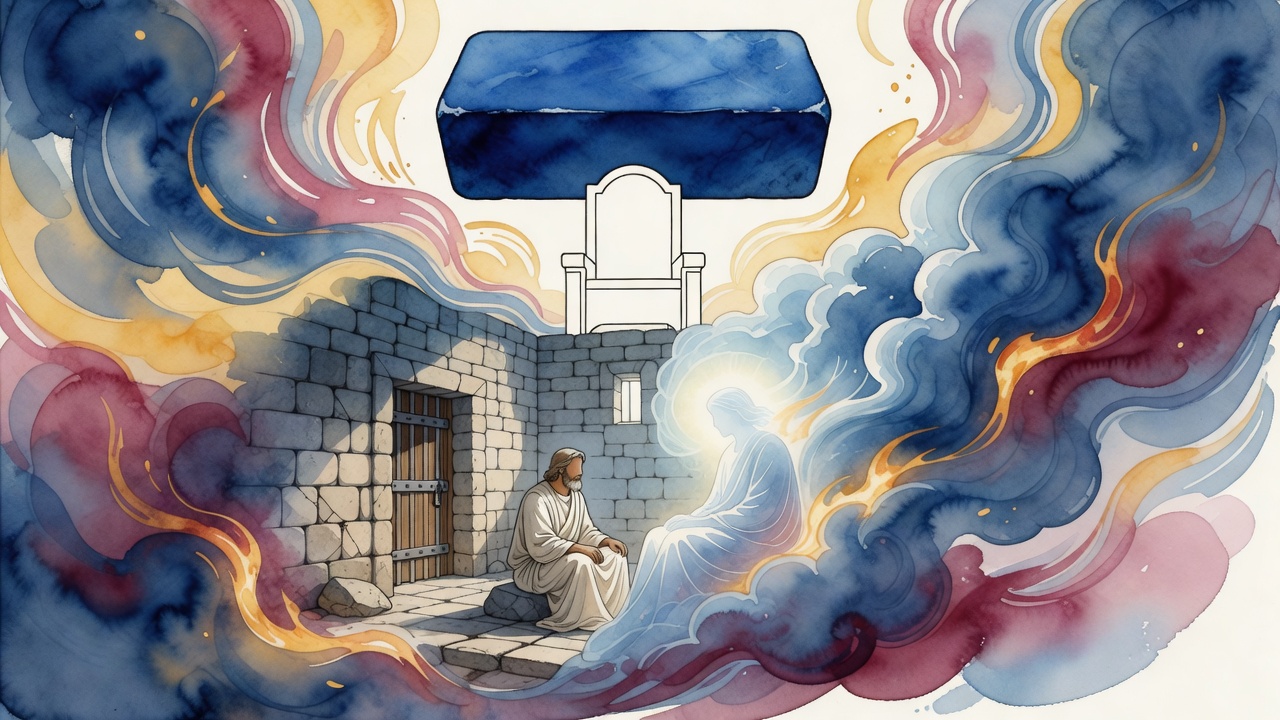
Then the room filled anyway. "The Lord was with Joseph" (Genesis 39:20-21). Not near. Not watching from a polite distance. With him, in the same locked air, while an Egyptian jailer counted keys and thought God stopped at the threshold.
Sorrow Scaled to One Cell
Joseph worked the prison the way he had worked Potiphar's house. Order returned under his hands. Other prisoners learned his name as the man who could sort a day. None of that erased the lock. Presence is not the same as release. Presence is the refusal to let the lock be the whole story.
"In all of their sorrows, He sorrowed" (Isaiah 63:9) names a people. "I am with him in sorrow" (Psalms 91:15) names a single throat. Him. One prisoner is enough. Bondage does not wait for a crowd before the Presence will enter. Joseph slept some nights with his back to stone and woke still accompanied. He did not yet know dreams of sheaves would reopen the door. He knew only that the jailer's keys were not the highest authority in the room.
A Brick Under Heaven's Feet
When Israel later stood far enough from mud to see glory, they saw under God's feet "as the work of a sapphire brick" (Exodus 24:10). Mortar and brick, remembered at the Throne itself. While the people still bent under quotas, heaven wore their labor. When redemption came, the same vision shifted toward "the appearance of the heavens in brightness."
Joseph's prison was the private version of that brick. One body. One false charge. One Presence that would not wait for a census of sufferers before entering. A nation would later see the brick under heaven's feet. A jailed man had already felt the companionship the brick would advertise.
Naked of Commandments
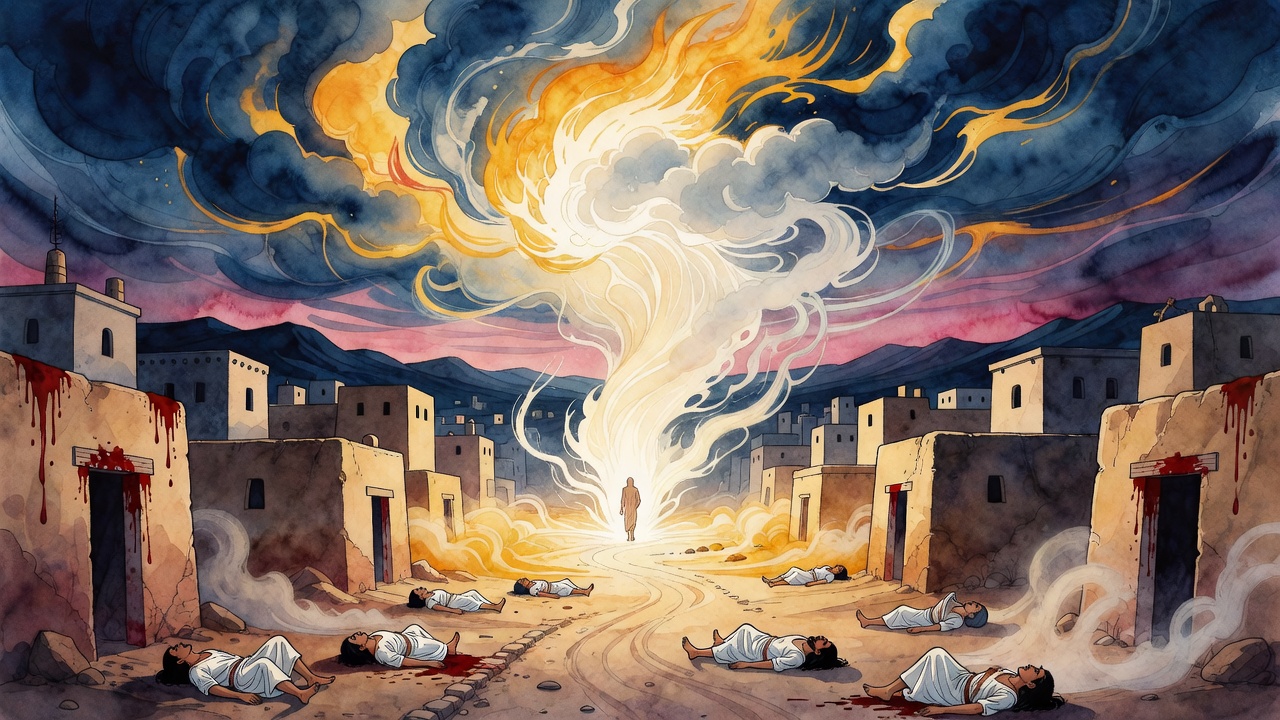
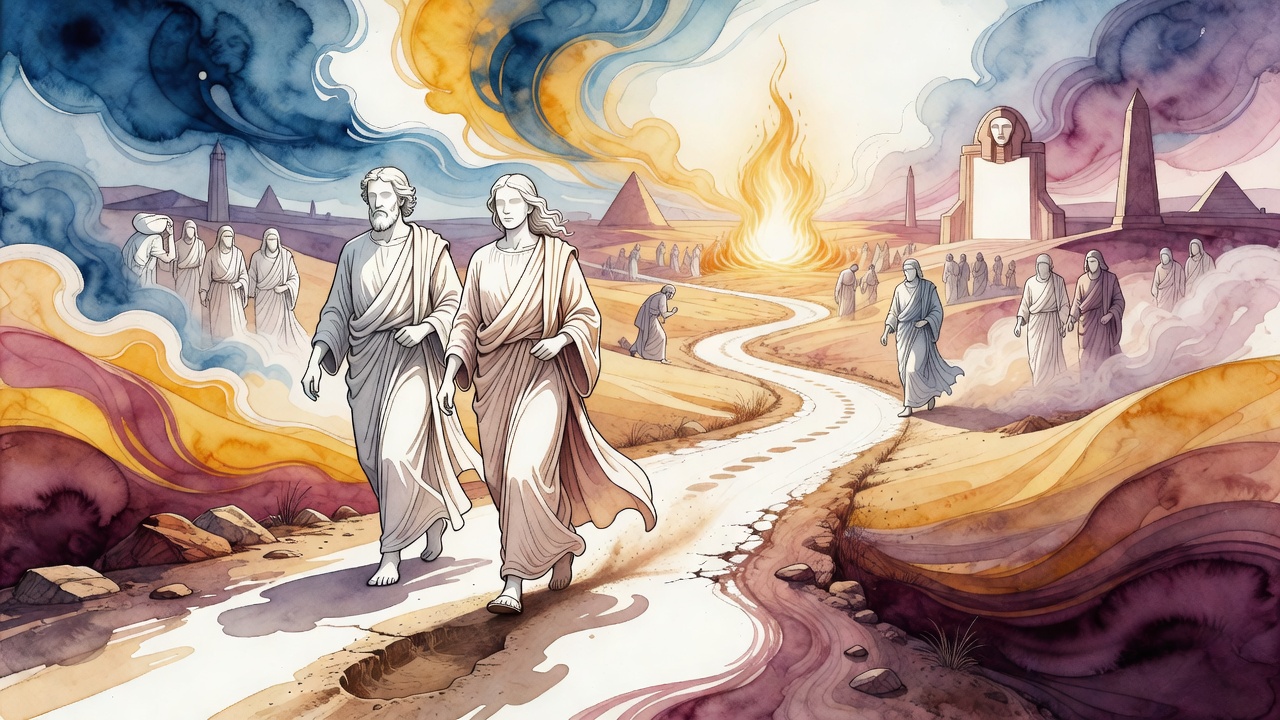
Centuries on, when the oath to Abraham ripened toward midnight in Egypt, the people stood naked and bare of mitzvot, commandments to grip for redemption. Breasts firm, hair sprouted, maturity without tools. Moses and Aaron could stand as signs, the elders could stand as signs, and still the camp lacked acts thick enough to carry a going-out.
God gave two. The blood of the Pesach (פסח) lamb. The blood of circumcision. "I saw you steeped in your blood" (Ezekiel 16:6). Four days the lamb waited as a keeping before the knife, so reward could attach to an act and not only to a wish (Exodus 12:6).
Joseph had held Presence without those two bloods. The nation could not. A cell can be shared. A going-out has to be marked on wood and on flesh.
Light That Egypt Could Not Enter
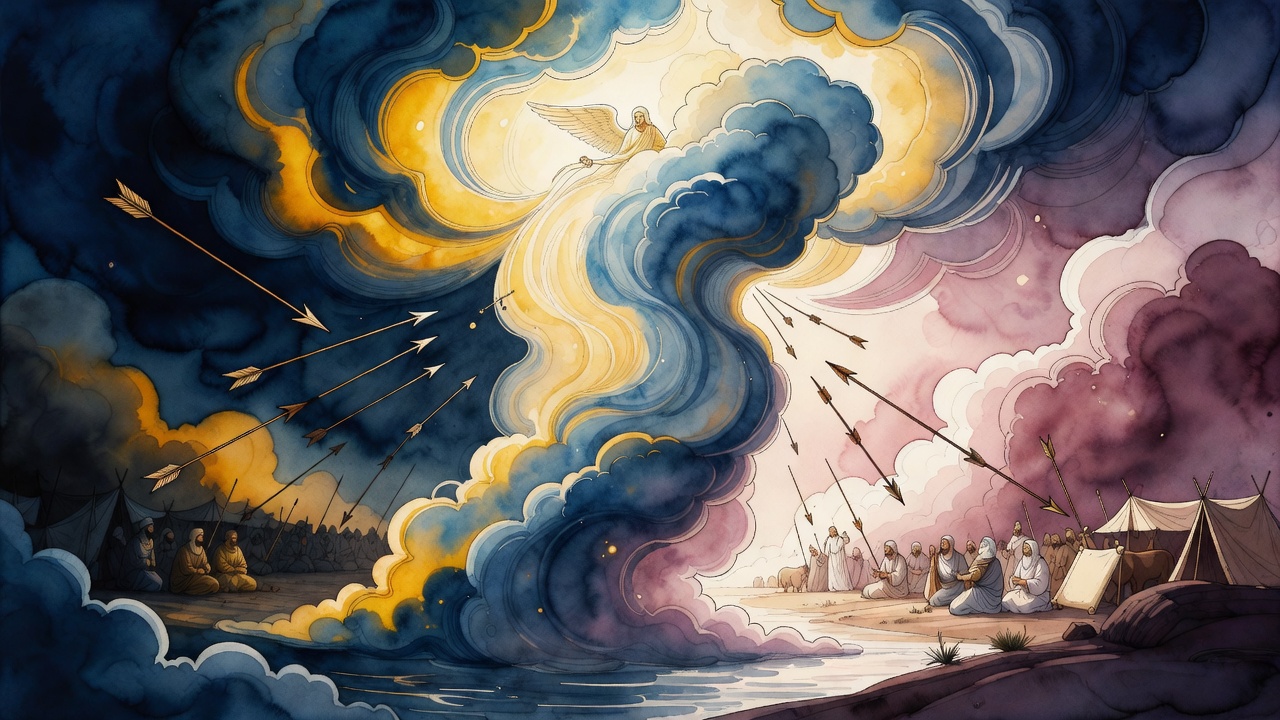
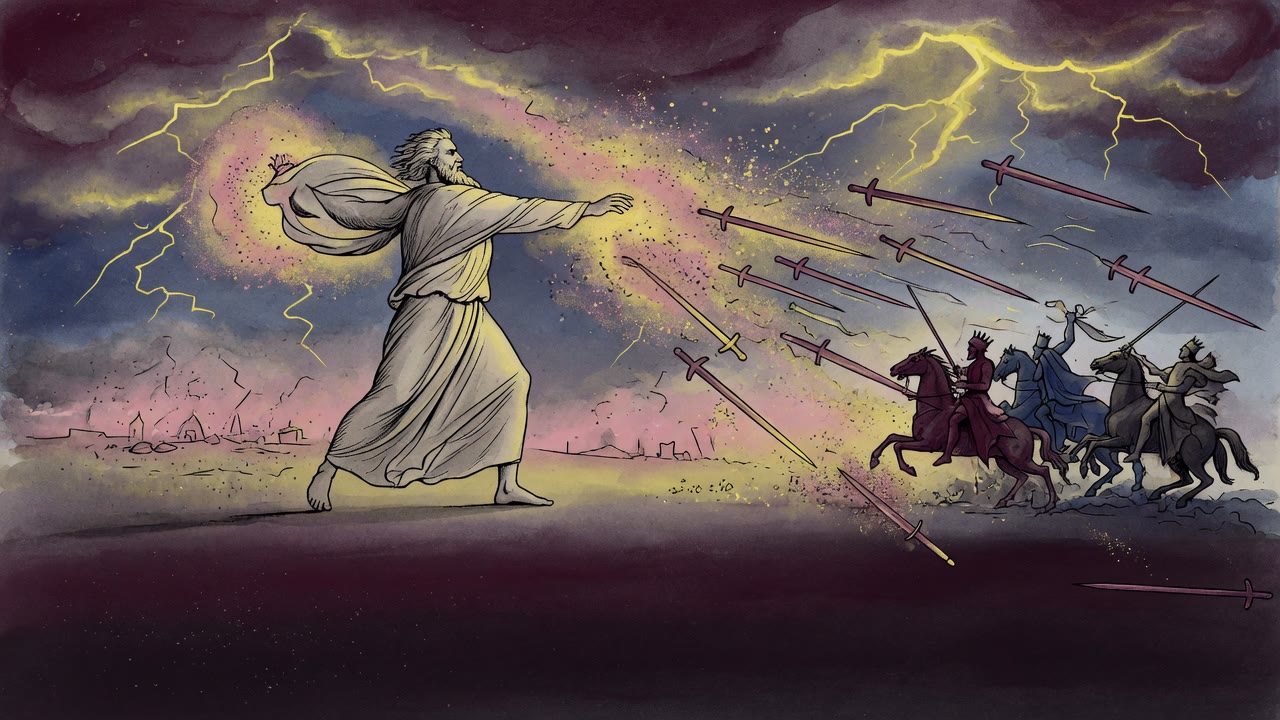
At the sea the pattern widened into weather. The cloud came between camps, darkness for Egypt, light for Israel (Exodus 14:20). Egyptians in the dark could still see Israel eating and drinking in brightness, and they loosed arrows into a joy they could not touch. Cloud and angel took the shafts.
The God who sat in Joseph's locked room now sat in a pillar that chose sides in public. Arrows hit cloud and fell. Israel ate in light Egypt could see and could not enter. The jailer's keys, long ago, had not been the highest authority in Joseph's room. The brick under heaven's feet had not been decoration.
When Israel is locked, the Shechinah (שכינה), the Divine Presence, does not wait outside the lock.
← All myths