Every Cup in Egypt Turned to Blood Overnight
The wooden bucket by the door still held yesterday's water. Aaron lifted the rod. Even the stone jug by the master's bed went dark.
Table of Contents
 Click for full size
The Bucket by the Door
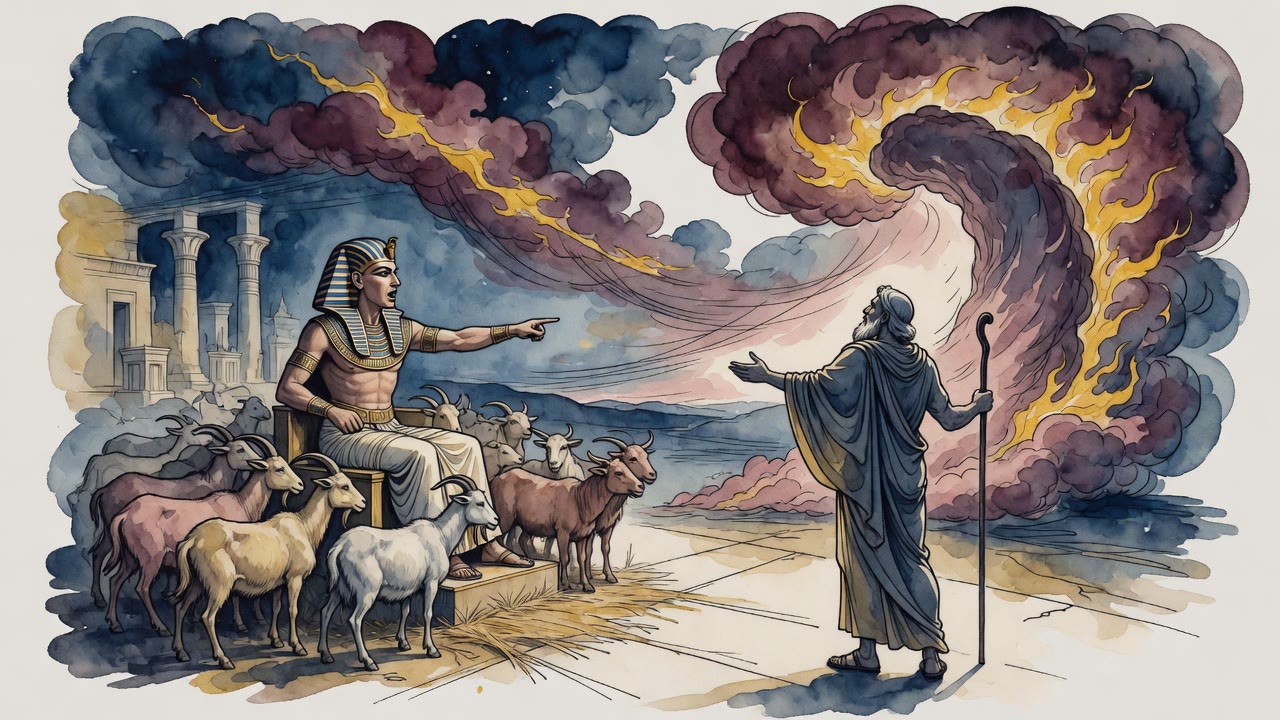
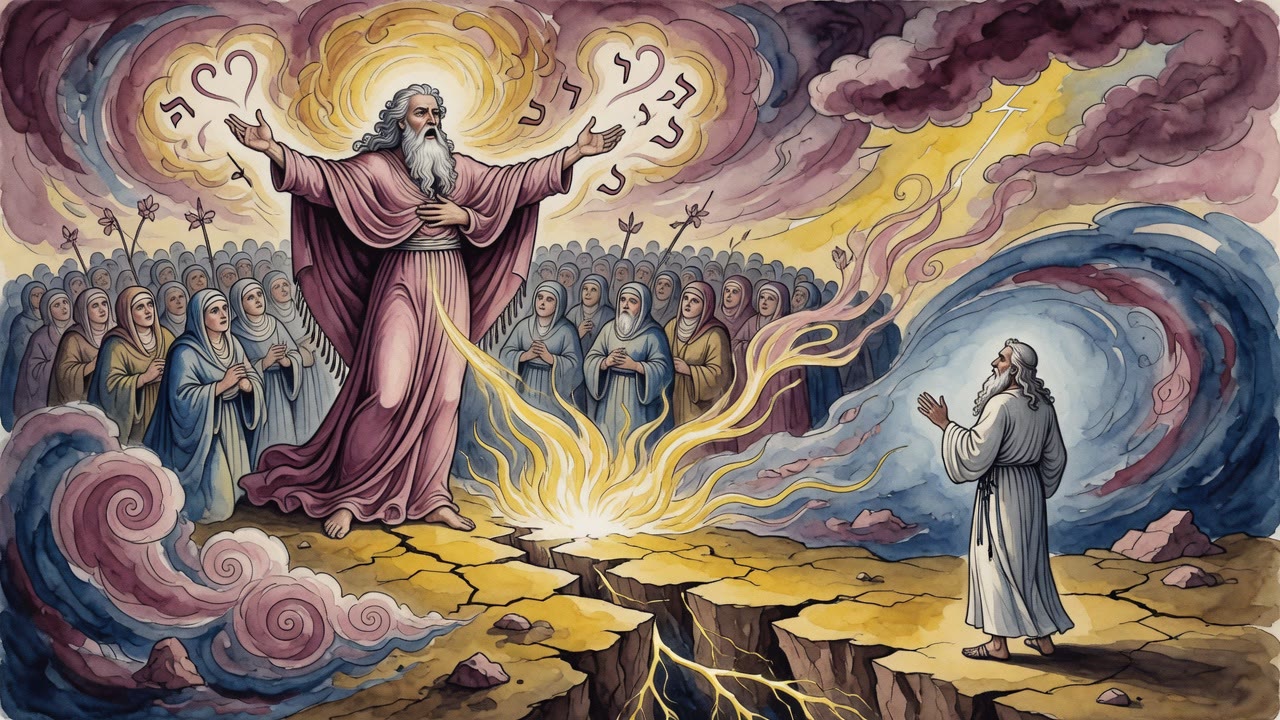
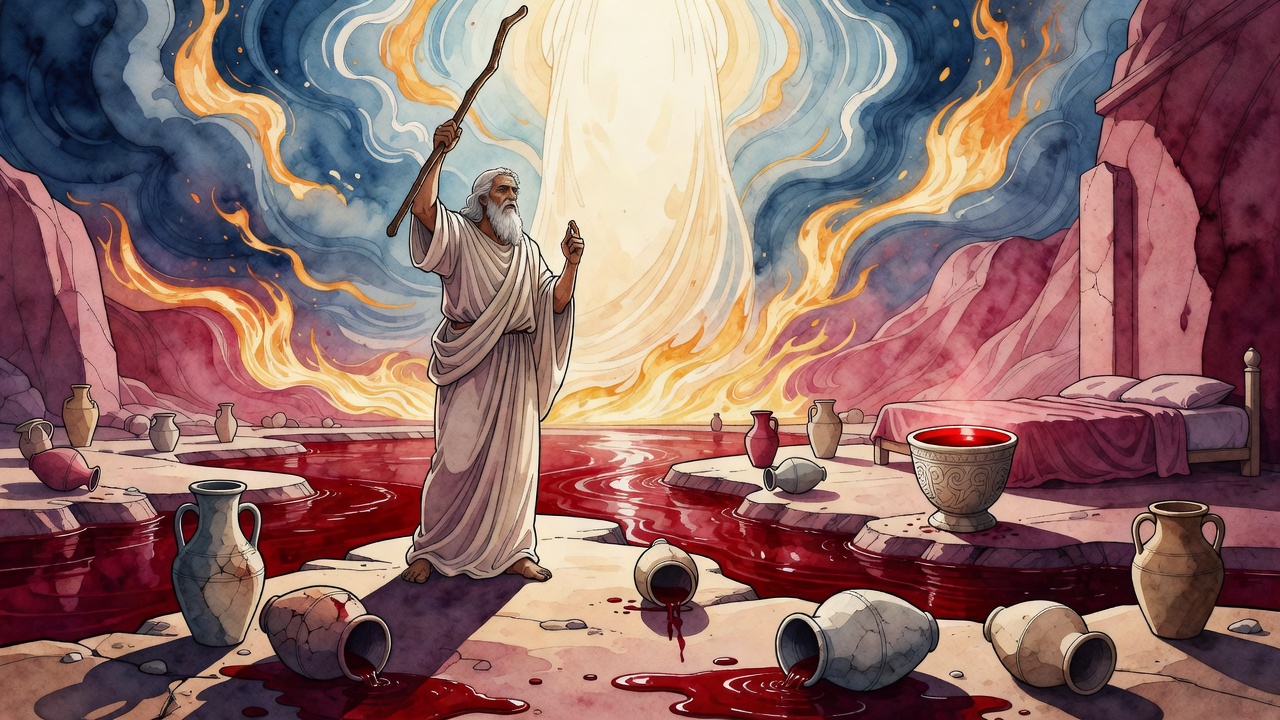
The wooden bucket by the door still held yesterday's water when Aaron lifted the rod. In the cool corner of an Egyptian kitchen, a stone jug waited for the morning pour. Beside a master's bed sat a clay basin, already drawn, already trusted, no longer the Nile itself. Then the rod stretched over rivers, trenches, canals, and every place Egypt collected its life (Exodus 7:19).
Overnight, every cup in Egypt turned to blood. The red did not stop at the riverbank. It entered the house.
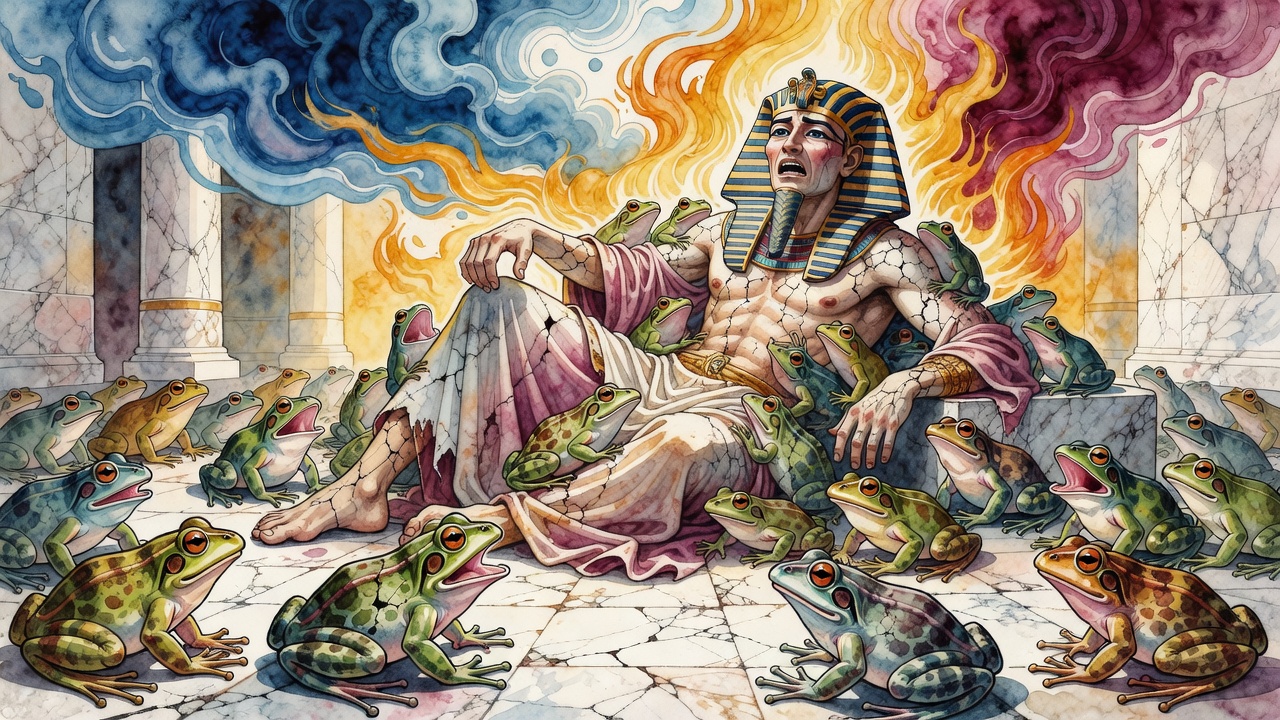
Every vessel of wood and every vessel of stone went dark and thick. The water an overseer had hoarded for his children turned the color of a wound. There was no cupboard left where the God of Israel could not reach. An Egyptian who dug a new pit found red. An Egyptian who bought a sealed jar from last month found red.
Goshen's Wells Stayed Clear
In Goshen the wells stayed clear, and that clarity felt almost cruel. Children put hands into buckets and brought up ordinary water while the wind carried Egyptian screaming. A woman who had ground grain under an Egyptian overseer's stick stood in her doorway and did not smile. Freedom was coming, but first the empire had to learn what thirst means when every cup betrays you.
Moses walked the edge of the camps and heard the same report from every direction. Rivers, trenches, canals, and the private stores. The plague had no blind corner. The God who spoke through Aaron's rod was not performing a river trick for a stadium. He was rewriting the chemistry of a kingdom that had treated Hebrew bodies as raw material.
Pharaoh had ordered the labor made heavy upon the slaves. Bricks without straw. Counts that never ended. The weight sat in Israel's bones long after the last clay dried on their palms. Heaven was already measuring with the same measure.
The Wheels Turned Against Their Masters
When the hour of the sea arrived, God drove Egypt with difficulty, with a heavy hand, the exact weight they had laid on others now pressing down on their own flight. Fire burned above the army until the wheels caught and blackened. Axle-pins rattled loose under thunder. Silver and gold the Egyptians had dragged out for plunder heaped the chariots until the frames lurched against the will of the men who rode them.
Normally the mules pull the chariot. Now the runaway chariots dragged the mules backward into the water. Rabbi Yehudah said the fire above burned the wheels away. Rabbi Nehemiah said the thunder shook the axle-pins loose. Either way the result was the same reversal. The men who had driven Israel now were driven.
Wherever a fleeing Egyptian turned, the sea ran to meet him. A dove flees a hawk into a king's hall. The king lets the dove out one window and bolts every other, trapping the hawk for the arrows. As the last Israelite climbed free, the last Egyptian went under. Heaven shook Egypt the way a person shakes out a pot, the bottom flung to the top and the top driven down.
A Man of War Without a Blade
At the sea, Israel saw a warrior: sword, mail, helmet, spear, bow, arrows, buckler, shield. Each weapon had its verse. Then the arsenal vanished into three words. "The LORD is a man of war, the LORD is His name." He fights by His name alone. The armor was shown so a people still soft from slavery would know that when danger comes, He does not send a deputy to the front.
The same God who looked like a fierce champion at the water looked, at Sinai, like a merciful elder. Not two powers. One Name. A mortal soldier may carry every weapon and still lack strength. God owns strength itself. A human arrow, once loosed, cannot return. When Israel repents, the decree can be called back before it lands. A human king at war cannot hear petitions. God wages war and still feeds all flesh.
In the houses behind the shore, the stone jugs still stood red. The war had begun in the kitchen before it ended in the deep. Oppression had thought safety could be stored. The plague answered that there is no private storehouse against the Judge who invented water.
Two Turns, One Measure
By the time chariot wheels burned and the sea closed, Egypt already knew the shape of the Judge. The kitchen had told the truth before the deep did. Israel carried both memories out: the night the cups turned, and the day the wheels turned against their masters.
Between those two turns, a people learned that no hoard of safety outruns the One who invented the water in the first place. A child in Goshen who had put a hand into a clear bucket would remember the screaming on the wind. A man who had watched a chariot drag its own mules backward would remember that the heavy labor had come home.
Aaron lowered the rod. The red in the jugs did not need it anymore. The sea had finished what the kitchen began.
← All myths