Nachshon's Silver Carried David and Solomon Into the Tabernacle
He paid for every item himself. The goat he set down answered for the blood his ancestor Judah once smeared on Joseph's coat.
Table of Contents
 Click for full size
The First Man Through the Gate
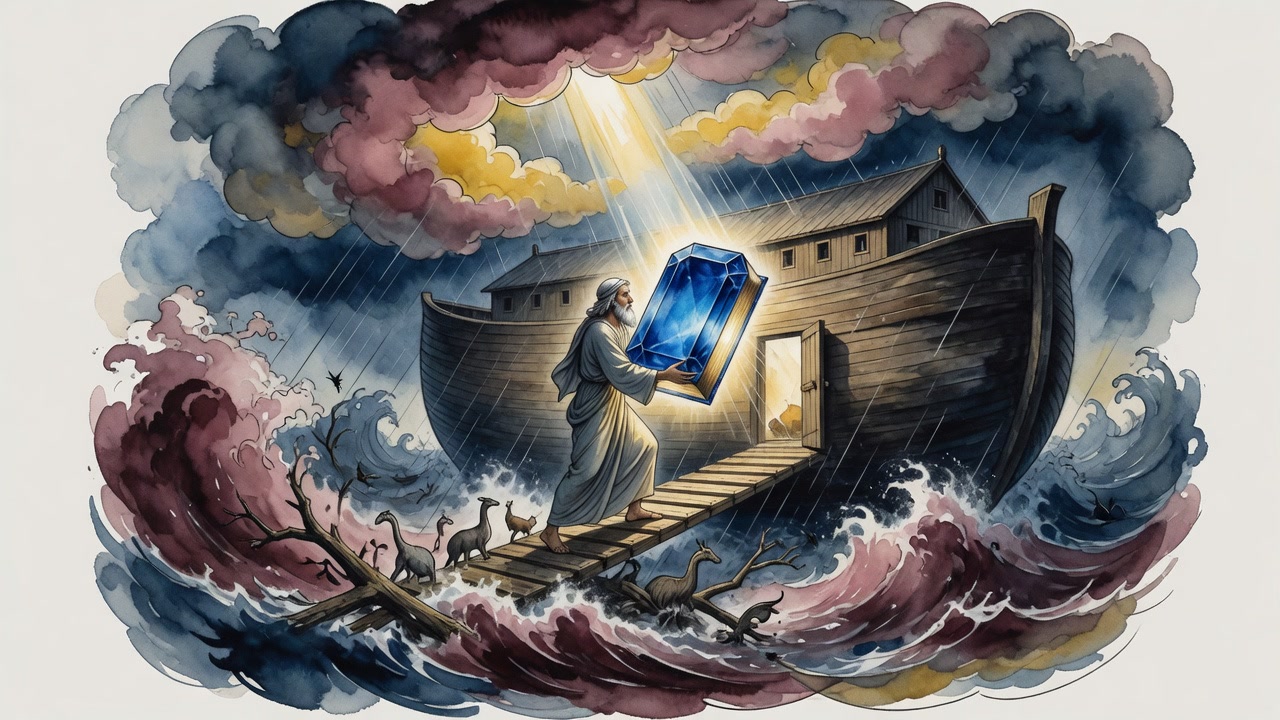
On the first of Nisan the Tabernacle stood finished in the wilderness, and the twelve princes waited outside it with their carts. Nachshon son of Aminadav went first, because Judah went first. Jacob had crowned that tribe over its brothers on his deathbed, and every man in the courtyard knew the reason without being told.
He paid for all of it himself. Not the tribe's silver, gathered tent by tent and pooled. His own.
What he carried in was small enough to hold in two hands, and it took him a long time to set down.
A Sea and a World, Weighed Out in Metal
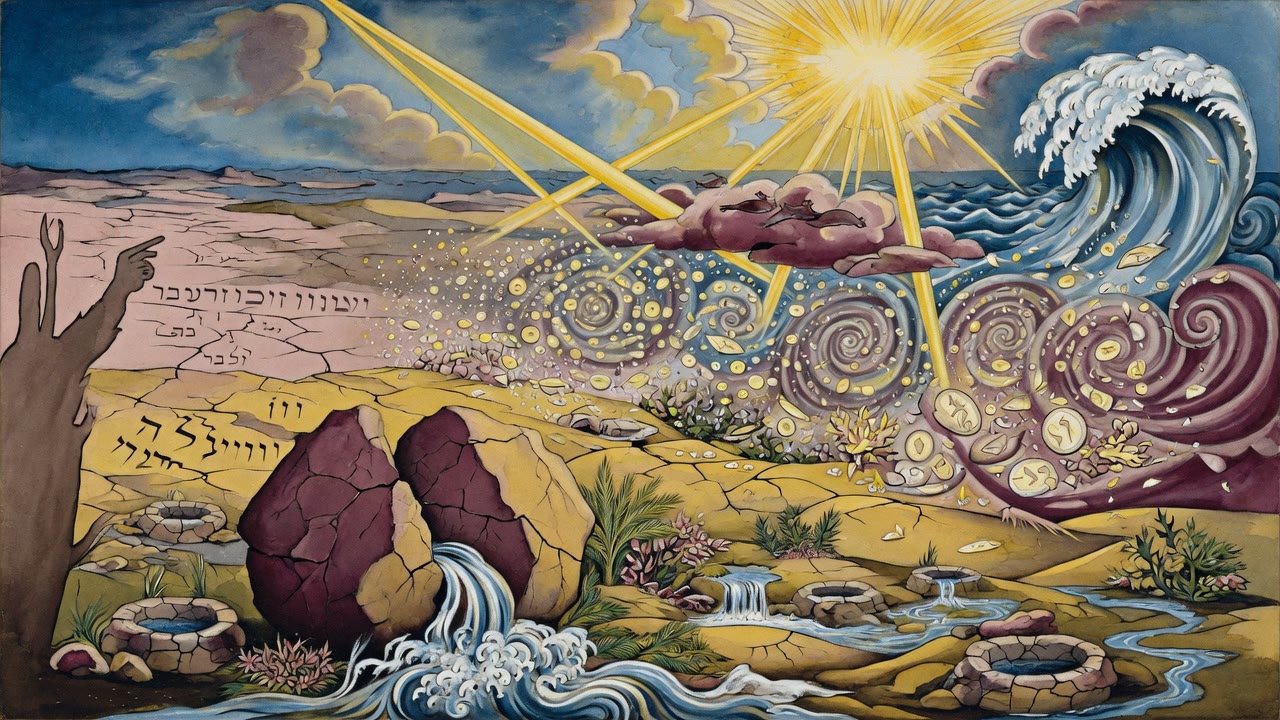
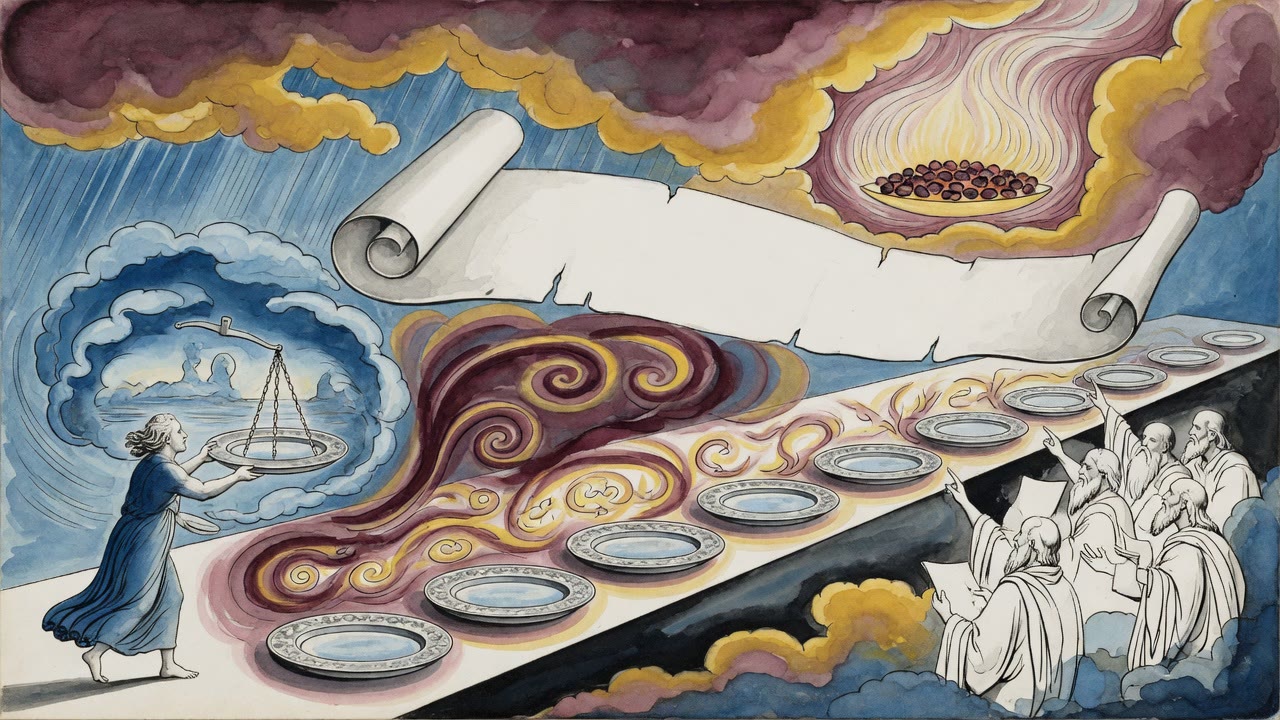
First the dish, one hundred and thirty shekels of silver, curved like a bowl. On the third day of the world God had gathered the waters into one place and called them yamim, seas, and the letters of that word count out one hundred. The other thirty came from a sea that did not exist yet. Solomon would cast one in bronze for the Temple courtyard, ten cubits from brim to brim, a measuring line of thirty cubits going around it, deep enough for the priests to lower themselves in before they served.
Then the basin, seventy shekels, round as a ball tossed hand to hand. Seventy for the seventy nations that Solomon would rule and that the king at the end of days would rule after him.
Rabbi Yona used to say that Alexander of Macedonia went up and up, trying to reach heaven, until the earth below him looked like a ball and the sea looked like a shallow dish. That is why the painters put a ball in his hand. They never put a dish there. He had no power over the sea.
The Goat That Answered for Joseph's Coat
The animals came next, and they were a family walking in one at a time. A young bull for Abraham, who ran to the herd and took a calf when three strangers stopped at his tent. A ram for Isaac, caught by its horns and burned in place of him. A sheep for Jacob, who stood in Laban's fields separating the flock.
Then the goat, and the goat was a sin offering.
Everyone knew what a goat meant in that house. Judah had slaughtered one, dipped his brother's long tunic in its blood, and carried the ruined cloth to his father. "Identify this, please," he said. "Is it your son's tunic?" Years later Tamar sent his own seal and cord and staff back to him from the road to Timnah with the same word attached. "Identify, please. Whose are these?" Nachshon set the goat down for the anguish his ancestor had put into an old man's hands.
Two oxen for the peace offering, and those were David and Solomon, who began the kingdom and built the House between them, one laying the foundation and one raising the walls. Five rams, five goats, five lambs in their first year: fifteen kings from Rehoboam down to Zedekiah, king after king after king. Some of them were wholly righteous. Some were wholly wicked. Most were somewhere in between, which is worse to read and truer to a family.
A gold ladle of ten shekels, packed with incense, for the ten generations from Peretz to David. They were all one hand, ten righteous men in a row, and their deeds smelled sweet.
Is This in Keeping With My Honor
God looked at what was on the ground. One dish. One basin. One ladle. One bull, one ram, one lamb, one goat.
"Is this in keeping with My honor?"
They answered the way travelers answer a king they meet on the road, when all they have to set before him is what fits in a saddlebag. Our lord, this is food for the road and the inn. Wait until you enter your own province and walk into your own palace. Then you will see what we can do.
"Master of the universe, we are in the wilderness. When You come into Your palace, You will see how many bulls we slaughter for You."
They kept it. Solomon stood at the dedication of the Temple and slaughtered twenty-two thousand oxen and a hundred and twenty thousand sheep, and the smoke of it went up over Jerusalem for days.
God Said the Name Out Loud
Nothing about that week in the wilderness was ordinary. No private man was ever again allowed to burn incense the way Nachshon and his fellows burned it. They brought sin offerings without being able to name a sin. When the prince of Ephraim's turn came on the seventh day it fell on Shabbat, when nothing but the daily offering is brought, and his offering was taken anyway.
And when God saw that Nachshon had laid out his silver in the order of the fathers and the kings, He said the whole name over it, the way a man says a name he intends to keep.
"This was the offering of Nachshon son of Aminadav."
← All myths