The Purse in the Pool and the Dream of Blood
A traveler hid in a mountain cave and watched three strangers cycle through a pool until a purse, a theft, and a killing demanded a dream.
Table of Contents
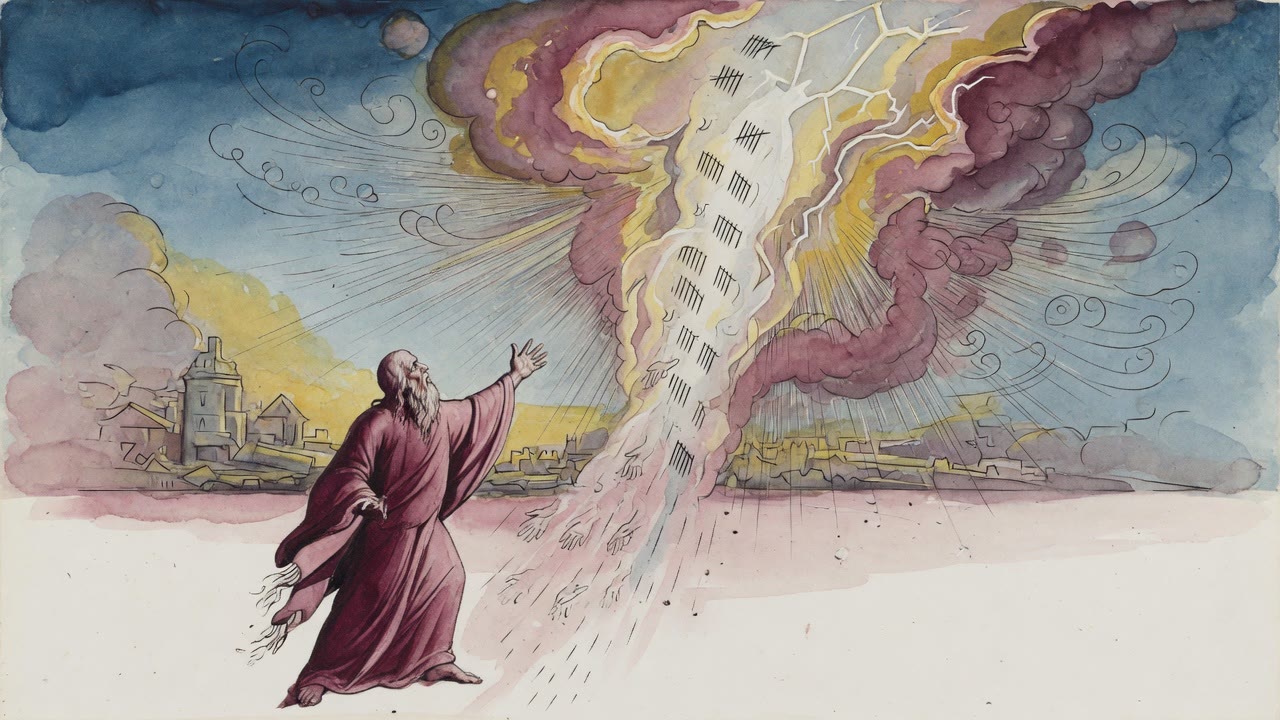
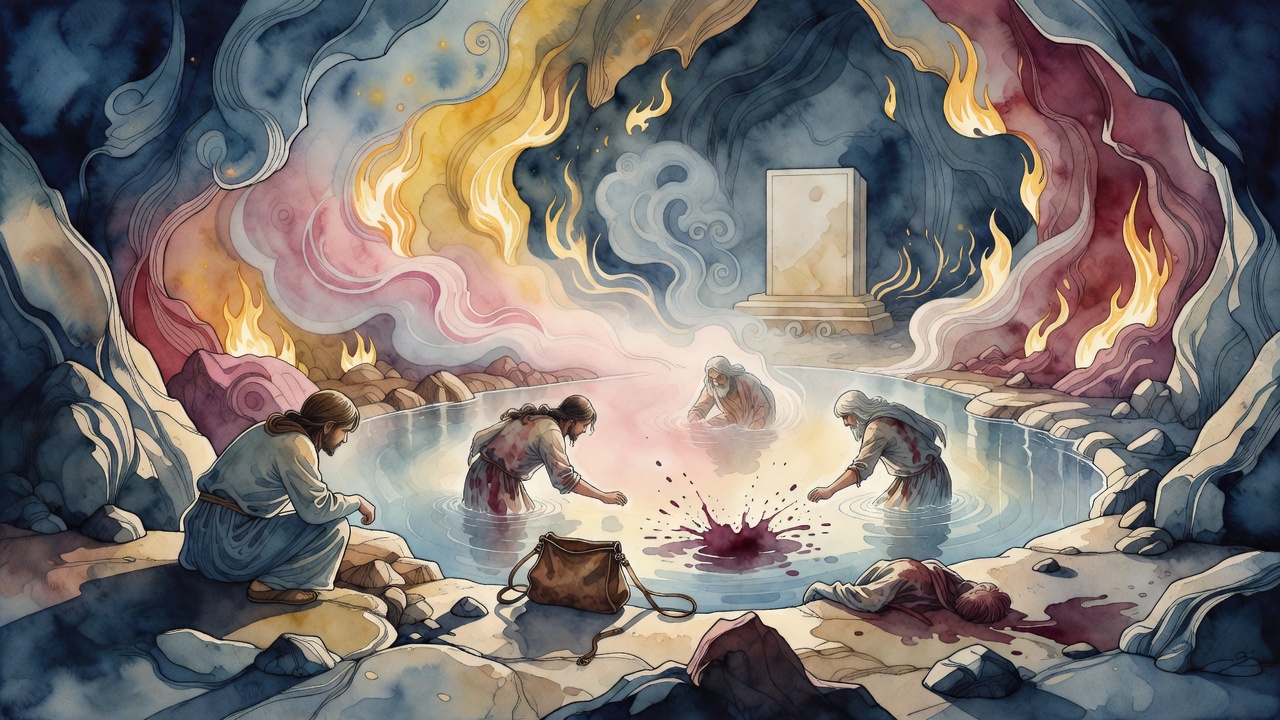
The pious man pressed into the dark throat of the mountain and found a pool, then a second cavern behind it, blacker still. He was turning back when footsteps entered the outer cave. A stranger stripped, plunged, dressed, prayed, and left. A purse slipped from the clothes and stayed on the stone, unnoticed.
 Click for full size
Three Men and One Purse
No sooner had the first man gone than a second arrived, saw the purse, snatched it, and ran. A third came after that, undressed, bathed, and began to dress. The first man returned, empty-handed and furious, demanding his purse. The third protested innocence. The first did not believe him. He killed him there by the water.
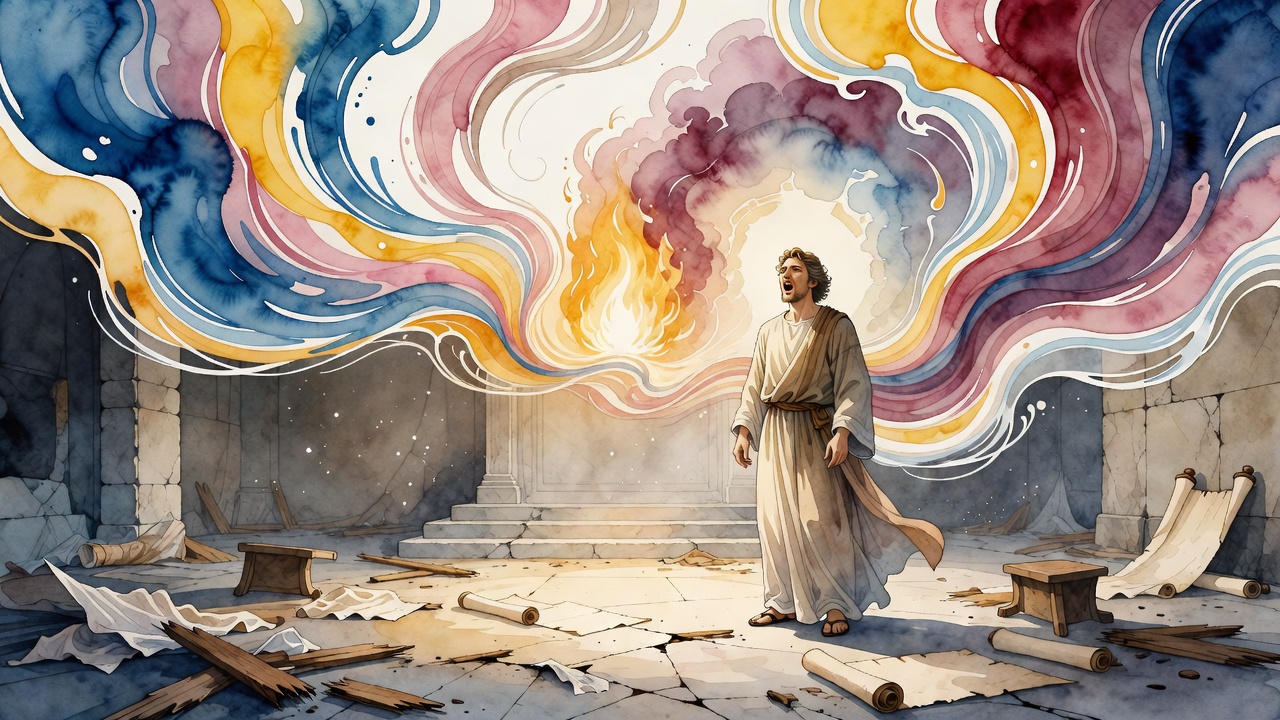
The hidden traveler watched without power to stop the blow. His stomach turned. He had just seen the world prove that innocence dies and theft walks free. He fell asleep in the inner dark, still shaking.
What Sleep Told Him
In the dream the ledger opened. The third man, who looked innocent in the cave, had once murdered the father of the first. The first man's hand, bloody and wrong by daylight, had finished a debt the court never saw. The second man, the thief of the purse, had only taken back what the first man's father had stolen from his father. Property returned. Blood answered blood. The traveler woke with the taste of iron and the knowledge that he had misread every face.
The mountain did not become kind. It became exact. What looked like random cruelty was a delayed sentence. What looked like pure theft was restoration. The dream did not make murder holy. It made the traveler careful with his eyes.
Mercy Before the Body
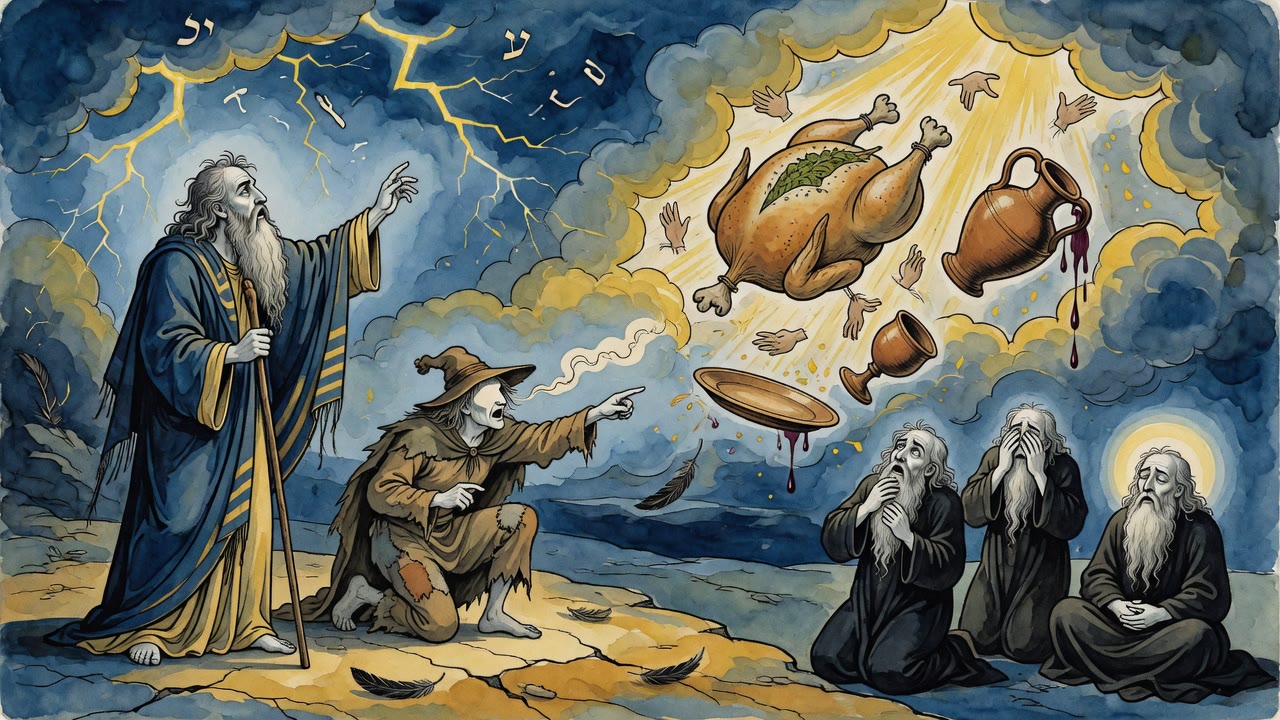
Elsewhere the tradition names a different patience. When a man sins, the Holy One does not rush to wound flesh. First the plague of tzaraat (a creeping affliction of walls, cloth, and skin) falls on the house. The stones cry out: turn back. If he hardens, the affliction climbs to the garment. Only then, if he still will not return, does it reach the skin (Leviticus 13-14). House, then cloth, then body. Mercy builds stairs down into judgment so a man can wake on an earlier step.
The cave had no house-stage for the traveler to admire. He saw the last step first. The dream restored the missing warnings of history: old theft, old murder, old silence. Heaven's sequence is not always visible in one hour of mountain light.
Judgment and Mercy Argue
In a later mystical courtroom the Attribute of Judgment and the Attribute of Mercy pull on the same rope over Israel. Judgment quotes sin and demands death for complete rebels. Mercy answers that Jacob must not be shamed forever (Isaiah 29:22). Judgment recalls the sins of the fathers to the fourth generation. Mercy answers that a father must not die for a son's sin. Judgment threatens fever and empty harvest (Leviticus 26:16). Mercy closes with God's own name: "For My sake, for My sake, I will act" (Isaiah 48:11). Judgment with mercy, for the sake of the Name, remains with the people in goodness and in exile.
The cave is that argument in three bodies. Strict measure moves. Compassion still claims the last word, because the dream was given to a living witness, not withheld until he became another corpse by the pool.
He stayed in the cavern until morning light made the outer pool look ordinary again. Water is water. Stone is stone. The blood had been washed or hidden or taken by animals. Nothing in the cave offered a plaque explaining the plot. Only the dream remained, heavy as undigested meat.
The traveler did not appoint himself judge of the three men. He appointed himself student of his own certainty. He had been ready to write the world as random and cruel. Heaven answered with a longer sentence. Longer is not always kinder. It is often simply more precise. Precision can still break a neck. Precision can also return a purse to the line that first lost it two fathers ago.
People want judgment or mercy as a single flavor. The attributes argue because human history is not a single flavor. A house warned before a body is wounded is mercy. A murder answered generations later is judgment that waited. The pious man climbed out of the mountain carrying both, and for the rest of his road he watched strangers with a slower tongue.
If you meet a story that looks like pure injustice, the cave says, do not rush to close the book. Ask what page you are missing. Ask who died before you arrived. Ask who stole before the purse hit the stone. Then, and only then, speak.
← All myths