Moses Claimed Sinai Spoke Only to Him Alone
At the calf, Moses seizes a grammar loophole at Sinai. God said Elohekha, singular. Israel stole the ox from the chariot and paid fivefold in the wilderness.
Table of Contents
 Click for full size
The Opening God Left at Sinai
When God spoke at Sinai, He gave Moses more than law. He left a crack in the wording large enough for an advocate to drive a whole people through. "I am the Lord your God," He said, and the Hebrew was Elohekha, singular, as if the voice had locked eyes with one man alone on a smoking peak.
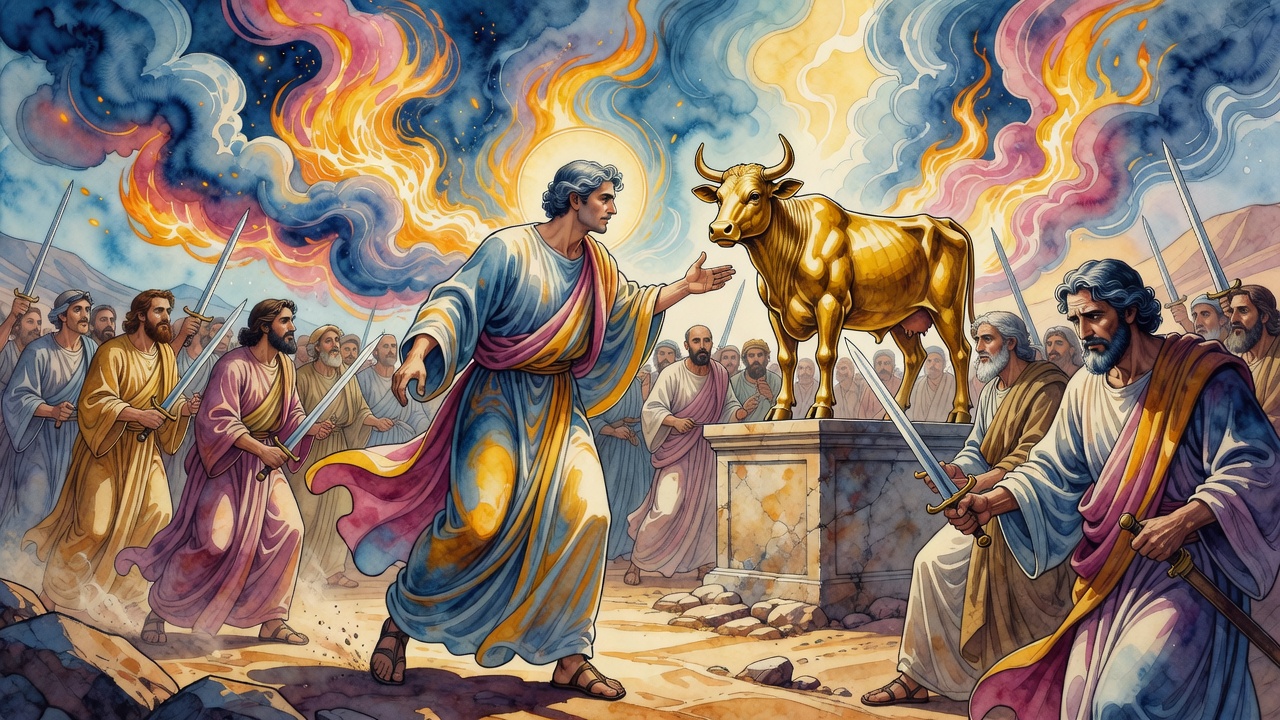
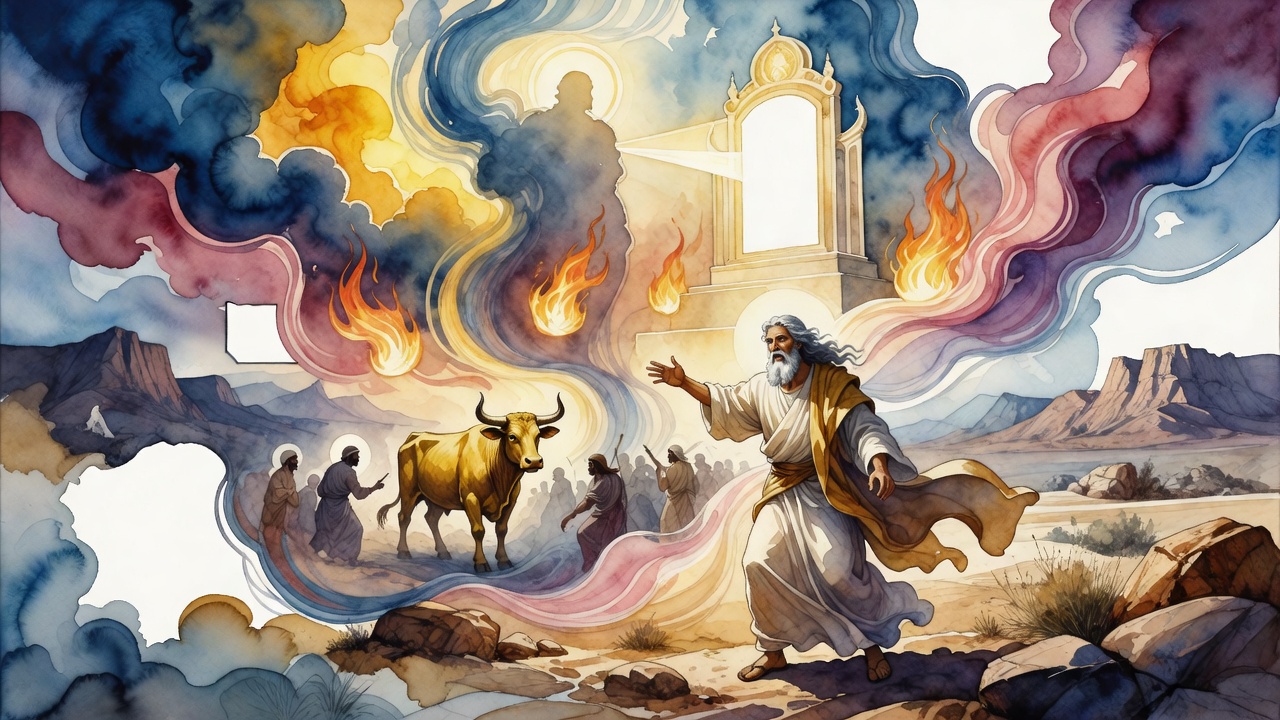
Years of teaching and journeying would follow that day. Then the calf rose in the valley, gold hard as a new sun, and justice demanded a verdict that would empty the camp. God refused Moses's first pleas. "Is it possible," He asked, "that the attribute of justice will not be implemented against them for having violated the precept?"
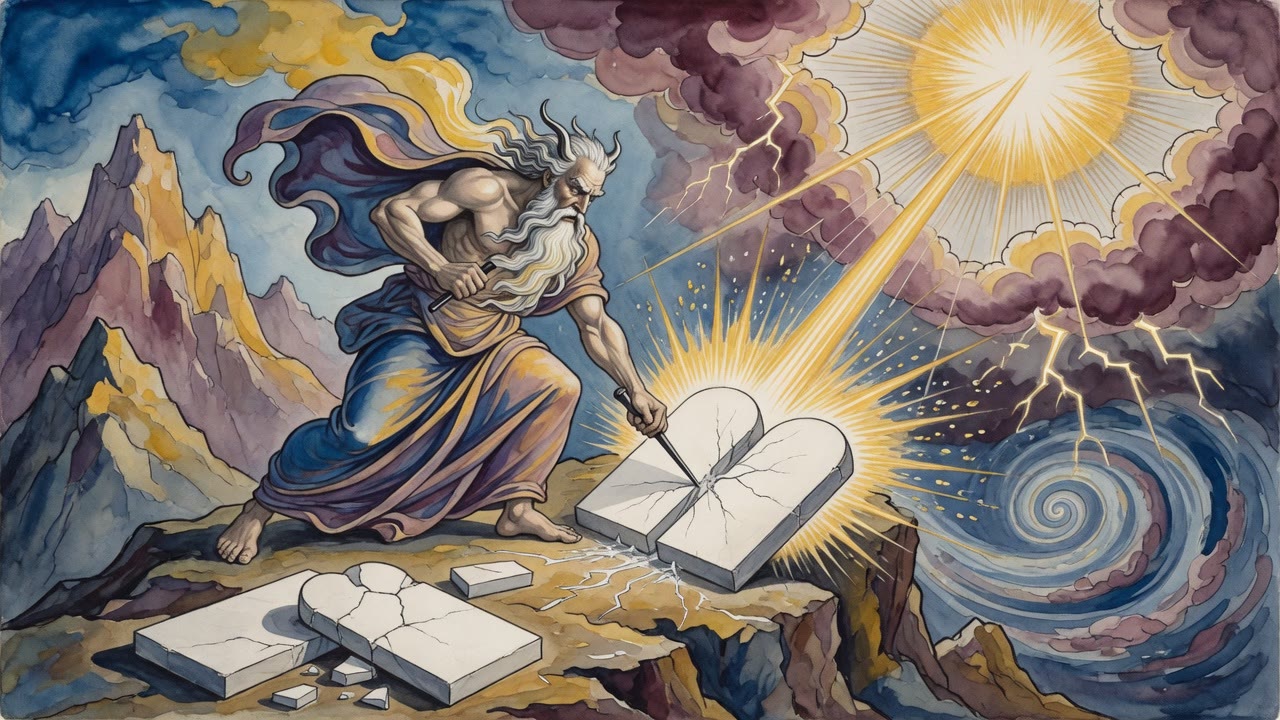
Moses answered with the grammar of the mountain. "Master of the universe, so You said at Sinai: I am the Lord your God, Elohekha. Eloheikhem was not stated. Did You say it to them? Did I violate the precept?" The first word of the Decalogue became a shield. If the command had been spoken only to Moses in the singular, the camp could not be executed for a charge never leveled at the many in the plural.
Rabbi Yehoshua ben Levi said in the name of Rabbi Shimon ben Yochai that God Himself had given that opening when He chose the singular form. The advocate did not invent a trick. He walked through a door Heaven had framed in fire.
The Plural That Closed the Gap
Heaven did not leave the loophole forever. Later, in the priestly teaching, the same formula returns in the plural: "I am the Lord your God," Eloheikhem. From then on the mitzvot (commandments) speak to the people as a people. The opening Moses used at the calf would not stand a second time in the same shape.
But in the hour of the calf it stood. Moses seized the singular and held the people inside it while wrath still burned above the mountain. The advocate did not deny the gold or the dancing or the shout that rose from the valley. He denied that the charge sheet had ever been written against the full assembly in the first person plural of command.
Justice wanted a clean sentence and a clean camp. Mercy wanted a hearing that could last long enough for repentance to find a path. The hearing lived inside one suffix on God's name, the difference between "your" said to one man and "your" said to a nation of freed slaves still learning how to stand under speech.
After that day, whenever the Torah says Eloheikhem, the midrash hears a bolt sliding home. The people are addressed. The people are bound. The people can no longer hide behind their teacher's singular ear.
They Stole an Ox From the Chariot
Another strand of the same midrash hears the calf in the laws of theft. "If a man steals an ox or a sheep and slaughters it or sells it, he shall pay five cattle for the ox and four sheep for the sheep." Rabbi Yehuda puts those words in Israel's mouth as confession and ledger at once.
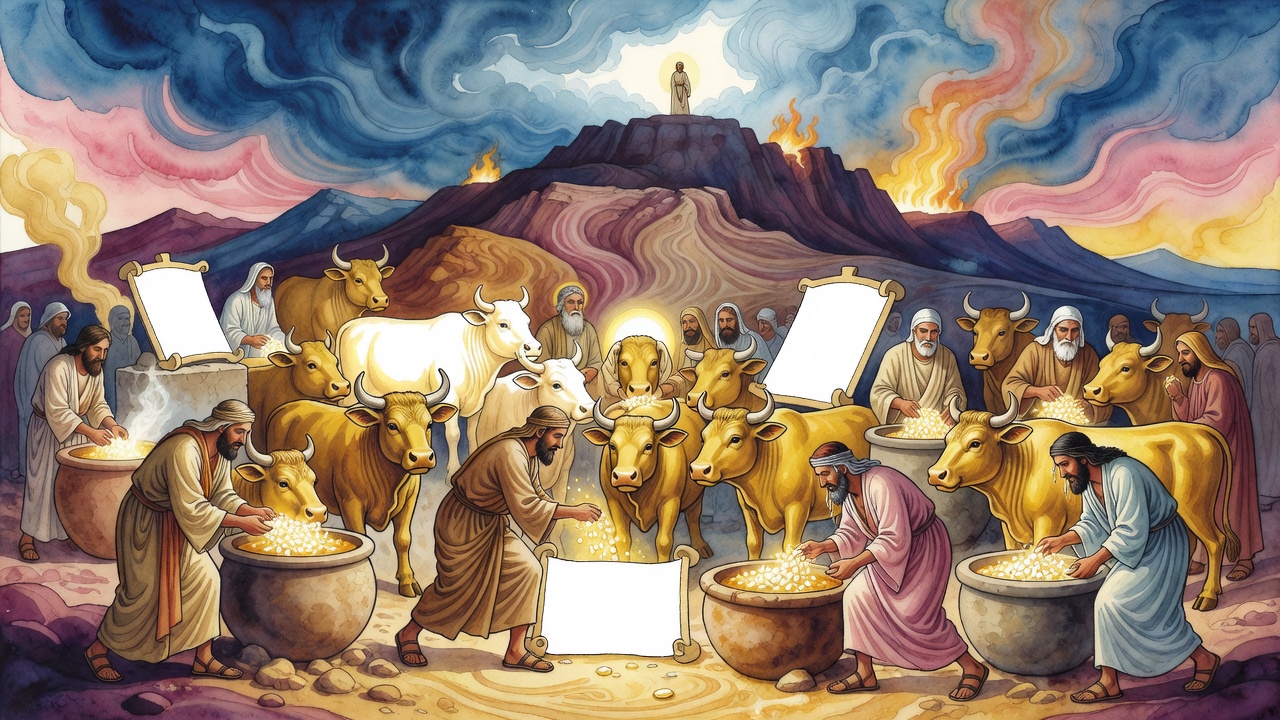
When God descended at Sinai, the heavenly chariot bore four living creatures, and one of them resembled an ox. Israel took that form and poured it into gold under Aaron's reluctant eye. They stole the ox of the chariot and set it in the camp where everyone could see. For that public theft they paid fivefold: fathers dying in the wilderness under the weight of the calf's debt, even when other sins later stood in the open as the stated cause.
Four sheep answer for four kingdoms that would rule over them in the long night of history. The abduction of Joseph, called a flock in the psalms, cost four hundred years in Egypt, fourfold measured in generations of bricks and cry. Public shame against Heaven's honor costs more than private betrayal of a brother, not because the brother matters less, but because the statue of the prince, when struck in the square, wounds the kingdom itself in front of every witness.
Two Defendants on One Podium
Picture two men on a judgment platform. One sold the prince's son in secret among brothers. One cast a stone at the prince's statue where the whole city could see the crack. The stone-thrower takes the harsher lashes. The seller pays a price in silver counted out under a quieter roof. So the ox of the calf, stolen in public from the face of glory, draws the fivefold. Joseph's sale, terrible and private in the pit, draws the fourfold of long exile and the long road back.
David later prays, "Do not enter into judgment with Your servant." He has read the arithmetic of ox and sheep. If God opens the full account, no one stands. Moses at Sinai, gripping the singular Elohekha while the valley still reeks of molten gold, is already praying that same prayer for a nation that has not yet learned the words.
The calf is not only a failure of patience after forty days. It is a theft of Heaven's own image, paid for in wilderness graves and foreign crowns, defended for one burning hour by a man who turned grammar into advocacy until the plural of the commandments closed the door he had held open with his bare hands and a single pronoun.
← All myths