5 min read

The Rabbi Sorted Twin Sons With a Bunch of Grapes

A king raised two look-alike boys, one Jewish and one not. A rabbi set out clustered grapes and loose grapes, and watched which hand chose which.

Curated by Arthur · Told by Maggid ·
Table of Contents
  1. Refusal at Court
  2. Grapes as a Test
  3. A Bird That Would Not Stay Quiet
  4. The Tree That Knew the Distance
  5. What Courts Actually Hear
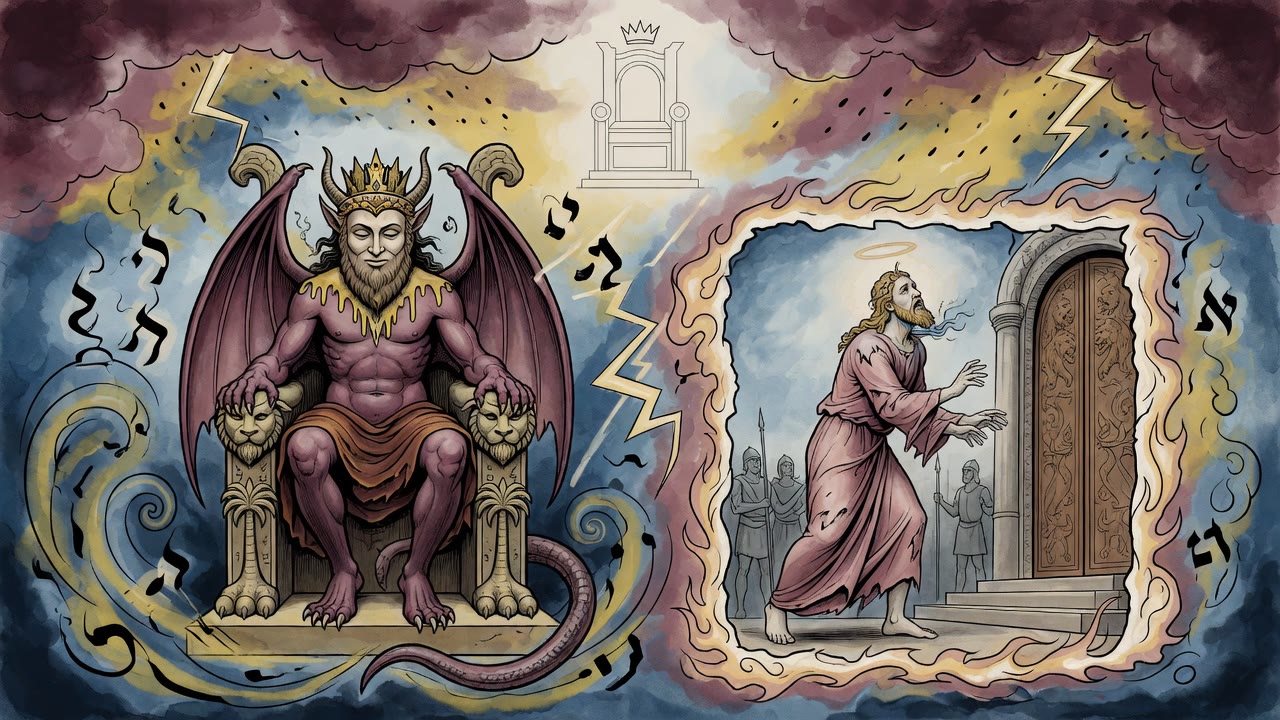
The Rabbi Sorted Twin Sons With a Bunch of Grapes Click for full size

Refusal at Court

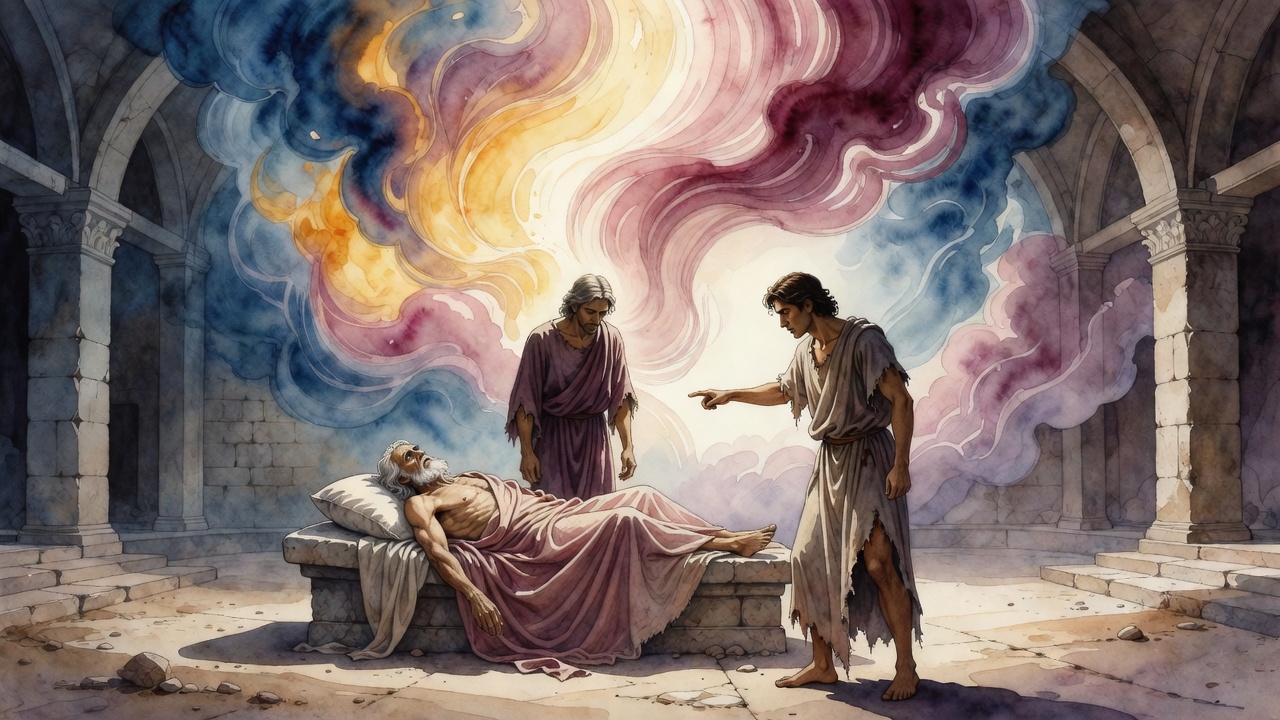
A handsome Jew served at a king's court. The minister's wife reached for him. He refused. Time passed. She bore a son. His own wife bore a son. The two boys looked so alike that nurses lost the thread of which child belonged to which bed, and rumors filled the kitchens faster than bread cooled.

The king took both into the palace and raised them under one roof. One child carried a private sign the king alone knew. Years later the parents came to claim their sons, and the hall filled with faces that could not sort blood from blood. The king sent for a rabbi, because a crown can raise children and still fail to name them.

Grapes as a Test

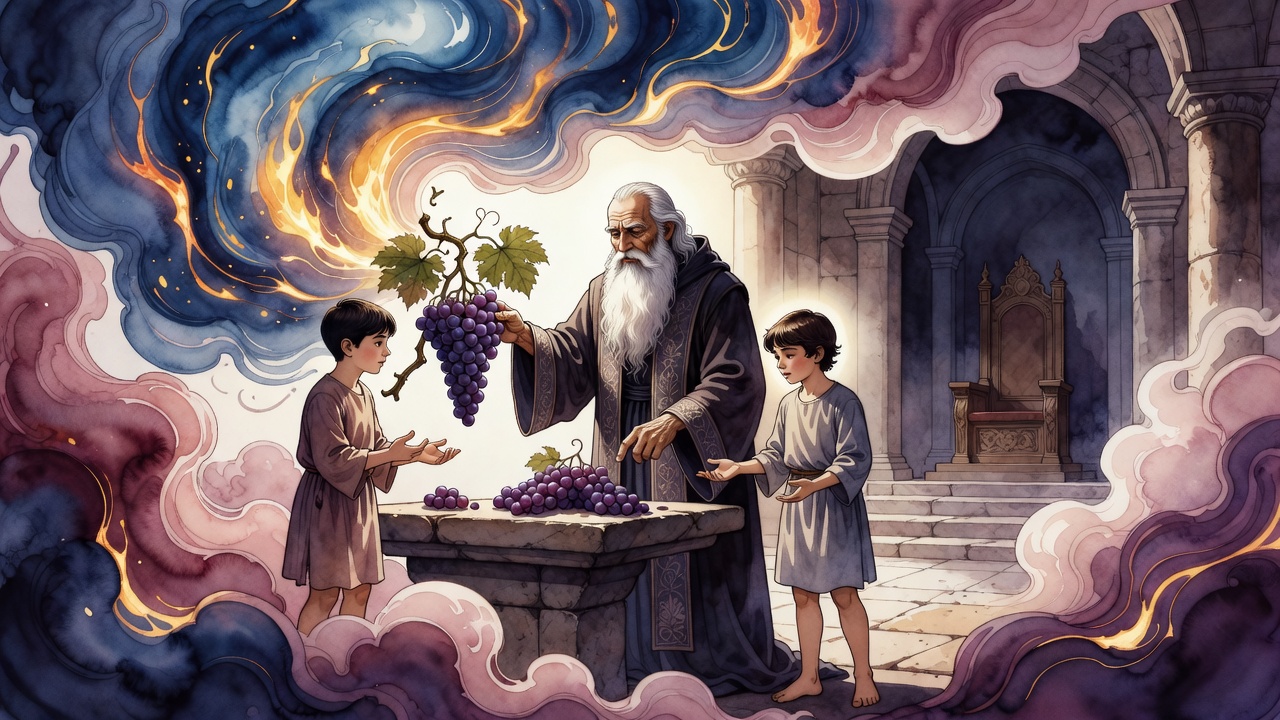
The rabbi asked for grapes still on the bunch and grapes already picked into a basket. He set both before the young men. Choose, the silence said. One hand closed on the cluster. The other gathered loose fruit. The rabbi pointed. The Jew had taken the bunch.

"Jews keep together like grapes on a stem," he told the king. "Others live separate, each berry alone." The court laughed, then quieted. A people that survives by clinging will reach for what holds. A people that prizes the single self will take the scattered pile. The sign the king had hidden was no longer needed. Habit had spoken louder than a secret mark.

A Bird That Would Not Stay Quiet

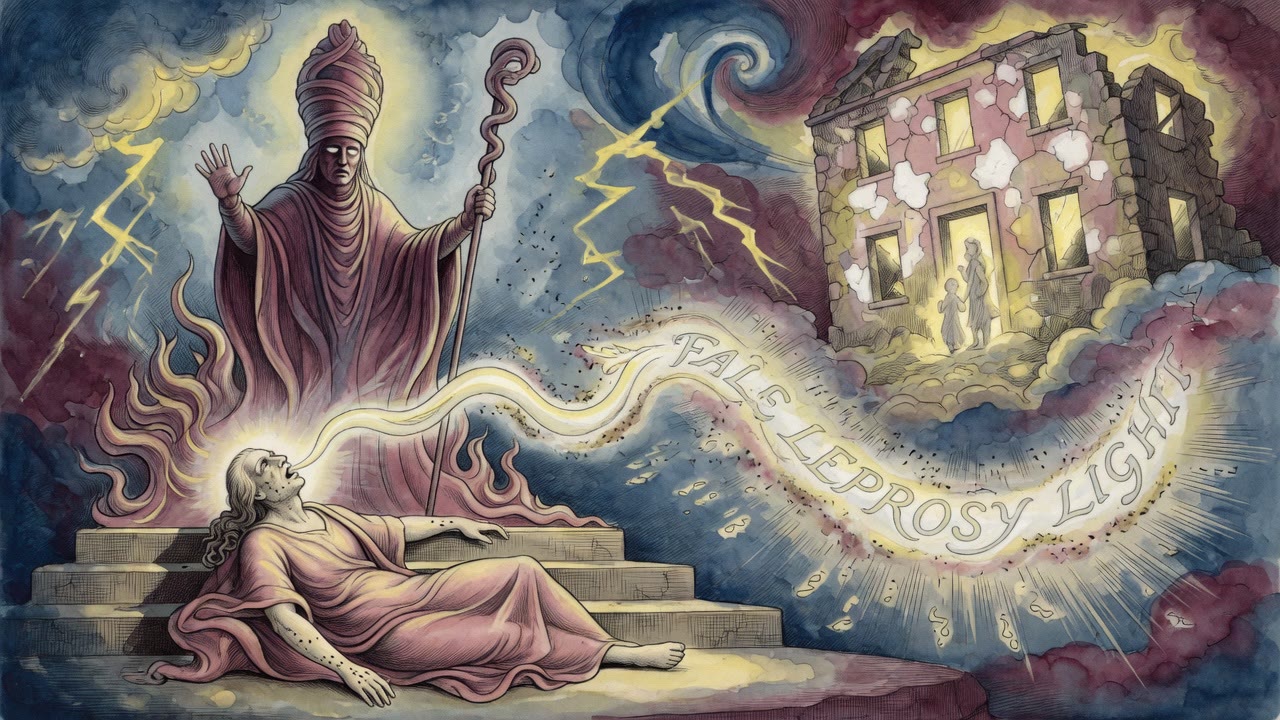
Another tale from the same stream of court danger: a Jewish merchant robbed on a caravan road, throat nearly opened so he could not report the theft. Dying, he saw a bird on a branch and said the bird would bear witness. The robber grew rich and favored. One day a rare bird was served at the royal table. When the cover lifted, the robber laughed. The king pressed him. The truth came out with the laugh. The rope followed. Property returned to the murdered man's house.

Birds do not file depositions. A guilty man still hands the court his own mouth when a joke opens the wrong door. Memory and mockery travel together until a king asks why the favorite is smiling at a plate.

The Tree That Knew the Distance

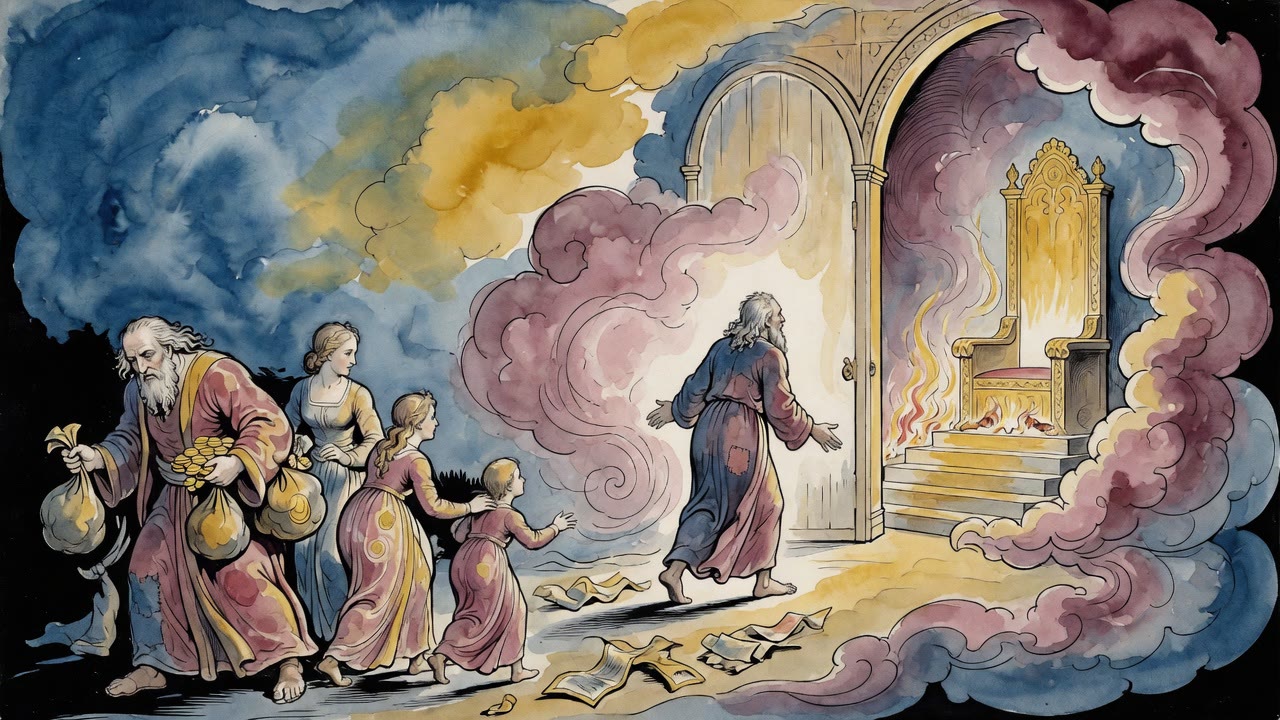
Elsewhere a gentile lent money to a Jew under a great tree, calling the Holy One and the tree as witnesses. When payment came due, the borrower denied the loan. Rabbi Hariri heard both sides and sent the lender to fetch a branch from that tree. Hours later the debtor, waiting and irritable, snapped that the tree was far and the man would not return until evening.

"Pay," said the rabbi. "The tree has testified." The slip named the tree the debtor had sworn never existed. No branch was required. Memory under pressure is a witness that forgets to lie cleanly. Distance is a confession when only the guilty would know how long the walk takes.

What Courts Actually Hear

Grapes sort a people by grip. A bird sorts a murderer by a laugh. A tree sorts a debtor by a distance only the guilty would know. Judges who listen for habit, for slip, for the body that cannot keep its story straight, do not always need the private sign only a king holds in a locked chest.

The twin who chose the bunch walked back into a people that clusters. The twin who chose the loose fruit walked into a different map. The king watched both, and the rabbi did not need to raise his voice. Proof had already arrived in the shape of a hand closing on fruit.

The grape test is comic until it is not. A king with a private sign still needed a public proof the parents could accept. The rabbi gave him one that did not depend on a hidden birthmark. It depended on a lifetime of belonging already written into the hand. Cluster or scatter. That is not blood magic. It is sociology of survival made edible for a court that understands symbols better than census rolls.

Pair that with the bird and the tree and a pattern hardens. Truth often arrives sideways. The robber was not undone by a prophet in the road. He was undone by a laugh he could not swallow at a royal table. The debtor was not undone by a magic branch. He was undone by impatience that named a tree he had denied. Courts that wait for the slip, that stage a delay, that set two choices before twin sons, are practicing a Jewish craft of proof that prefers the guilty mouth to a forced confession.

The handsome Jew who refused the minister's wife sits at the root of the twin problem. His refusal made enemies and also made a household the court later had to sort. Desire refused becomes a plot. A plot becomes two boys who look alike. Looking alike becomes a crisis of inheritance and peoplehood. The rabbi's grapes close a story that began with a no spoken in a corridor no chronicler named.


← All myths
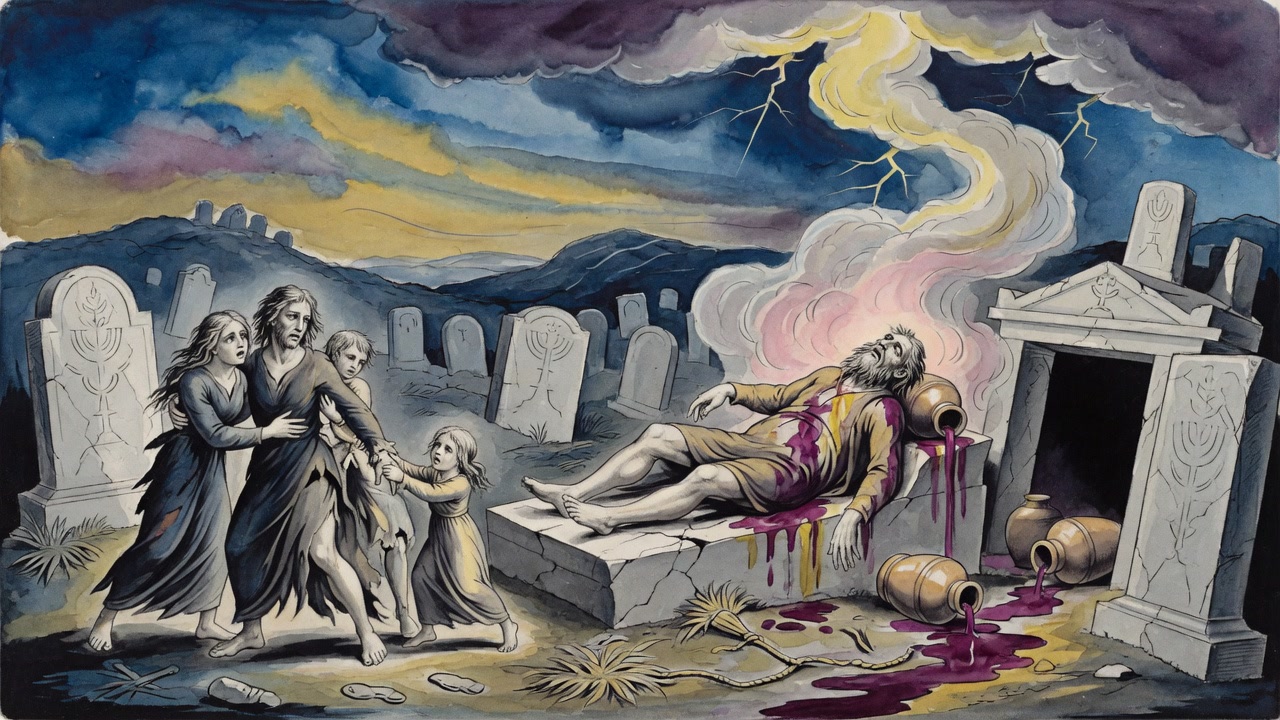
From the tradition

Sources

3 sources

The texts behind this telling. Some cards carry a translation of the source; others are our own retelling of it, and each card says which. Every card links out to the original.

Exempla of the Rabbis, No. 430Exempla of the Rabbis (Gaster, 1924)

Retold in our words. Read the original at the link below.The Exempla of the Rabbis, Moses Gaster (1924) · Public Domain

At the court of a king there lived a Jew who was very handsome. The wife of the minister fell in love with him, but he refused her advances. After a time she gave birth to a boy and so also did his own wife. The two boys looked exactly like one another and could not be distinguished one from the other. The king who heard of it took the two children and brought them up in the palace; one of them had a sign but only the king knew of it. When they had grown up the parents came to ask for their children, but no one could distinguish them so he sent for the Rabbi

Asked him to find out which was the son of the Jew and which of the minister. The rabbi told him to bring grapes, some still on the bunch and the others picked singly and put in a basket. He who took the bunch would be the Jew and so it happened. The king asked the rabbi the reason and was told, “The Jews cluster together like the grapes in a bunch. They must keep together whilst the others live separately and therefore the Jew took hold of the bunch and the other of the single grapes/'

431, A Jewish merchant sold his wares in a distant land at great profit. A man who had noticed it returned home with him in the caravan and induced him to remain a little behind. Then he robbed him of all he possessed and was on the point of killing him, saying, “If I spare your life you are sure to tell." When the Jew was dying he saw a bird on a tree, and said, “This bird will bear witness against you." The man went away with all the money and becoming richer became a favourite of the king. One day a dish was brought to the table of a rare bird shot by a hunter. On the cover being removed the man recognised the same bird and he laughed. The king pressed for an explanation and the man had to tell the truth whereupon the king ordered him to the hanged and the property returned to the family of the murdered man.

Full source
Gaster, Exempla No. 358The Exempla of the Rabbis (1924)

Retold in our words. Read the original at the link below.The Exempla of the Rabbis, Moses Gaster (1924) · PD-US-pre-1929

A gentile once lent a sum of money to a Jew. They had no written contract, but they swore their agreement beneath a great tree in the countryside, calling on the Holy One and on the tree itself to be their witnesses.

When the time came to repay, the Jew denied ever receiving the money. He claimed there had been no such loan. Without a contract and without human witnesses, the lender had no legal case.

He brought the dispute to Rabbi Hariri.

The rabbi summoned both men and told them to return the next morning. In the meantime, he quietly took the lender aside and whispered something in his ear. The lender nodded and left town.

The next morning the accused debtor came to court. He waited. And waited. The lender did not appear. The rabbi did not conduct the hearing. The hours passed.

Finally the debtor, irritated, asked Rabbi Hariri what was going on.

"I sent him," said the rabbi, "to fetch a branch from the tree under which you made the loan."

The debtor snorted. "Oh, the tree is far. He won't be back before evening."

Rabbi Hariri looked up from his desk. "Pay the money," he said. "The tree has testified."

The debtor turned white. He had just admitted, from his own mouth, that he knew exactly which tree the loan had been made under, even though moments before he had sworn there had been no loan at all. The rabbi had not needed the branch. He had only needed the debtor's memory to slip for a single second (Gaster, Exempla No. 358).

The teaching is small and sharp: a liar's own tongue eventually testifies against him. The rabbi's job is just to wait for the slip.

Full source
Gaster, Exempla No. 124The Exempla of the Rabbis (1924)

Retold in our words. Read the original at the link below.The Exempla of the Rabbis, Moses Gaster (1924) · PD-US-pre-1929

A pious man had given his life to discipline, studying Torah, eating little, owning less. His sister-in-law accused him of stealing her jewelry. The charge was false, but the court demanded what Jewish law demands in disputed property claims, a solemn oath of innocence.

The ascetic refused. An oath, he knew, is a sacred act. To swear even truthfully, when truth could be established another way, was to treat God's Name as a convenience. He would rather be convicted than take the oath lightly.

Gaster's Exempla (1924), No. 124, says the case was brought to Rabbi Yochanan ben Zakkai, who prayed. As he prayed, Heaven opened the answer for him. He rose, walked out into the garden, and climbed to a nest high in one of the trees. There, tucked among twigs and feathers, lay the sister-in-law's missing jewelry. A bird had seen the glint of it and stolen it into the sky.

The ascetic was cleared without swearing a single word. And a lesson was stamped into Jewish law: the righteous hold the Divine Name so carefully that they will risk their own reputations rather than spend it. Heaven tends to notice.

Sometimes the bird that accused you is also the bird that acquits you.

Full source