6 min read

The Scribe Kept Silent and the Knight Died Instead

A poor man rose to royal scribe by a maxim and a careful pen. Silence saved him from a queen's trap, and another man walked first into the death letter.

Curated by Arthur · Told by Maggid ·
Table of Contents
  1. The Petition Nobody Would Write
  2. The Rule That Shut His Mouth
  3. The Torn Dress
  4. Breakfast on the Road
  5. The Seal He Never Broke
The Scribe Kept Silent and the Knight Died Instead Click for full size

The Petition Nobody Would Write

He had spent the last of his money buying short rules, so when he walked into the strange town he owned nothing but a few sentences and a hand that could still shape letters. In the market a man stood at a scribe's table with one small coin held out, asking for a petition to the king. The scribe looked at the coin, and then at the man, and would not pick up his pen for that price. One of the rules covered exactly this, and the rule said write.

So he borrowed the reed and the ink and wrote the petition himself, standing, with the paper braced on his forearm. He wrote it in the script he had learned before he was poor, every letter the same height, the lines running true without a rule underneath them. The officer who carried it upstairs came back down to ask who had made it.

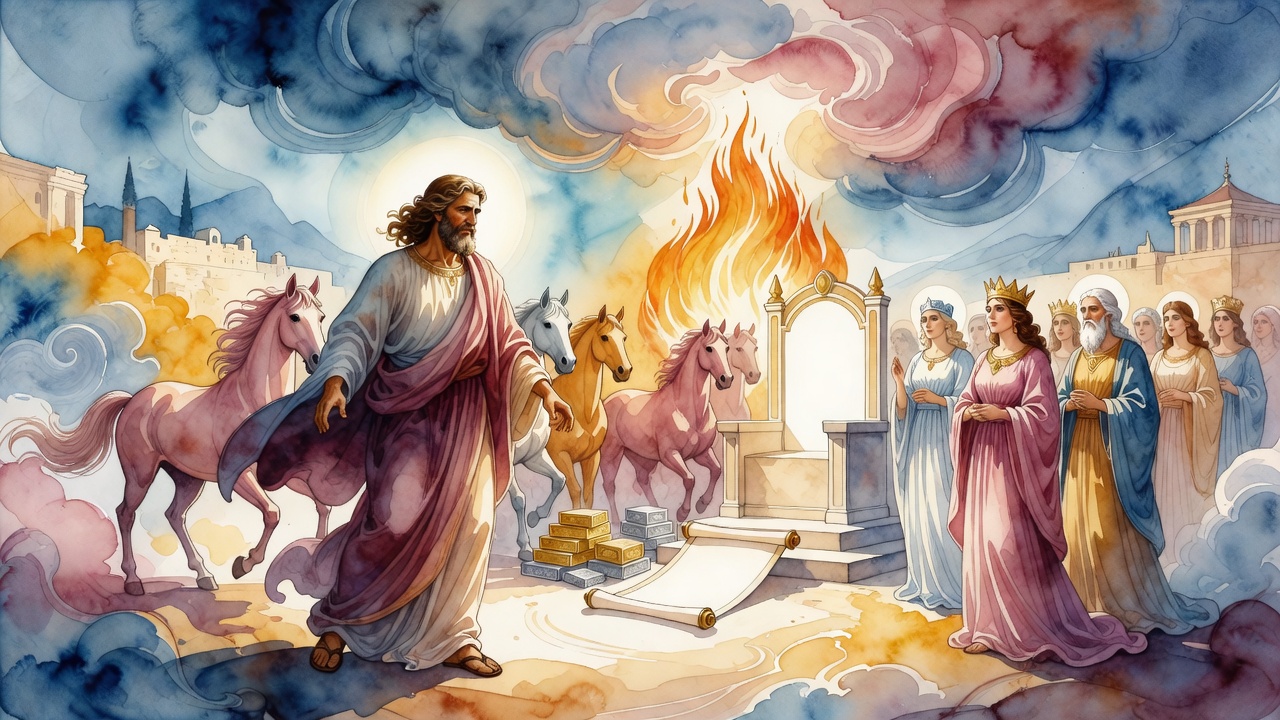
The king wanted the hand more than he wanted the complaint. By evening the poor man had a stool among the court scribes, a box of ink that was his own, and bread that arrived without being asked for.

The Rule That Shut His Mouth

Months later he rode out behind the king's party and got as far as the outer gate before he understood that his pen and inkhorn were still on the table where he had left them. Nobody takes a scribe on a progress without ink, so he turned his horse around and went back alone.

The corridors were empty, because everyone who mattered was on the road. The room was not empty. A knight was standing inside it with the queen, close, and the two of them turned toward the door at the same moment.

The words were already up in his throat, and they were good words, the kind that make a man feel tall for about a day. Rebuke not the wicked lest you make an enemy. He closed his mouth over the sentence and held it there while he crossed the room, picked the pen and the inkhorn off the table, and went out again with his eyes down. He kept silent all the way back down the corridor, and nobody said anything behind him either, which is how he knew he had guessed the room right.

The Torn Dress

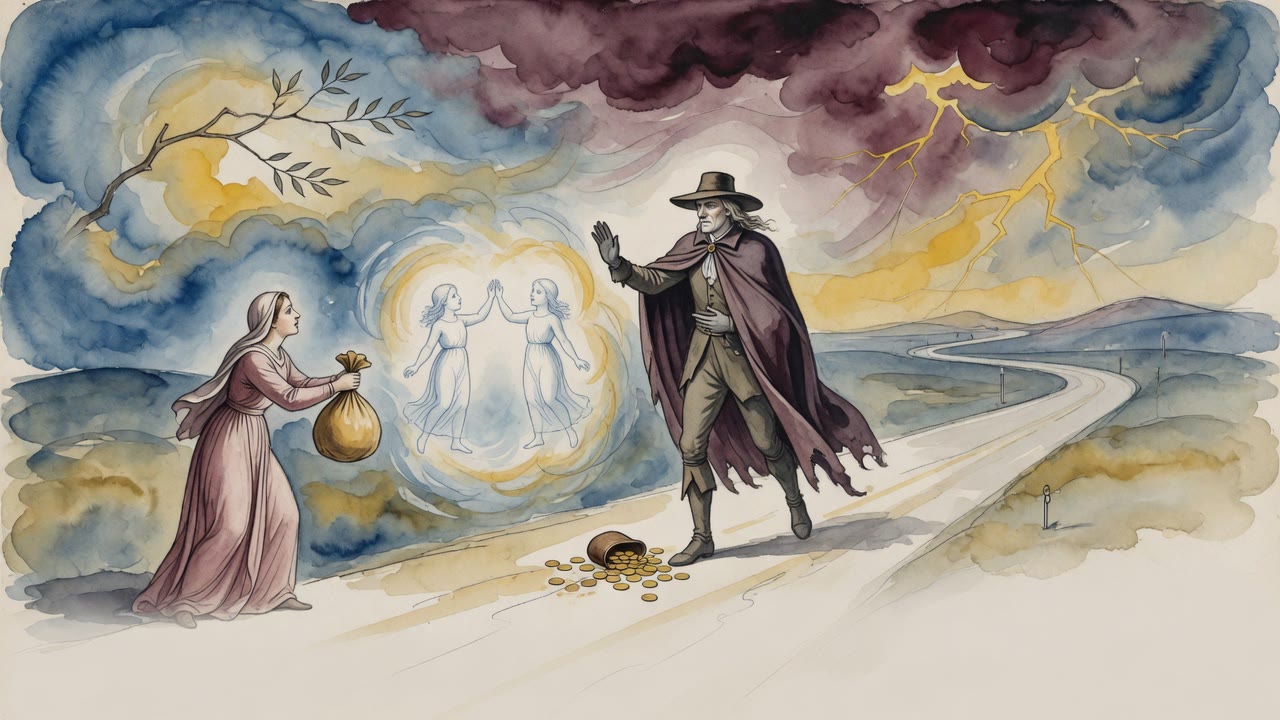
Silence did not calm the queen. It frightened her worse than a shout would have, because a man who says nothing today is a man saving it for a better hour. Before the king was back in his own hall she had torn her clothes down the front and was weeping in front of servants that the new scribe had put his hands on her.

The king believed the cloth. He did not shout either, and that should have been the warning. He wrote a letter at his own desk, sealed it, and told the scribe to carry it to a certain lord in the country who was holding a thousand dinars of his, and to bring the money back. The scribe took it with both hands, the way a man takes a gift.

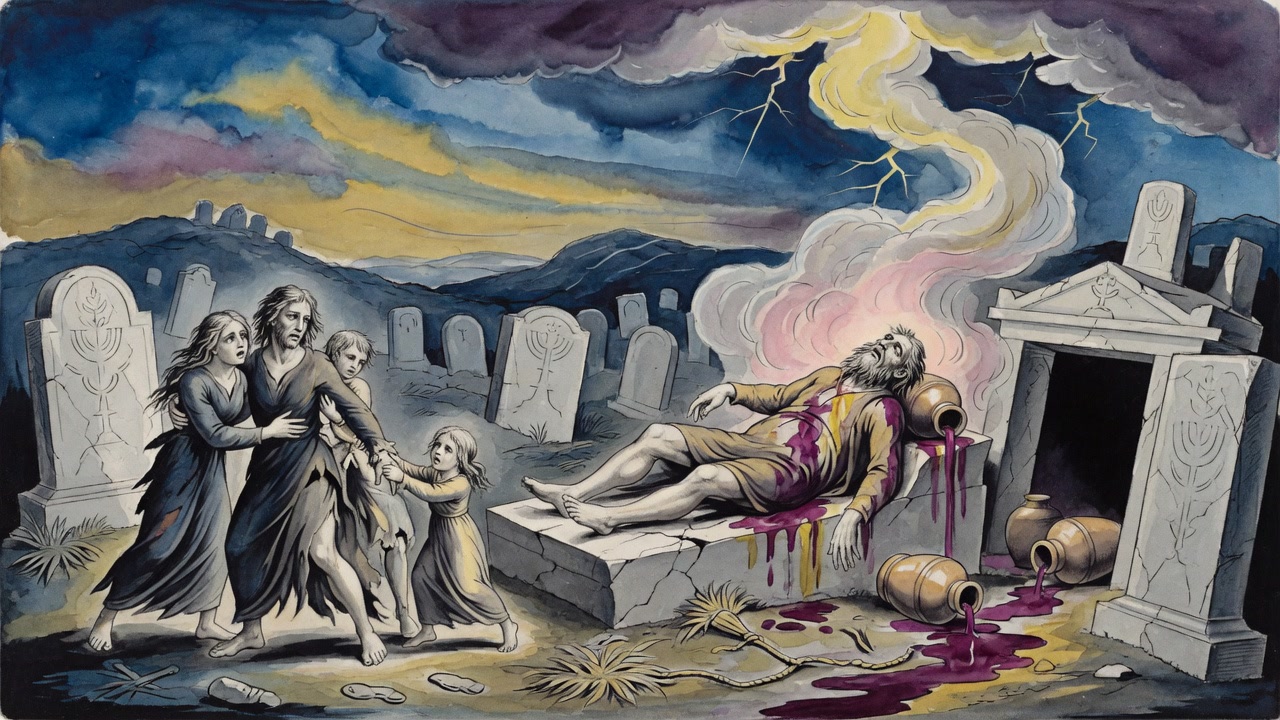
The lord already had his instructions, sent days before for another purpose entirely: kill the first man who comes to you from the palace. The letter in the scribe's belt promised him a thousand dinars, and the standing order at the far end promised him a knife, and the two of them were written by the same king.

Breakfast on the Road

He was an hour out of the city when a friend saw him from a doorway and called him in to break his fast. He had a king's errand under his belt and a thousand dinars to fetch, so every reason he could name said keep riding. But another of the rules said sit down when a friend puts food in front of you, and he had already learned what happened the last two times he argued with one of them. He sat down. He ate slowly, because his friend wanted to talk.

The knight could not wait that long. He knew what was in the letter, since half the palace had watched the king write it, and he wanted to see the body before the story could change shape. So he took a fast horse and went around the eating house and got to the lord's gate first, in the middle of the morning, dusty and pleased with himself, saying he had come from the palace.

They killed him at the gate. He was the first man from the palace, and the order did not ask for a name, so the knight died in the afternoon instead of the man he had come to watch die.

The Seal He Never Broke

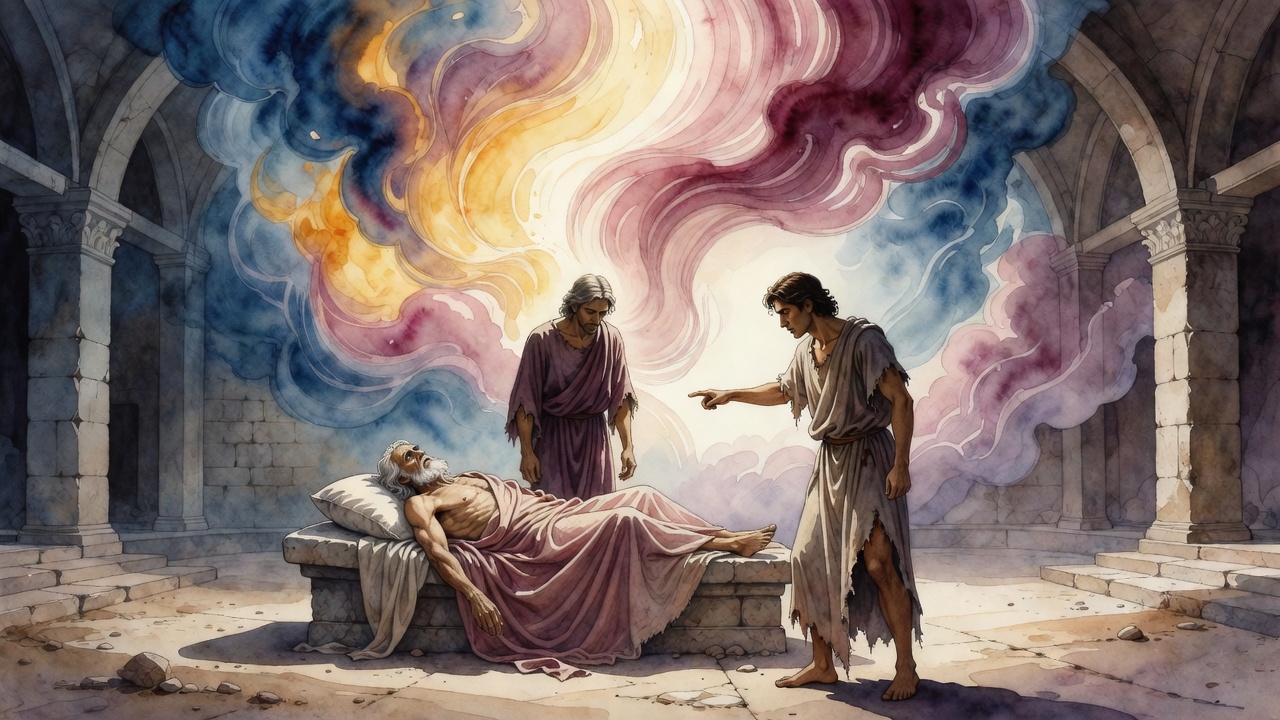
The scribe rode in during the afternoon and found the courtyard still loud with it, water going onto the stones, somebody arguing about who would tell the man's family. They told him who was dead and why. Then the lord told him what the order had said, and asked, reasonably enough, what business had brought him down from the palace on this particular day.

He did not hand over the letter. He turned his horse and rode back the way he had come, and he was in front of the king that night with the wax still whole.

The king looked at his own seal for a long while before he opened it. He had not expected to see the letter again, and he certainly had not expected to see the man carrying it, so he asked how this had happened, and the scribe told him all of it from the coin in the market forward. The rules, the petition, the forgotten ink, the knight standing in the room with the queen and the sentence he had swallowed there. The king kept turning the letter over while he listened. It was still sealed when the scribe finished.


← All myths
From the tradition

Sources

3 sources

The texts behind this telling. Some cards carry a translation of the source; others are our own retelling of it, and each card says which. Every card links out to the original.

Exempla of the Rabbis, No. 3Exempla of the Rabbis (Gaster, 1924)

Retold in our words. Read the original at the link below.The Exempla of the Rabbis, Moses Gaster (1924) · Public Domain

Rebuke not the wicked lest you make an enemy. Having thus spent all his money he went to another town. There a man asked a scribe to write a petition, offer- ding a small coin. The scribe refused. The poor man remembering the maxim wrote the petition. The king greatly surprised and pleased with the beautiful writing appointed\ him scribe at Court. One day, going out of town with the King, he remembered that he had left his pen and ink at the palace. Returning to fetch it he found a Knight with the Queen. Remembering the other maxim he said nothing. The Queen, however, frightened tore her clothes and accused the scribe to the King of having abused her. The King sent him with a letter, as he said, to get a thousand Dinars from a certain lord to whom he had previously sent word to kill the first man that would come to him from the palace. On the way the scribe was invited to break his fast with a friend before going on his errand; remembering the other maxim he stayed there. Meanwhile, the wicked knight, knowing the order of the king went to the place, hoping to find that man killed, but being the first to come he was killed instead. When the scribe came he learned what had happened and returned to the King, who wondered at it until the man told all that had passed.

(cf. 320 and 345.)

12*

180,

447 [Id. f. 14a]. Two men were travelling in the desert, each one carrying his own provisions. At the request of one, they first ate together the provisions of one man, after which the second refused to share and ran away. The man went up a mountain and tried to feed on herbs and fearing wild animals, went up to the top of a tree. In the night two demons came, brought the other man, slaughtered him and cooked him. Whilst they were eating they said to one another, “The leaves of this tree are a remedy for all kinds of illness/’ The other said, “The daughter of the king of Alexandria is insane, but the blood of a slaughtered spotted dog and tiger will heal her.” They departed and the man gathered a large quantity of the leaves and went along healing the sick. He became very rich. Then he cured the princess, acquired great wealth and married her.

448 [Ibid. f. 21 b]. When Moses went up to Heaven to receive the Law, an Angel refused him entrance, saying that this was not his place. He told him that once upon a time a star, curious to see the ways of the earth, came down from Heaven and spent some time upon the earth. After a while he went up to Heaven. But the stars refused him admission as he had lost his position. He however pleaded to be re-admitted. His case was brought before the highest Angels, and they decided that he should be re-admitted as his proper place was in the Heavens. Not so Moses who was earth-born. But Moses pushed him aside and entered the Heavens.

449 [Cod. G. 246 f. 35 b]. A pious man used to give alms to the poor until the people of his town decreed that whoever gave charity should either be cast into the sea or killed. The man grieved over the decree and then cast a loaf daily into the sea, interpreting the verse, “Cast thy bread upon the waters for in the length of days thou shalt find it” to mean “in the heart of the seas thou shalt find it.” On the eve of the Day of Atonement all the people went to the seashore to wash their clothes and to bathe in the sea, and the pious man did likewise. Suddenly a

181 -

storm arose which blew the man into the sea. Seeing it, the people jeered, saying, "This is the man of pious actions. Now he has been drowned in that very sea of his." But when the man fell into the sea, all the fishes gathered round him and one said, "This is the man who fed us every day with a loaf of bread. What do you intend to do with him?" The other fishes left him and that fish took the man down into the depths of the sea and showed him treasures of silver and gold and jewels and pearls. Then the fish said, "Choose either the silver and gold or the jewels and pearls, or I will teach you the seventy languages." The pious man replied, "Teach me the seventy languages," and the fish did so and them cast him up on to land. The man went his way and then lay down to sleep under a tree. Presently two crows appeared and one said to his companion, "Let us pick out the eyes of that man." But the other replied, "Do not do so, for he may only be asleep and then will catch you". But the first said, "It does not matter, for he will go on his way and presently come to a place where three roads meet. If he take the one to the right, wild beasts will meet him and he will let me go; if he take the middle one, he will come to rich treasures of gold and silver and then he will let me go, and if he take the one to the left, robbers will meet him and he will let me go." The man understood their language and everything happened as the bird had said. He took the middle road, found the treasure, let the bird free and returned to his town. The people were much surprised to see him, but he told them nothing, for the fish had only taught him the secret of the languages on condition that he related his adventures to no one; on the day he told anyone, he would die. Soon afterwards he married a woman who was very bad tempered and inquisitive and tried to force his secret from him. He told her why he could not reveal it but she did not care so long as she knew. Then he called his son and told him to prepare a meal for him as he was about to die. The lad went to the ox who said, "Peace be upon thee

i82,

my master and teacher/' But the lad replied, “I cannot give thee the greeting of peace, for I am come to kill thee and give my father to eat of thy flesh". "And is there no one else to be found but me since all creatures are fed from the tread of my foot? As it is said, ‘A multitude of produce from the strength of an ox’,” said the ox. Then the lad felt ashamed and went to the sheep who also gave him the greeting of peace. But the lad said, "I cannot give thee the greeting of peace, for I am come to kill thee and give my father to eat of thy flesh”. And the sheep said, "Have you found no one else but me, since Israel is likened unto me, as it is said, ‘Scattered sheep is Israel’!” Then the lad felt ashamed and went to the cock who gave him the greeting of peace. But the lad replied, "I cannot give thee the greeting of peace, for I am come to kill thee to give my father to eat of thy flesh before he dies.” Then the cock replied, "Why should you kill me? I rule over many women and is your father to die because he has only one wife? Let him divorce her, and if her dowry be ioo zuzim, then let him give her 200 and get rid of her, as it is said, ‘Drive away the mocker and strife shall cease’.” Then the son told his father what the cock had said, and the father acted upon the advice given, drove away his wife and lived in peace.

(Cf. 381.)

450 [Cod. G. 246 f. 109; 257 f. 4]. Akiba had a pious wife. She fed 500 pupils. Before death she asked her daughter to continue her work. Akiba married a bad woman. Jealous of her step-daughter, she paid the the washer-man to take the girl away and kill her and told the daughter to follow him with the clothes. At her request he saved her life but cut off her hands and feet. She dragged herself along to a solitary spot. A merchant passed by. Being the eve of Sabbath, he settled down, erected his tent and said his prayers. She answered "Amen” from behind the tent. Discovered by him, he took her home and married her, not knowing whose daughter she was. He made her hands of gold and feet of

- 183 -

silver. A son was born and she urged him to go to R. Akiba to study. There the step-mother learned what had happened. She forged a letter in the name of the husband which she sent to his family, to take away her hands and feet of gold, to tie the baby on her back and to cast her out, being of low origin. They did so. Coming to a river, the baby wanted to drink. She was frightened lest it would slip into the water and wept. The prophet Elijah came, told her to put her stumps into the water and new hands grew. He told her to go to the next town, where she would find a treasure, and to buy a palace with it. She built an inn close by for all the travellers. The husband came and learning what had happened, went in search of his wife. He came to that place, was served with the others by his son, now a lad of nine years. He refused to eat and drink and asked the reason, told the story, was recognised by the wife and remained there, bringing his parents with him, where they lived in peace.

ADDITIONS & CORRECTIONS.

Nos. 145 (144) 177 and 187 have been inadvertently omitted and No. 316 too briefly told and is here amplified.

145 (144). Advancing age prevented R. Shimeon b. Ha- lafta from continuing his regular visits to Rabbi. When asked the reason he replied:, “The distant has become near and the near has become distant and two turned into three.” By this he meant: his sight had weakened so that he could no longer see far, his hearing had weakened so that he could only hear things near, while he had to use a stick to help his legs.

Full source
Exempla of the Rabbis, No. 315Exempla of the Rabbis (Gaster, 1924)

Retold in our words. Read the original at the link below.The Exempla of the Rabbis, Moses Gaster (1924) · Public Domain

Rabbi Meir had a principle: never trust a person whose name contains the word for evil. The Talmud (Yoma 83b) tells the story of how this principle was tested. And proven devastatingly correct.

Rabbi Meir and his colleagues were traveling and stopped at an inn. The innkeeper's name was Kidor. Rabbi Meir refused to entrust his money to the innkeeper. "His name," Rabbi Meir said, "echoes the verse: 'Ki dor tahpukhot hema', 'For they are a generation of reversals' (Deuteronomy 32:20). A man named Kidor cannot be trusted."

His colleagues disagreed. They thought Rabbi Meir's name-reading was superstitious. They gave their money to Kidor for safekeeping.

In the morning, Kidor denied ever receiving their money. "What money? I don't know what you're talking about." The colleagues were robbed. Rabbi Meir's money was safe, because he had never handed it over.

Rabbi Meir then tracked down Kidor and noticed lentil residue on his mustache, evidence that he had eaten lentils, which were customarily served at a house of mourning. Rabbi Meir went to Kidor's family and told them their father had died. While Kidor rushed home to investigate the false report, Rabbi Meir's colleagues retrieved their money from Kidor's strongbox.

The sages preserved this story as a lesson in reading character. Rabbi Meir did not merely read names, he read people. The name was a clue, but the behavior confirmed it. A person's name, the sages taught, is not destiny. But it can be a warning sign. And the wise man pays attention to warning signs.

Full source
Exempla of the Rabbis, No. 324Exempla of the Rabbis (Gaster, 1924)

Retold in our words. Read the original at the link below.The Exempla of the Rabbis, Moses Gaster (1924) · Public Domain

Money Recovered by Trick.

Yoma, f. 83 b.

Pesikta R. ch. 22.

Ben Atar, No. 6, f. 25 a. Midr. Decalogue III, 3;

VIII, 2.

Nissim, f. 25 a.

Yalk. Sip. II, p. 149. Maase Buch No. 215. Helvicus, Historien I, ch. 36, p. 144.

Zunz, G. V. p. 152. Tendlau, Fellmeier,

No. 11a.

cf. Steinschneider, Manna, No. 9.

Ben Gorion II, 131,

346-

Boccaccio Decameron, VIII, 10.

Burton, Supplemental Nights I, p. 264 ff.; II, p. 333-

Cento Novelle Antiche, No. 74.

Clouston, Eastern Romances, pp. 442, 558. cf. Dunlop-Liebrecht, p. 247.

Gesta Rom. No. 118. Gladwin, Moonshee, No. 15, pp. 9, 10. Lidzbarski, Neu-Aram. p. 168.

Petrus Alphons. Discip.

XVI, 1, p. 55 f. Sacchetti, No. 198. Schmidt to Petrus Al.

P- I37-

Zachariae, Z. V. Vlksd.

XVI, p. 146 f.

Cod. Br. M. 27 189, f. 21 b. Codd. G. 28, f. 680; 242, f. 27 b.

Full source