Parshat Noach5 min read

The Raven Lost His Walk Chasing the Dove

He copied the dove's delicate step until he nearly broke his bones. The other animals laughed, and his own hop never came back.

Curated by Arthur · Told by Maggid ·
Table of Contents
  1. Envy on the Branch
  2. A Gait That Never Came Home
  3. Five Kinds of Orlah
  4. When the Heart Copies the Wrong Flight
  5. What the Awkward Hop Still Teaches
The Raven Lost His Walk Chasing the Dove Click for full size

Envy on the Branch

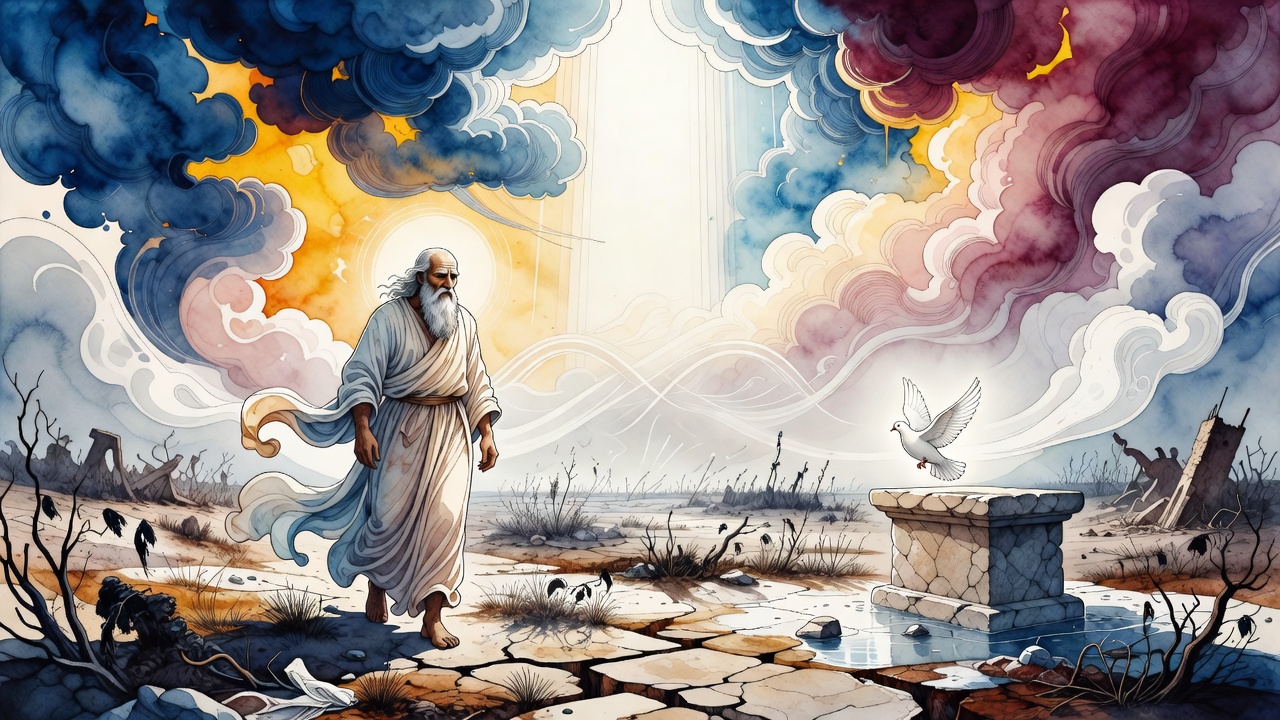
The raven watched the dove and hated his own body for not being hers. She moved with a refined, delicate step. He wanted that elegance the way a thief wants a locked room. So he tried to imitate the glide and flutter of a bird built for grace he did not own.
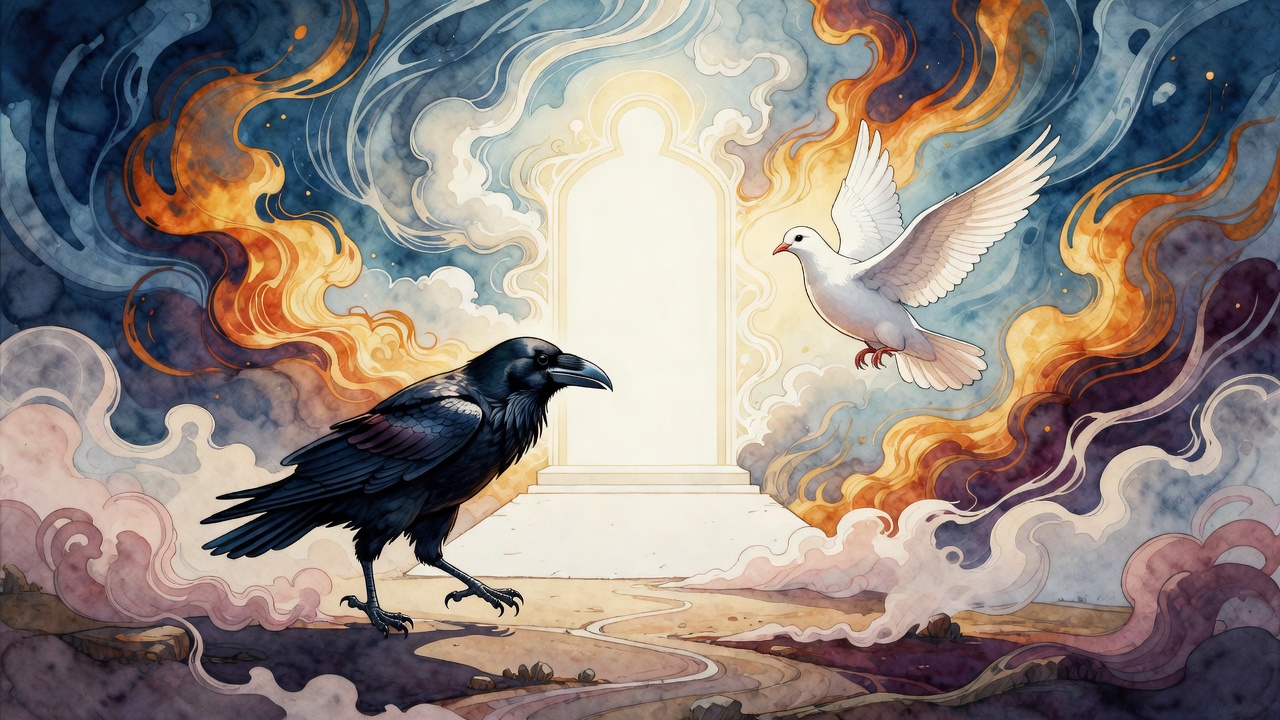
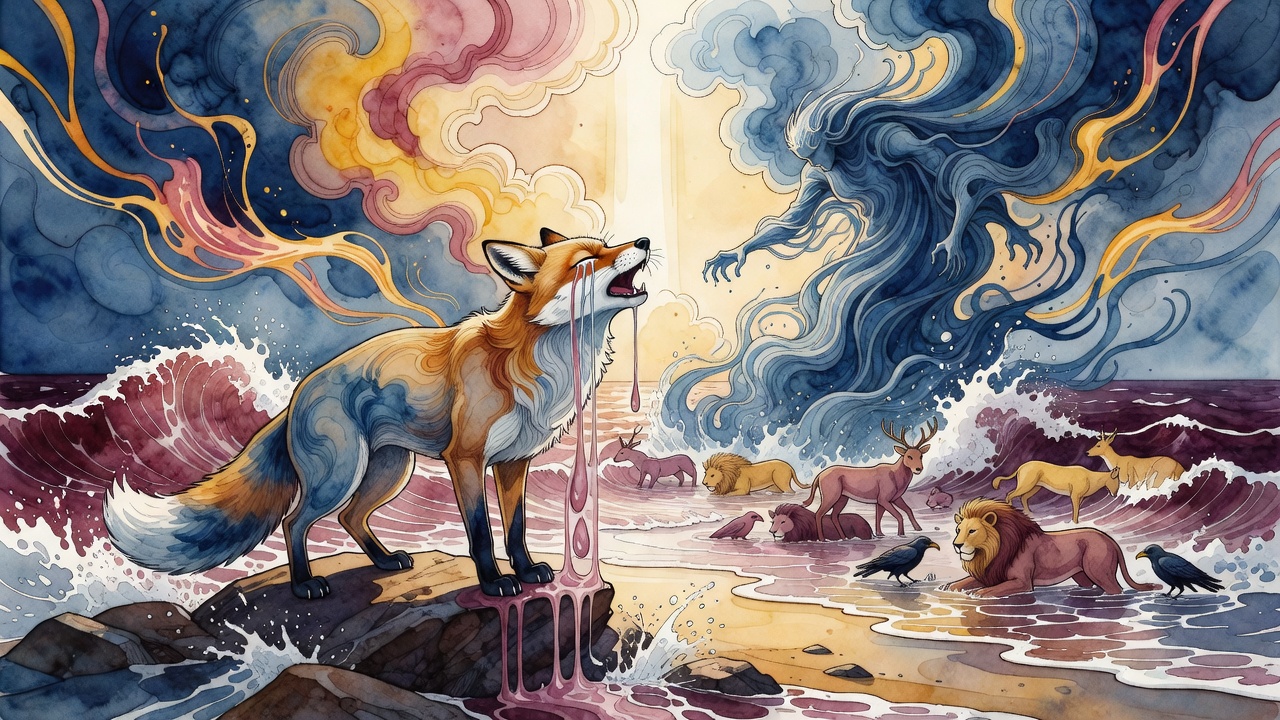
Picture the disaster. A heavy black bird forcing dove manners through raven bones. He nearly broke every bone he had. He looked nothing like a dove. The other animals saw the performance and laughed until the air stung. Shame did what the fall began. It finished him.

He decided to quit and walk like a raven again. The kicker waited in his muscles. He had practiced false steps so long he had forgotten the true ones.

A Gait That Never Came Home

Stuck between two walks, he could neither glide like a dove nor hop like himself. That, the legend says, is why the raven keeps an awkward gait to this day. Every landing is a small public record of envy. He who is dissatisfied with his small portion loses the little he has while straining for more and better things.

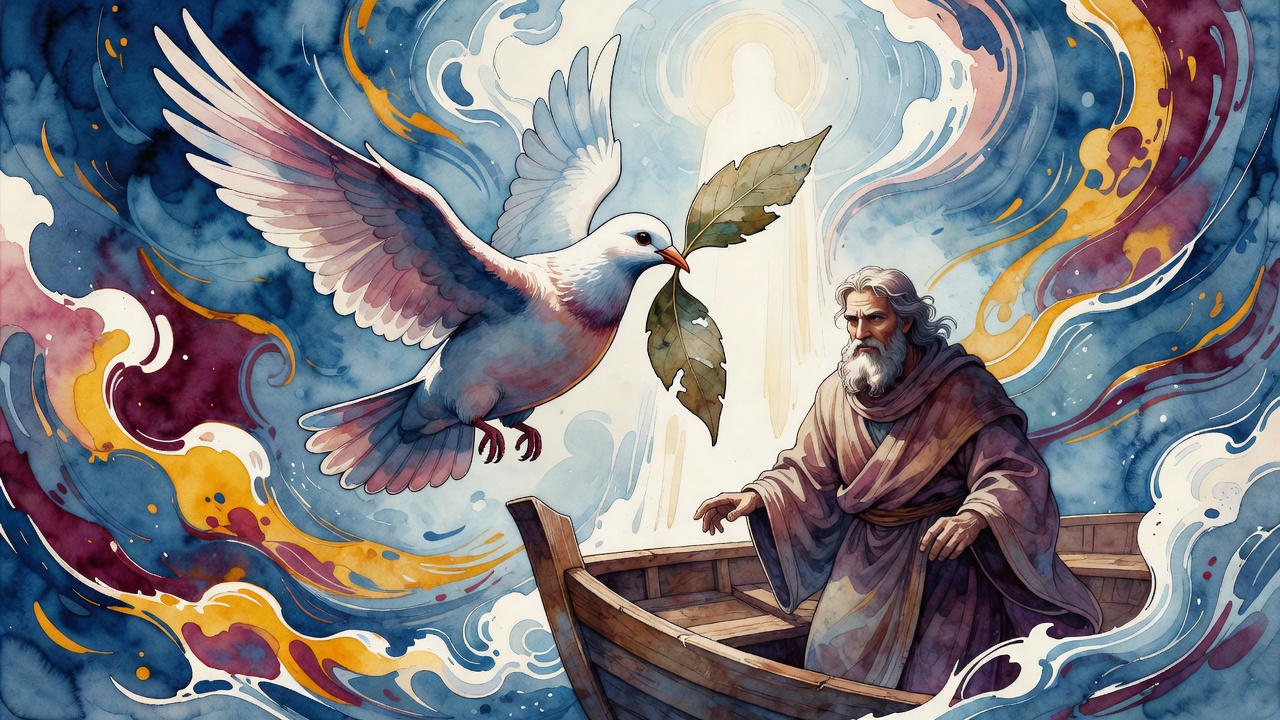
The ark stories remember ravens and doves as messengers over water. This side legend remembers them as a moral written in joints and balance. The dove never asked to be copied. The raven never asked whether his own hop was already enough for the work heaven gave him.

Humiliation did not restore the old walk. It only named the cost of wanting another creature's ease.

Five Kinds of Orlah

Rabbi Ze'era counts five kinds of orlah in the world. Four cling to the human body and spirit. One clings to trees. Uncircumcision of the ear, the lips, the heart, and the flesh. Then the fruit of a tree's first three years, forbidden until roots deepen and the plant is ready to give (Leviticus 19:23).

"Behold, their ear is uncircumcised" names people who will not hear (Jeremiah 6:10). Moses spoke of uncircumcised lips when speech itself felt blocked (Exodus 6:12). A heart can wear the same closed skin, thick against pity and instruction. Flesh has its covenant mark, and trees have their waiting season before sweetness is legal.

Orlah is not only a knife and a calendar. It is every place a creature refuses to open on time, or opens toward the wrong model.

When the Heart Copies the Wrong Flight

The raven's ear was open to mockery and closed to contentment. His heart chased a foreign elegance and lost its native rhythm. That is orlah of the heart in feathers and bone. He would not let his own portion mature. He tore at another bird's portion and ripped his gait in the process.

A tree's first fruit is withheld so the plant can strengthen. The raven withheld nothing from his envy. He harvested humiliation early and ate it for the rest of his species' memory. Patience might have left him a clean hop. Imitation left him a permanent stumble.

God's world runs on boundaries that look like delays. Three years for fruit. A covenant cut for flesh. An ear that must learn to hear. The raven treated another creature's walk as a shortcut around his own design.

What the Awkward Hop Still Teaches

Animals still laugh in the old telling. The raven still lands wrong. Children hearing the story feel the burn of being watched while failing to become someone else. That burn is the point. Dissatisfaction is not ambition. It is a solvent that dissolves the little you already carry.

Open the ear. Soften the heart. Let the tree take its three years. Walk the hop you were given until it becomes work instead of shame. The dove will keep her grace. She never needed your imitation to complete the ark's errands.

Somewhere over drying ground a black bird still remembers, in the clumsiness of each step, the day he traded a working body for a fantasy of elegance and could not buy the old body back.

Envy is a teacher with a stick. It taught the raven anatomy he could not use and erased anatomy he needed. The laugh of the other animals sealed the lesson harder than the fall. Public failure turns a private desire into a species-wide gait.

Orlah of the ear will not hear that your portion is enough. Orlah of the lips will not confess the wanting. Orlah of the heart keeps chasing foreign elegance. Orlah of the flesh and of the tree at least know they wait on a calendar. The raven observed no calendar. He harvested shame out of season.

Noah's world needed a dove that could find olive and a raven that could fly its own errands. Heaven did not require one bird to wear the other's grace. The awkward hop remains a footnote under every later envy that forgets this.

Wanting more is not always holy hunger. Sometimes it is the raven's eye on a step that was never built for his weight. The legend refuses to romanticize the stretch. Bones nearly break. Laughter rises. Memory of the old hop dies. What remains is a gait that advertises the mistake to every generation of watchers.

Softening an uncircumcised heart takes longer than three years of orlah fruit, and it cannot be done by costume. The raven wore dove manners like stolen clothes and lost the fit of his own. That is the whole sermon in feathers.


← All myths

From the tradition

Sources

2 sources

The texts behind this telling. Some cards carry a translation of the source; others are our own retelling of it, and each card says which. Every card links out to the original.

Legends of the Jews 1:65Legends of the Jews

Retold in our words. Read the original at the link below.The Legends of the Jews by Louis Ginzberg (1909) · Public Domain

This raven wasn't content with his own raven-y way of doing things. He watched the dove, so graceful, so elegant, and thought, "I want that!" He yearned for that refined, delicate step.

So, he tried to imitate the dove. This big, clumsy raven, trying to glide and flutter like a delicate dove. The result? A complete disaster. He almost broke every bone in his body! And, of course, he didn't look anything like a dove. Not even close.

The story doesn't end there.

What made it even worse was that the other animals saw him, saw his awkward attempts, and just… laughed. They ridiculed him. The humiliation?

So, naturally, the raven decided to give up. "Okay," he thought, "I'll just go back to my own way of walking." Makes sense. But here's the kicker: he'd spent so much time trying to be something he wasn't, that he'd forgotten how to walk like a raven! He was stuck between two worlds, unable to walk like a dove, and unable to walk like himself.

And that, my friends, is why, according to this legend, the raven has that awkward hop in his gait. A permanent reminder of his foolish envy.

It's a pretty powerful image, isn’t it? A creature so focused on what it lacked that it lost what it already possessed.

The lesson here, as Ginzberg points out, is that "he who is dissatisfied with his small portion loses the little he has in striving for more and better things." A pretty stark warning against envy and discontent. How often do we look around and compare ourselves to others? How often do we let that comparison fuel a desire to be something we're not?

Maybe the raven's awkward hop is a reminder to appreciate what we have, to embrace our own unique qualities, and to be content with our own path. Because trying to be someone else might just leave us stumbling between two worlds, belonging to neither.

Full source
Pirkei DeRabbi Eliezer 29:6Pirkei DeRabbi Eliezer

Retold in our words. Read the original at the link below.Pirke de Rabbi Eliezer, trans. Rabbi Gerald Friedlander, London (1916) · CC-BY

It’s a fascinating idea, explored in Pirkei DeRabbi Eliezer, a text filled with beautiful stories and interpretations.

Rabbi Ẓe'era makes a profound statement: there are five kinds of 'Orlah in the world. Four relate to us as human beings, and one relates to trees. What does that even mean?

The four kinds of 'Orlah pertaining to humanity? They are, according to Rabbi Ẓe'era, the uncircumcision of the ear, the lips, the heart, and the flesh.

The uncircumcision of the ear? (Jeremiah 6:10) gives us a clue: "Behold, their ear is uncircumcised." It suggests an inability or unwillingness to truly hear and understand divine messages, to listen with an open heart. Are we truly listening to the world around us, to the still, small voice within?

Then there's the uncircumcision of the lips. Remember Moses in (Exodus 6:12)? "For I am of uncircumcised lips." This isn’t just about a physical impediment. It speaks to the struggle to articulate truth, to speak with clarity and sincerity, perhaps even a reluctance to engage in prayer or meaningful conversation.

Next, and perhaps most importantly, the uncircumcision of the heart. (Deuteronomy 10:16) urges us to "Circumcise the foreskin of your heart." (Jeremiah 9:26) adds, "For all the nations are uncircumcised, and all the house of Israel are uncircumcised in heart." This goes right to the core. It's about a heart that's closed off, hardened, resistant to love, compassion, and spiritual growth. It’s a barrier to genuine connection.

And finally, the uncircumcision of the flesh, as mentioned in (Genesis 17:14). This is the physical brit milah, the covenant of circumcision.

Pirkei DeRabbi Eliezer emphasizes that the uncircumcision of the heart prevents us from doing the will of our Creator. It's a powerful statement about the connection between our inner state and our actions in the world. But here's the hopeful part: the text assures us that in the future, the Holy One, blessed be He, will take away from Israel the uncircumcision of the heart. We will no longer harden our hearts against our Creator.

As (Ezekiel 36:26) promises, "And I will take away the stony heart out of your flesh, and I will give you an heart of flesh." Imagine that – a heart that's open, receptive, and full of life!

Now, what about that fifth 'Orlah, the one concerning trees? (Leviticus 19:23) tells us, "And when ye shall come into the land, and shall have planted all manner of trees for food, then ye shall count the fruit thereof as their uncircumcision: three years shall they be as uncircumcised unto you." For the first three years after planting a tree, its fruit is considered 'Orlah and is forbidden to be eaten. It’s a period of allowing the tree to establish itself, to grow strong roots before we partake of its bounty.

So, what's the connection between uncircumcised fruit and an uncircumcised heart? Perhaps it's about patience, about allowing things to mature and develop in their own time. Maybe it’s about recognizing that true sweetness comes from a process of growth and refinement. Just as a tree needs time to bear fruit, so too does our heart need time to soften and open.

This idea of 'Orlah, in all its forms, invites us to examine ourselves. Where are we holding back? Where are we not truly listening, speaking, or feeling? Where is our heart hardened? And how can we, like a newly planted tree, allow ourselves the time and space to grow, to heal, and to finally bear the sweet fruit of a life lived with an open heart?

Full source