The Rebellious Son the Court Could Almost Never Kill
A boy's parents brought him to the elders at the gate, calling him a drunk and a thief. The rabbis then added so many conditions that no boy could be stoned.
Table of Contents
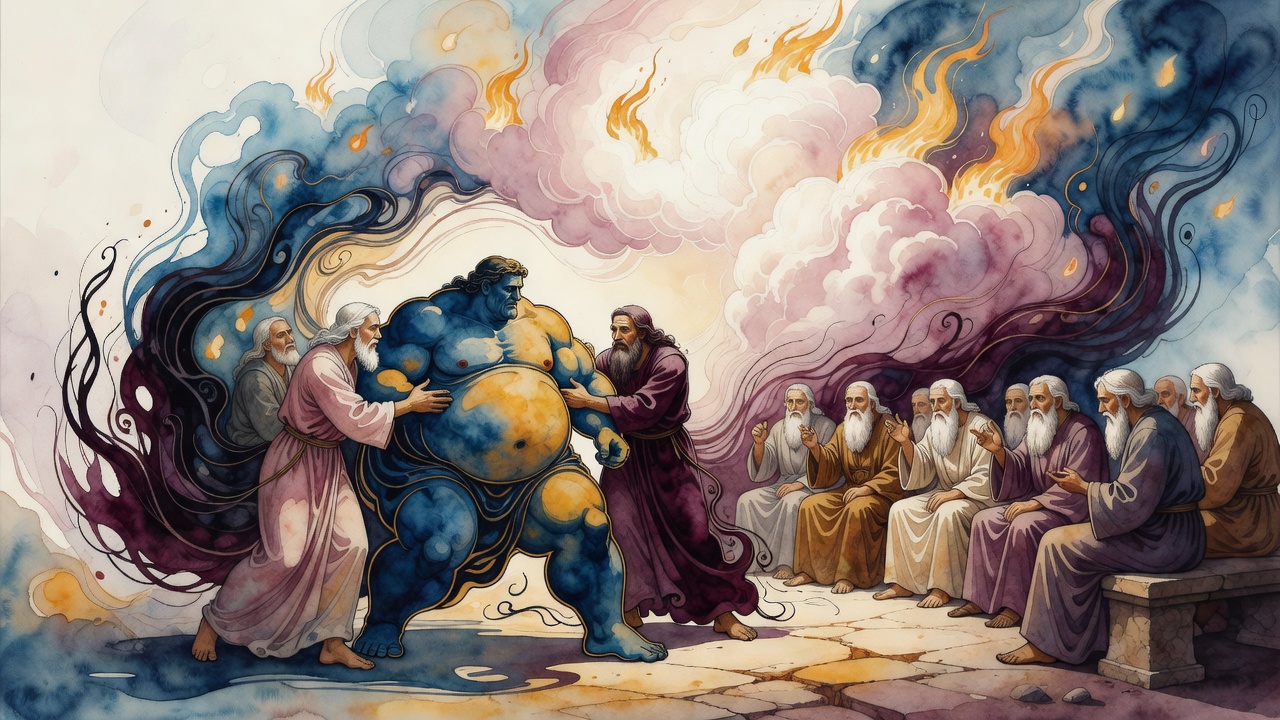
The boy laughed when his father seized his sleeve, then stopped laughing when he saw his mother's face. They were taking him to the gate, not to bed without supper, and the street already knew the difference by how the neighbors stepped aside.
 Click for full size
Wayward Against Two Voices
The Torah named him sorer u-moreh, wayward and rebellious (Deuteronomy 21:18-21). The midrash split the words across authorities until defiance looked like a whole life, not a single slammed door: against the father, against the mother; against Torah, against prophets; against witnesses, against judges. He was a pattern of refusal wearing a young man's body.
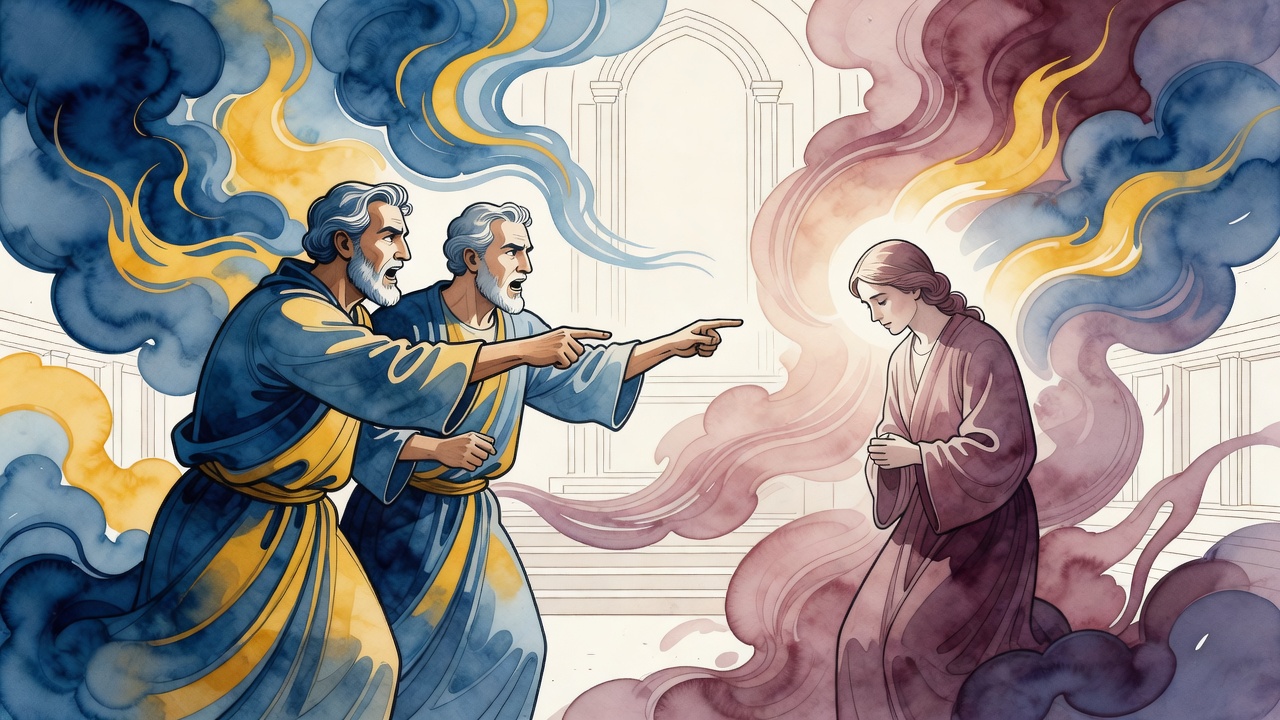
At the gate the elders waited with the patience of men who had heard worse and hoped not to hear this. The parents spoke the required charge: he would not listen; he was a glutton and a drunkard. The boy wiped wine from his lip with the back of his hand and grinned at a cousin in the crowd, hunting for an audience that would make the gate feel like a stage.
No one grinned back. A stage needs applause. A capital charge needs silence first.
His mother held a cloth as if she might wipe his mouth the way she had when he was small. She did not lift it. The cloth hung from her fist like a white flag that could not yet decide which war it served.
Not Every Refusal Is Death
The court did not leap from a dark mood to stones. The teachers narrowed the path until it was thin as a knife edge and easy to miss if you wanted blood more than law. Refusing to light a candle was not enough. "Not heeding" was tied by gezeirah shavah to glutting and guzzling, not to every household quarrel about chores and pride.
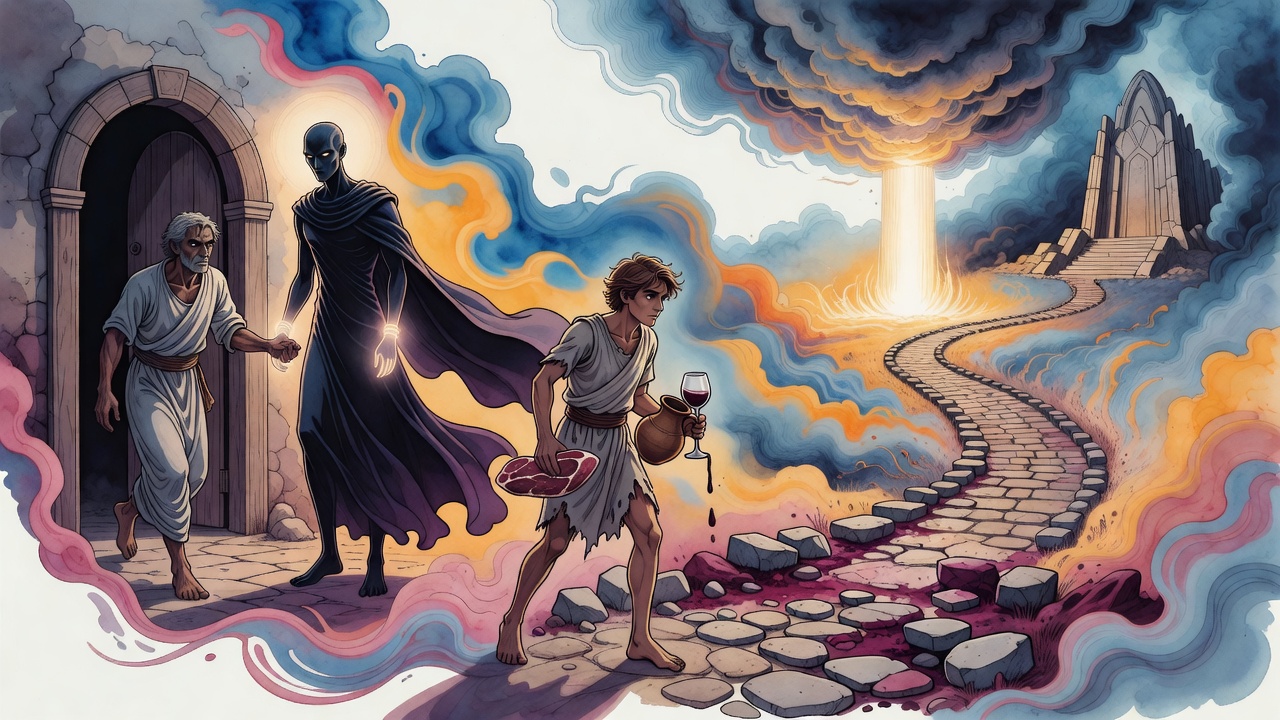
Rabbi Yose son of Rabbi Yehudah pressed further: liability did not land until the son stole what he ate and drank from father and mother alike. Theft from the house that fed him. Excess that was also robbery. The boy had done that much. A jar was missing. Coins were missing. His breath still smelled like wine he had not paid for with work or permission.
Even then the law demanded a prior flogging before any talk of stoning. "This our son," the parents had to say, "who already received stripes before you." If one parent had died, the case died with that parent. Both living voices had to stand together, or the gate closed on the charge like a door barred from inside.
The midrash called the bringing a mitzvah and also not categorical, a command with room for human will to stop the machine before it ran to the end.
Forgiveness Still Had a Door
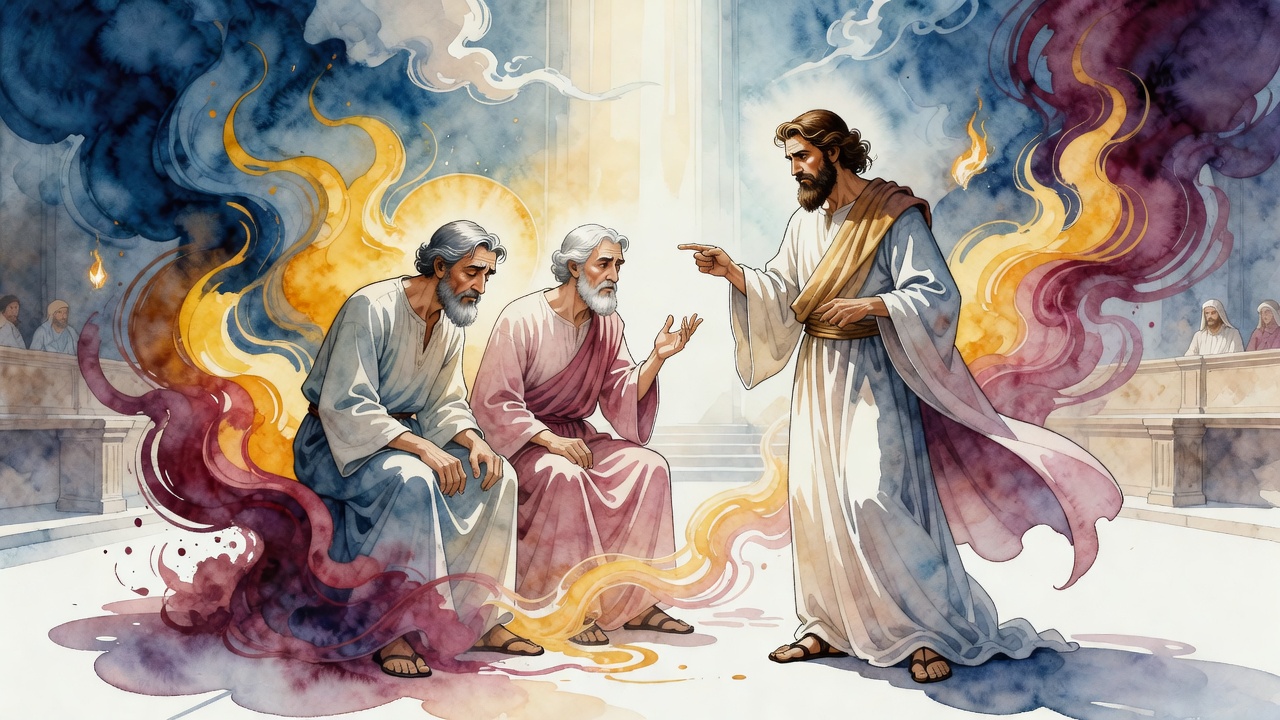
A tradition carried from the men of Jerusalem said the parents could forgive. If they wished to pull the charge back, they could. The boy heard that possibility in a pause between elders and looked, for the first time, less like a drunk and more like someone counting exits.
The mother looked at her husband's hands. His hands were shaking hard enough to make the boy's stolen coins, now returned and held as evidence, click faintly together. The boy's grin had thinned into something like fear, late and small and almost useful.
"If we stop now," the father whispered, "he lives." The mother did not answer with a verse. She answered with a nod that cost her in front of the town, a public undoing of a public drag to the gate.
An elder exhaled through his nose. Another looked disappointed in a way that made the father hate him for half a breath, then grateful, then only tired.
Stones in the Presence of the City
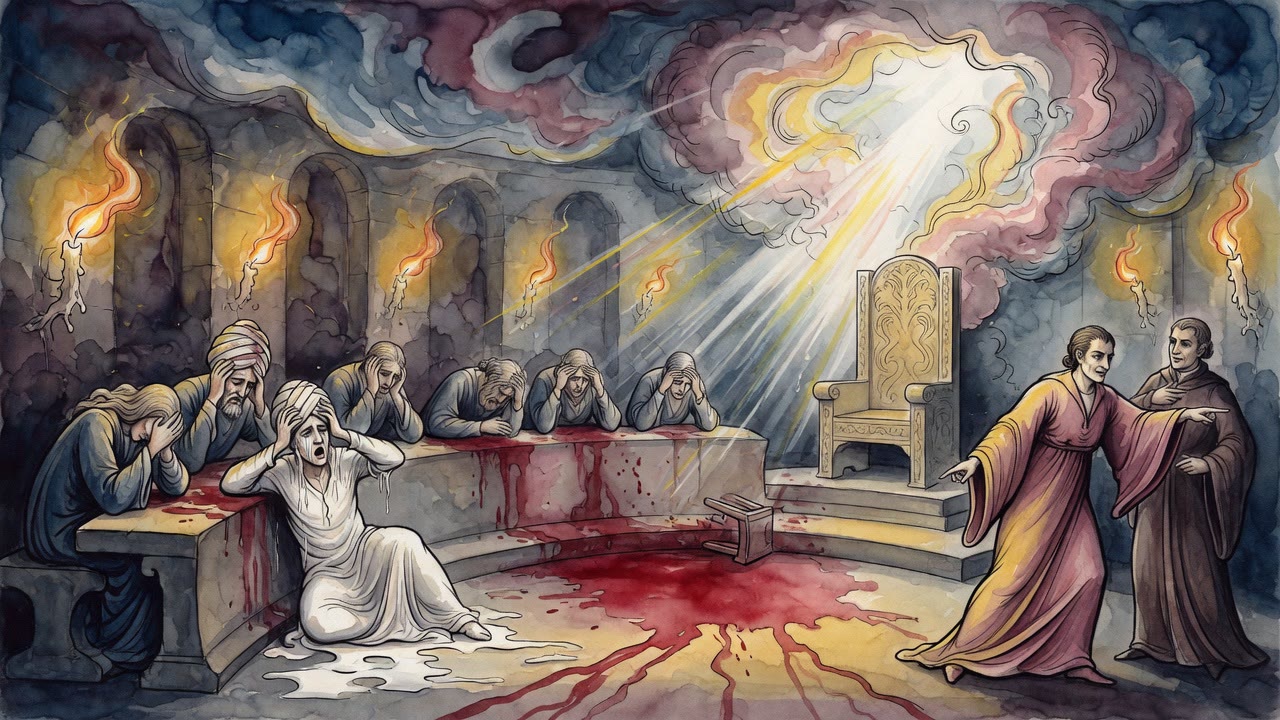
Had they not stopped, the verse's wide language might have sounded like the whole city hurling rocks, infants and elders included, a chaos of justice. The midrash refused the absurdity. Not every person stones him. He is stoned in the presence of all the people of his city, public enough to make the warning land, not chaotic enough to turn judgment into a riot of thrown gravel.
That public image hung over the gate even as the parents withdrew the charge. The boy felt it on his skin like weather. For the first time all afternoon he looked younger than his crimes, which is not innocence, only age returning to a face that had been performing hardness.
They walked him home between them, not as a condemned man, but as a nearly lost one. The elders watched until the three figures turned the corner and the street noise rose again, embarrassed to have been quiet. The law had shown its teeth and then, by its own narrowings and the parents' choice, closed its mouth.
At home the boy sat on the floor without being told. The wine jar stayed empty. The coins stayed on the table between them like a small, ugly altar. No one touched them until morning.
← All myths