The Same Instrument Turns Back on the Hand That Killed
A man kills in an empty field and trusts the dark, but the heavenly tablets record every deed and the sword and fire are already coming.
Table of Contents
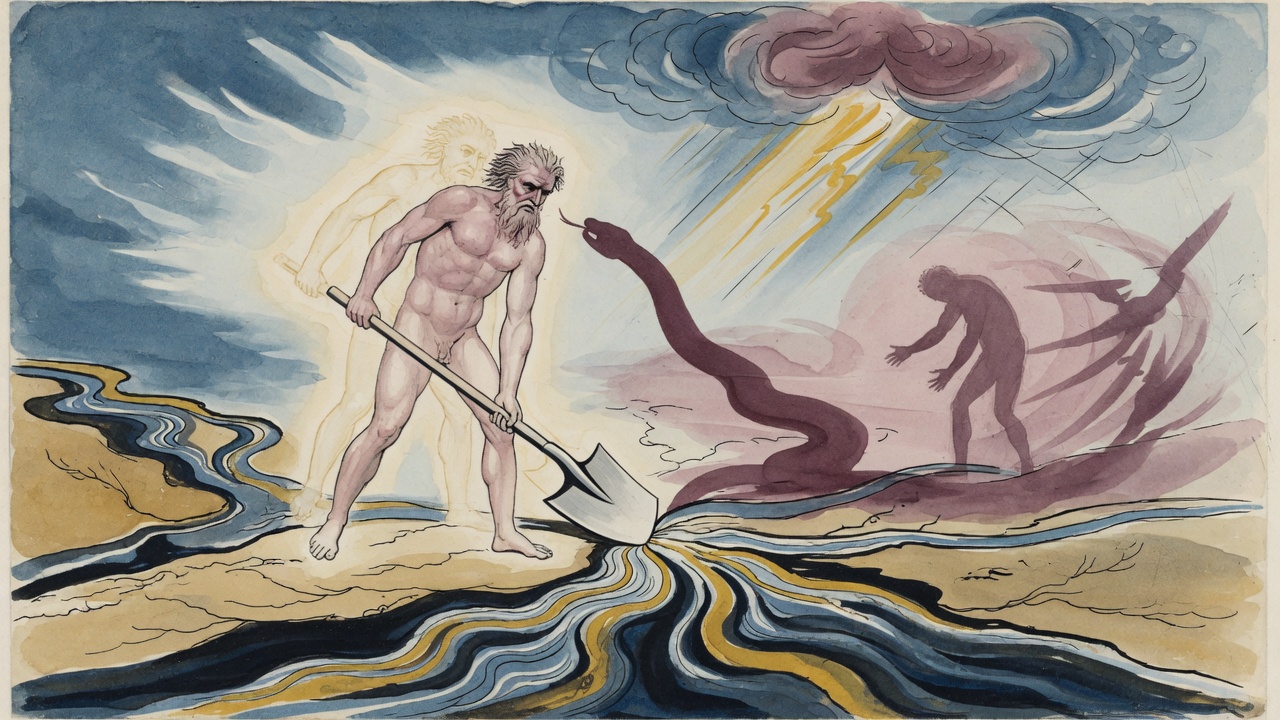
A man closed his fist around a stone he meant to bury in his neighbor's skull.
 Click for full size
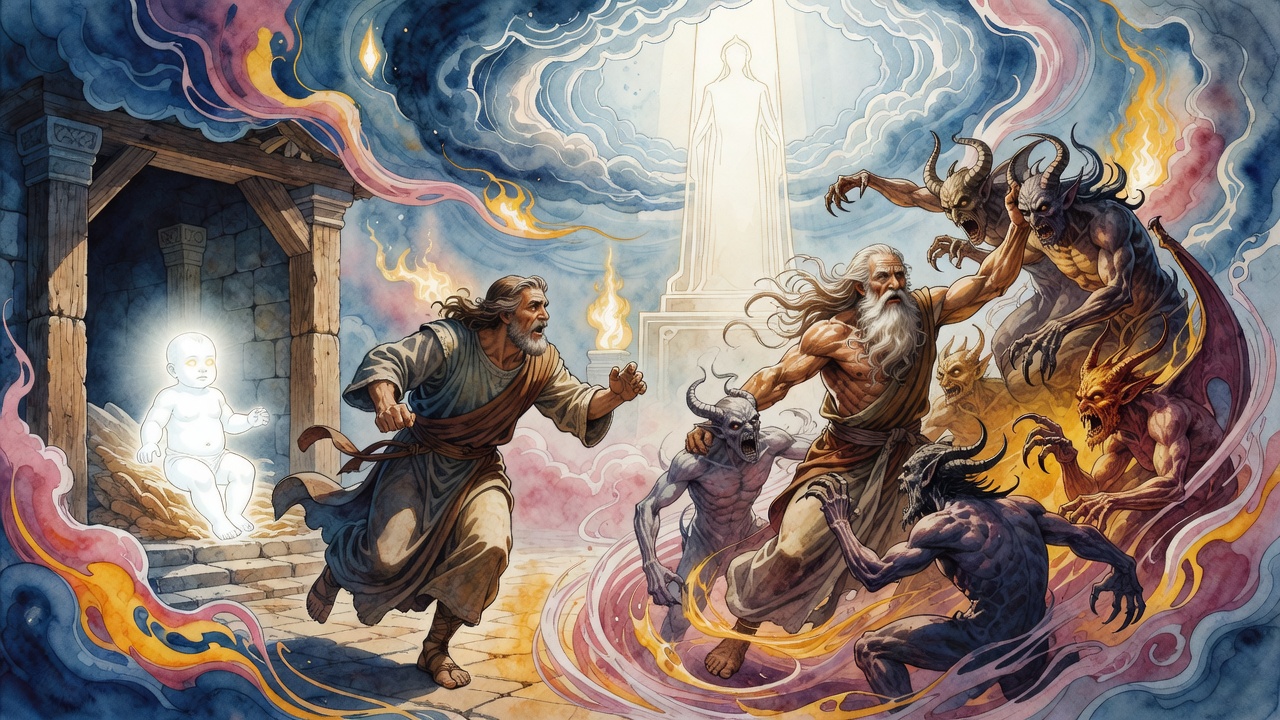
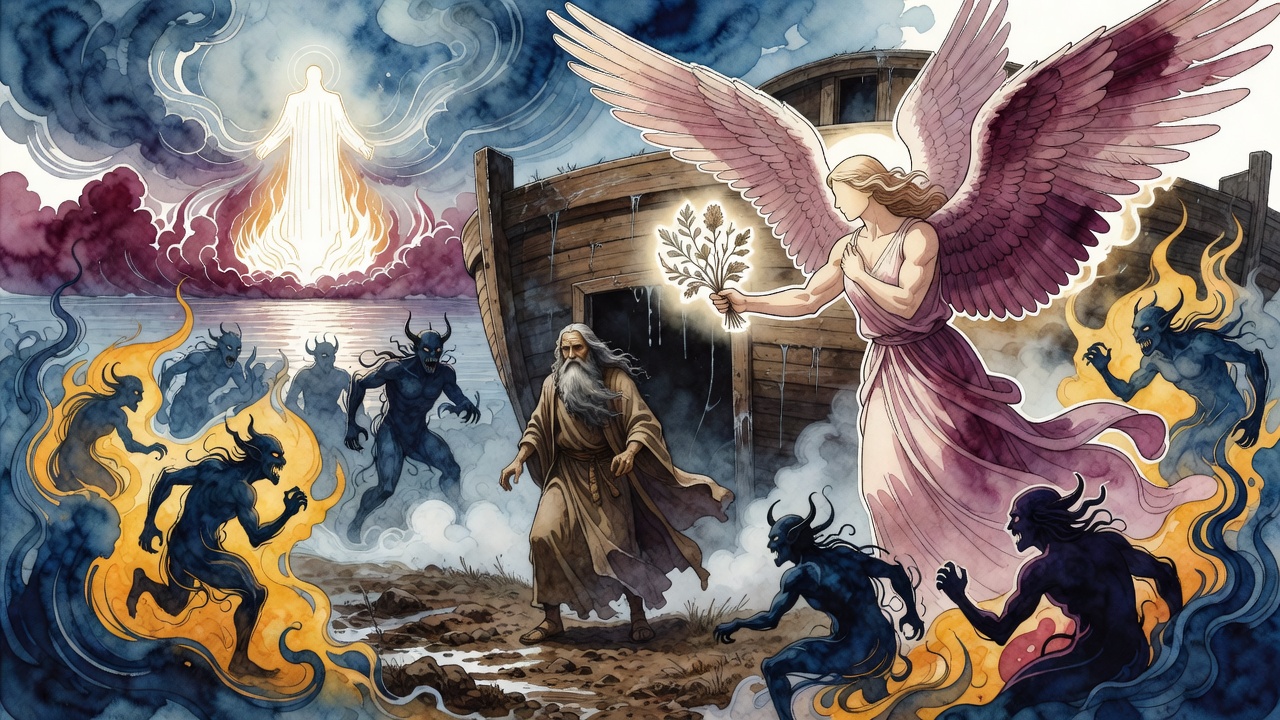
He had nursed the grievance for days, some quarrel over a boundary or a stray animal, and a voice at his ear had been sweetening it the whole time until the murder tasted like justice. The voice belonged to nothing he could see. In the third week of that jubilee the unclean demons had begun to move among the children of the sons of Noah, leading them astray, working to destroy the very generation meant to refill the emptied earth. The demon did not raise the stone. It only leaned close and whispered that the field was empty, that the night was dark, that a thing done where no eye watched was as good as a thing never done.
The man believed it. He struck.
The Field Had No Witness, but the Heavens Kept a Scribe
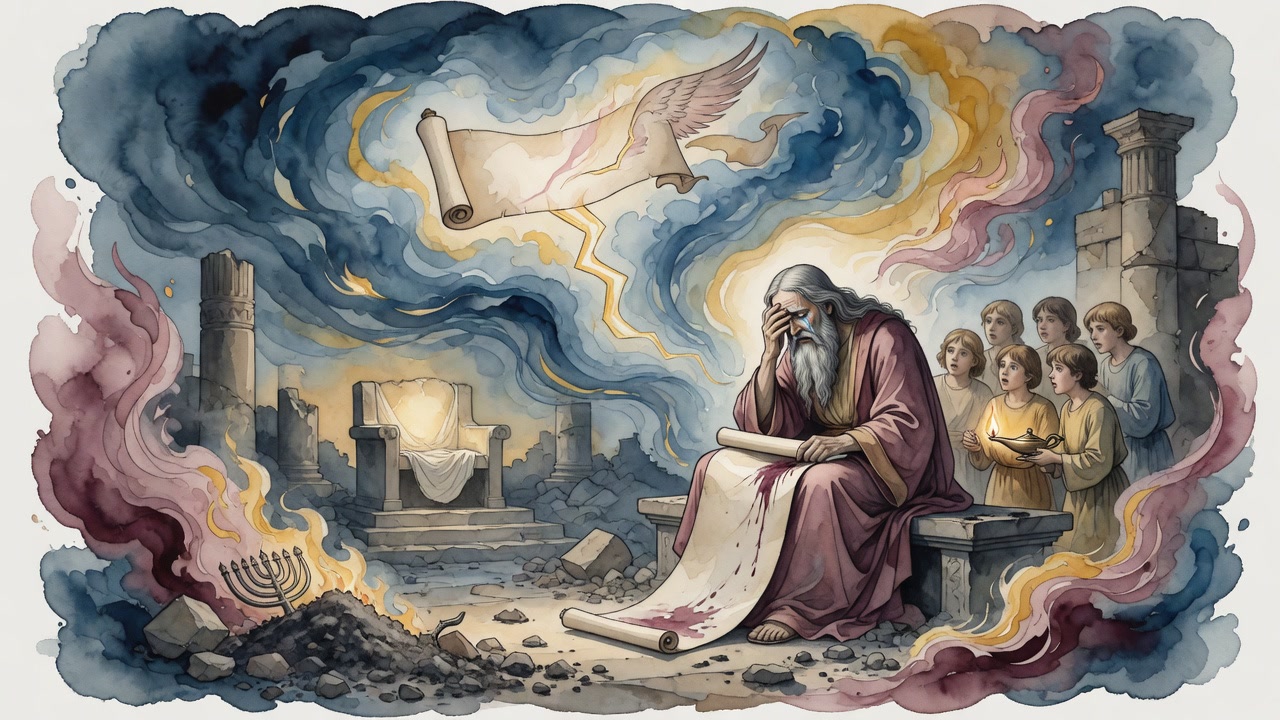
He was wrong about the eye. High above the dark field, in a hall no murderer would ever be shown, an angel of the Presence bent over tablets harder than any stone below and wrote down what had been done. Not the bare fact of it. The whole of it. The grievance, the whisper, the heft of the stone, the hour, the darkness the man had trusted like a friend. The stylus did not scratch the surface and fade. It cut. Whatever passed onto those heavenly tablets was ordained there, and engraved, and it did not wash away.
There is nothing in heaven or on the earth, nothing in the light or in the darkness, nothing in the depths or down in Sheol (the underworld of the dead) among the dead, that escapes those tablets. The man had staked everything on the darkness. He never learned that the darkness itself was written down, that the empty field had been counted, that the night he trusted was only another page in the ledger.
The Great by Their Greatness, the Small by Their Smallness
A king who ordered a hundred deaths and a herdsman who choked one rival in a doorway were not weighed on the same scale, and that was not mercy. It was precision. The great were judged according to their greatness and the small according to their smallness, and each one according to his own way, so that no ruler could hide his slaughter inside the size of his crown and no poor man could plead that a single killing was too small to be seen.
And no one bought his way off the tablets. The Judge of the whole earth lifted no man's face for the sake of his rank and took no gift from a full hand to soften a verdict. A bribe that could turn any court in any city turned nothing in that hall. The rich murderer and the ragged one stood in the same line, and the line moved toward the same reckoning.
The Instrument Turns in the Hand That Raised It
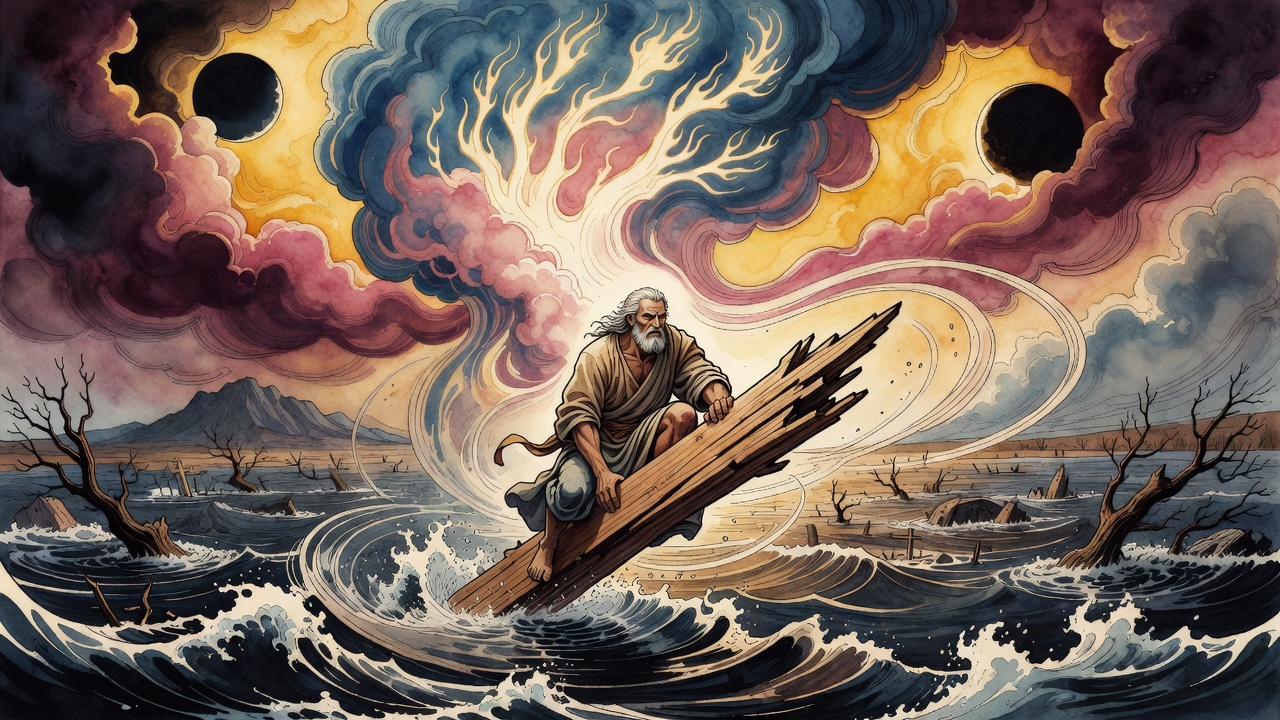
There was an older law engraved on those same tablets, older than the flood, and it was exact and merciless. With the instrument a man used to kill his neighbor, with that same instrument he himself would be killed. However he had wounded another, in that very manner they would deal with him. The stone a hand lifted came back for the hand that lifted it. The blade found the throat that had drawn it. A man who drowned his brother would go down under the water himself. Creation had been built so that a crime carried its own sentence inside it, folded up and waiting, and the weapon a killer chose was already the weapon of his own undoing.
So the stone in the empty field was not only recorded. It was aimed. The moment it fell it began, slowly and certainly, to turn back toward the man who threw it.
The Household Meant to Refill the World
All of this pressed hardest on one family, because the whole of humankind had narrowed to it and then widened out again from it. In the twenty-fifth jubilee Noah had taken a wife named Emzara, the daughter of his father's brother, and she had borne him three sons. First came Shem, then Ham, and last Japheth, and from those three the nations of the renewed earth would branch out to every coast and mountain. That was exactly why the demons came for their children. Poison the sons of Noah's sons and you poison the spring the whole new world had to drink from. The unclean spirits were not chasing scattered sinners. They were reaching for the foundation, hungry to fill the scrubbed and flood-cleaned earth with violence and transgression and uncleanness all over again, as if the waters had never risen.
The Day of the Sword and the Fire
Everything the tablets held was written toward a single appointed day. On that day the wicked who had crowded the earth with their errors would be given over, and the sentence would arrive in two forms that leave nothing standing. Sword. And fire. The measure of each would match the tablets exactly, greatness for greatness and smallness for smallness, the instrument turned back on every hand that raised one, no gift accepted at the threshold, no darkness deep enough to have hidden a single deed.
Somewhere a stone lay in a field where a man believed he had gotten away with it. Above him the tablets were already engraved, and the sword and the fire were already promised, and the only thing not yet arrived was the day.
← All myths