The Shekhinah Descended by Measure and Returned
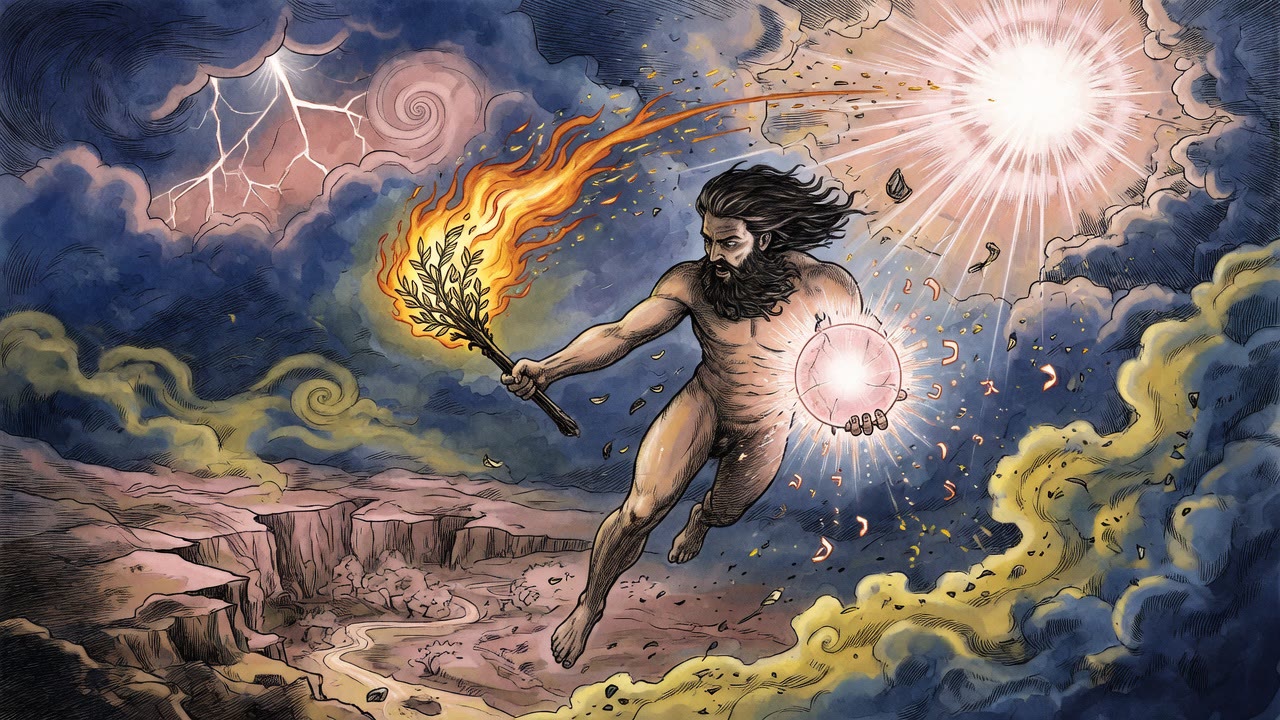
The etrog sat cool in a left hand. The Presence came down toward the righteous by measure, like manna poured, then went back up.
Table of Contents
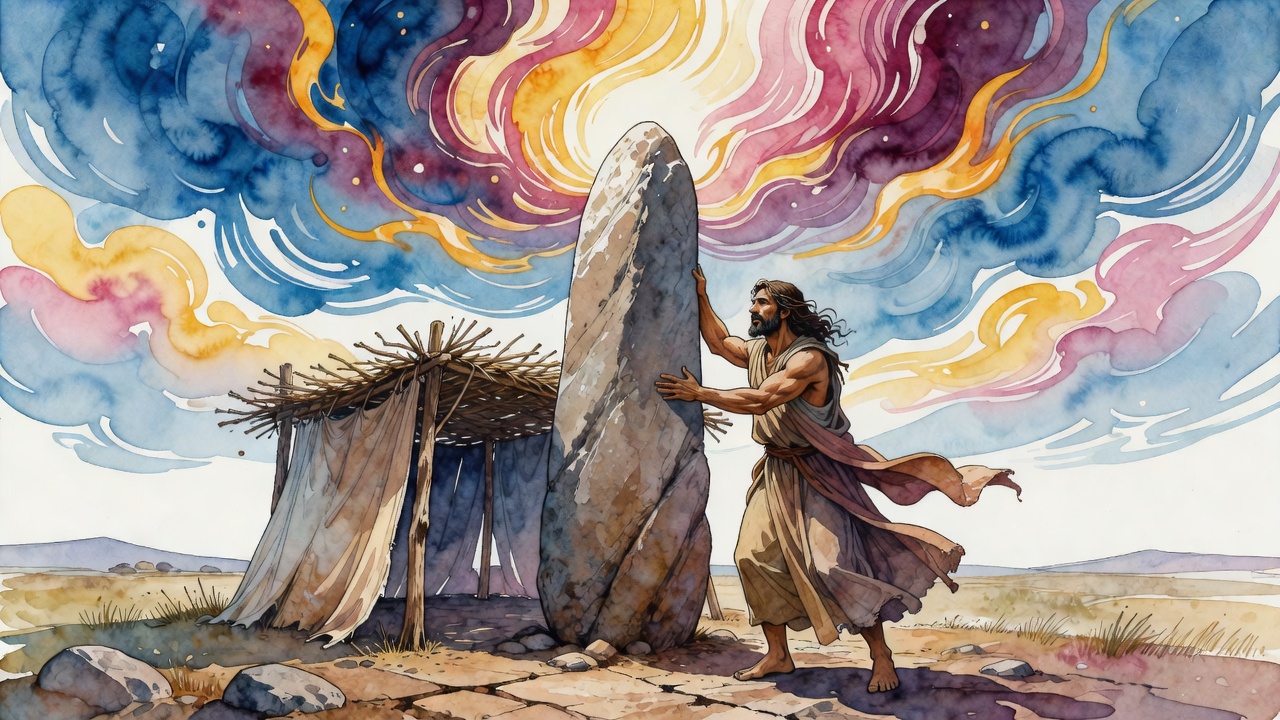
Rabbi Elazar stopped on the road. A young man walked toward him, and the face already belonged to someone Elazar had studied under. He had not been told a name. He looked and knew. The son of Rabbi Hamnuna carried his father the way a seal carries a mark.
 Click for full size
Men around them would have come down from their horses for that father. They would have walked behind his cattle on foot. The son had walked into the same war.
The Snake and the Tower
"That snake you are fighting," they asked him, "how did you escape it? It swallows and kills. It killed the first human, and every generation after him."
The snake was the old enemy from the garden, the urge that took Adam and did not retire. The son did not boast. The war was still on.
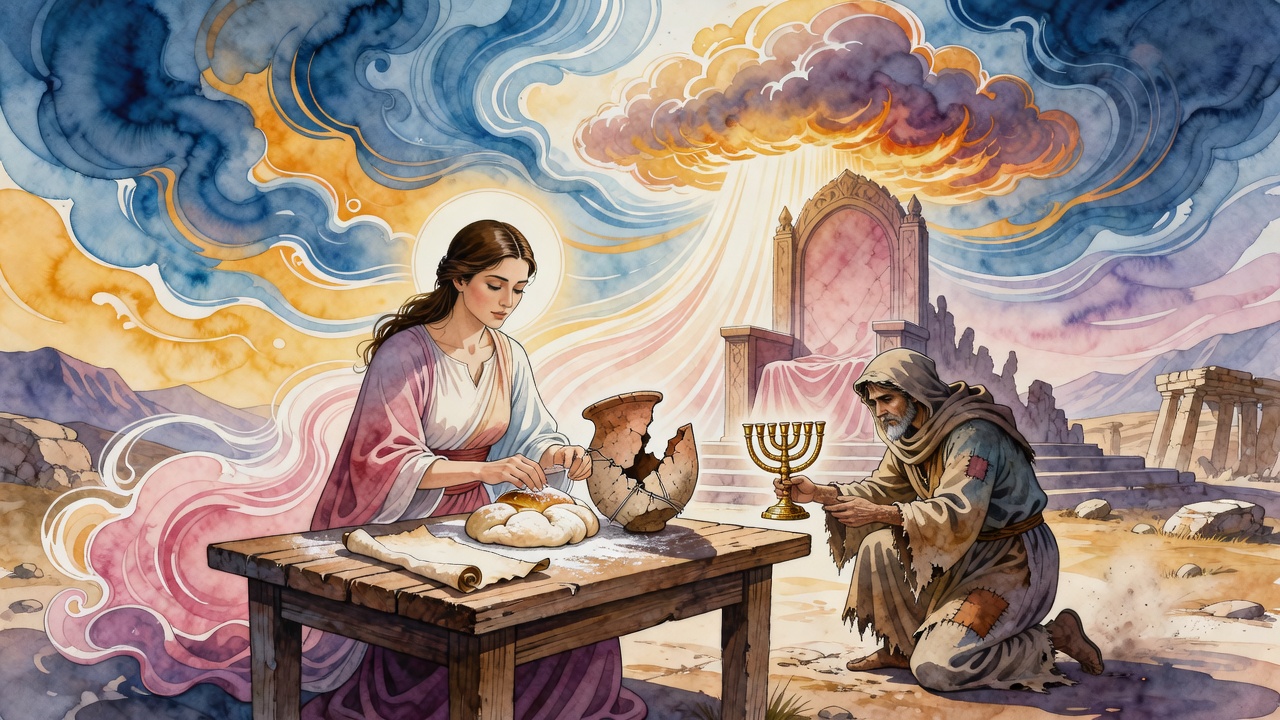
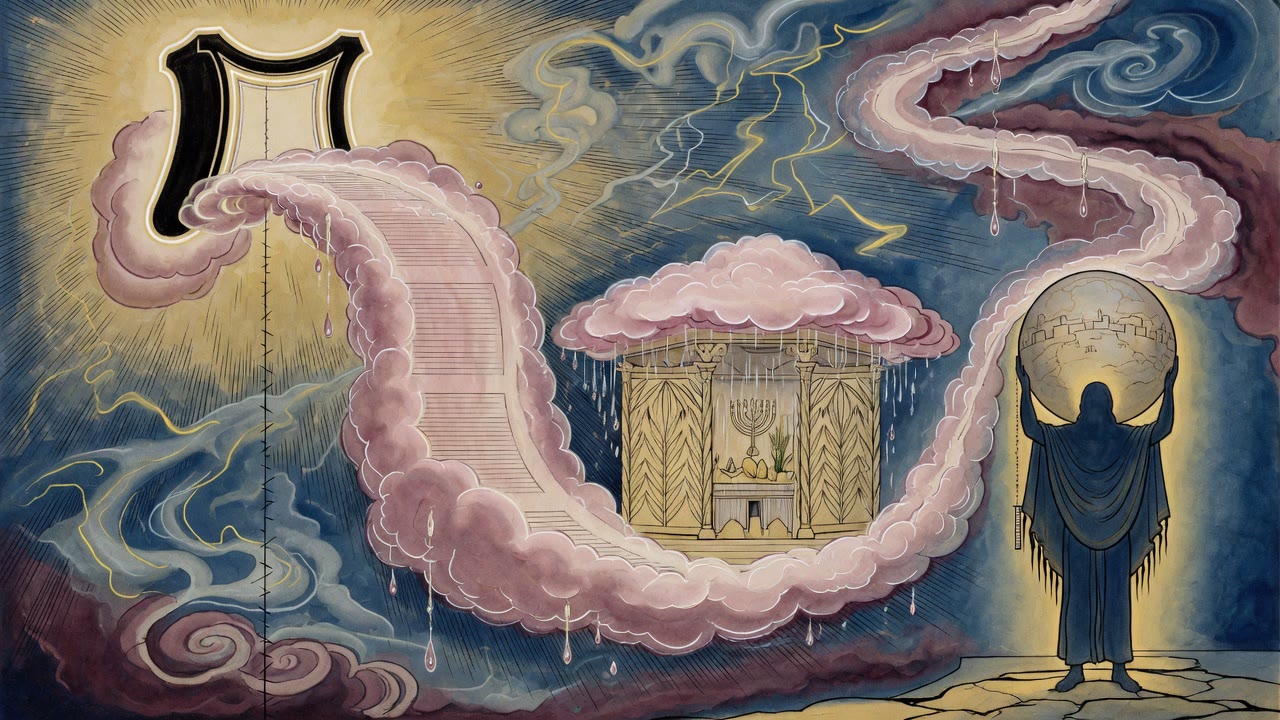
Above them, in the teaching that held this road, a tower hovered in the air. The king's daughter sat in it. Every day the firmament announced that whoever killed the snake would be given her as a wife. "The daughter of the king, inside, her garment is of settings of gold" (Psalms 45:14). The daughter was the Shekhinah (שכינה), God's dwelling presence. She would not come down into a world still in the snake's mouth. She waited in the tower for a kill that had not yet landed.
Weapons in the Rain
A king fought seventy nations, and the way to tell who had won was to see whose men still held weapons. On Sukkot the palm branch shook in a right hand. Rain found the hut. The man did not set the branch down. The etrog sat cool in his left hand, heavy, smelling of a garden that had not been opened that morning.
The hut was temporary. The rain was real. The king they served looked hidden. The lulav and the etrog in two hands said the fight was not over. A people still holding the signs of the covenant in the autumn wet were the men who had not dropped their weapons. Victory, in that parable, was the side that kept standing.
She Came Down by Measure
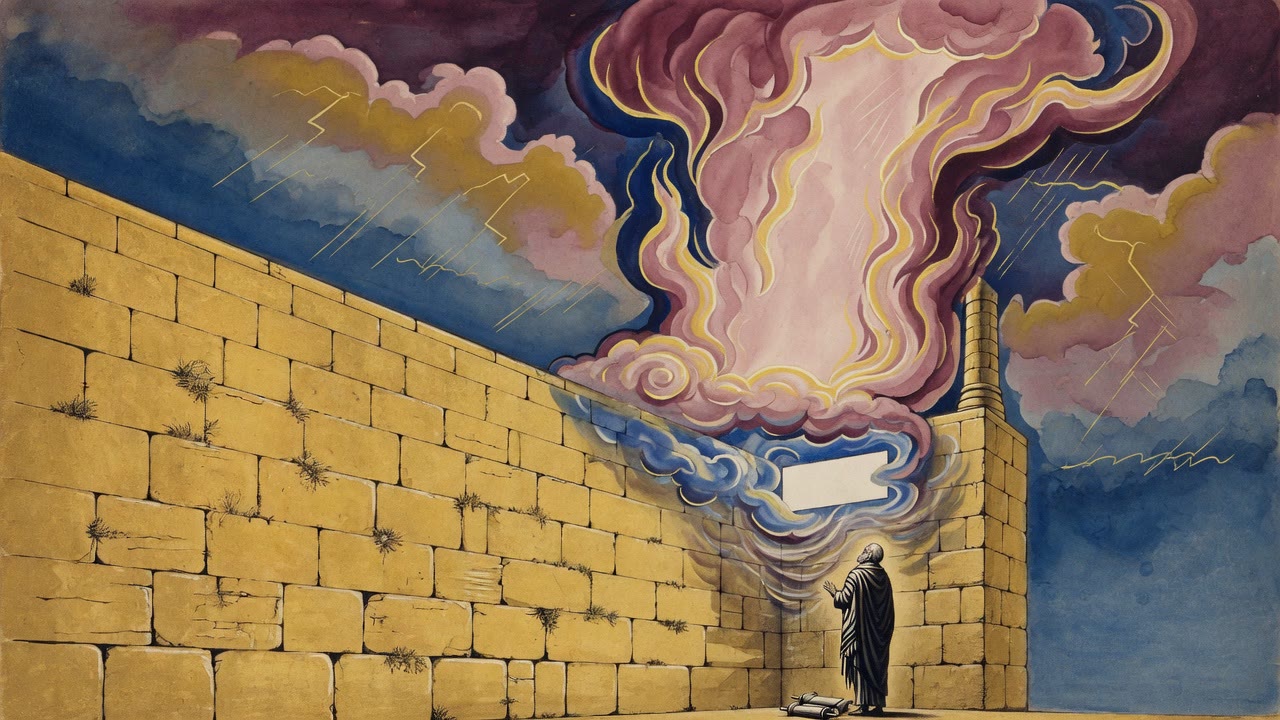
The Shekhinah did not fall on the world all at once. She descended toward the righteous the way manna was poured in the camp: by measure. They measured with the omer (Exodus 16:18). An omer for each head. Descent took on dimension, shiur, the exact amount a body can bear. If she came without measure she would crush what she meant to dwell in.
When she returned, she went up as stature, a standing, a height. Down by the omer. Up by growth. The forty-nine days of counting between the going-out and the giving of Torah were that measuring in public. Each day a number. Each number a step she could take without breaking the floor.
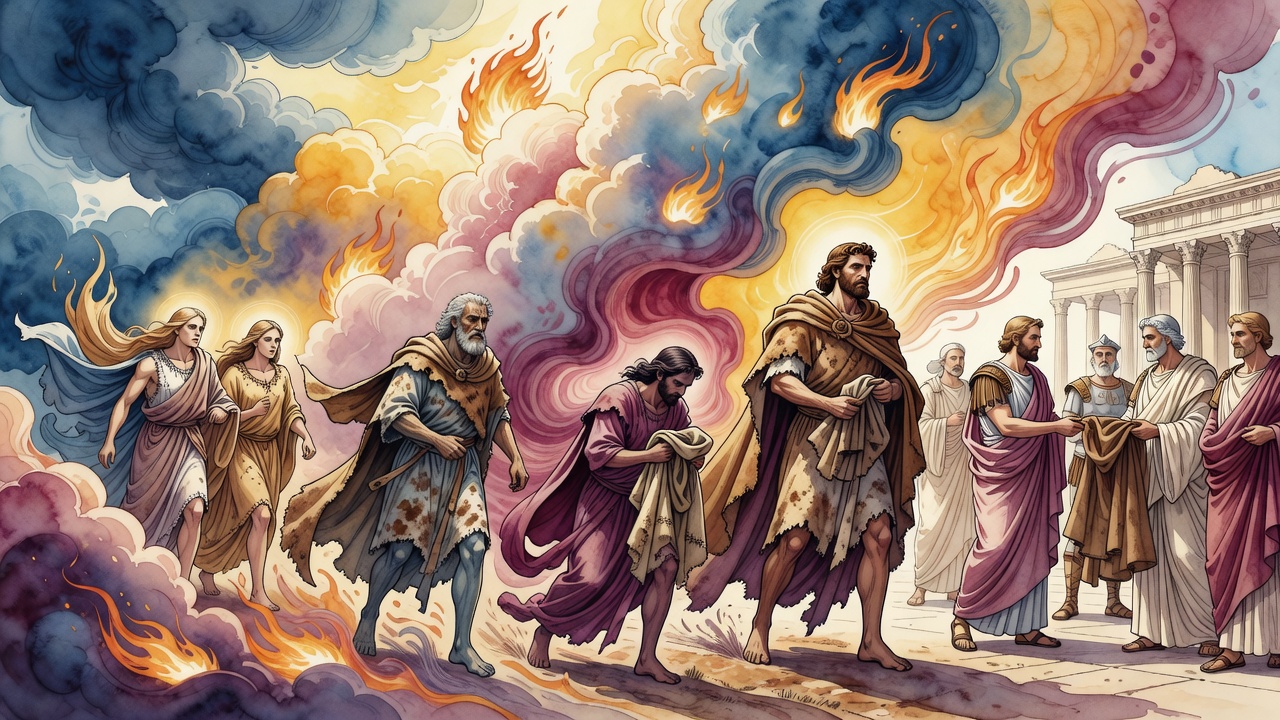
The righteous man was that floor. His name in Hebrew shares letters with foundation. The world rests on him the way a house rests on its first stones. Thirty-six hidden righteous people walk in every generation. Some versions say they do not know who they are. If they all vanished at once, the Shekhinah would have no place to land, and the structure above would give way.
Jacob Held Her, Then She Rose
Jacob had been a man the Presence could rest on. The fear of heaven sat in him the way it sat in the first letter of the Torah, the bet of Bereshit, with heaven already hidden in the opening sound. That fear was not a flinch from a whip. It was the shame that rises when a soul remembers that nothing is private. The Shekhinah is close enough to be wounded. Heaven is high enough to require awe.
On the road, Elazar had recognized a son without a name being said. In the hut, a left hand closed on an etrog and held the same Presence in a fruit. In the camp, they had measured manna so the descent would not drown them. Then she returned. The tower in the air did not come down that day. The snake was not dead. The announcement in the firmament ran again at morning.
She had come down by measure toward a righteous face and a festival hand. She went back up as stature, taller than when she arrived. The etrog still smelled. The palm branch still shook. The young man on the road still walked, and Elazar still knew him without being told.
← All myths