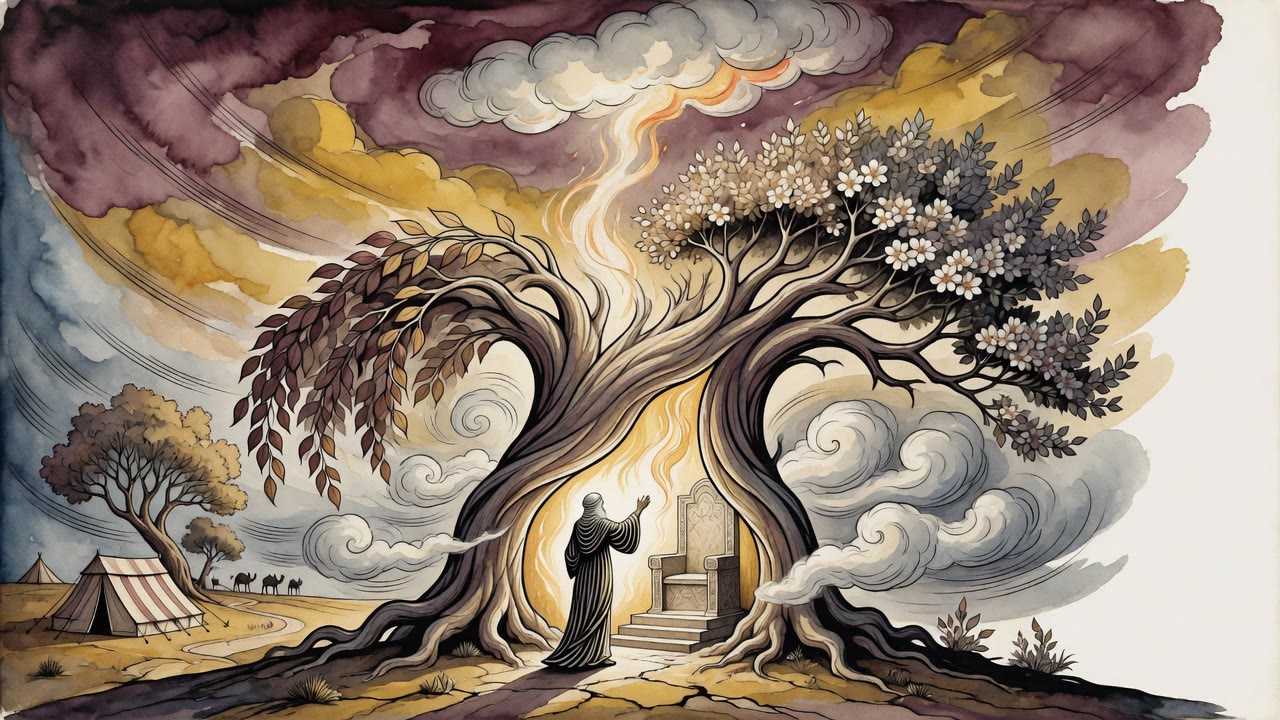
Moses Counted the Flock Before He Handed It Back to God
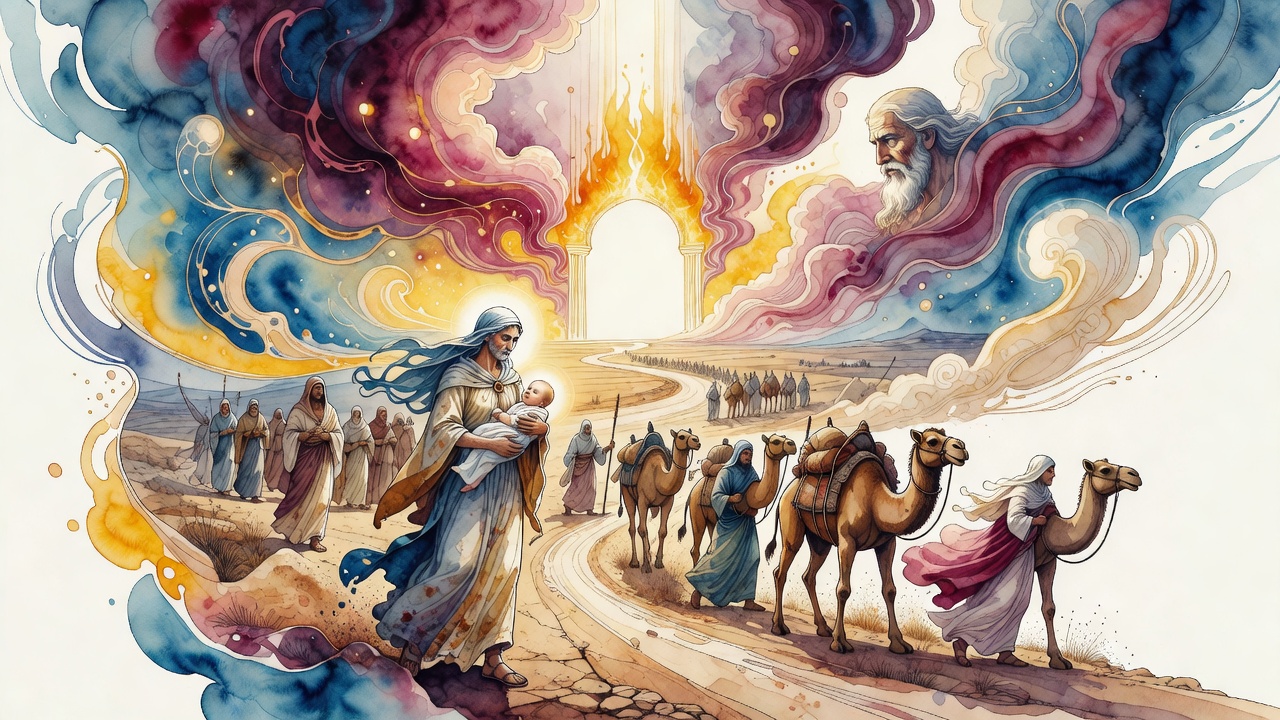
Jacob's caravan halted between two walls at the Egyptian border, and a woman went into labor. The list needed seventy names and had sixty-nine.
Table of Contents
 Click for full size
Sixty-Nine at the Border
Jacob's caravan stopped moving somewhere between one wall and the next, at the place where a country stops being one country and has not yet become the other, and a woman in the middle of the column went into labor.
The child was a girl. They called her Jochebed, and she was the daughter of Levi, and no one standing in that dust had any reason to look at her twice. She was born on a road, in a gap between two walls, in a family that had come down for grain.
She was also the seventieth.
The list of the household of Jacob who went down into Egypt has seventy names on it and sixty-nine people in it. Count the sons and the sons of the sons and the wives and you come up one short every time, and the shortfall closed at the border, in the hour of the crossing, with a birth nobody had planned for.
They were an odd caravan to look at. Every male in it was married, including the ones who could not walk. Hezron was one year old and had a wife. Pallu was two and had a wife, both of them chosen by parents who saw no reason to wait. In that family a boy could be a father at seven.
The girl born between the walls grew up in Egypt, married her nephew, and had three children. The youngest she put in a basket.
The Holy One Went Into the Count
Not everyone accepted the arithmetic.
Count the males at the border, the other reckoning goes, and you get sixty-six. Add Joseph, who was already inside, and his two sons, who had been born there, and you have sixty-nine. And Moses would say, later, in his last speeches on the far side of everything, that their fathers went down into Egypt seventy persons.
So what did the Holy One, blessed be He, do?
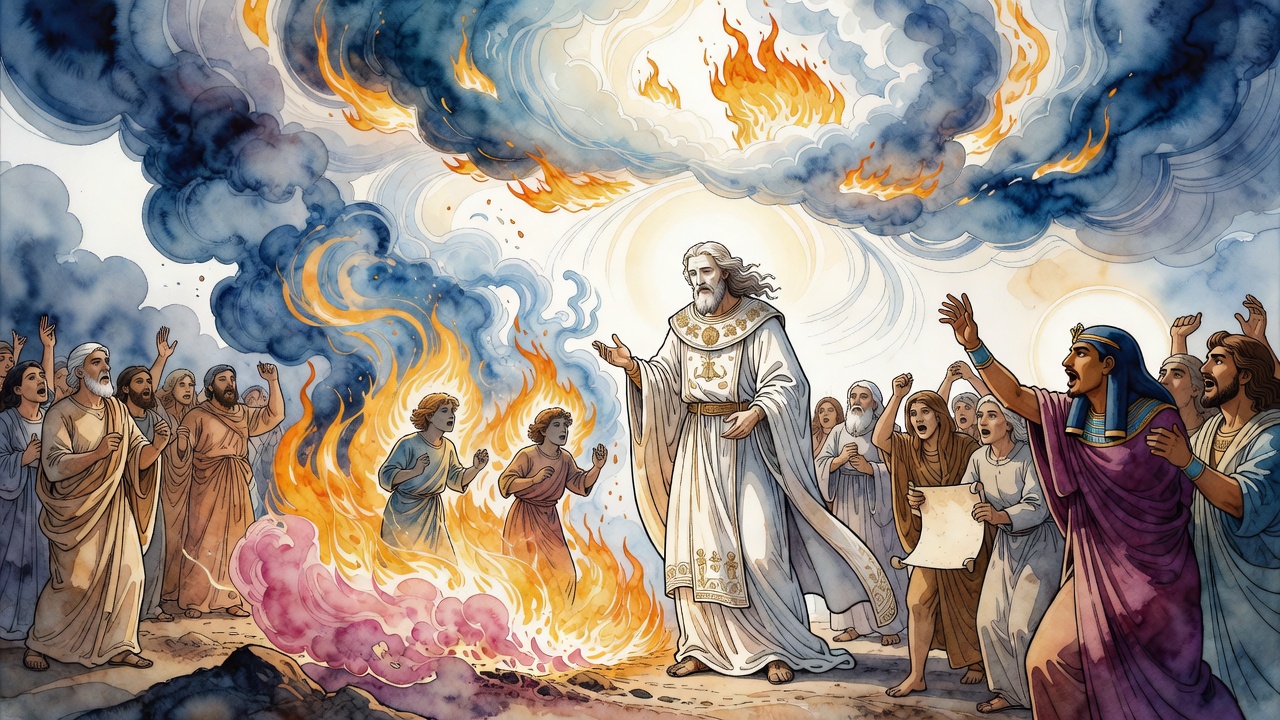
He entered the number with them. He counted Himself in among the sixty-nine, and the total was seventy, and the promise He had made to Jacob at Beer Sheva, that He would go down with him into Egypt, was true in the plainest and most literal way a promise can be true. He was not watching the caravan. He was in it, listed, one of the seventy.
Four hundred years later the mighty men coming up out of Egypt were counted, and there were six hundred thousand less one. So He did it again. And that closed the other half of the same sentence, the half that says He would surely bring them up again.
The Tribes That Came Back Short
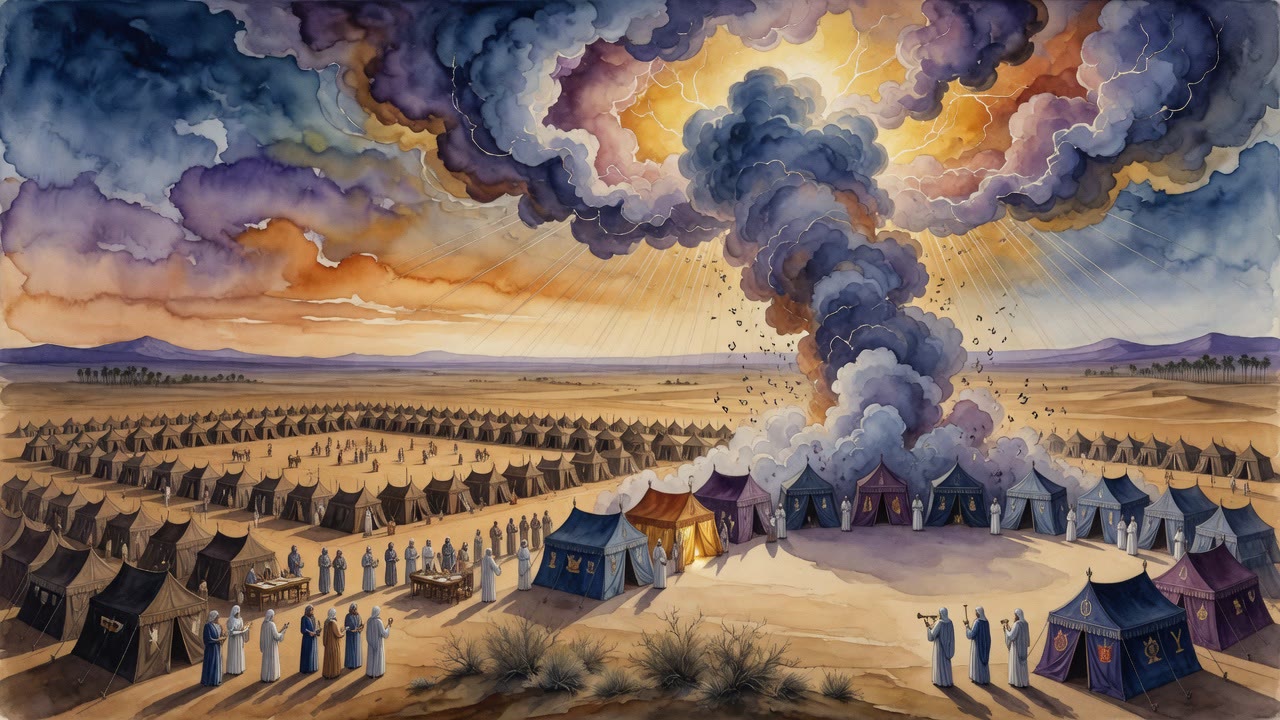
At the end of the wilderness, on the plains of Moab, Moses counted them one more time, and this time the numbers told him what the forty years had cost.
Whole divisions were missing. Some of them had never left Egypt at all. During the three days of darkness there were Israelites who did not want to go, who had made their peace with the place and intended to stay in it, and they died in the dark while their neighbors could not see far enough to bury them.
Benjamin was down seven divisions. Those were lost in a fight among brothers after Aaron died, when the other tribes looked at the Canaanites ahead of them and decided to walk back to Egypt, and the Levites stood in the road and would not let them pass.
Simeon was worse. All twenty-four thousand men who fell in the plague at Shittim came out of that one tribe, and by the time the last camp was struck Simeon was less than half the size it had been.
Only Dan had gone the other way. Dan had come into Egypt as a single division and came out of the wilderness larger than every tribe except Judah.
Returning the Flock
The counting was not for information. God knew the number.
When Israel came out of Egypt, God had counted the people first and then put them into Moses' hands, the way a man counts sheep out of a pen before handing the crook to someone else. Now Moses was about to walk up a mountain and not come down, and he wanted the flock handed back the same way he had received it. Counted. Every head. No arguments afterward about what had been lost on his watch, because the losses were written down too.
That is what the census on the plains of Moab was. A shepherd who is dying, standing in front of the owner, going through the tally out loud.
The Lots That Announced Themselves
Once the number was fixed, the land was divided by it, the bigger tribes getting more and the smaller less.
Jacob had already settled all of this on his deathbed in Egypt, saying which portion belonged to which son. It was decided by lot anyway, because a family that had been fighting since Isaac's tent would find something to fight about in any list a man could produce.
So Joshua stood with Eleazar the priest and an urn between them, and Eleazar put his hand in and drew.
The lot spoke as it came out.
"I am the lot of," it said, and then it said whose, and everyone standing there heard it. The next one named its own tribe too, and the next, out loud, in front of the whole assembly, so that no man could go home afterward and tell his sons that the priest had looked after his friends.
← All myths