The Shipmate Who Saw Paradise and Could Not Taste It
The harbor smelled of fruit and oil. One man walked those tables and came back hungry. His friend slept on a coil of rope.
Table of Contents
The rope hit the dock first. One traveler stepped onto the planks before the ship had fully settled. Salt on his lips. Dust already in his throat. Somewhere past the warehouses a city was rumored never to run dry.
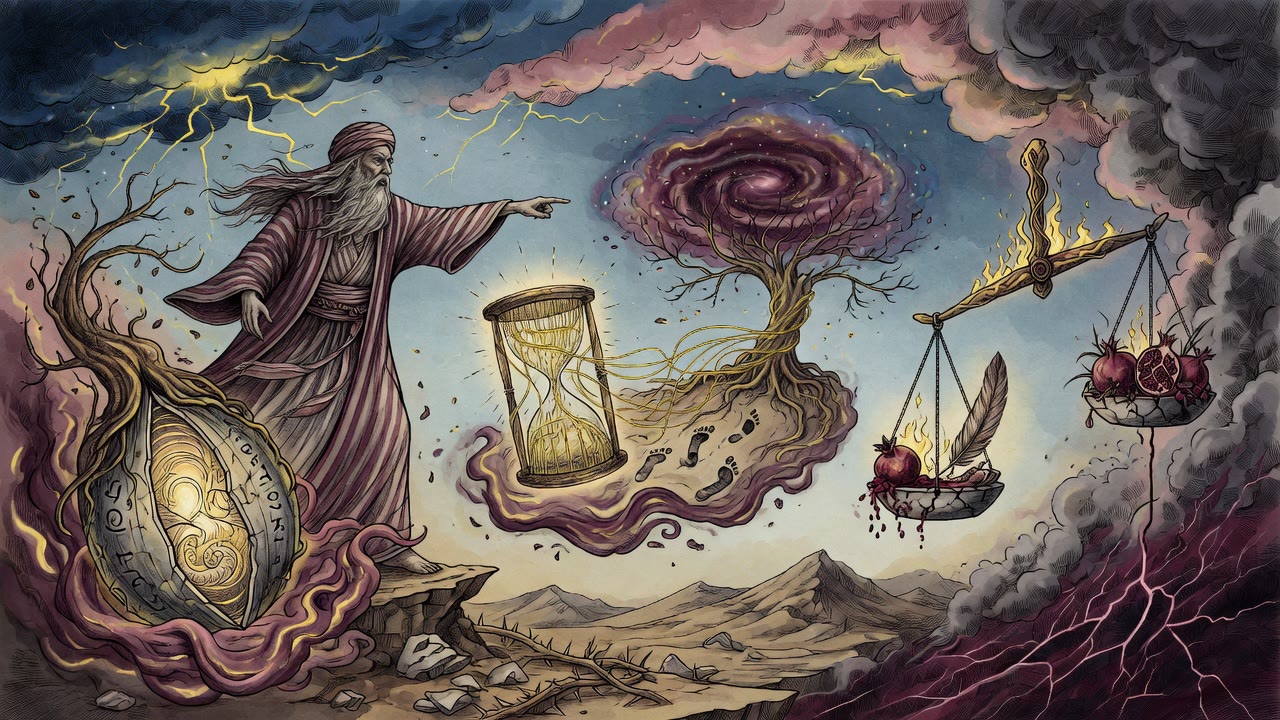 Click for full size
His companion stayed by the rail. Fruit and oil rose off the harbor. Voices came from a street he could not see. The one who went ashore walked toward them as if the road had been waiting for his feet alone.
The Port That Had Everything
Tables stood in the open. Bread still warm. Cups filled without asking. No one hurried. No one argued over a seat. The traveler moved through rooms of quiet plenty and counted the ways a man could live if the sea never called him back.
He put his hand on a jug and did not pour. He stood before a dish and did not eat. Peace pressed against his skin like sun on a wall. His mouth stayed closed. The land offered itself without a price he could pay, and the unpaid price stuck in his throat.
A woman passed him a bowl. He took it. He set it down full. A boy held out a cup. He shook his head. The boy shrugged and drank it himself. The traveler's hands were empty again before he had crossed the square.
When the light turned, he retraced the streets. Same tables. Same calm. He carried the sights the way a man carries a wound he cannot show.
The Question on the Deck
Back on the ship his friend looked him over. "What did you see?"
"Food. Drink. A place that does not know war." He listed the rooms and the silence between them. Each word made the deck feel smaller.
"Did you enjoy it?" his friend asked.
"No," he said. The answer came flat. He had seen the sun of that port and still gone hungry under it.
The one who had never left the ship nodded once. "Then I am better off. I did not go ashore, and I did not see." He folded his cloak and slept, free of a hunger that only knowledge can plant.
Want That Would Not Die
The traveler lay awake counting dishes he had refused. Salt spray wet the rail. His friend turned once against a coil of rope and settled, as if the sea itself were a sufficient table.
In the morning the first man tried to name what had failed. The food was not false. His mouth had already filled with wanting before the plate arrived, and wanting left no room for taste. The second man asked for nothing, and therefore lost nothing when the roofs slipped under the horizon.
The body kept wanting. A good night did not empty it. A heel of bread did not empty it. If someone had cut that want out of him, pleasure itself would have had no vessel left to hold it. On the dock that fact already lived in his empty hands. He had stood inside the feast and left without a single bite. Desire intact. Enjoyment refused.
His friend ate on the open deck and wiped his mouth on his sleeve. The traveler watched the crumbs and could not make them into the rooms he had walked. The smaller meal sat in a smaller vessel. It went down. It stayed down.
The Roofs Became a Smear of Light
The ship pulled from the harbor. The traveler watched the roofs shrink until they were only a smear of light. His friend snored against the rope. Between them sat the difference between missing a world and missing a world already walked through.
Far behind them the tables still stood. No one on the ship could prove the food had ever been real. One man would spend the voyage tasting what he refused. The other would taste only salt and sleep.
Other ports would come. Other tables. The one who saw did not learn to eat the next time. Sight without grasp became a poverty the closed eye never meets. A man who sees the feast and cannot sit down has met his own vessel at its cruelest angle.
When the voyage ended, both men stepped onto a different dock. One carried a memory that still hurt. One carried only the habit of the ship. There is more gratification for the one who has not seen the sun than for the one who has seen it and cannot take hold (Ecclesiastes 6:5). The traveler heard the verse in his own mouth and did not take it as praise of blindness. It named a pain that arrives only after the eyes open.
Night on the last water finished what the port began. The traveler who had gone ashore still counted. The friend who had stayed aboard asked for bread in the morning and ate it without thinking of rooms he had never entered.
← All myths