4 min read

The Sick Man Spits Out the Physician's Cup

A fevered man refuses the doctor God schooled, sins against the Maker by defying medicine, while a farmer's toil still honors heaven in the field.

Curated by Arthur · Told by Maggid ·
Table of Contents
  1. Fever and a Cup at the Door
  2. Sin Against the Maker, Defiance of the Doctor
  3. The Farmer Whose Talk Is With Bullocks
  4. Wisdom That Ends in Thanks
The Sick Man Spits Out the Physician's Cup Click for full size

Fever and a Cup at the Door

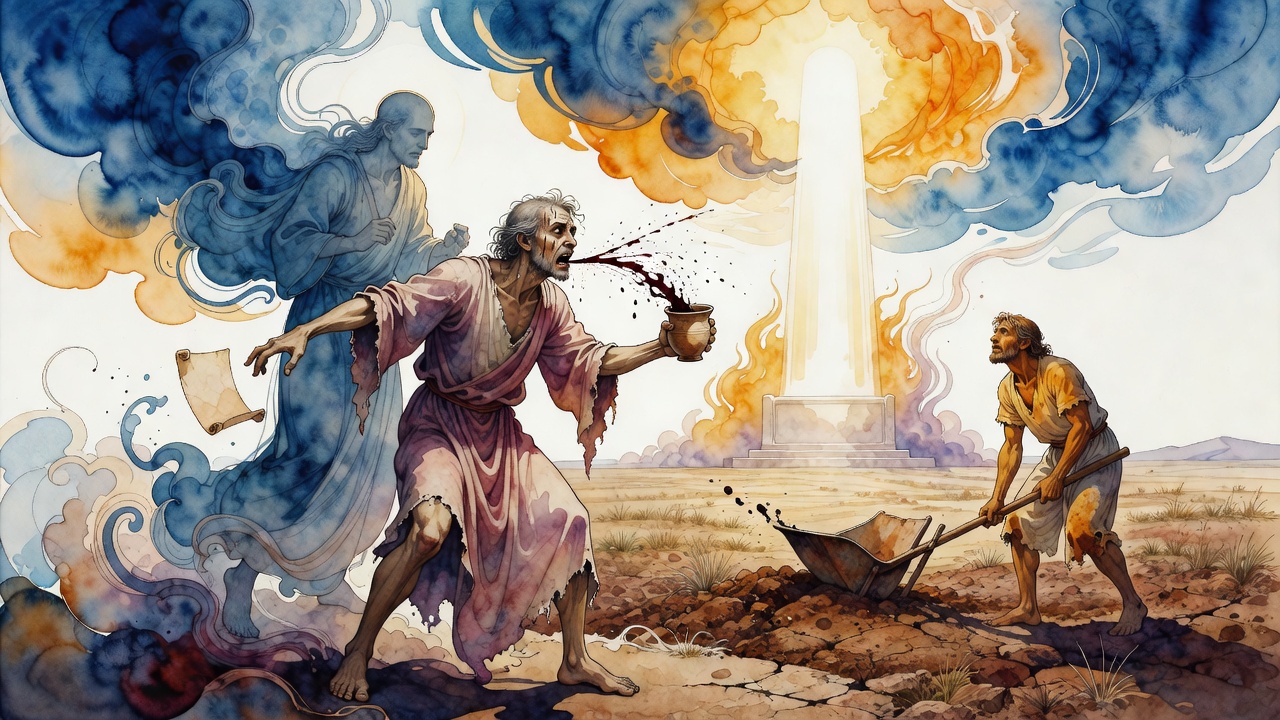
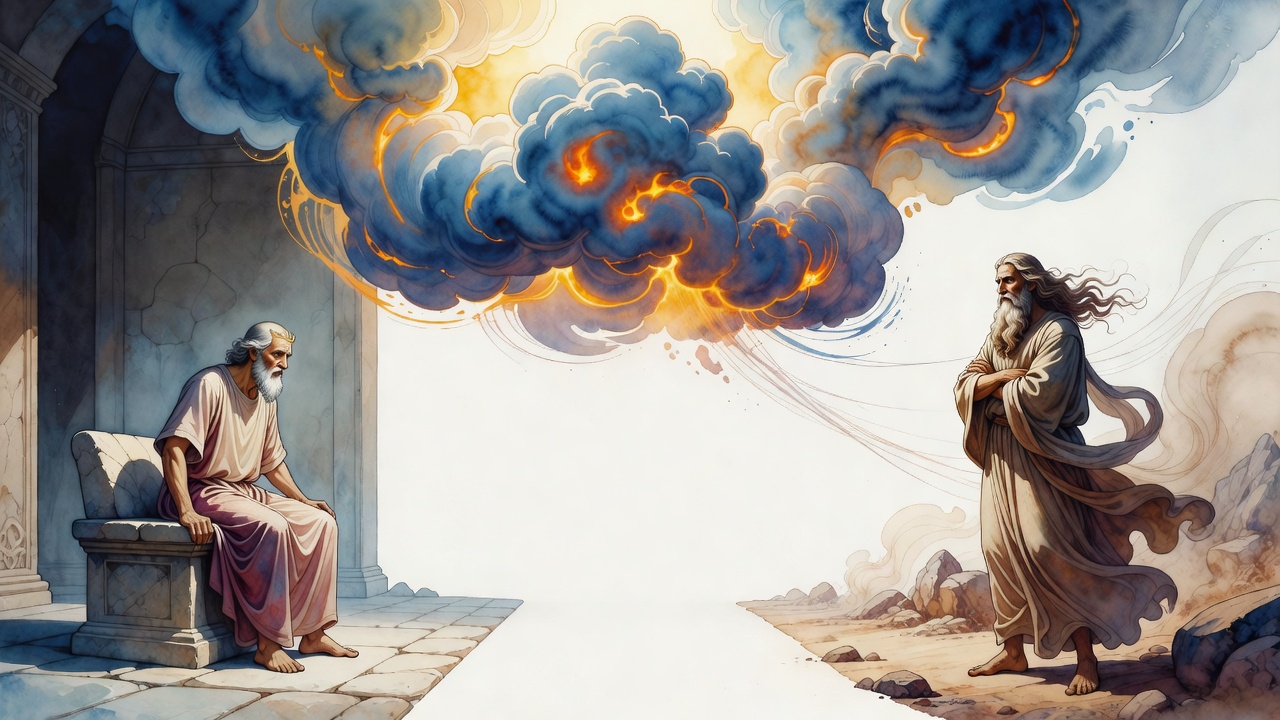
The physician set the cup on the stool and waited. Bitter steam rose. The sick man turned his face to the wall and called the medicine a humiliation. He wanted a miracle that would bypass tongue and stomach. He wanted heaven without instruments.

From God a physician getteth wisdom, Ben Sira says. The line does not dethrone prayer. It refuses to treat skill as theft from providence. The same Maker who wounds for reasons humans half understand also plants remedies in leaves, minerals, and trained hands.

The sick man spat the first sip back. Pride wore the mask of piety. He would not let a human being stand between him and recovery. The fever, indifferent to theology, climbed.

Outside, a neighbor who farmed for a living walked past with dirt on his ankles, already hours into work God would never call trivial.

Sin Against the Maker, Defiance of the Doctor

He who sins against his Maker defies the physician. Ben Sira ties the knots tight. To slap away the cup can be rebellion against the One who authorized healing as a human craft. The doctor is not a rival deity. The doctor is an employee of creation's mercy.

The sick man quoted half-remembered verses about God as healer and ignored the other half of the tradition that sends bandages. Selective trust is still a kind of idol, an image of God trimmed to fit stubbornness.

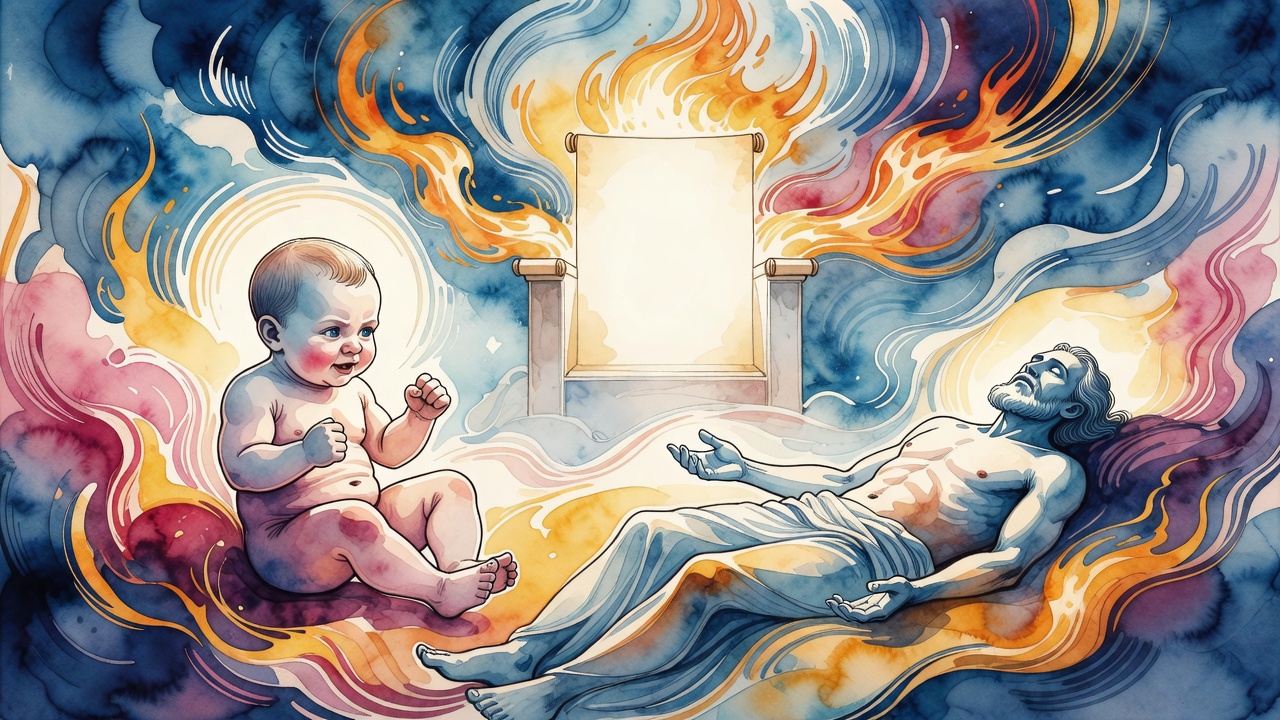
When the fever broke the wrong way, fear arrived without humility. He asked for the cup he had insulted. The physician returned without crowing. Skill that comes from God can afford patience. The patient's repentance was ugly and useful, like most real turnings.

Bitter liquid went down. Sleep came. The wall he had faced no longer needed to be an altar of refusal.

The Farmer Whose Talk Is With Bullocks

While the sickroom negotiated pride, the farmer rose early and led cattle. He is busied with oxen, Ben Sira says, and his discourses are with bullocks. His wakefulness is to victual the stall. He sets his heart to plough furrows. No one writes songs about his elbows. The world eats because he does not quit.

Piety is not confined to kings and prophets. The farmer's honor is the honor of necessary labor under heaven. He will never prescribe a cup, yet his work is cousin to the physician's. Both keep bodies alive inside a world God refuses to run as pure spectacle.

The sick man, recovering, watched the farmer from the doorway and felt the rebuke without a sermon. While he had argued with mercy in liquid form, another man had been feeding the living that pull the plough. Glory looked like mud.

Ben Sira's catalog of workers is a hierarchy of usefulness, not of fame. The one who heals and the one who ploughs both stand inside divine economy.

Wisdom That Ends in Thanks

When strength returned, the man paid the physician and blessed the Maker who had not been too proud to use a cup. Prayer after medicine is not a lesser prayer. It is an accurate one. It names the chain of causes without breaking it at the human link.

He who hates instruction will not be wise. The sickbed is a school that charges high fees. Some graduate. Some die still spitting out help. The difference is not intelligence. It is whether the will can receive from a neighbor without calling the neighbor a threat to God.

In later seasons he still feared fever. He no longer feared the stool beside the bed. The cup had become a small sign of humility, ordinary as bread, bitter as truth.

Across the field the farmer's oxen leaned into the yoke. Somewhere a physician washed his hands. Between them the Maker kept staffing the world with people who know how to keep other people alive.


← All myths

From the tradition

Sources

3 sources

The texts behind this telling. Some cards carry a translation of the source; others are our own retelling of it, and each card says which. Every card links out to the original.

Ben Sira 38:8Ben Sira

Retold in our words. Read the original at the link below.The Wisdom of Ben Sira, Cambridge University Press (1899) · CC-BY

Ben Sira, in his wisdom, offers a fascinating perspective.

"From God a physician getteth wisdom," he tells us. He’s not dismissing the hard work and knowledge of doctors, not at all. Instead, he's grounding their abilities in something far greater: a divine source. It's as if the capacity to heal, to understand the intricate workings of the body, is a gift, a spark of the divine breathed into humanity. And what's the reward for this divinely-inspired skill? "And from a king he shall receive gifts." Recognition, honor, a place at the table.

"The skill of a physician shall lift up his head; And he shall stand before nobles." Medicine, in this view, isn’t just a trade; it’s a calling that elevates the practitioner. The physician, with their knowledge and skill, would have been a figure of immense authority and respect.

Where do the medicines themselves come from? Ben Sira is beautifully clear: "God bringeth out medicines from the earth; And let a prudent man not refuse them." It's a call to appreciate the natural world, to recognize the healing properties hidden within plants, minerals, and water. We are reminded that these gifts are there for a reason and that wisdom lies in using them responsibly. The earth itself is a pharmacy, a source of healing provided by the Creator.

He then offers a beautiful, almost poetic, reminder: "Was not water made sweet with wood, For to acquaint every man with his (their) power?" This is generally understood as a reference to the story in (Exodus 15:22-25), where Moses sweetens the bitter waters of Marah with a piece of wood. A seemingly simple act, a natural remedy, transforming something unpleasant into something life-sustaining. It teaches us that even the most ordinary things can hold extraordinary potential for healing and transformation.

And why are we even capable of understanding and utilizing these remedies? "And he gave man understanding; To glory in his (their) might." The ability to learn, to reason, to discover the secrets of healing – this is a divine gift too. It's an invitation to participate in the ongoing work of creation, to use our intellect to alleviate suffering and improve the world.

"By them doth the physician assuage pain; And likewise the apothecary maketh a confection." The physician and the apothecary, working together, using both knowledge and skill to create remedies. It's a collaborative effort, a partnership between human ingenuity and the gifts of the earth. Think of the apothecary (the pharmacist) carefully crafting a confection (a medicinal preparation).

"That his work may not fail (?); Nor health from among the sons of men (his earth)." Ben Sira concludes with a prayer, a hope that the work of healing will continue, that health will prevail. It's a recognition that our efforts, though vital, are ultimately dependent on something larger than ourselves. The well-being of humanity is inextricably linked to the health of the earth, and both are sustained by the divine.

Remember the connection between wisdom, healing, and the divine. Remember that the earth itself is a source of remedies, and that our ability to understand and utilize these gifts is evidence of the power and potential within us.

Full source
Ben Sira 38:18Ben Sira

Retold in our words. Read the original at the link below.The Wisdom of Ben Sira, Cambridge University Press (1899) · CC-BY

It turns out, that feeling might be older than you think.

" Ouch. It suggests a connection between our spiritual well-being and how we treat our physical health and those who care for it. Perhaps ignoring medical advice is, in a way, a rejection of the gift of life itself.

Ben Sira doesn't just deal with our bodies; he delves deep into the heart of grief and mourning. He reminds us, "My son, let tears fall over the dead: Be in bitterness, and wail with lamentation."

He urges us to fully embrace the pain of loss. To not shy away from the tears, the bitterness, the wailing. It’s a powerful directive, especially in a world that often tells us to "move on" quickly.

And how should we mourn? Ben Sira gets practical: "According to the manner of each, bury his flesh; And hide not thyself when they die." Attend to the body with respect, he says. Don't isolate yourself in grief. Be present.

There’s a rawness to this, a call to participate fully in the rituals of death. It's a reminder that mourning isn't just a feeling; it's an action.

Then comes a fascinating glimpse into the customs of the time: "Weep bitterly, and make grievous wailing; And appoint mourning accordingly: A day or two because of hearsay; And be comforted for the sake of health."

Did you catch that? A day or two of mourning based on hearsay? It speaks to a world where news traveled differently, where certainty was a luxury. And then, the gentle nudge towards healing: "be comforted for the sake of health." Grief is important, Ben Sira acknowledges, but so is our well-being.

He concludes with a somber warning: "Out of sorrow cometh harm; So the sad of heart buildeth up trouble." Unprocessed grief, he suggests, can fester and create more pain. It's a sentiment echoed in many traditions, highlighting the importance of healthy grieving processes. Is Ben Sira saying that wallowing in sorrow is detrimental? That unchecked grief can actually create more problems? It’s not about suppressing sadness, but about finding a way to move through it, to acknowledge the pain without letting it consume us.

Ben Sira offers us a timeless guide to navigating life's challenges: from the everyday choices we make about our health to the profound experience of loss. It's a reminder that our bodies and our spirits are intertwined, and that both deserve our care and attention. And maybe, just maybe, he's also reminding us that it's okay to cry. It's okay to mourn. It's okay to be human.

Full source
Ben Sira 44:1Ben Sira

Retold in our words. Read the original at the link below.The Wisdom of Ben Sira, Cambridge University Press (1899) · CC-BY

Ben Sira, in his wisdom, gives us a glimpse into their lives. He reminds us that piety and significance aren't confined to kings and prophets.

"He is busied with oxen, and leadeth about cattle," Ben Sira tells us, painting a picture of the everyday farmer (Ben Sira 44). Imagine the scene: the sun rising, the air filled with the sounds of the barnyard, and the farmer, deeply connected to the land and his animals. It wasn’t just a job; it was a way of life. "And his discourses are with bullocks," Ben Sira adds. He understands these creatures, speaks their language, and depends upon them for his family's sustenance.

"And his wakefulness is to victual the stall," meaning his dedication extends beyond the daylight hours. He ensures his animals are fed and cared for, evidence of his responsibility and compassion. "He setteth his heart to plough furrows." His focus is on the work, the physical labor of preparing the earth, a humble task, perhaps, but one that is fundamental to the well-being of the community.

It's not just the farmers! Ben Sira also nods to "Likewise the artificer. Which by night is busied." Think of the artisans, the craftspeople who poured their skill and creativity into their work, often laboring long into the night. The carpenter shaping wood, the potter molding clay. these were the people who built and beautified the world around them.

These people, these farmers and artisans. their lives were not filled with grand pronouncements or miraculous deeds, at least not the kind that make it into history books. But their quiet dedication, their connection to the land, their skill in crafting objects of beauty and utility, that was their legacy. That was their form of piety.

And Ben Sira concludes with a powerful intention: "I wish to praise the pious men, our ancestors in their generations."

Why is this important? Because it’s easy to get caught up in the stories of the famous and powerful, to forget the ordinary people who make up the fabric of society. Ben Sira reminds us to look around, to appreciate the quiet acts of devotion, the unsung heroes who contribute to the world in their own unique ways.

So, the next time you pass a farm, or see a beautifully crafted object, take a moment to think about the people behind it. Remember their dedication, their hard work, and their quiet contribution to the tradition of our shared history. They, too, are part of the story.

Full source