Solomon Mixed Lime for the Queen of Sheba
The throne room went quiet around a joke. Ben Sira did not laugh. He named the king's mother and a paste mixed in Jerusalem.
Table of Contents
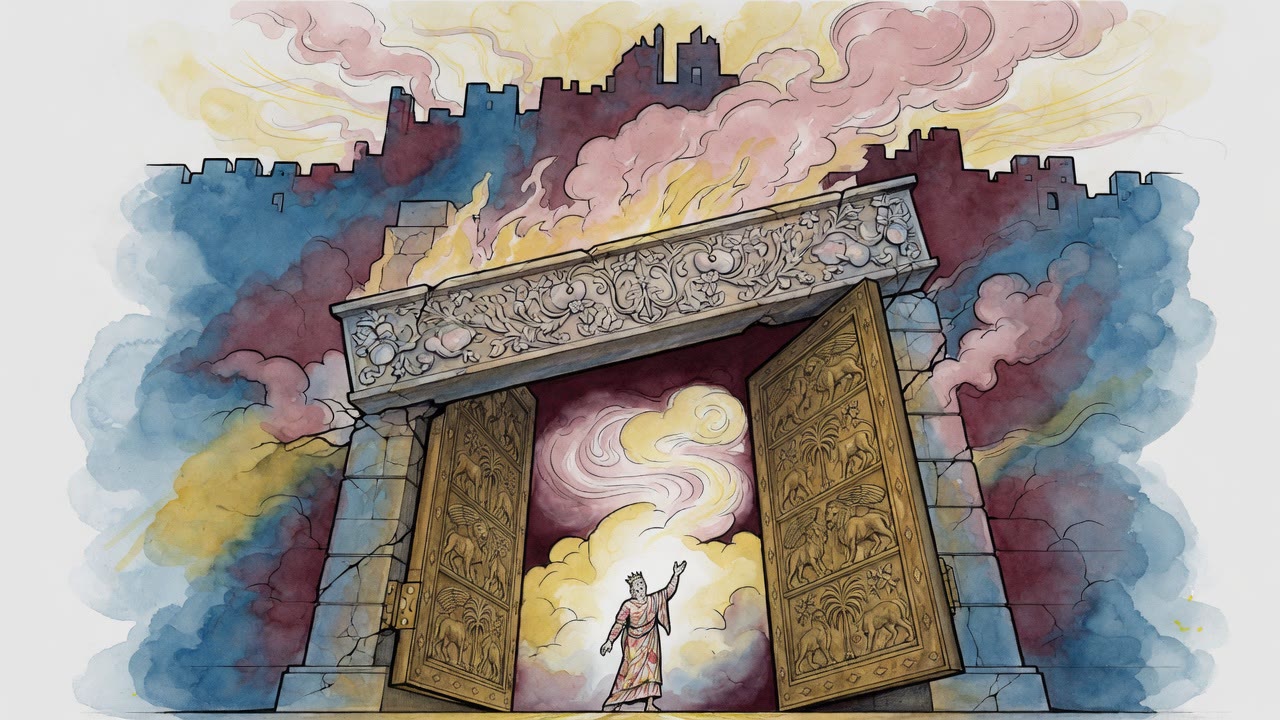
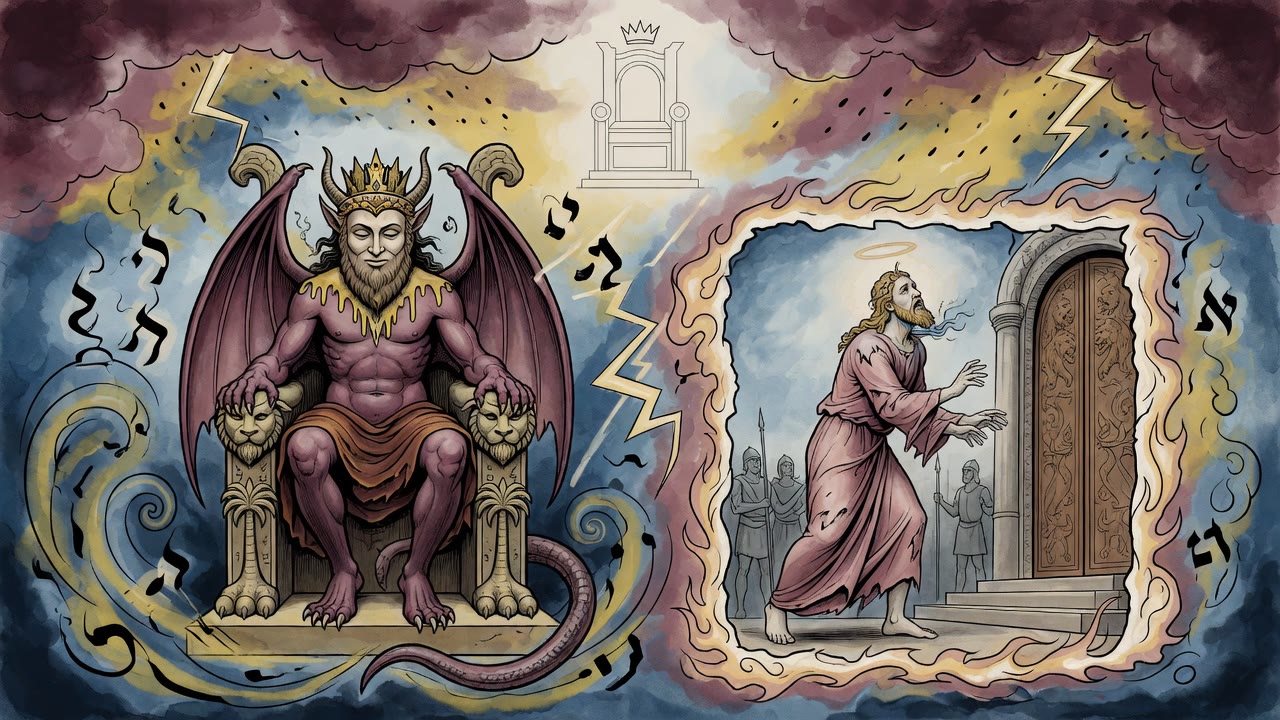
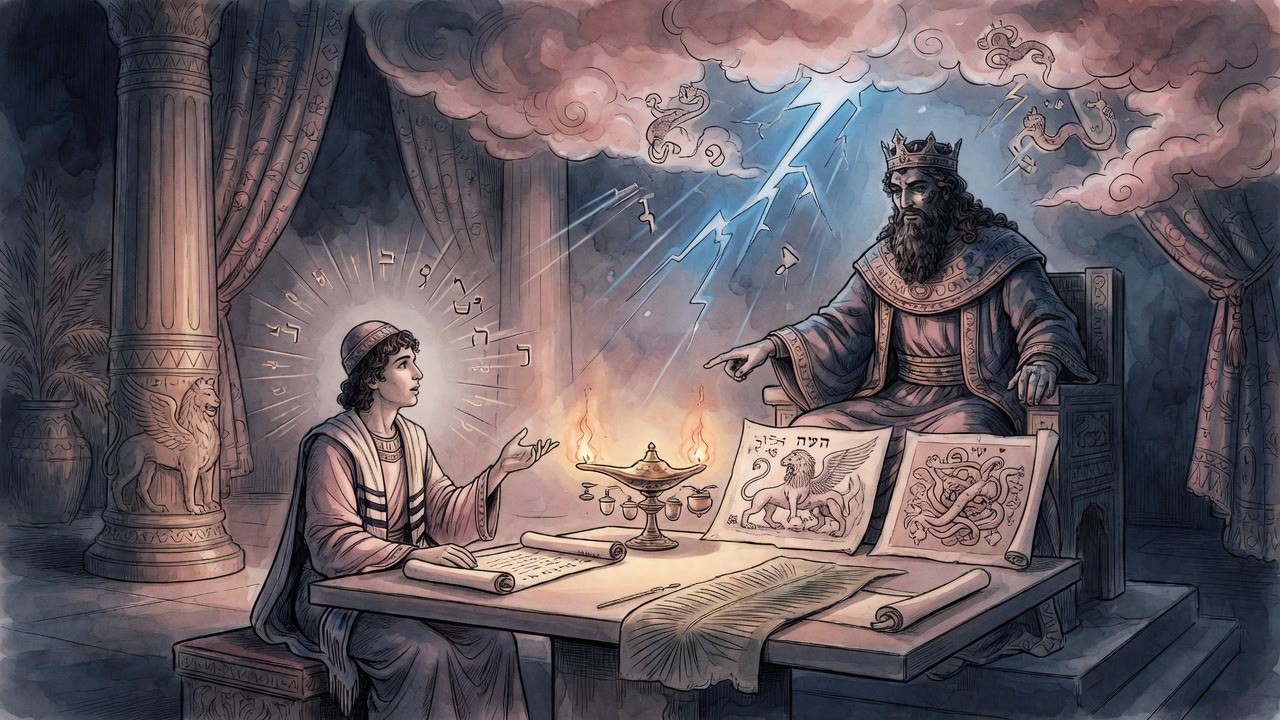
Nebuchadnezzar leaned forward on his throne and asked a question that sounded like a joke until the room went quiet. How does the rabbit shave her head? Courtiers shifted. Guards stared at the floor. Ben Sira did not laugh.
 Click for full size
He answered with a story that tied the king's own blood to Solomon's bed and to a paste mixed from quicklime and arsenic.
The Queen Who Came to Test a King
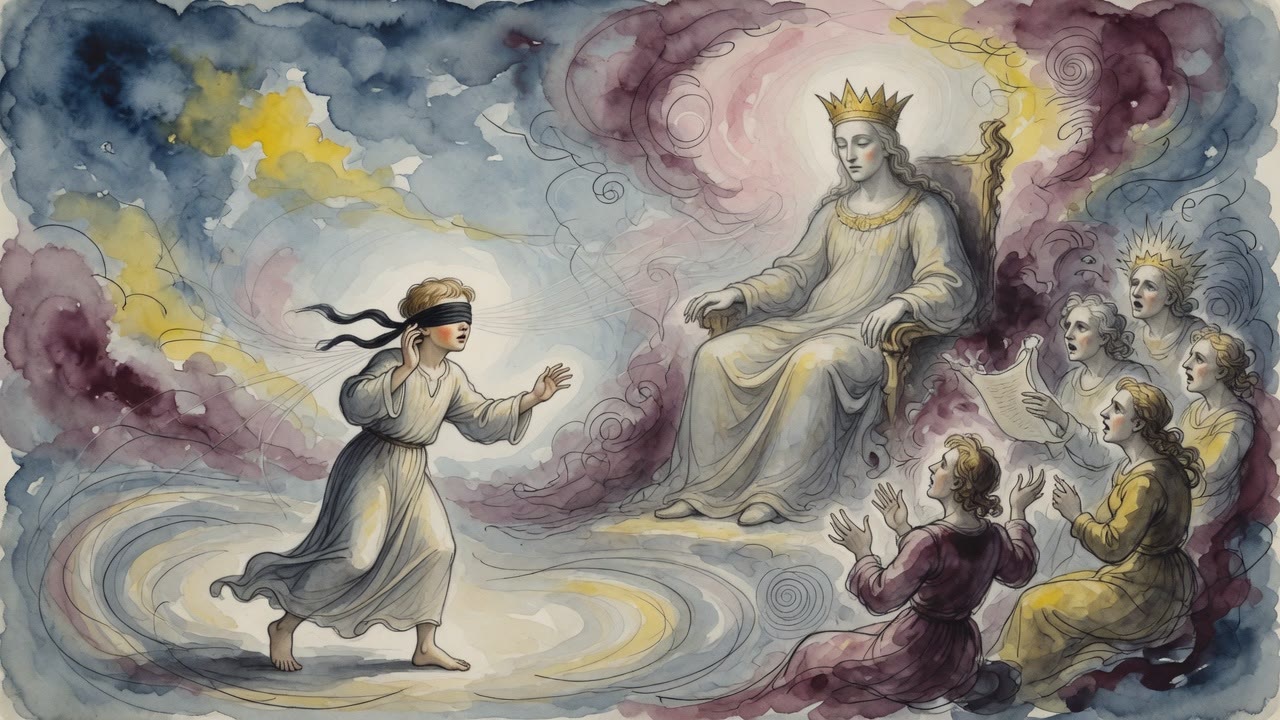
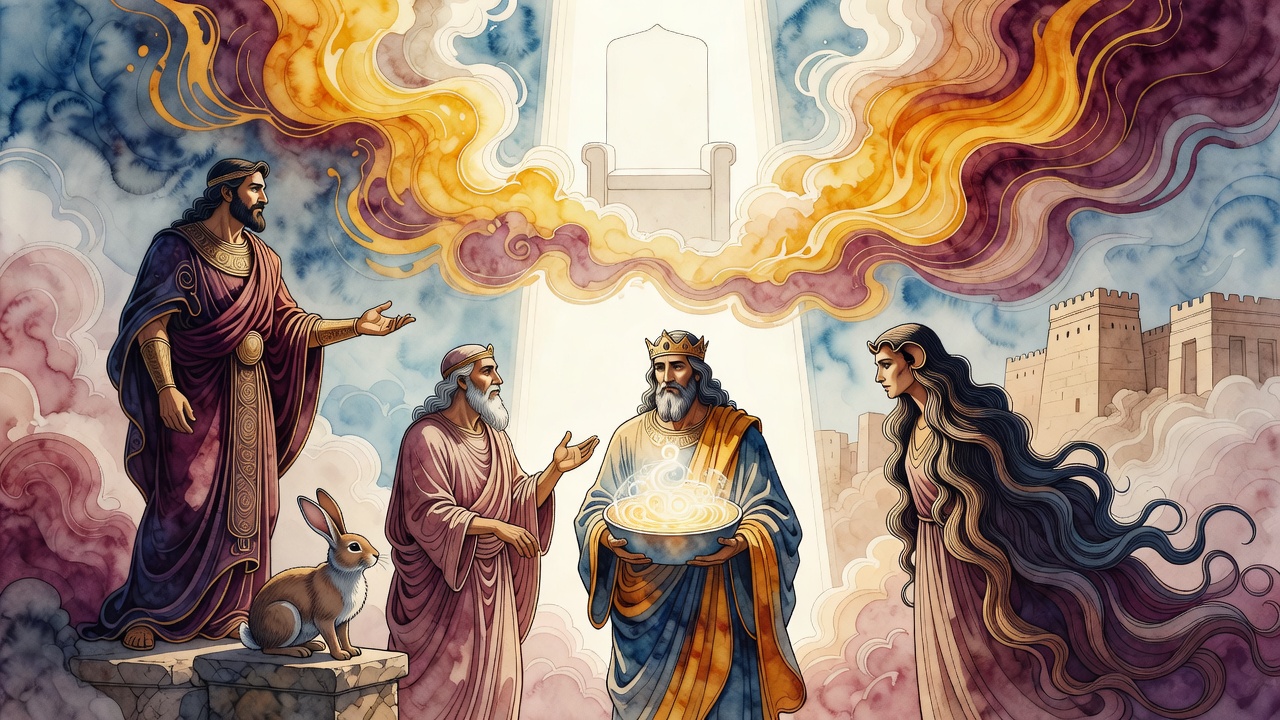
The Queen of Sheba came to Jerusalem to test Solomon with hard questions. The city smelled of cedar and burnt offering. She arrived with riddles and wealth, expecting a contest of minds. Solomon met her as a king who had asked God for a listening heart and had received more than he could spend.
The visit became more than riddles. Desire entered the room where wisdom had been performing for an audience. Solomon wanted her. He also discovered she was covered in body hair. The alphabet that preserves the tale does not soft-pedal the moment. Wisdom here is not a proverb on a scroll. It is a craftsman's problem with a woman's skin and a king's will.
Quicklime, Arsenic, and Water
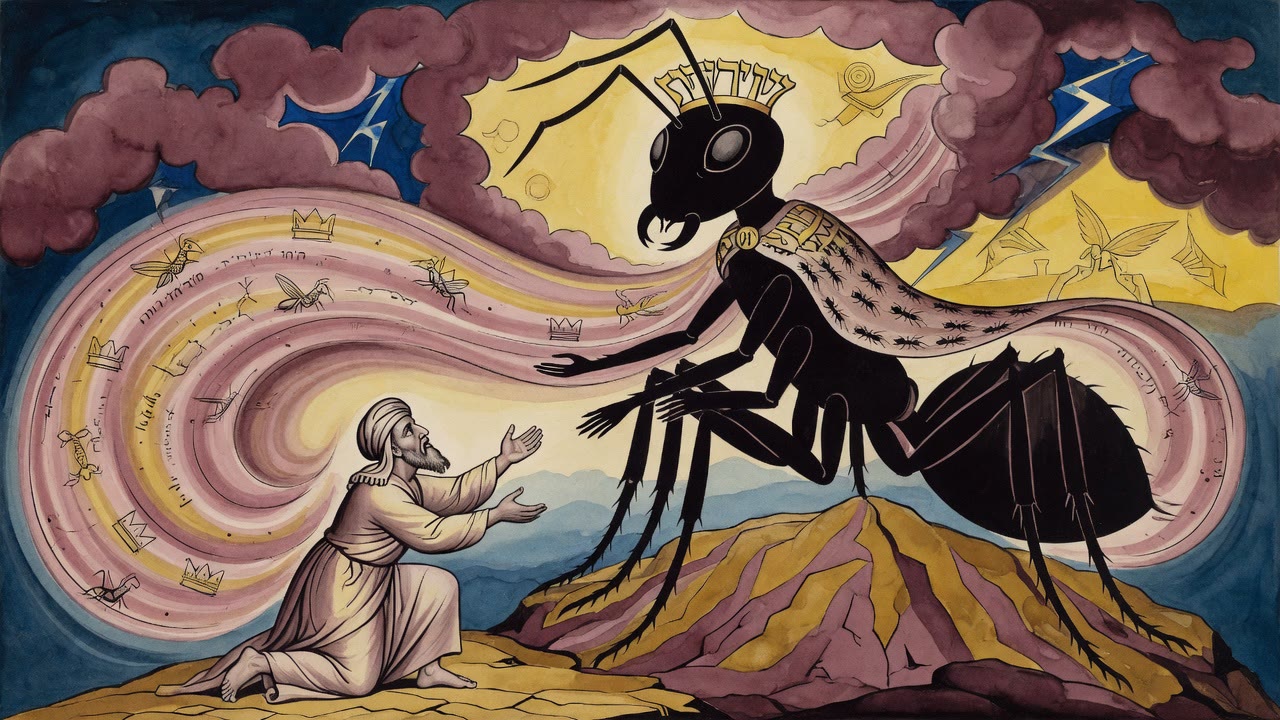
Solomon crushed arsenic. He crushed quicklime. He mixed them with water. He invented a depilatory paste the way other kings invent laws. He applied it. Hair left skin. He rinsed her. Only then were they together.
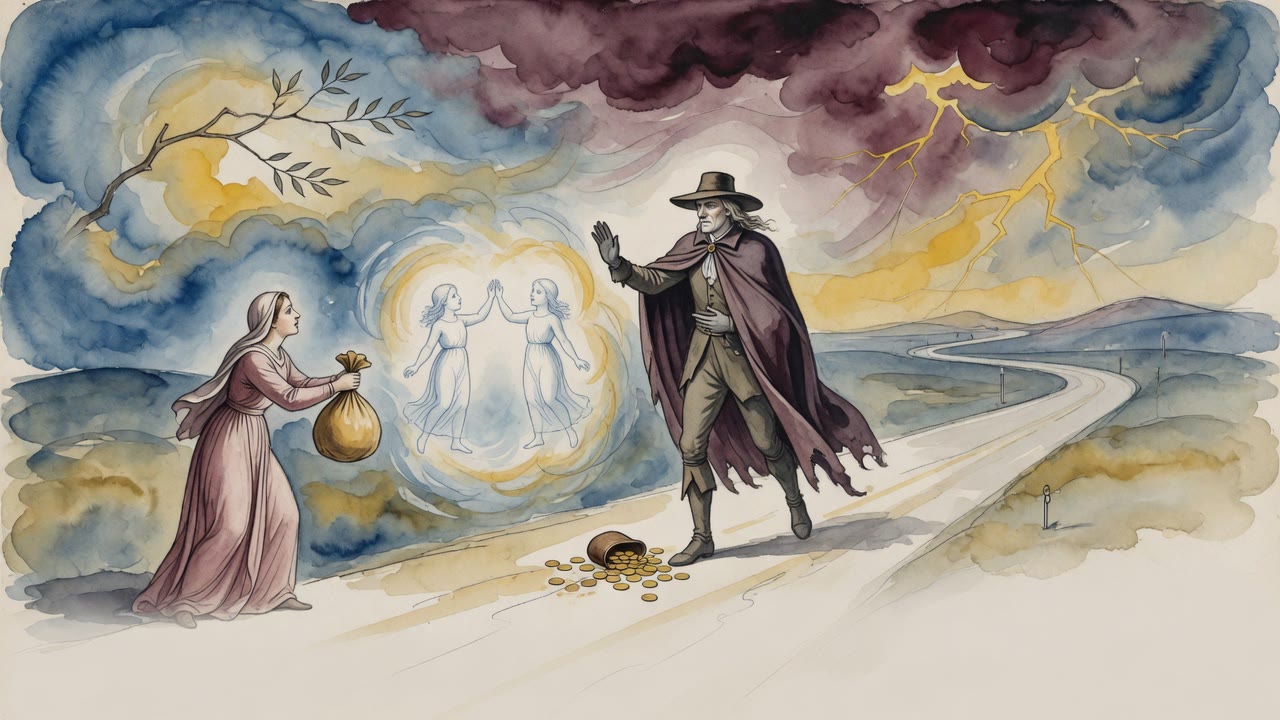
The same mind that judged two mothers and one living child also mixed a chemical to clear a path to intimacy. In the night after, with the queen asleep, a whisper moved through the palace that flesh already knows. The days of our lives are short, and full of toil. A man is not saved from death, and no one is known who has returned from it.
Solomon had asked God for a listening heart. He had also seized a night because the ledger closes. The paste and the whisper sat on the same table. Both knew time is short. One tried to hold a moment. One named the fear so it could be answered.
The King Demanded Proof
Ben Sira told Nebuchadnezzar that this union mattered beyond one night. The Queen of Sheba, in that telling, became the mother of the line that would produce Nebuchadnezzar himself. Israel's wisest king and Babylon's most feared conqueror were bound by a genealogy that sounded like scandal and prophecy at once.
The king demanded proof. He would not believe these things unless he saw them with his own eyes. "How do you know this?" Ben Sira answered as a prophet answers. "I am a prophet, and the Holy Blessed One reveals sealed matters to me." Nebuchadnezzar accepted the claim. In that court, revelation outranked every other kind of evidence.
The rabbit was never about animals. It was a barb shaped like folklore, a way to force Ben Sira into either silence or a story that would embarrass Israel. Ben Sira chose embarrassment that doubled as power. He made the conqueror a grandson of Solomon's desire. He turned a crude riddle into a claim that Babylon's throne still sat downstream of Jerusalem's wisdom, even when that wisdom mixed lime like a physician of the skin.
Hair, Blood, and Short Days
When the paste did its work, hair left skin the way doubt leaves a room that has chosen a side. Solomon and the queen met as bodies after the riddles. Centuries later a boy named Ben Sira stood in Babylon and told the heir of that meeting who he was. No parchment genealogy was produced. No midwife was summoned. God told me, Ben Sira said, and the throne accepted it because the alternative was to admit that some questions are traps and some answers remake the asker.
The king who asked how a rabbit shaves her head heard how a queen's body was prepared and how a dynasty began. He heard that sealed matters open for a prophet more readily than for a monarch with soldiers. He also heard, if he had ears for it, that the short days and hard toil of human flesh drive even the wisest men into acts that later ages will retell with a wince and a stare.
Wisdom, in these strands, is not only the fear of the Lord and the sorting of cases. It is also the courage to name desire, to invent a paste, to face the cynic's truth about death, and to answer a tyrant's joke with a lineage that binds him to the house he conquered. The rabbit shaves her head the way empires shave history: with a mixture that burns, a claim that sticks, and a story no one in the room can quite put down.
← All myths