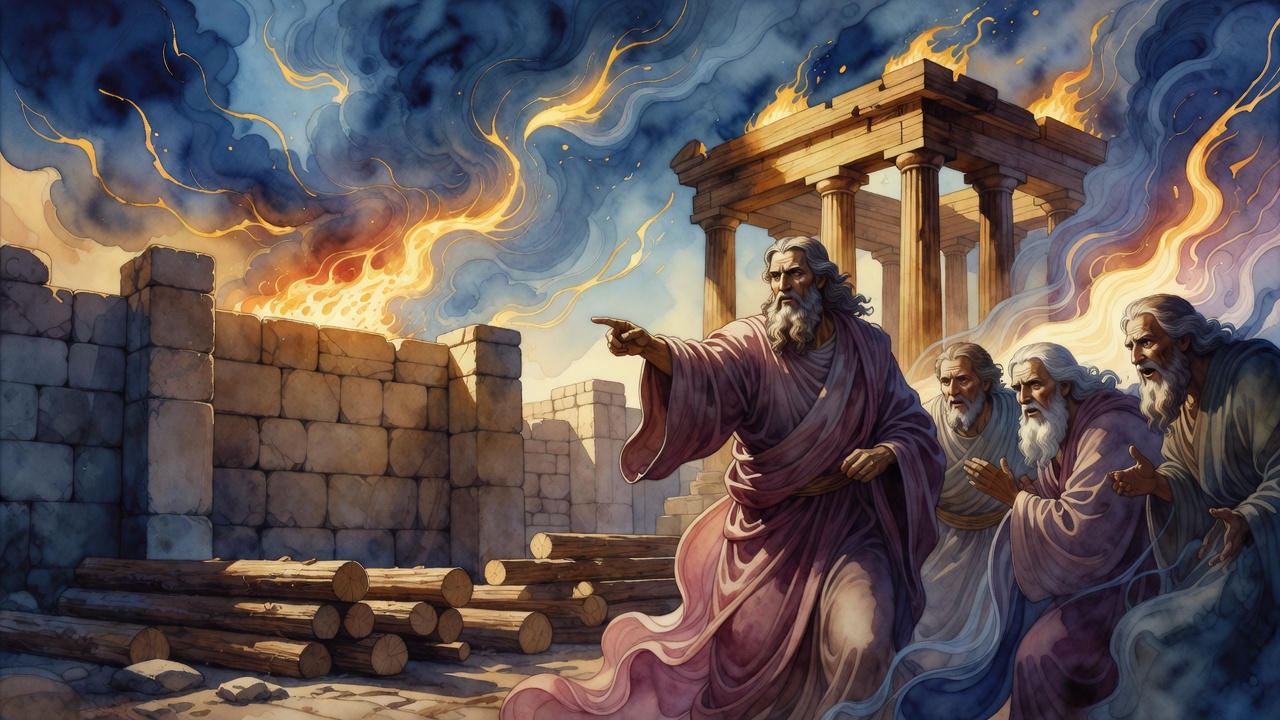
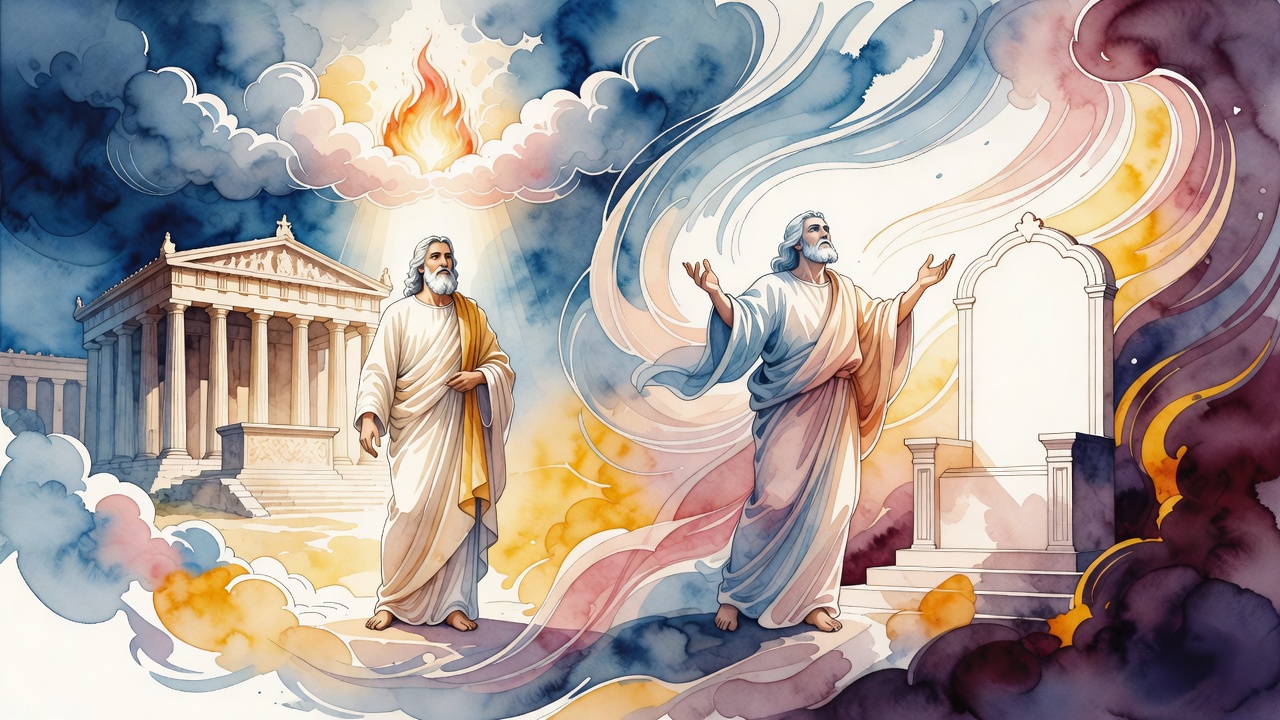
Temple Gates Nearly Crushed King Solomon
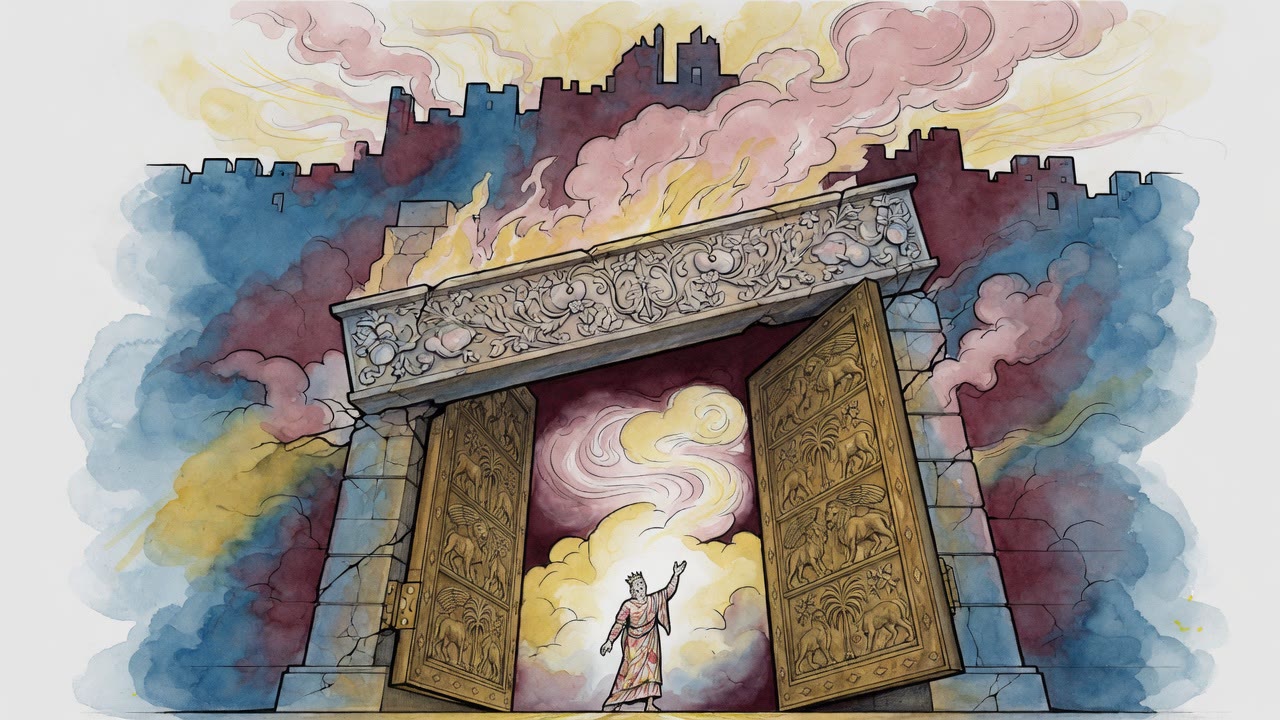
The lintels started down toward Solomon's crown. He had named the wrong king, and the new doors meant to kill him for it.
Table of Contents
The Ark of the Covenant rested on the priests' shoulders, and the new gates of the First Temple did not move.
 Click for full size
Solomon stood on the threshold in royal cloth. Gold caught the sun. Cedar still smelled cut. The courtyards held a hush like a breath before a name is spoken. He opened his mouth with the psalm that should have opened stone.
"Lift up your heads, O ye gates, and the King of glory shall come in" (Psalm 24:7).
The Lintels Began to Descend
The gates heard "King of glory" and looked at the man in the crown.
Lintels started down. Doorposts leaned inward. Dust sifted from joints fitted only weeks before. Priests shifted under the poles. Someone whispered a prayer that was mostly panic.
Solomon felt the air change above his hair. The house he had built was preparing to kill him for a line of praise aimed at the wrong king. Stone does not bluff.
A priest's knee buckled. The Ark tilted a finger's width. Solomon did not step back. If he ran, the Name would stay outside, and the doors would have their verdict without a correction.
The Line That Lifted the Stone
He spoke the last line of the psalm before the lintel finished its drop.
"The Lord of hosts. He is the King of glory" (Psalm 24:10).
The gates lifted with a sound like a great throat clearing. The Ark passed. Light seemed to move differently once the Name had been set right. Priests walked through on shaking legs. Solomon followed with sweat cooling on his neck.
The Holy One remembered the refusal. Because those gates would not bow to a man, no man would carry them off as plunder when the city fell. When Nebuchadnezzar sacked Jerusalem, vessels and the menorah, the lampstand, went to Babylon. The gates sank into the earth where they stood (Lamentations 2:9).
They wait under dust for a house whose King they can name without error. Solomon learned the correction in a breath. He thought renaming was a skill he could spend elsewhere.
Shade Over Two Armies
Years of counsel and proverbs did not teach him to leave the future alone. On a riverbank opposite Hiram of Tyre, armies stood in heat that punished the ranks. Solomon called birds. Wings made a moving ceiling. Shade walked over helmets. Hiram came to see the wonder. Peace replaced the almost-war. Bread was shared where blood had been planned. Wine passed between kings who had nearly measured each other for graves.
An eagle pulled its wing from over Solomon's head. Heat struck his hair. The king asked why.
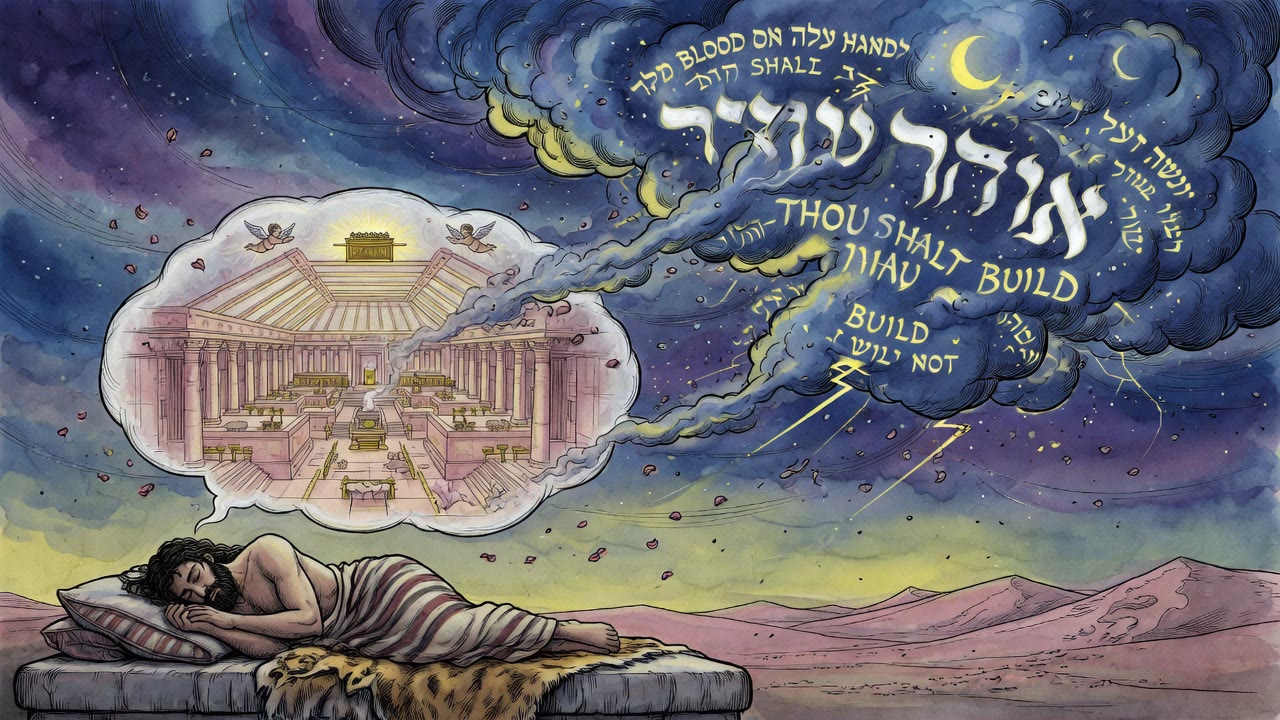
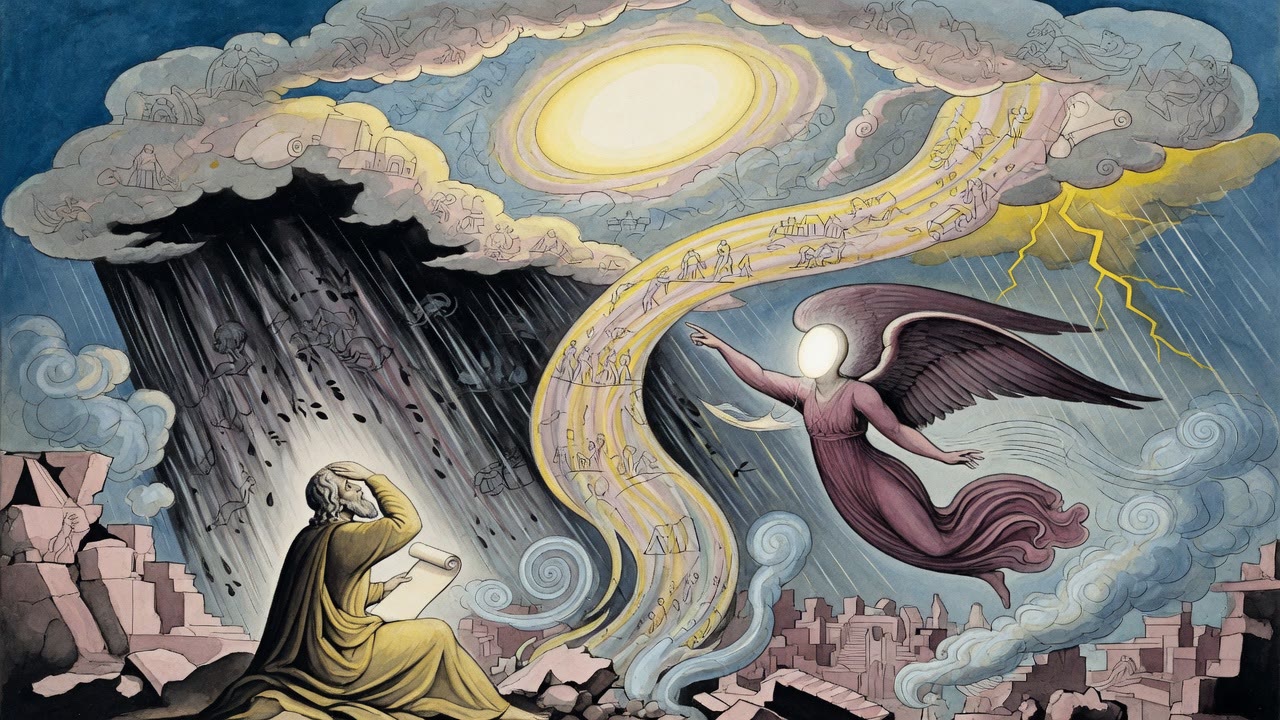
The bird spoke of a prophecy overheard in the high air. The High Priest would die. Solomon's own daughter would marry a mamzer (ממזר), a man without tribal standing.
Solomon, who preferred walls to surrender, did not argue with the bird. He built.
The Tower Against a Bird
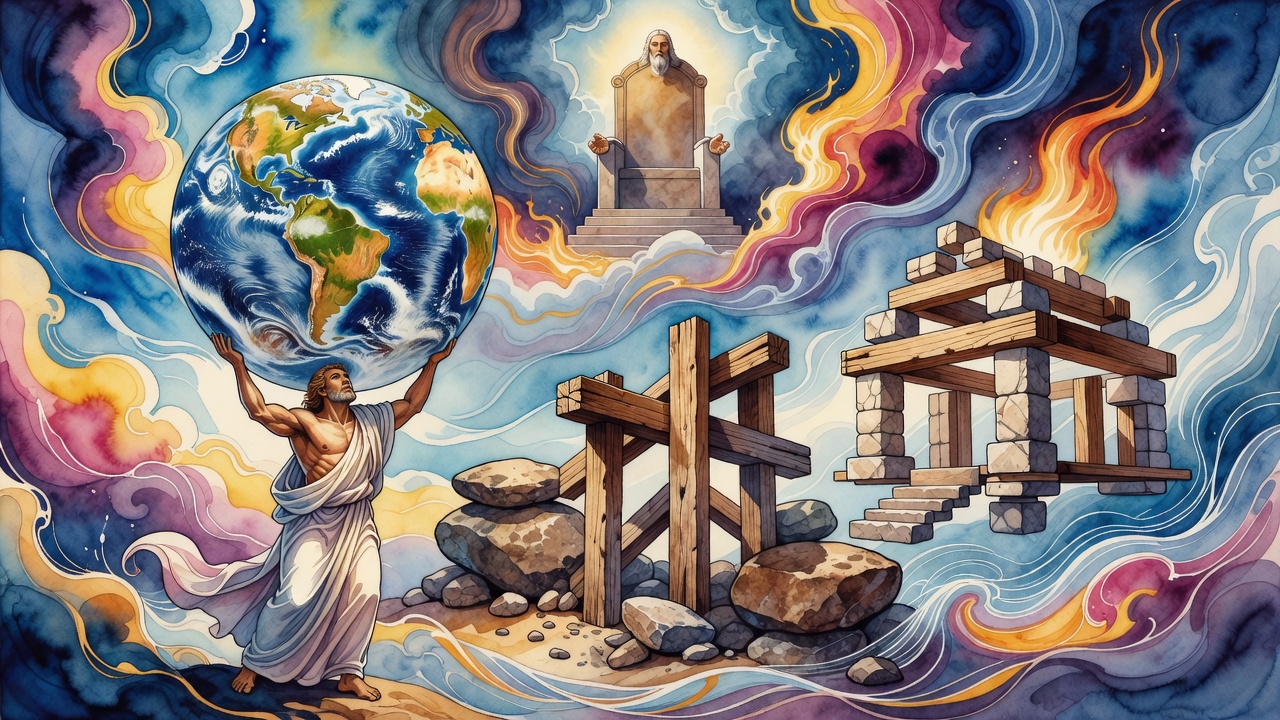
He set his daughter at the top with guards at every stair. No marriage. No stranger. No prophecy that did not first break against brick. He had named the King of glory for the gates. He thought he could name a daughter's years as well.
Wind lived in that room. The girl learned the hours by the sound of wings against stone. Guards watched empty stairs and grew old on the landings. She had silk and silence and a window too high for any ordinary suitor.
Solomon sent food up. He did not send company. The future, he believed, could be starved of faces.
What the Eagle Dropped
An eagle, perhaps the same one, found a discarded child on the road and dropped him into the tower. The boy grew there among ropes and wind. The daughter grew there among silks and silence. The only human face she knew was his.
Love did what guards could not prevent. They married inside the king's own fortress against fate, with no court and no trumpet, only the long habit of two people who had no one else to speak to.
When Solomon climbed at last and saw the husband the prophecy had named, he sat down on the tower floor. Dust from the climb was still on his palms. He remembered dust sifting from the Temple joins, the day stone refused to confuse him with God. Stone had failed to keep a bird from a window.
He did not order the marriage undone. He looked at his daughter. She did not apologize for loving the only face she had been given. The guards below kept watching empty stairs, loyal to a plan already finished without them.
← All myths