6 min read

The Blindfolded Boy Who Found the King by His Silence

Babylon's court sages plotted to destroy a seven-year-old, so the king blindfolded him and marched an army past to expose the fraud.

Curated by Arthur · Told by Maggid ·
Table of Contents
  1. The Sages of Babylon Count Their Own Days
  2. A Thousand Horsemen Who Did Not Want to Ride
  3. The Box With Two Ends
  4. Thirty Trees He Never Turned to Look At
  5. The Battalion That Made No Sound
  6. The Verse About the Eagle
The Blindfolded Boy Who Found the King by His Silence Click for full size

The Sages of Babylon Count Their Own Days

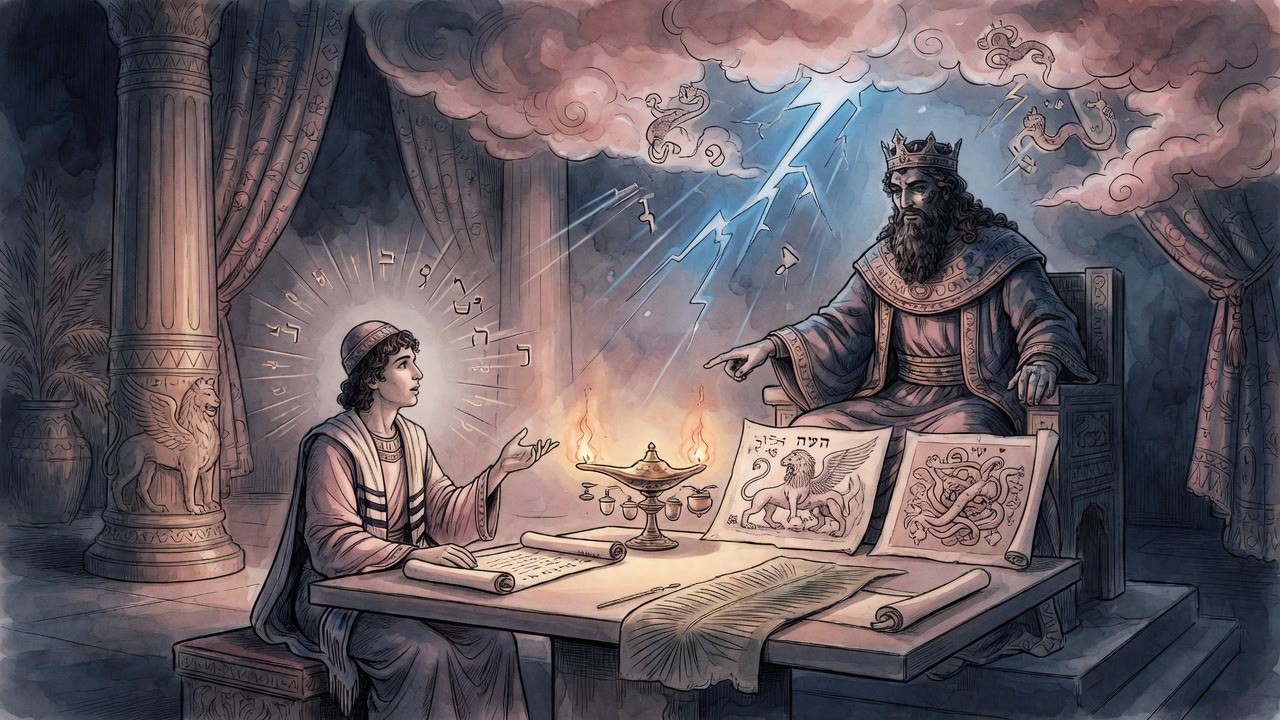
The report that came up the road from Judea was one sentence long, and it spoiled the appetite of every wise man in Babylon. There was a Jewish child who could look at a bushel of wheat and say how many grains were in it. Not weigh it. Look at it.

The court sages of Nebuchadnezzar did the only arithmetic that concerned them. A king who hears about a boy like that sends for him, and then has no use for the men already eating at his table. So they asked their master to summon the child, and while they asked, they were arranging his death.

"We will ask him what Oy Vanehi means," one of them said. "The phrase is ours and not his. When he stands there with his mouth open, we kill him."

A Thousand Horsemen Who Did Not Want to Ride

Nebuchadnezzar sent a thousand cavalry to fetch a seven-year-old. The cavalry refused to mount.

"Send us anywhere on earth," they told him, "but not to an Israelite sage." They remembered the Aramean troops who went out after Elisha and were struck blind on the open road. Nebuchadnezzar answered with a verse. God had handed him dominion over the beasts of the field (Jeremiah 27:6), and a man holding that in writing does not lose soldiers to a child. They rode.

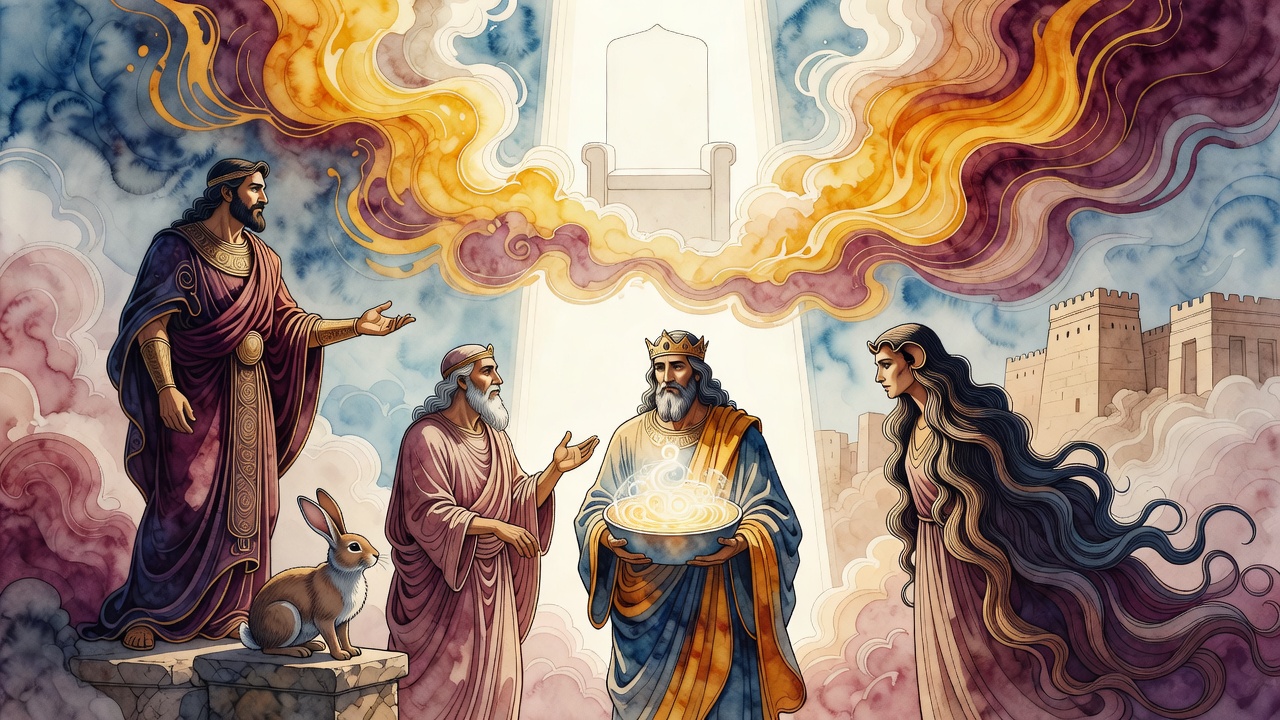
What came back to Babylon was a rabbit. The boy had shaved a patch of its head bare, written on the skin, and sent it running to the palace as the wild beast granted to serve his majesty. Nebuchadnezzar turned the animal over in his hands and dictated a second summons. "If you will not come for the honor of the king," it read, "come for your rabbit's."

Ben Sira came. He was seven years old.

The Box With Two Ends

They put their riddle to him in front of the whole court, the two syllables of grief no Jewish child had any business explaining.

The boy had brought a container with him. One end held snakes. The other held scorpions. He set it down and invited the wise men of Babylon to reach in and take out what they found. Standing in front of their king, they reached.

"Vay!" screamed the first, tearing his arm free. "Oy Vanehi!" screamed the second, and the riddle answered itself in their own throats while the child watched them shake. Nebuchadnezzar laughed until he had to sit down, then offered the boy the throne of Babylon. Ben Sira turned it down, not being of the house of David, and agreed instead to serve as the king's advisor and answer twenty-two questions, one for every letter of the Hebrew alphabet.

Thirty Trees He Never Turned to Look At

"Count the trees in my garden," Nebuchadnezzar said.

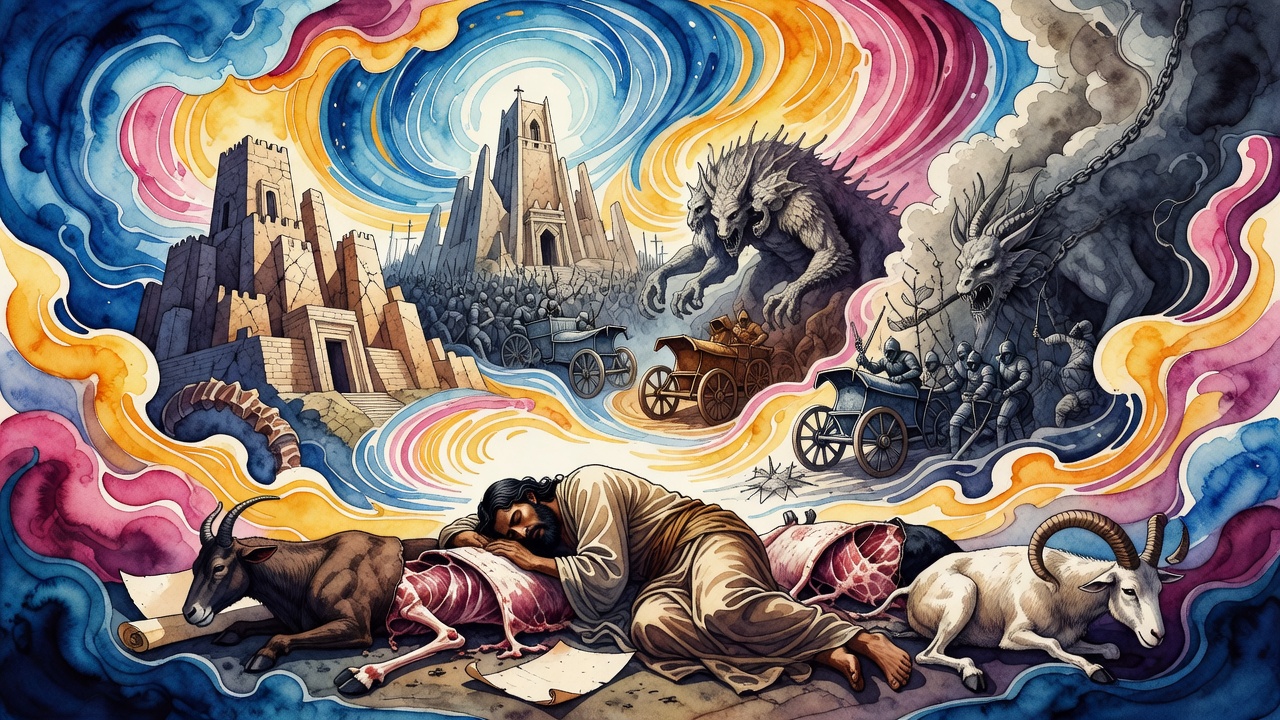
Ben Sira did not go to the window. "Thirty kinds grow in your garden," he said, and sorted them while the king's gardeners stood there with nothing to correct. Ten are eaten whole, nothing thrown away: apples, figs, sycamore fruit, citrons, grapes, quinces, pears, botnim, peppers, limonia. Ten are eaten from the inside while the shell goes on the fire: pomegranates, walnuts, almonds, pistachios. Ten are eaten from the outside, the stone spat out: dates, olives, carobs, persimmons, crabapples, plums.

Nebuchadnezzar wanted to know who had planted them, thinking of a tribute shipment of saplings in wet sacking.

"Adam carried them out," the boy said. When the first man was driven from the Garden of Eden, God let him take thirty kinds of trees, and thirty fragrances, and thirty medicines. The king of the world had walked past Eden on his way to dinner for years and never bent down to smell it.

The Battalion That Made No Sound

Nebuchadnezzar decided the child was guessing. Nobody counts a garden with his back to it.

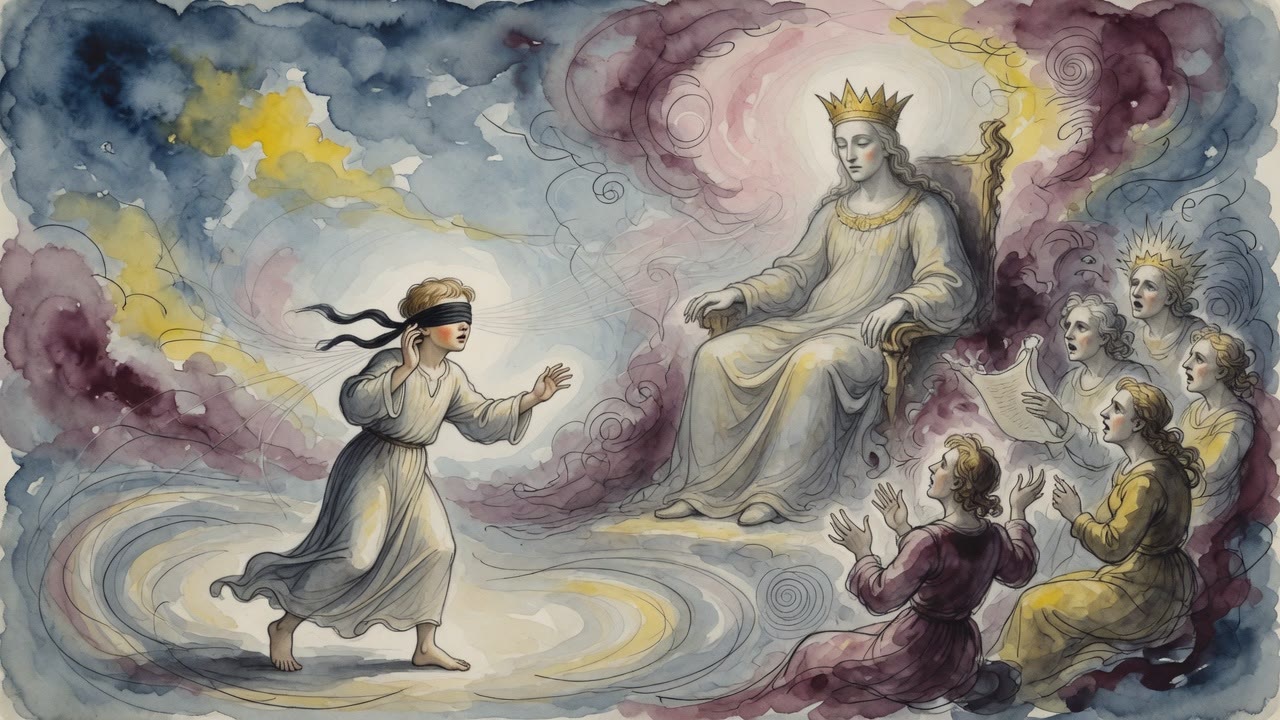
So he had a cloth tied over the boy's eyes and the army called out of its barracks, battalion by battalion, until the boy could name the one carrying the king.

The first troop came through at a run, shouting, iron on iron, the ground going soft under the weight of them. "Is the king among them?" the guard at the boy's shoulder asked. "No."

The second came with cavalry hung on both flanks and the horses screaming. "No."

The third came chanting, with drums and pipes, the way a city welcomes a victory. "No."

The fourth passed without a sound. No shout, no drum, not one hoof striking stone, only a thin quiet moving across the courtyard like a held breath.

"That is the king," Ben Sira said. "And he is standing in front of me."

They pulled the blindfold off. Nebuchadnezzar was close enough to touch.

The Verse About the Eagle

The king wanted to know how a blindfolded child had found him. The answer took the smile off his face.

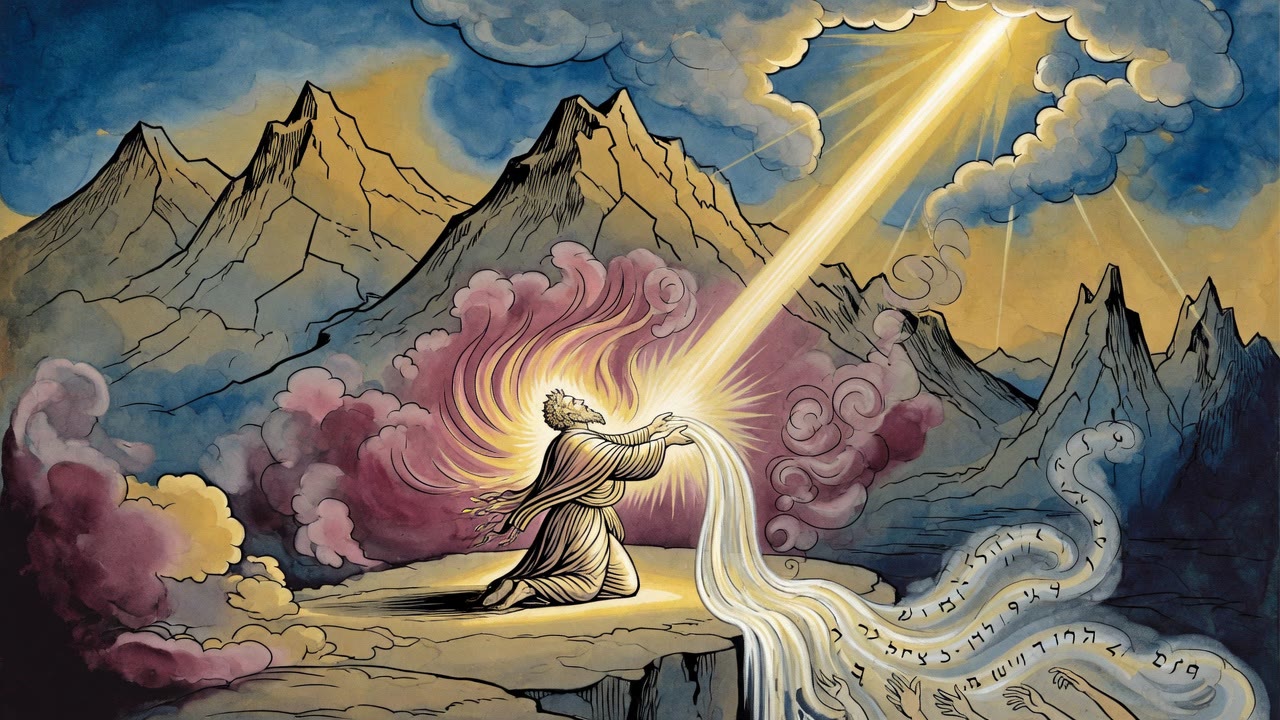
God had come to Elijah on the mountain, the boy said, and God was not in the wind that tore the rocks apart, not in the earthquake, not in the fire. After the fire came a kol d'mamah dakah (קול דממה דקה), a thin voice of silence, and that was the one. Nebuchadnezzar had built the same hush around himself and walked around inside it, and any Jewish child raised on that verse could hear a man imitating the Holy One.

"You are not equal to God," Ben Sira told him. "But your pride has set you beside His authority, and that is why He is angry with you."

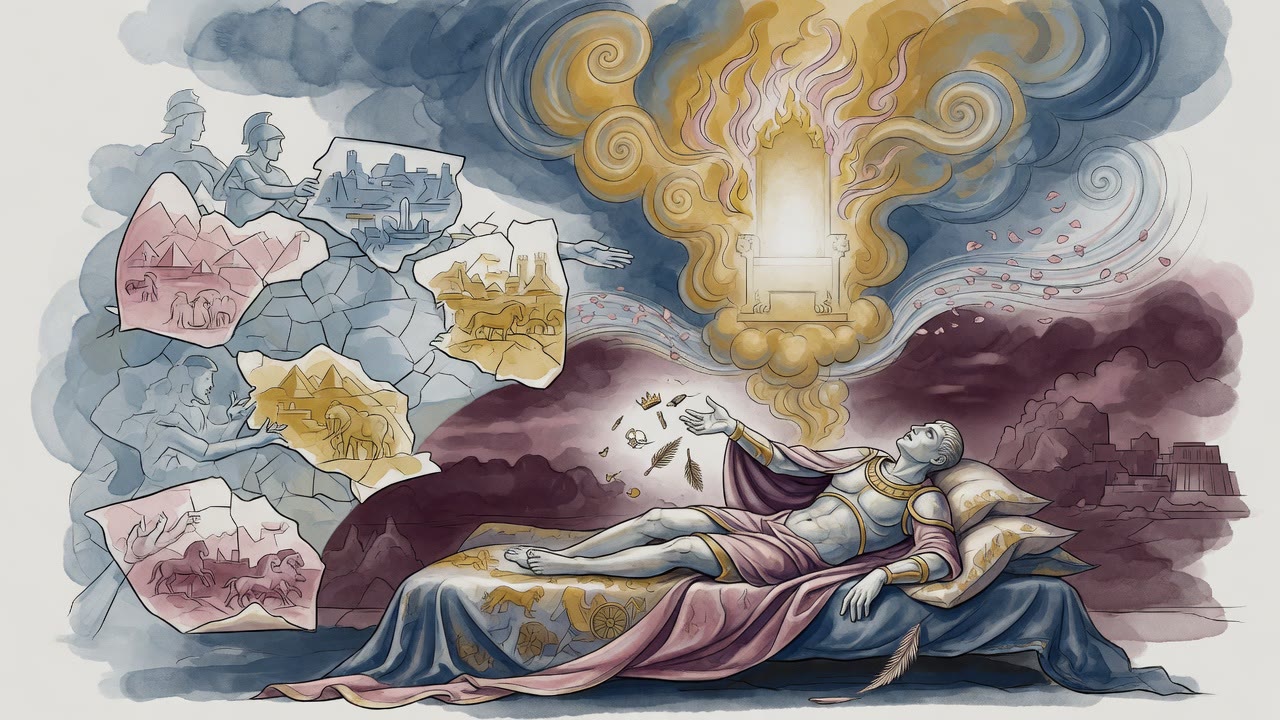
Nebuchadnezzar said that God Himself had made him great, that the greatness was a gift. The boy gave him Obadiah, the man who builds his nest as high as an eagle and sets it among the stars (Obadiah 1:4). The verse does not stop at the stars. It ends with the nest coming down.

The king thanked his advisor warmly, then went to ask which of his physicians knew the most about poison.


← All myths
From the tradition

Sources

3 sources

The texts behind this telling. Some cards carry a translation of the source; others are our own retelling of it, and each card says which. Every card links out to the original.

Alphabet of Ben Sira 26Alphabet of Ben Sira

Retold in our words. Read the original at the link below.Sefaria Community Translation · CC0

Ben Sira's reputation for impossible feats of knowledge, like counting every grain of wheat in a bushel at a glance, eventually reached the court of Nebuchadnezzar, King of Babylon.

Nebuchadnezzar's own court sages panicked when they heard about this Jewish child genius. "If the king finds out, he'll replace us," they reasoned. So they hatched a plan. They'd challenge Ben Sira to explain the meaning of the phrase "Oy Vanehi", a riddle drawn from their own tradition, not his. If he couldn't answer, they'd kill him.

The king sent a thousand cavalry to fetch the boy. But the soldiers were terrified. "Send us anywhere in the world," they begged, "just not to an Israelite sage." They remembered what the prophet Elisha had done to Aramean troops. Nebuchadnezzar had to invoke the verse from (Jeremiah 27:6), that God had given him dominion over even the wild beasts, to convince them to go.

When they arrived, Ben Sira trolled them. He sent back a rabbit with writing on its shaved head, claiming that was the "wild beast" who would serve the king. Nebuchadnezzar was baffled. He sent a second delegation with a message dripping with sarcasm: "If you won't come for my honor, come for your rabbit's."

Ben Sira finally went. He was seven years old.

When the court sages posed their riddle, the boy turned it into a trap. He built a container with snakes hidden in one end and scorpions in the other. The sages reached in and screamed "Vay!" and "Oy Vanehi!", answering their own riddle with their own terror. The king, impressed and amused, offered Ben Sira the throne. The boy refused. He wasn't from the dynasty of David. Instead, he became Nebuchadnezzar's personal advisor, agreeing to answer twenty-two questions, one for each letter of the Hebrew alphabet.

Full source
Alphabet of Ben Sira 28Alphabet of Ben Sira

Retold in our words. Read the original at the link below.Sefaria Community Translation · CC0

Nebuchadnezzar's second challenge to Ben Sira is deceptively simple. "Count the trees in my garden." The seven-year-old doesn't even need to look.

"Thirty types of trees are in your garden," he answers, and then classifies them into three precise categories of ten. Ten are eaten whole, as-is: apples, figs, sycamores, citrons, grapes, quinces, pears, botnim (pistachios or peanuts), peppers, and limonia (a citrus fruit). Ten are eaten for their insides while the shell is discarded: pomegranates, walnuts, almonds, pistachios, and several varieties whose names survive only in their medieval Arabic forms. And ten are eaten for what's on the outside: dates, olives, carobs, persimmons, crabapples, plums, and more.

The real surprise comes when the king asks who planted them. Ben Sira's answer reaches all the way back to the beginning of time. Adam, the first human, took these thirty types of trees from the Garden of Eden before he was expelled. God gave him permission. Along with the trees, Adam also carried out fragrances and medicines, thirty types of each.

The Alphabet of Ben Sira says written between 700 and 1000 CE, every fruit tree in Nebuchadnezzar's royal garden is a living souvenir from Paradise. The Babylonian king tends a garden planted with stolen Eden stock and doesn't even know it. Ben Sira does. That's the whole point. The Jewish child understands the origin of things that the world's most powerful king takes for granted.

Full source
Alphabet of Ben Sira 29Alphabet of Ben Sira

Retold in our words. Read the original at the link below.Sefaria Community Translation · CC0

Nebuchadnezzar doesn't believe Ben Sira actually knows what's in his garden. So the king proposes a test. He'll blindfold the boy, march his army past in separate battalions, and Ben Sira will have to identify which group contains the king.

The first troop thunders past with noise and shouting, shaking the ground. "Is the king here?" asks the guard watching Ben Sira. "No." The second troop charges by with cavalry flanking all sides. "No." The third marches past with chanting and music. "No."

Then a fourth group passes. In silence. Not even the horses' hooves can be heard. Just a thin, quiet stillness.

"That's the king," Ben Sira says. "And he's standing right in front of me."

They remove the blindfold. He's right.

The explanation Ben Sira gives is devastating. He recognized Nebuchadnezzar's presence by the silence because the king, in his arrogance, imitates God. Just as God appeared to the prophet Elijah not in the earthquake, not in the fire, but in a kol d'mamah dakah, a still, small voice. Nebuchadnezzar surrounds himself with the same quiet grandeur. "You are not equal to God," Ben Sira tells him bluntly. "But your pride has made you comparable to the Holy One's authority, and that's why God is angry with you."

When Nebuchadnezzar protests that God has made him great, Ben Sira quotes (Obadiah 1:4): "If you go as high as an eagle..." The verse ends with a fall. According to the Alphabet of Ben Sira, composed between 700 and 1000 CE, God raises the proud only so the crash will be louder. Furious, Nebuchadnezzar plots to poison the boy. And the story takes an even wilder turn from there.

Full source