A Loaf of Bread and a Daughter Seen Too Late
Akilas wanted more than food and a coat for crossing over. Rabbi Eliezer threw Jacob's cold night on a stone at him.
Table of Contents
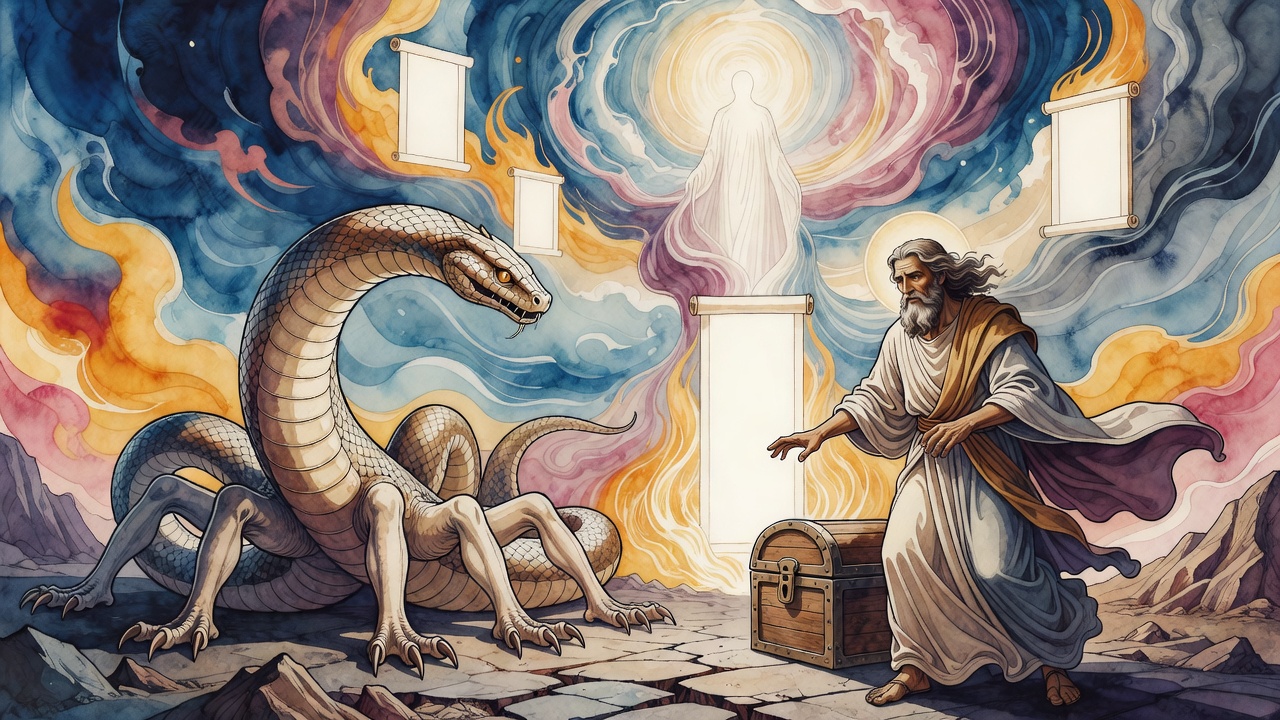
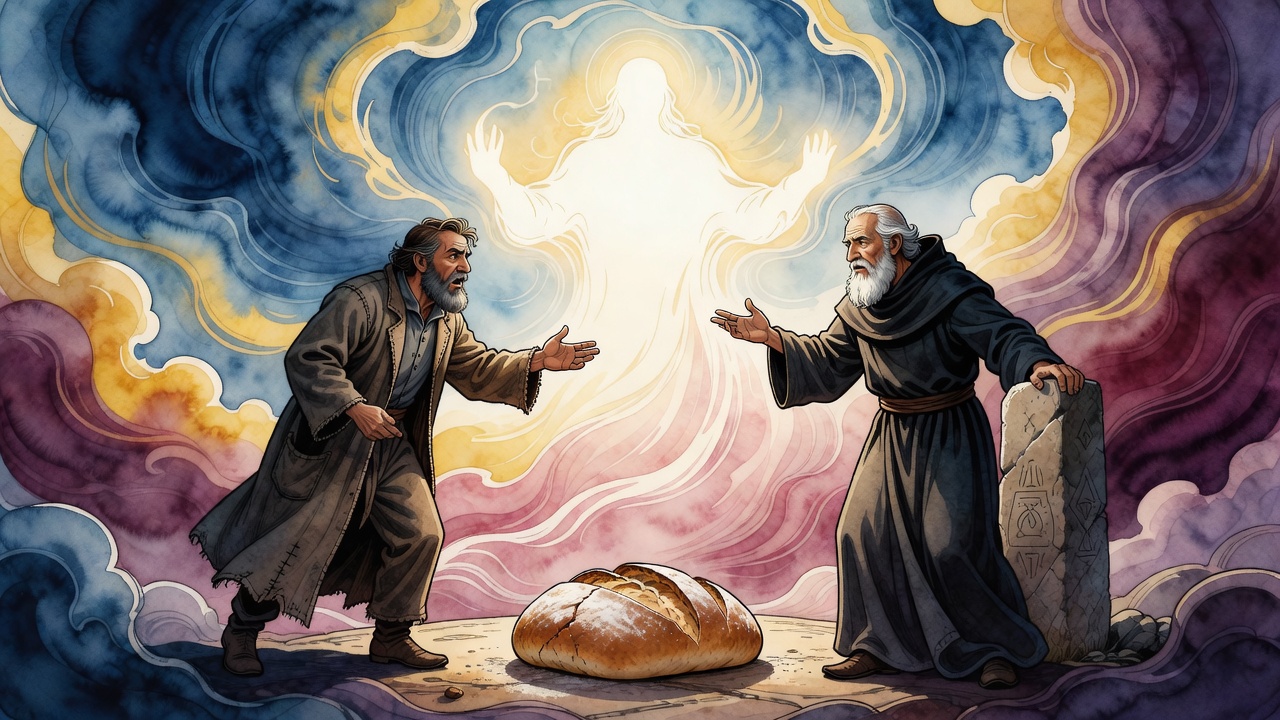
Akilas walked into the study house with a verse in his hand and a grievance behind it. He was a righteous convert, a ger tzedek (גר צדק), a stranger who had crossed into the covenant on purpose. He had left a former world. He had taken the yoke. Then he opened Deuteronomy and found the reward.
 Click for full size
Akilas Walked In With a Verse
God loves the stranger, the verse said, and gives him food and clothing (Deuteronomy 10:18). That was it. A loaf. A coat. The universe had noticed his conversion and sent him a receipt for dinner.
He had peacocks at home. He had pheasants. He paid no attention even to his servants. Food and a garment were what you handed a laborer at dusk, not what you handed a man who had cut his life in half to come in.
He set the verse in front of Rabbi Eliezer and waited to be told he had misread it.
Rabbi Eliezer Threw Jacob at Him
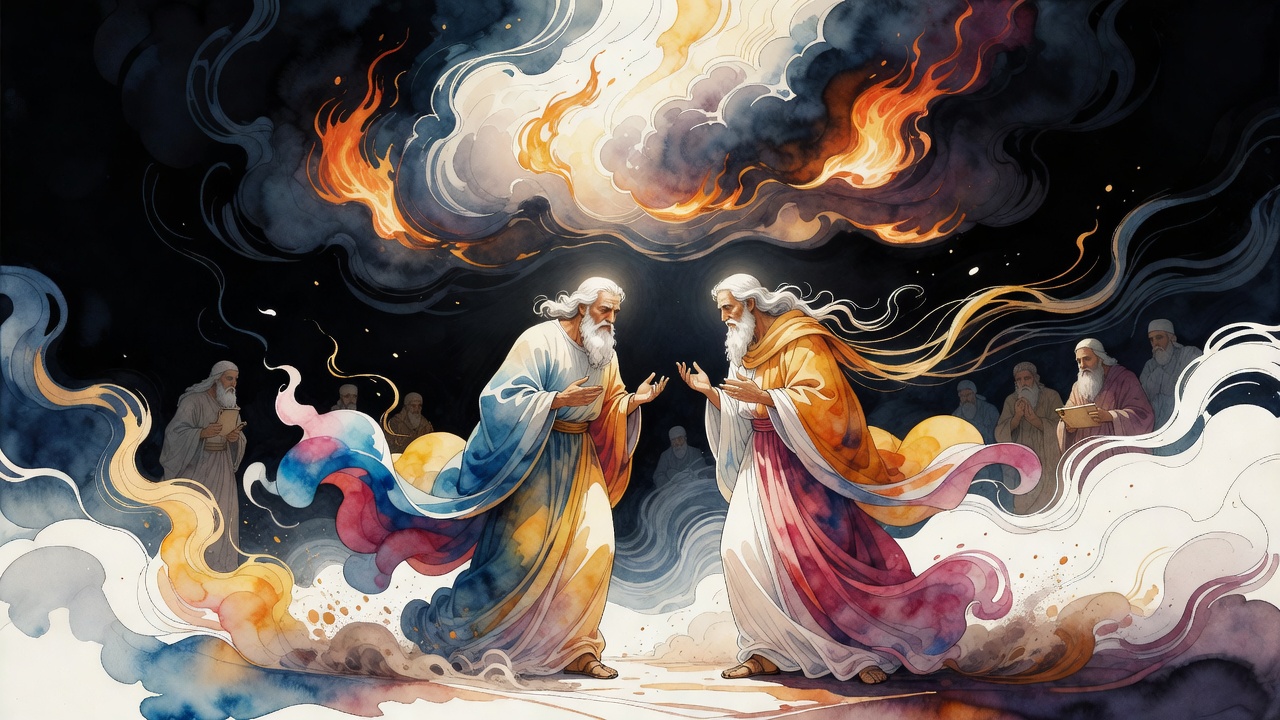
Rabbi Eliezer did not soften the answer. He threw Jacob's name at him like a stone.
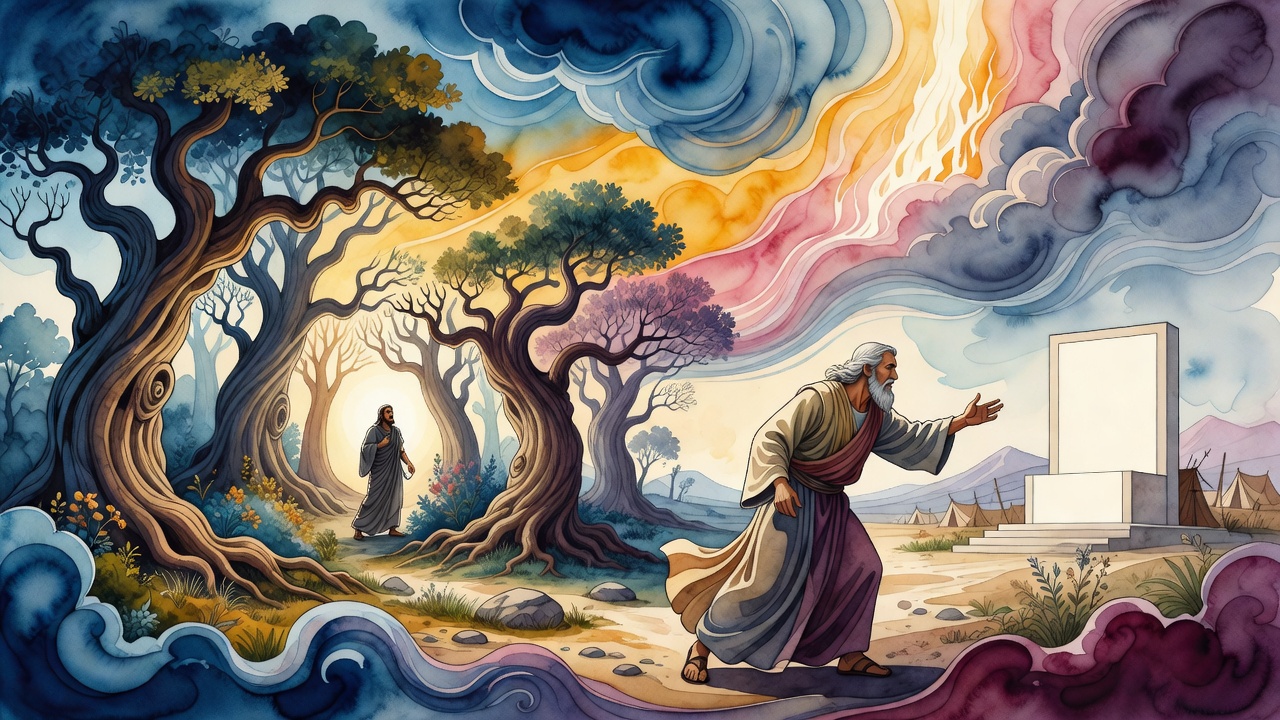
Jacob, fleeing Esau with nothing but the sandals on his feet, had slept on a rock and made a bargain with heaven. If God will be with me, and will keep me on this road, and will give me bread to eat and a garment to wear, then the Lord shall be my God (Genesis 28:20).
That was Jacob's maximum ask. Bread to eat. A garment to wear. The patriarch had bargained for the same package Akilas was dismissing. "Is it small in your eyes," Rabbi Eliezer said, "the thing this elder sweated for on cold ground? And you, a convert, receive it on a reed, with no night on a stone behind it."
Akilas left bruised. The students watched him drift toward the door. One more hard sentence and he would walk back out of the covenant over a loaf.
Rabbi Yehoshua Caught Him at the Door
Rabbi Yehoshua caught him with slower words. Bread, he said, is Torah. Come, eat my bread, the verse in Proverbs already taught. A garment is the cloak of a scholar. Merit the first and you merit the second. Daughters marry into the priesthood. Descendants stand at the altar. In the Temple the loaf is showbread and the garment is priestly linen. Outside it the loaf is challah and the garment is the first shearing.
He did not tell Akilas the gift was larger than it looked by shouting. He named what a loaf can hold until the man at the door could breathe again. The students said later that if Rabbi Eliezer's speed had been the only answer, Akilas would have returned to his former ways. Slow anger, they said, is better than the mighty.
Akilas stayed. The loaf stayed a loaf, and also became a life. The coat stayed a coat, and also became a standing in Israel. What had looked like a receipt for dinner had been Jacob's whole prayer on a night when he owned nothing.
Jacob Hid Dinah in a Chest
The same Jacob who asked for so little later locked too much away. When he saw Esau coming across the field, he hid Dinah in a chest. He was afraid Esau would want to marry her. He wanted to protect her. The hiding felt like love from inside the lid.
He had bargained with heaven for bread and a garment, the smallest roof a body needs. He would not bargain with his brother for a daughter in the open. He sealed her in a box and hoped the road stayed clear.
The box did its work. Esau did not see her. The wicked brother passed. Jacob kept his girl. For a while the protection looked like wisdom.
Shechem Saw a Forearm
Then Shechem saw her. The verse says he saw her and took her (Genesis 34:2). What did he see? An uncovered forearm. Rabbi Shmuel bar Nachman said it that way, small as a wrist, enough for a bird to stoop. Rabbi Berekhya said a man who leaves a litra of meat uncovered should not be surprised when a bird snatches it.
The teaching does not blame Dinah. It does not say the assault was deserved. It traces the exposure back to a father who hid her from one wicked man and so never gave her the covering that might have held, a public claim, a difficult match, a face turned toward Esau's court instead of a latch on a chest.
He hid her from Esau, who was wicked. She ended up in the hands of Shechem, who was also wicked. The protective father had protected his daughter straight into another man's tent. Two small things, then, and neither of them small. A loaf that held a patriarch's entire prayer. A forearm that held a father's fear dressed as care. Akilas had almost walked out over the first. Dinah never got a hearing on the second.
← All myths