God Woke Avimelekh at Night and Laban on the Road to Gilead
He had asked if she was free. Every mouth in the caravan said sister. God still named him a dead man in his own bed.
Table of Contents
 Click for full size
A Dead Man in His Own Bed
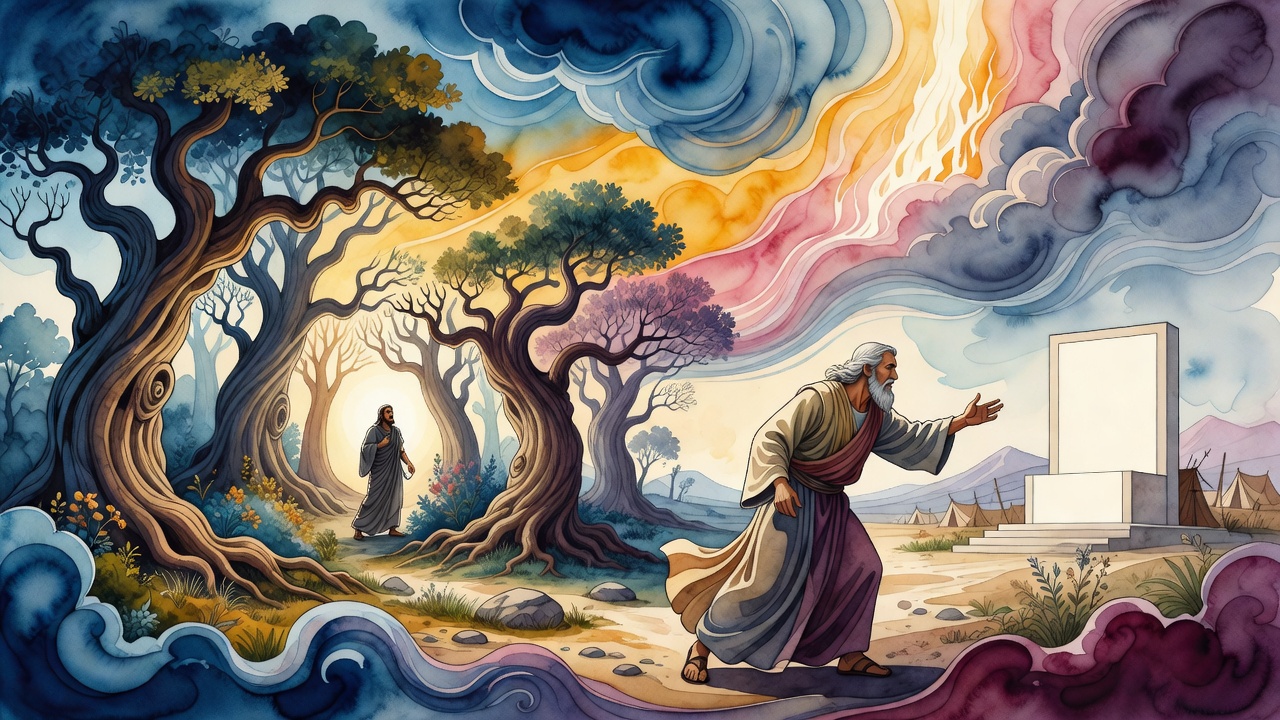
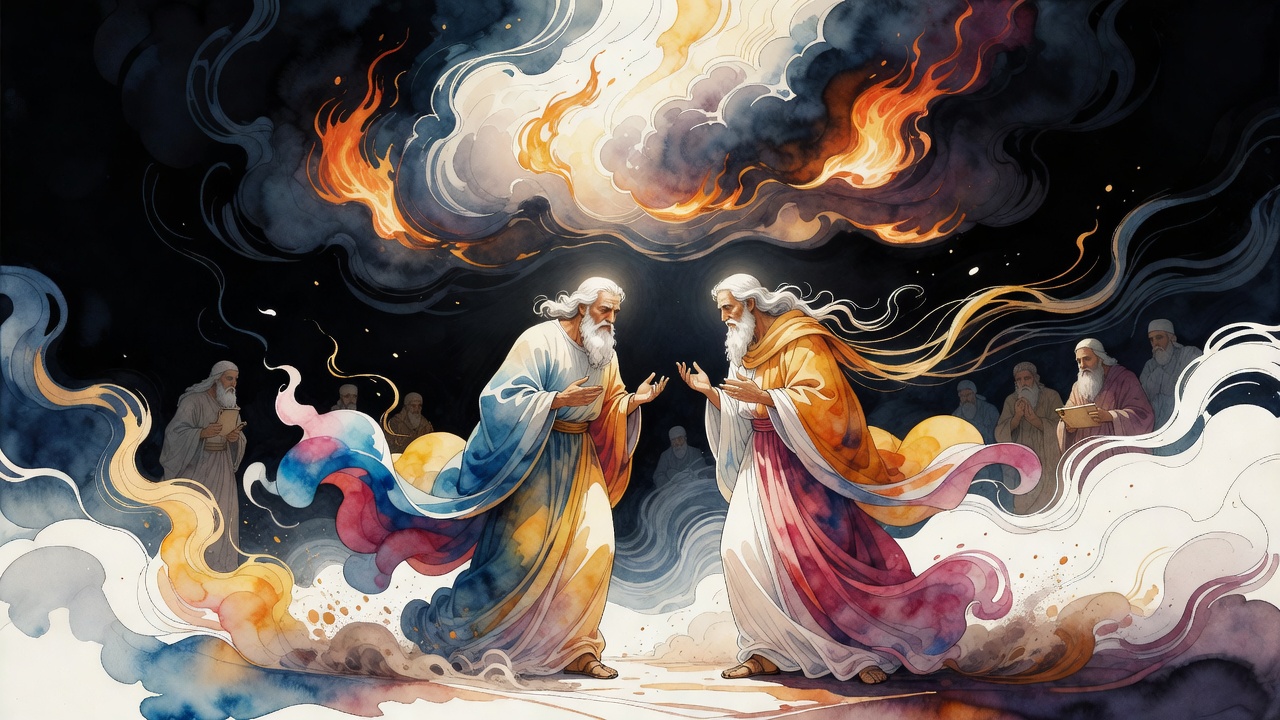
Avimelekh, king of Gerar, went to sleep with a new woman in his house. He woke with God in the room.
"You are a dead man," God told him, "over the woman you took. She belongs to a husband."
Nobody had warned him first. He had asked at the gate, and he had been answered. Abraham said she was his sister. Sarah said he was her brother. There had been no notice the week before, no dream, no messenger in the yard. For a man outside the covenant, the sentence can arrive with the crime.
Avimelekh lay still and started talking anyway. A king used to courts does not wait to be dressed before he argues for his life.
The Whole Caravan Had the Same Line
"Did he not say to me, she is my sister? And she, she also said, he is my brother."
She also. Two words more than the sentence needs. The surplus opened into a crowd. Not only Sarah. The donkey drivers had said it. The camel drivers had said it. Abraham's household had said it and Sarah's household had said it. Every person who had come through the gate with that caravan had the same answer ready. It was not one man's lie. It was a story a whole company had rehearsed on the road.
"In the innocence of my heart and the cleanness of my hands I did this."
He brought up the hands himself. A man who never came near her has no reason to mention his hands. There had been touching. He was putting the line exactly where it fell, and hoping heaven would take the placement as proof.
God did not unsay the death. God did not praise the rehearsal. God heard a king who had asked, and had been lied to by a whole camp, and had still put his hands where they did not belong.
He Threw the Flood Back at God
Then he stopped defending and started prosecuting.
"My Lord," he said, "will You kill a nation that is innocent too?"
Kill me, and You have killed a man who asked first. But the question ran past his own neck. If this is the standard, then think about the generation of the Flood. Think about the generation scattered from the tower. Maybe they were innocent as well. Maybe they also woke one morning already inside a sentence no one had read to them.
A king of Gerar lay in his bed arguing the whole record of judgment back at its author. Nothing struck him down for it.
God had said she belongs to a husband. In Abraham's tent the order already ran the other way. God had told Abraham to do whatever Sarah told him. The owner in that house was not the man.
Morning, and the Smoke Over Sodom
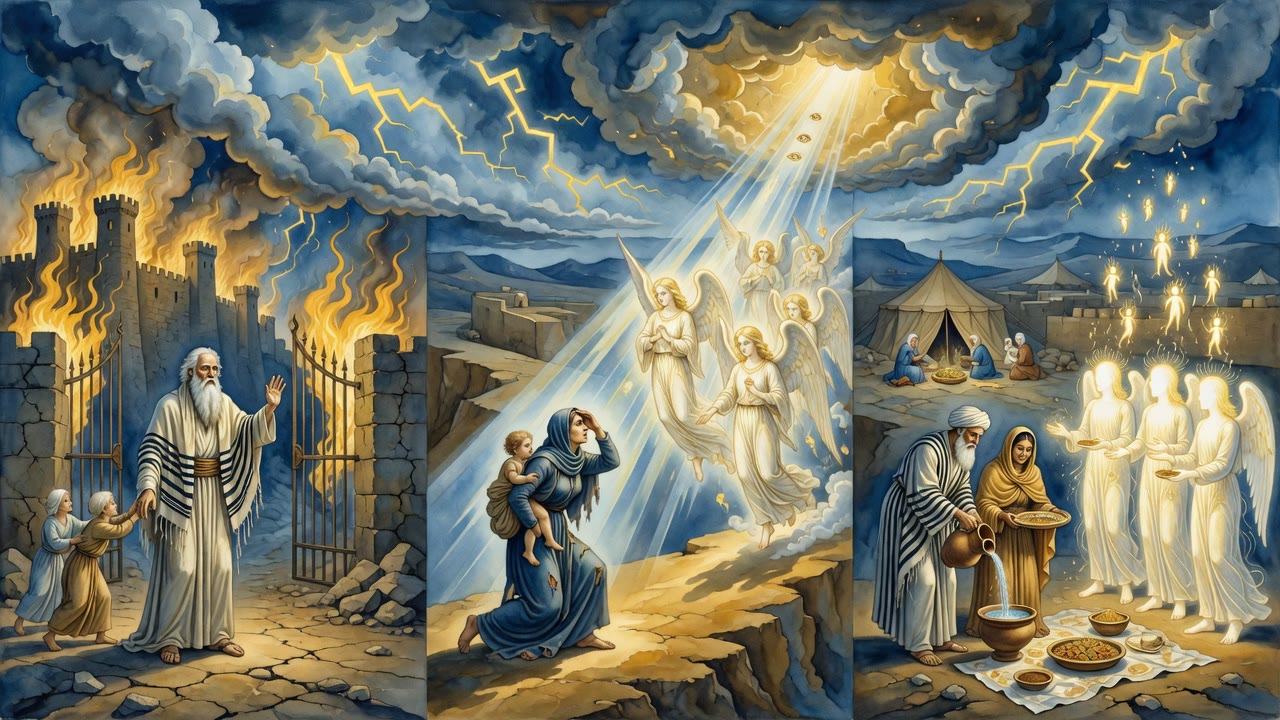
Avimelekh rose early. He called every servant he had. He spoke the whole night into their ears, and the men were very afraid.
They were not only afraid of the voice in the king's room. They were looking at the horizon. Sodom was burning. The smoke went up like the mouth of a furnace. Word had already come about the two visitors who had done it. Those angels went to Sodom. Maybe they have come here next.
Then the king sent for Abraham.
"What have you done to us? How did I sin against you, that you brought this great punishment on me and on my kingdom? You have done things to me that are not done."
Everywhere else Abraham went, prosperity walked in ahead of him. Here, famine walked in ahead of him. In the king's house every womb had closed and stayed closed. The sentence had not stopped at Avimelekh's bed. It had gone through the walls and into the bodies of people who had never asked Sarah her name.
Abraham prayed for the man who had almost died over his wife. The wombs opened. Avimelekh lived. He still had not seen the face that had called him a dead man in the dark.
Laban Got the Same Kind of Visit
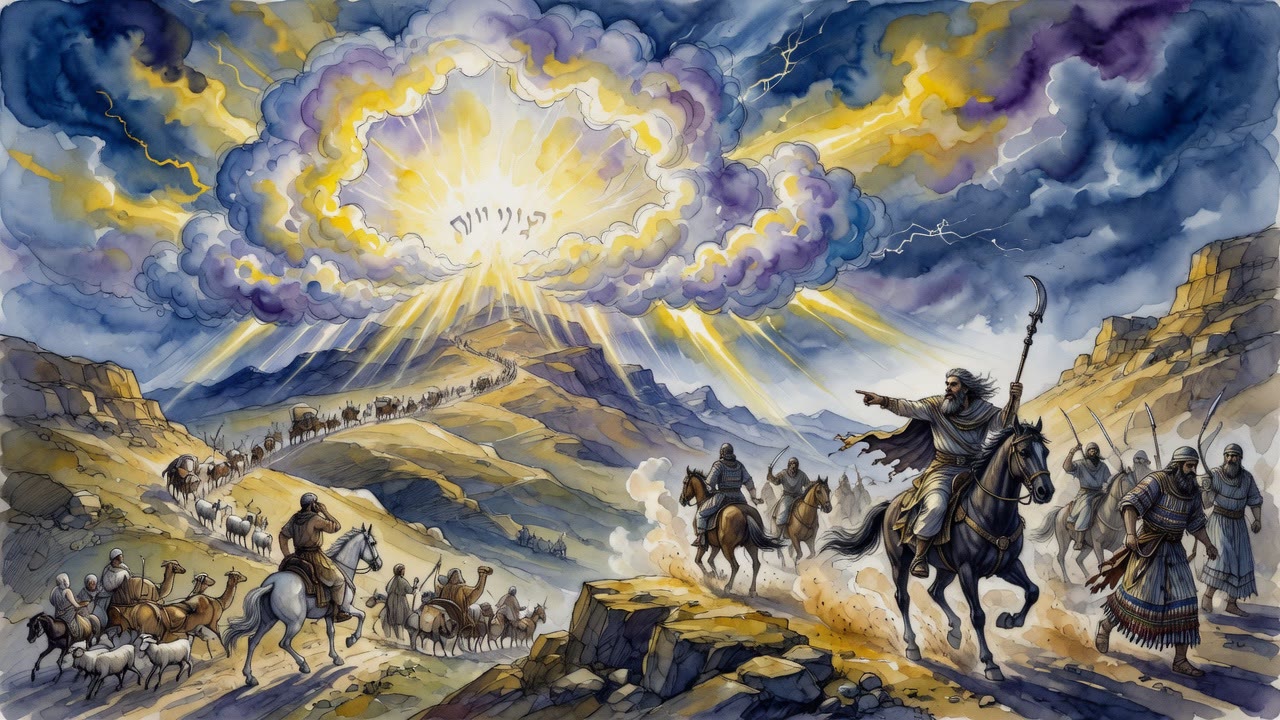
A generation later Laban the Aramean rode seven days after a son-in-law who had taken his daughters and his grandchildren and gone. He caught them in the hills of Gilead. The night before he caught them, God came into his sleep.
"Be careful. Not a word to Jacob, good or bad."
Not even good. Say something kind to that man and he will hear a threat in it, because it is you saying it.
Laban sat up in the dark with a day's ride still in front of him and a gag already in his mouth. God comes to the prophets of the nations only at the hour when people have taken leave of one another and gone to their own rooms, when a matter steals in at the edge of sleep. Never at noon. Never standing in an open field.
A king and his friend sit in one hall with a curtain hung between them. When the king wants to speak to the friend, he pulls the curtain aside. For the others he leaves it hanging and talks through the cloth. He walks to his wife in daylight where everyone can see him. He goes to the concubine after dark, and nobody is meant to notice.
Two beds. Two men who did exactly what they were told. Neither of them ever saw who was giving the order. The curtain stayed where it was.
← All myths