The Trees Accused Adam, and Generations Later Jacob Put Laban on Trial
Adam hid in the garden and the trees shouted that he was a thief. Long after, Jacob faced Laban before witnesses over twenty years of stolen wages.
Table of Contents
 Click for full size
The Trees Called Him a Thief
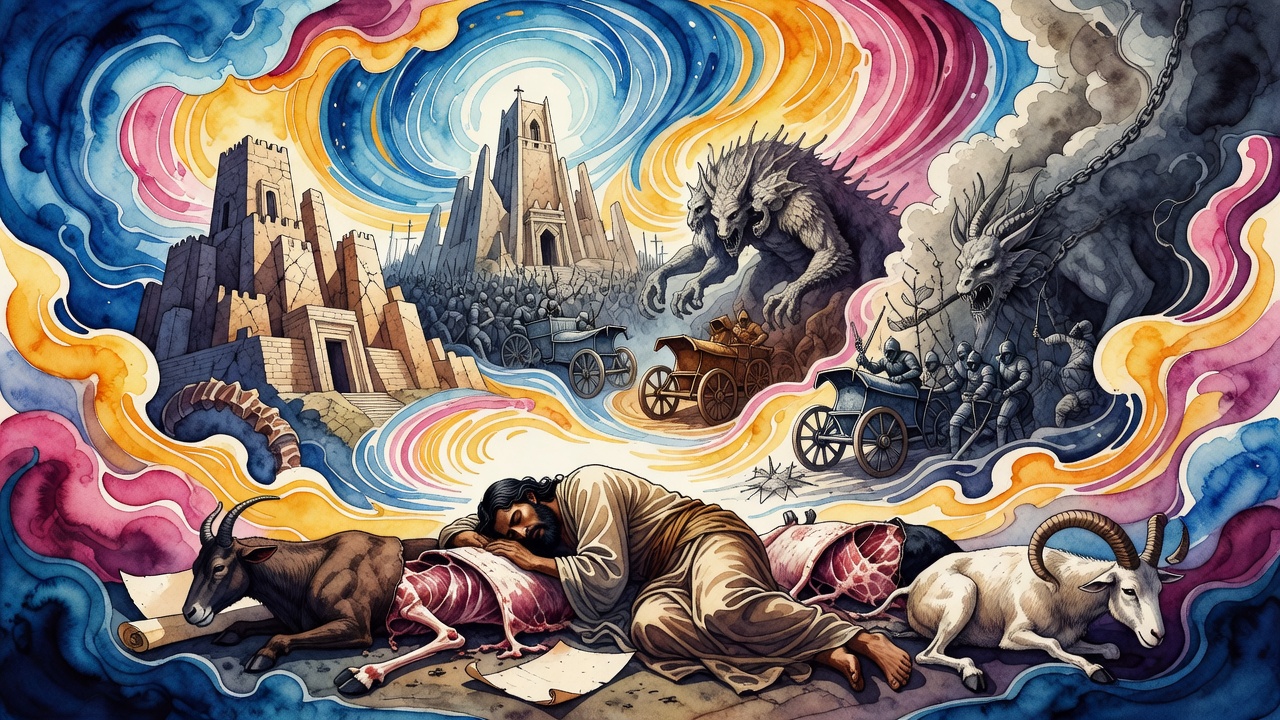
Adam heard the garden before he heard anything else. The trees he had walked past every day of his short life were all going off at once, the whole grove of them shouting the same thing: this is the thief who deceived his Creator. Not one of them had it wrong, so there was nothing he could say back to a tree.
The rabbis of Bereshit Rabbah would not let Genesis 3:8 be a man hearing God take a walk, since God has no feet and the path had no dust to make a sound in. They turned the verse around until it read the other way: not they heard, but something was made to be heard. What was made heard was the testimony of the orchard.
Adam and his wife hid among the trees of the garden, which is to say they went and stood inside the witnesses.
The Angels Asked If He Would Die Today
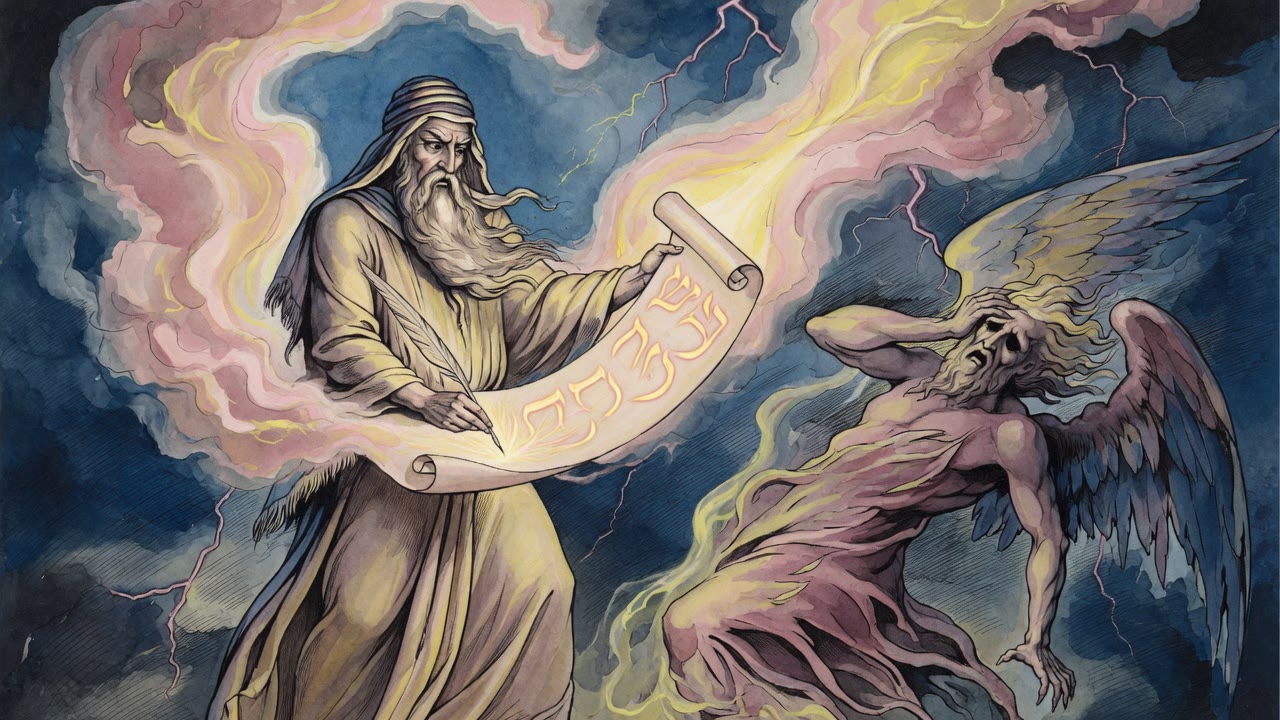
Higher up, the angels were working on a narrower question. The Lord God is going to the ones in the garden, they said to each other, and then, because the sentence had already been passed on the day of the eating, they asked whether the man walking down there was a man who was about to die. Rabbi Levi heard that question inside the word for walking. Rabbi Yitzhak heard a second version of it: is he to die for having gone off on his own way.
So it was a trial with a full bench and no defense. The trees gave evidence, the angels ran the odds, and the accused was hiding in the shrubbery with his wife, and Rav Aivu says that while all this was going on his body was shrinking, down from something enormous to a mere hundred cubits.
Seventy Years Left Over
The collection did not happen that day. God said that on the day you eat of it you shall die, but you did not know whether I meant one of my days or one of yours, and a day of his is a thousand years. He gave Adam one of his own days and let the man spend it.
Adam used nine hundred and thirty years of it. The seventy left on the account went to everybody who came after him, and that is where the psalm's count of a human life comes from. The judgment itself came down with the breeze of the day, and the sages could not agree whether that was harsh or lenient: Rav said God judged them by the direction the day rises from, since a day only gets hotter as it climbs, and Zavdi ben Levi said God judged them by the direction the day sets in, since a day cools as it goes down.
The hiding place kept its name in the sentence. They hid among the trees, and his children would be carried out in wood.
Twenty Years of Swallowed Wages
Generations later a second man was accused, and this one had spent two decades getting ready for it without knowing that was what he was doing.
Jacob had worked for Laban twenty years, and the wages moved whenever it suited Laban to move them, and Jacob took it. He took the cold looks. He took whatever the sons of the house muttered when he walked past them. A son-in-law living under his father-in-law's roof would normally help himself to something small over that span, a knife off the table, a tool from the shed, and nobody would call it theft. Jacob had not taken a needle. He had not taken a hook.
Then Laban chased him into the hills of Gilead over a set of missing household idols and turned out every pack and every tent and every vessel Jacob owned, in front of both families, and came up with nothing.
The Anger Took Fire
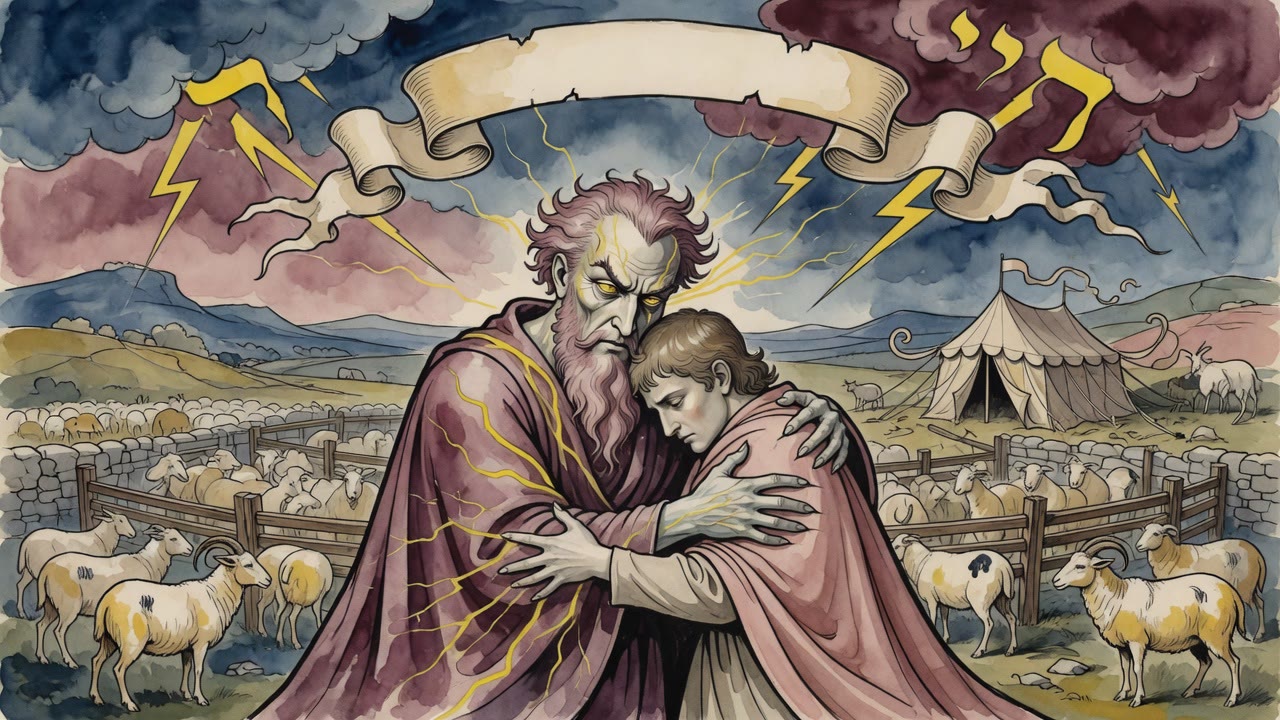
Jacob's anger took fire. The heat came up through his chest before any word did, and for the length of one breath he was not a herdsman doing arithmetic about what a rich uncle could still take from him. Then it came out, and it came out as a question, because he had been raised in Isaac's tents where nobody was condemned without hearing the charge read.
"What is my transgression, what is my sin, that you have pursued after me?"
He did not raise a hand. The quarrel was words, and the words were meant to bring the thing back down. "For you felt all my vessels. What have you found of all your household vessels?" You went through everything I own, he was saying, and you did not come out holding a needle or a hook.
Then the line that changed what kind of scene it was. "Place it here before my brethren and your brethren, and they will determine between the two of us." Laban had arrived as the accuser and the judge and the man who would carry out the sentence, all in one body, so Jacob refused the arrangement and called in the families instead, his own kinsmen and Laban's together, and put the private ambush in front of people who would have to decide it.
Bereshit Rabbah, in the name of Rabbi Azarya reporting Rabbi Hagai and Rabbi Yitzhak bar Maron, calls this the combativeness of the patriarchs and not the humility of the descendants, and puts David beside it for the comparison. David, running from Saul, asked Jonathan what he had done and what his iniquity was, and spoke about a man seeking his life. Jacob asked for the charge.
Nobody in that ring moved to give a verdict, because there was nothing in front of them to rule on. Laban stood in the middle of his own kinsmen with his hands empty, and the man he had chased across the hills waited for him to name the crime.
← All myths