The Stranger Who Walked Tobias to Media Was an Angel
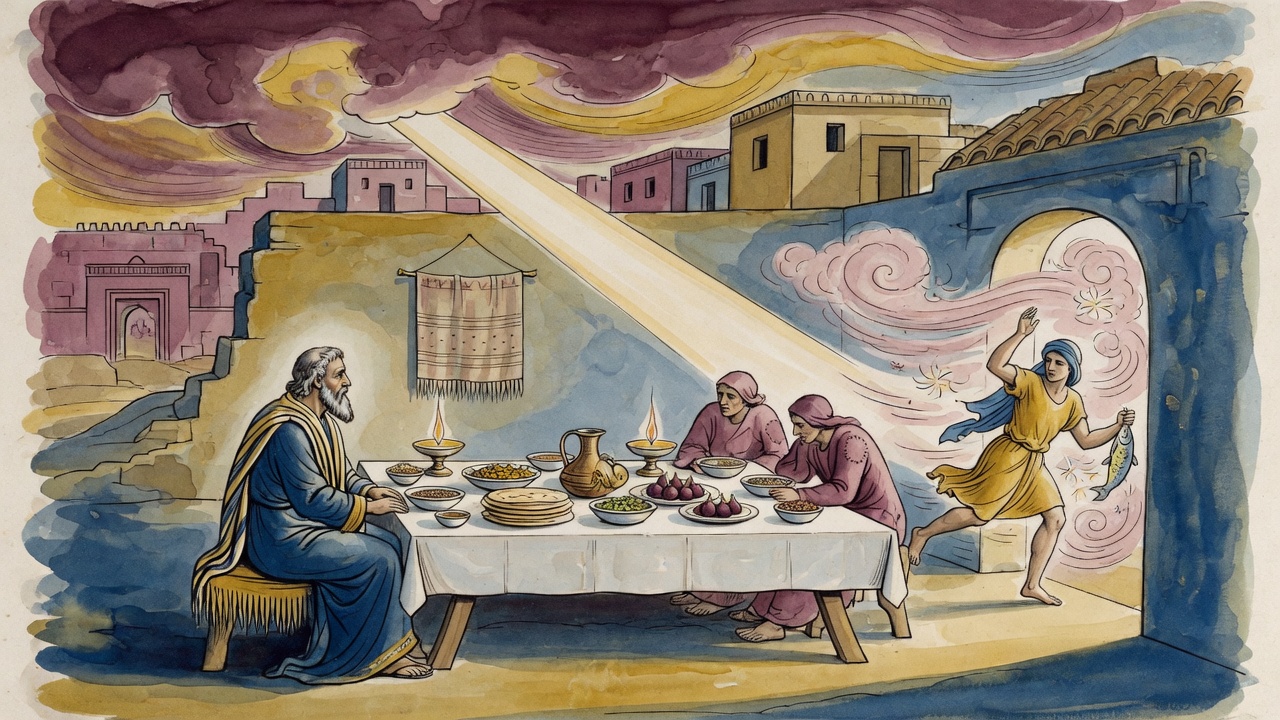
Tobias went looking for a road guide to distant Media and hired a traveler named Azariah, never guessing the man was an angel.
Table of Contents
A blind man sat in the dark of his own house and sent his son to walk to the far edge of the world for money.
 Click for full size
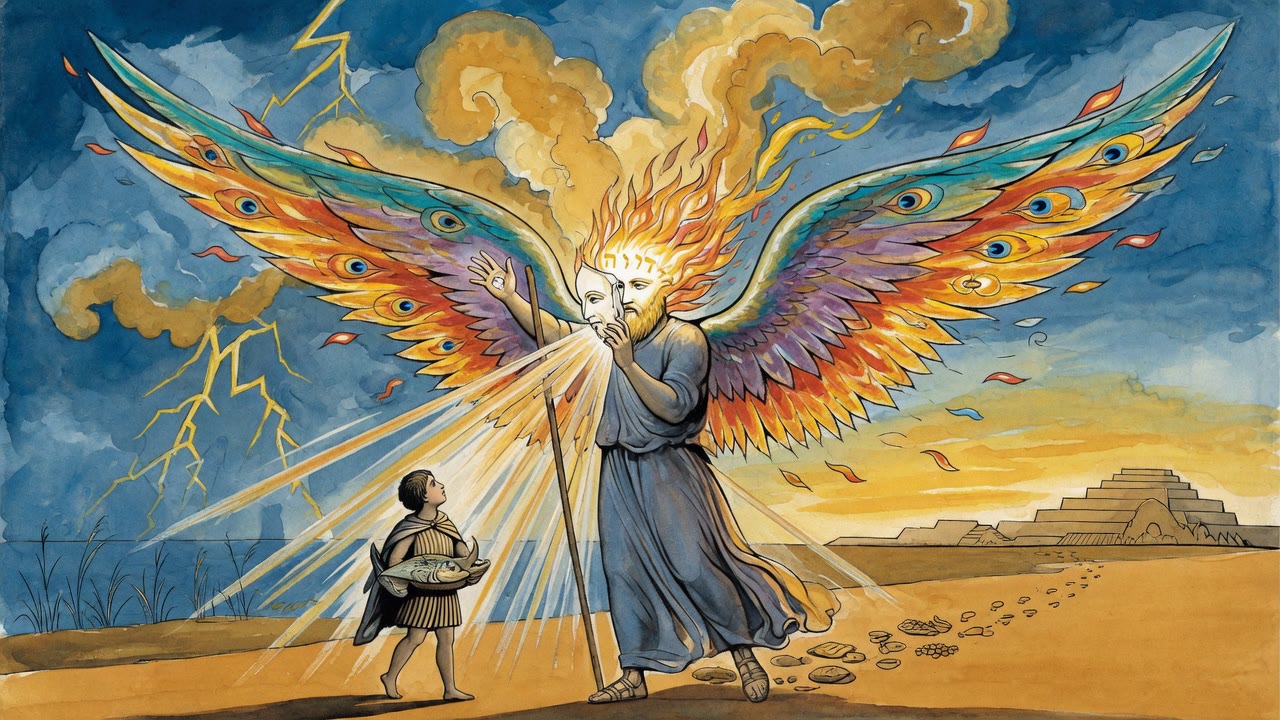
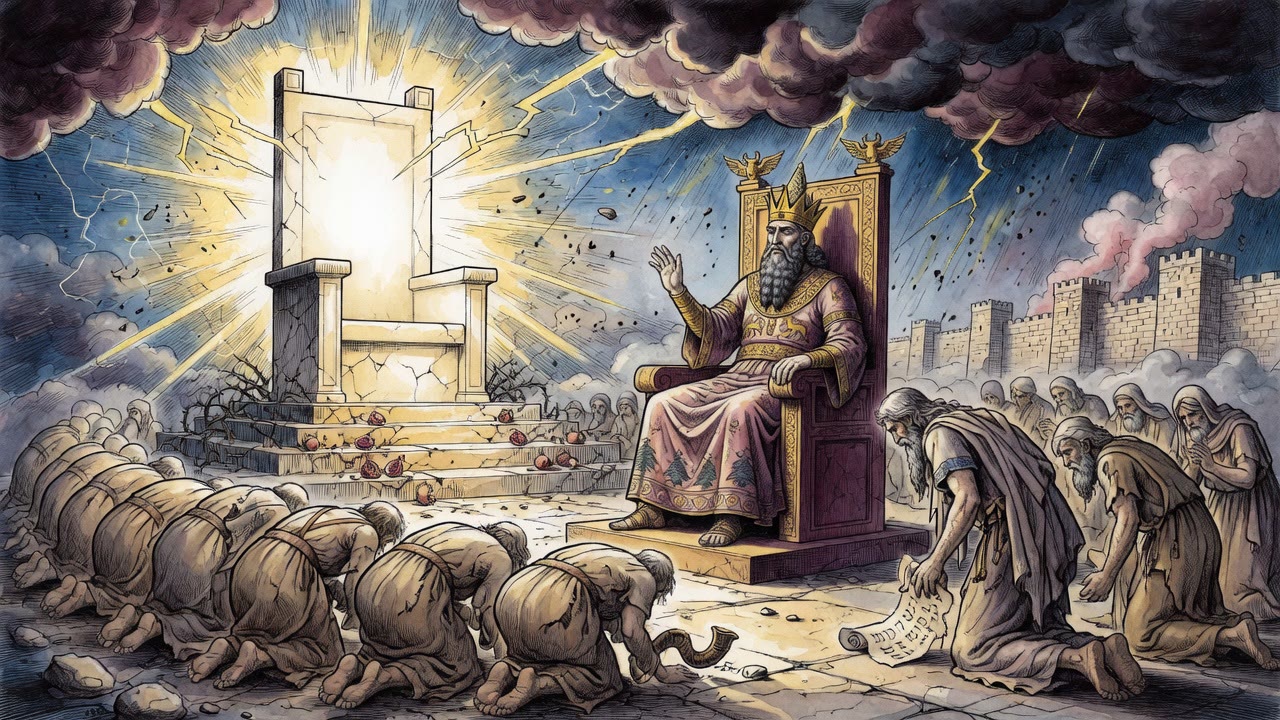
Tobi could not see the road, so he had to trust whoever stood on it. His son Tobiyyah went out into the streets of Nineveh to find a man who knew the way to Media, where a sum of silver lay waiting in a distant house. The boy needed a guide. What he found, though he did not know it, was the angel Raphael, standing in the road as if he had been placed there.
A Guide Appears in the Road
"From whence art thou, young man?" the stranger asked, and Tobiyyah answered without suspicion. "I am of the children of Israel."
The boy came straight to his need. "My lord, knowest thou how to go with me to Media?" The man's reply was that of someone with nothing to fear from any border. "Yea, I know all the ways," he said, and then sharpened the claim into proof. He had lodged in Media himself, a guest in the house of Gabael at Rages, and he laid out the country like a man tracing it on a table. "It is a two days' journey from Agbatanis to Rages, and Rages is built on a mountain, but Agbatanis is built on the plain."
A stranger who knew the mountains, who named the very man Tobiyyah's family knew, who could place each city on plain or height. It was almost too neat, and Tobiyyah did not stop to wonder at it. He wanted his father's word first. "Stay of thy kindness a moment," he said, "and I will go and declare the matter to my father, for I desire greatly that thou shouldest go with me, and I will give thee the wages of the journey." The angel did not press. "Go in haste," he said, "for behold I wait until thou comest back to me, and tarry not."
The Father Questions the Stranger
Tobiyyah burst back into the dark house with good news. "I have found a good man of our brethren to go with me!" But a blind father cannot look a man in the eye and weigh him, and Tobi would not hand his only son to a face he could not read. "Call him to me," he said, "that I may know of what place he is, and whether he be trusty to go with thee."
The angel came in and gave the plain greeting of one Israelite to another. "Peace be unto thee, thou man of God." And out of the blind man came a question that had been sitting in him for a long time, raw and unhealed. "If it is peace to me, why then hath all this befallen me, for I see not with mine eyes, but I sit blind in darkness?"
The stranger did not soften it or argue it away. He answered as though he already knew the ending. "He who hath deprived thee of light, the same shall heal thee, for thou art a righteous man." A promise, dressed as a flat statement of fact, spoken by a being who had no business knowing such a thing. Tobi caught only the hope in it. "Let the Lord say so," he said, half believing, half daring it to be true.
Then the patriarch turned practical. "My brother, my son Tobiyyah seeketh to go to Media, canst thou go with him? And I will give thy wages." The answer came back without a pause. "Yea, I can, for I know all the ways, and have traversed all the boundaries, and know the mountains."
A Name Carefully Chosen
That last line should have given the stranger away. No caravan driver has traversed all the boundaries. But Tobi only pressed for lineage, the way a man checks the seam of a coat before he buys it. "Of what place art thou, and of what tribe art thou, and of what city art thou?"
The angel deflected, almost amused. "Dost thou still enquire, when thou hast a hired man to go with thy son according to thy wish?" Still Tobi would not let go. "My brother, I wish to know thy name, and of what family thou art." So the angel reached down into the world of men and lifted out a name to wear. "I am Azaryah, the son of Hananel, of the family of the great Shelomith, of thy brethren." Every word of it true to its purpose and false to its bearer. The healer of the blind man stood in the blind man's house, hired by the hour, called by a name that was not his.
So they went out, the boy and his Azariah, onto the long road east toward Media. The father had vetted everything a father could vet, and approved a lie kinder than any truth he could have asked for.
The Likeness in the Young Man's Face
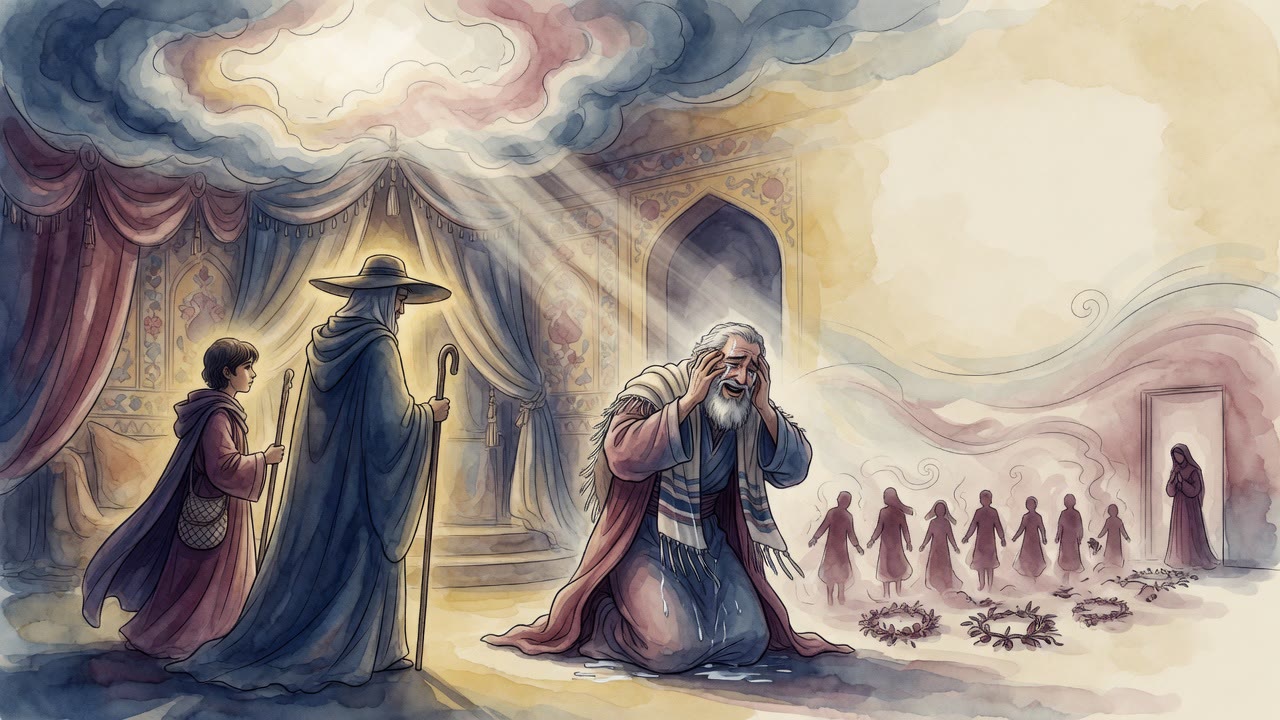
The road ran out at last at the house of Raguel, kin to Tobi's line, settled deep in the captivity. He met them with the open hand of a host. "Go into the house in peace." Then he looked again at the young man crossing his threshold, and something turned over in him. He swung around to his wife Ednah and said it before he could stop himself. "How like is this youth to Tobi my brother!"
Ednah moved closer, the way a person does toward a face that has begun to mean something. "My brethren, whence are ye?" The answer pulled the thread tighter. "Of the captivity, which is in Nineveh, of the tribe of Naphthali." The same exile, the same scattered tribe, the same blood spread thin across a foreign empire.
So she asked the only question left. "Know ye our brother Tobi?" They knew him, they said. "Is he well?" Her voice carried years without word of a kinsman swallowed by exile, the dread that the answer might be a grave.
Tobiyyah let the moment stand and then broke it open. "Your brother Tobi, of whom ye speak, is my father." The youth at the door was no stranger. He was the lost brother's own son, walked across half the earth and set down here by a guide nobody in the room could see for what he was. Raguel had wept at a resemblance before he knew its name. Now the name had arrived, wearing his brother's face, and behind it stood the angel who had carried it the whole way.
← All myths