How Tobiyyah Tried to Pay an Angel Half His Fortune
The Book of Tobit lets Tobiyyah host an angel for the whole journey without knowing it, then watch him refuse a payment of half the family treasure.
Table of Contents
- Why Tobiyyah needed to send the angel to Rages
- What Tobiyyah actually offered when the journey ended
- What does it mean to offer wages to an archangel?
- Why the angel revealed himself only at the wage offer
- What Raphael said about the prayers before he disappeared
- What the book wanted the reader to learn from an unpaid angel
The Book of Tobit, an apocryphal Jewish narrative likely composed in the second or third century BCE, runs on a quiet trick that the reader knows from the start. The character who is helping Tobiyyah is not the cousin Azaryah he claims to be. He is the archangel Raphael. Tobiyyah and his father Tobit treat him as a hired traveling companion all the way through the story. They share meals with him. They send him on errands. They offer him wages. The reader watches the family ask an archangel to handle the silver bag in Rages while Tobiyyah honors a wedding vow at his father-in-law's table.
The setup is one of the most generous in ancient Jewish literature. The book wants the reader to feel what it costs to host a heavenly being and not know it.
Why Tobiyyah needed to send the angel to Rages
The wedding feast at Reuel's house is the pivot of the book. Reuel, Sarah's father, is so relieved his long-cursed daughter has finally married safely that he refuses to let the couple leave for fourteen days. He slaughters calves and rams. He offers Tobiyyah half of everything he owns immediately, with the rest after his own death. He swears an oath that Tobiyyah will not depart.
Book of Tobit 9:1 shows Tobiyyah caught between two binding obligations. The father-in-law's oath says fourteen days. The aging parents back home are counting the days. Tobiyyah explains the dilemma to Azaryah in a single sentence. "My father and my mother count the days, and if one day exceed the time, I shall grieve my parents' soul." The Hebrew principle of kibbud av v'em, honoring one's parents, is silently doing the work behind the line.
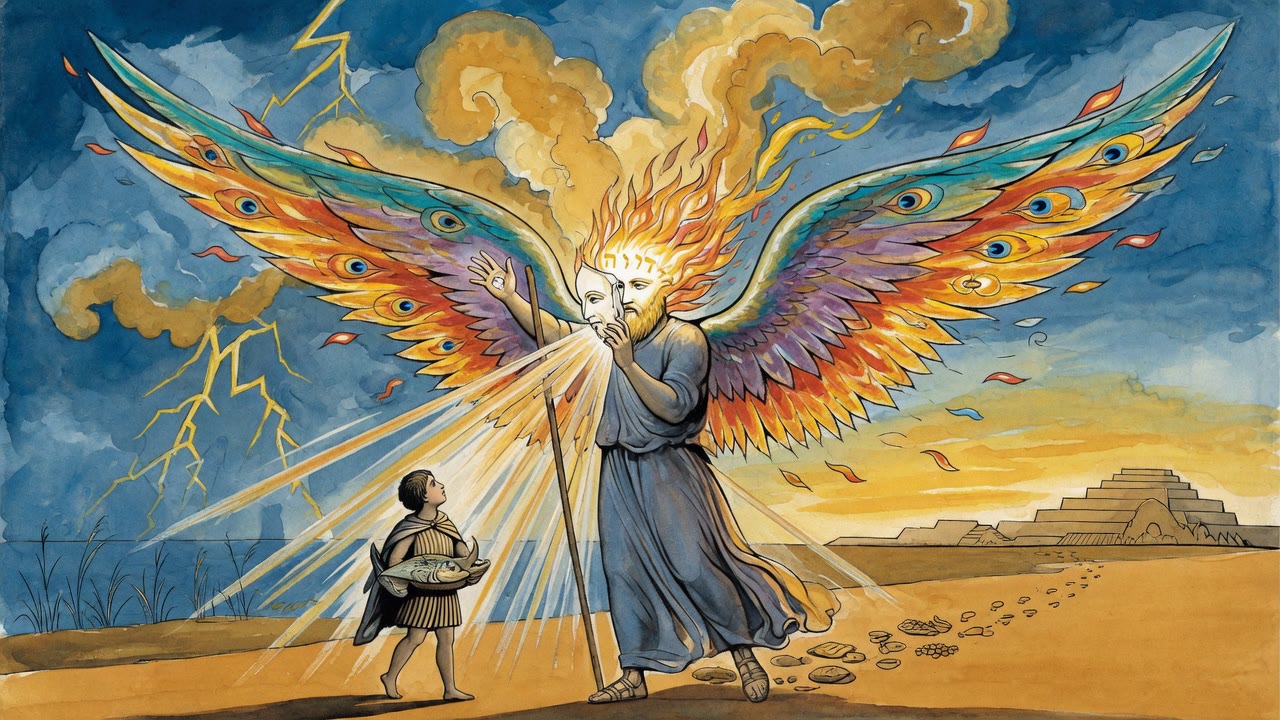
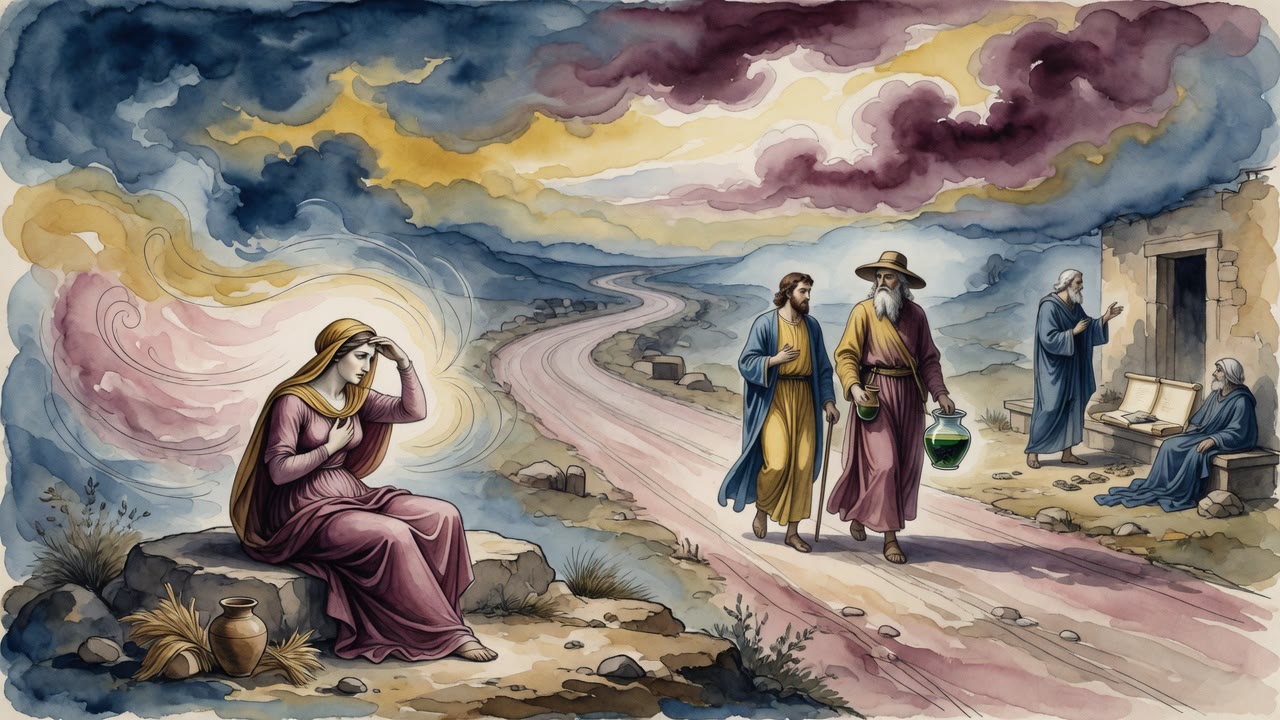
So Tobiyyah designs a workaround. He sends Azaryah, with four servants and two camels, to Rages, an ancient Median city, to collect the bag of silver from Gabael that started the whole journey. He asks Azaryah to bring Gabael to the wedding as a witness. The plan is practical. The reader, knowing Azaryah is Raphael, is watching a young Jew dispatch an archangel on a financial errand because the law of honoring parents could not be bent.
What Tobiyyah actually offered when the journey ended
After Azaryah returns, the family completes the journey home. Tobiyyah's father Tobit has his blindness cured by the gall of the fish Azaryah caught in the Tigris weeks earlier. Sarah, the new daughter-in-law, is welcomed. The household is restored. Tobit and Tobiyyah agree they owe Azaryah something proportional to what he has done.
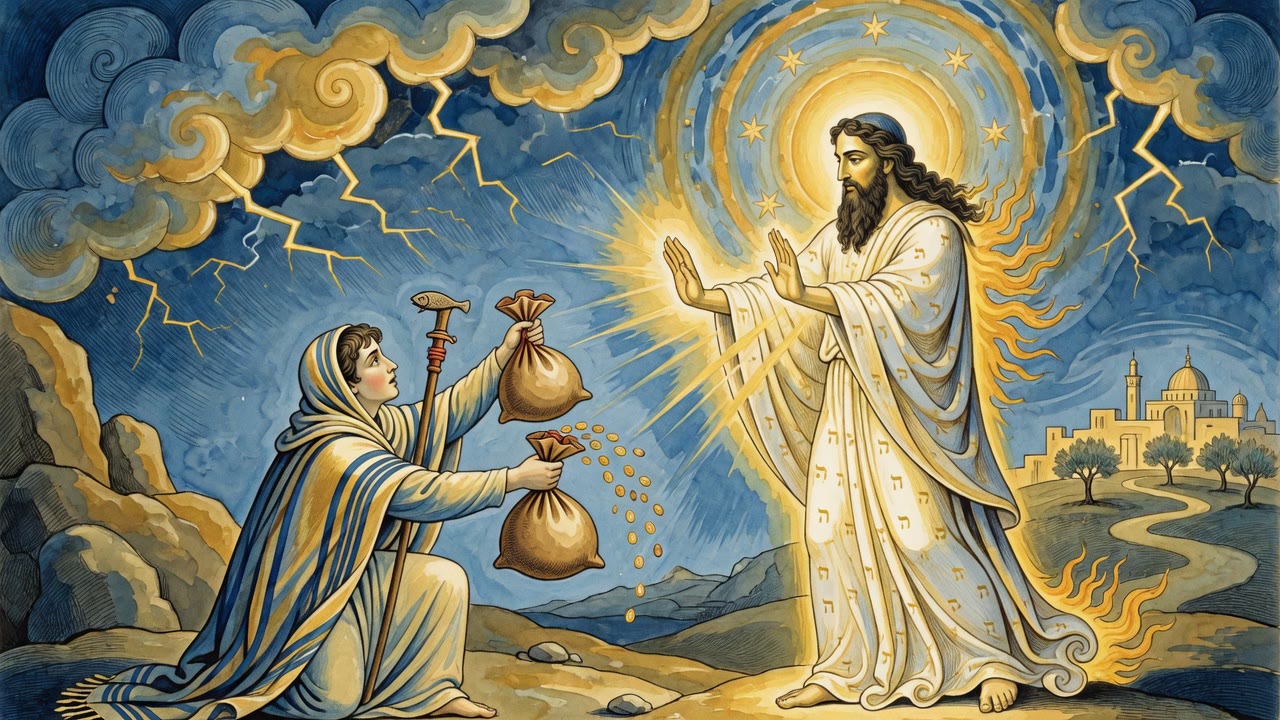
The offer Tobiyyah makes in Book of Tobit 12:3 is staggering. "Come and take thy wages, half of the money which thou hast brought thence, for it is thy wages, and go in peace." Half of the recovered fortune. The proposed compensation is, by any standard, more than generous. The family is willing to split a substantial portion of their wealth with the man they think is a hired companion.
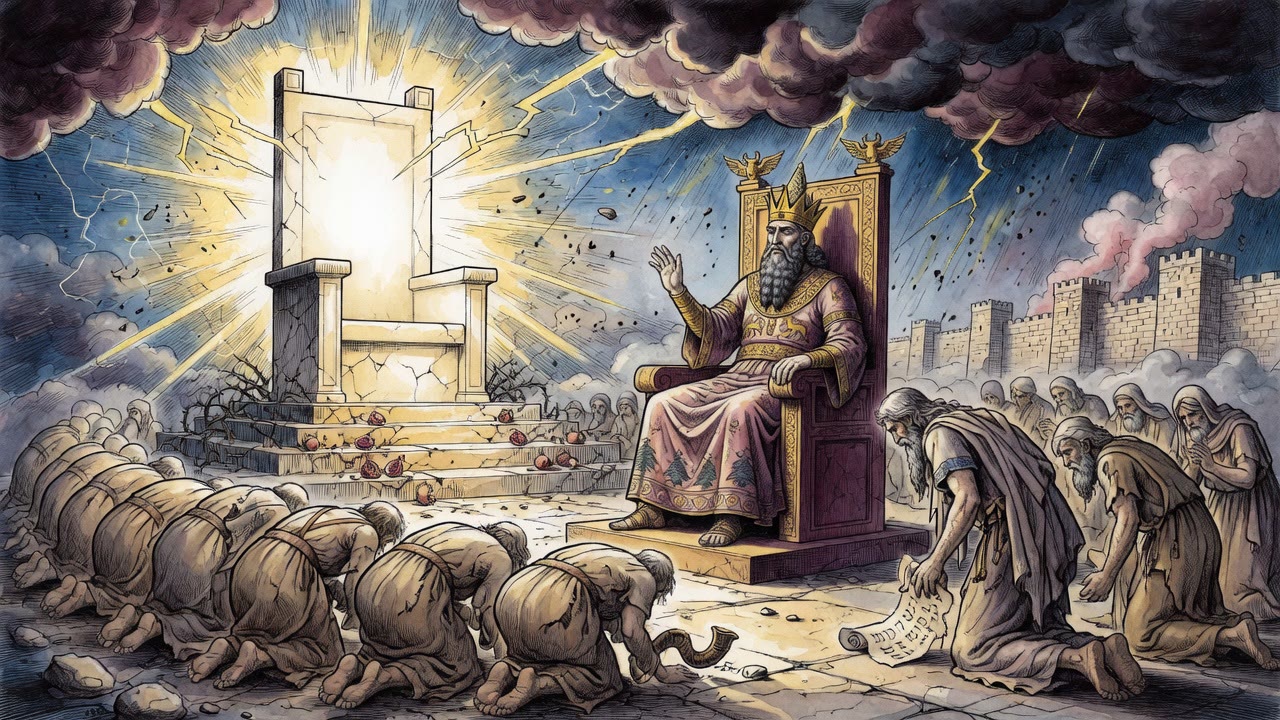
Azaryah declines the money in a single move. He turns to Tobit and Tobiyyah and counsels them to praise the Lord, to give to the poor, and to remember that almsgiving "doth deliver from death." Then he says the line that breaks the framing of the entire book. "I will not hide from you any of the truth." The next sentence reorders everything that has come before. "Now I am the angel Raphael, one of the princes who minister before the throne of glory."
What does it mean to offer wages to an archangel?
The Book of Tobit refuses to make Tobiyyah look foolish. The young man's offer of half his fortune is not naïve. It is exactly what his integrity required. Azaryah had executed the errand to Rages, helped catch the fish that healed his father's blindness, and traveled hundreds of miles. Wages were appropriate. The book is making a quiet theological point. The proper human response to mysterious help is to compensate generously, even if the help turns out to have come from a source no payment could match.
Raphael's refusal of the money is the book's other half of the same point. The angel does not need the silver. He needs Tobit and Tobiyyah to recognize where help actually came from. The refusal is not a rebuke of the offer. It is a redirection. The apocryphal narrative tradition, especially in Tobit and the related Jewish testaments, repeatedly stages this pattern. A human is asked to be honest. The honesty triggers an angelic revelation. The revelation reveals that the honest person was being watched by someone they could not see.
Why the angel revealed himself only at the wage offer
Raphael waited a long time. He could have identified himself at any earlier moment. At the Tigris when he told Tobiyyah how to use the fish. At the wedding when Tobiyyah was caught between Reuel's oath and his parents' counting. At the Rages mission when he was carrying a silver bag for a household he was secretly protecting. He chose none of those moments.
He chose the wage offer. The book is making a precise claim. The most revealing test of human character is not how a person behaves during crisis but how they behave when offered the chance to over-thank a helper. Tobiyyah passed the test. He offered too much. The angel revealed himself only at the moment the family had demonstrated, by way of an unsolicited payment, that they did not need the help to be miraculous to be willing to honor it.
What Raphael said about the prayers before he disappeared
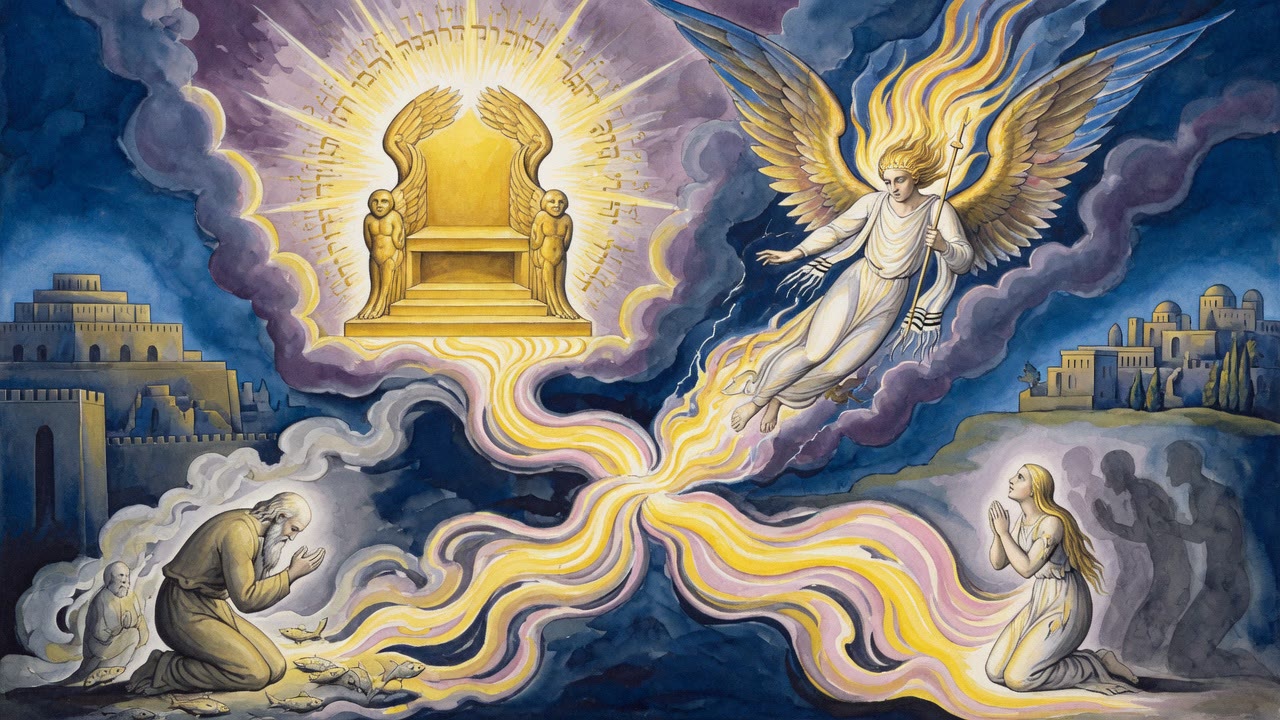
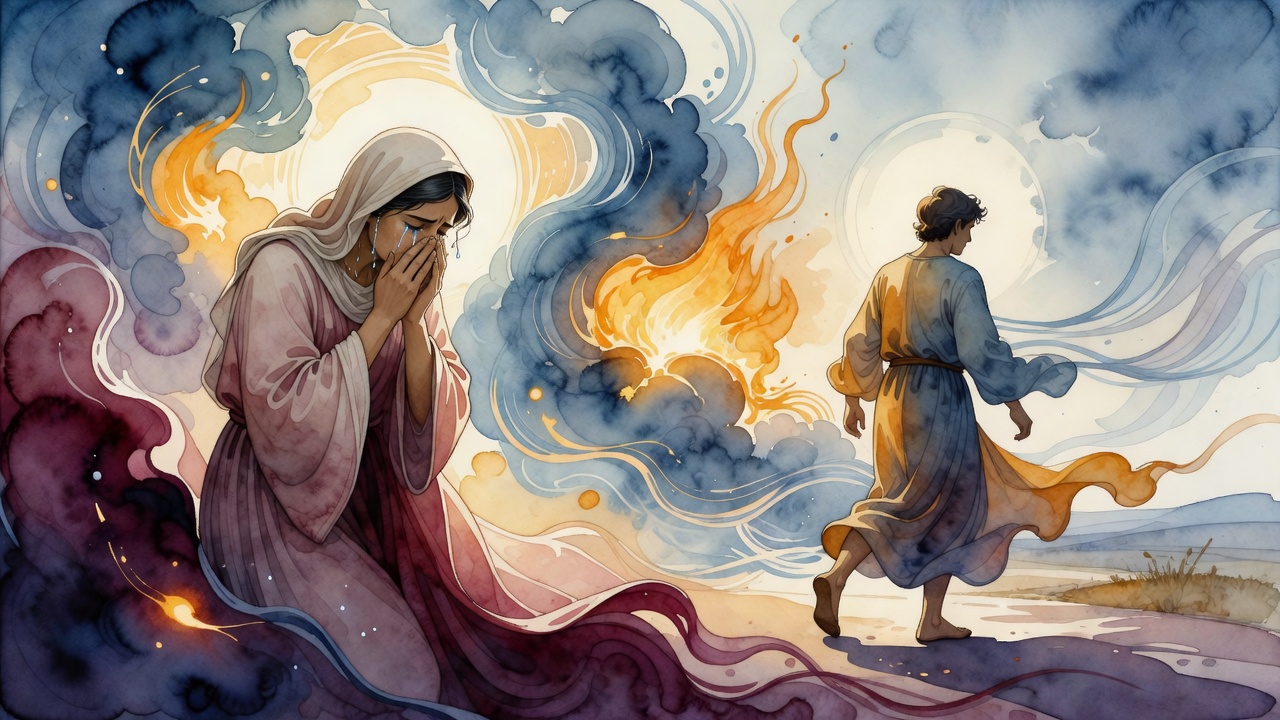
Before withdrawing, Raphael describes his actual job. He tells the family that when Tobit and Sarah prayed in their separate despairs, he carried their prayers before the throne of glory. He was present when Tobit risked safety to bury the dead. He was watching the test that Tobit's blindness had been. He names the tests as tests rather than punishments. "God hath tried thee by the blindness of thine eyes, for the Lord trieth the righteous."
The speech ends with Tobit and Tobiyyah falling on their faces. The book records the reaction without softening it. The family is terrified. They had been hosting one of the seven princes who stand before the throne. They had offered him a meal. They had asked him to fetch silver. They had offered him a year's wages. The accounting could no longer be kept on a normal ledger.
What the book wanted the reader to learn from an unpaid angel
The Book of Tobit ends with one of the most quietly devastating arrangements in Second Temple Jewish literature. A family in a foreign city has been visited by an angel they could not see. The angel leaves without payment. The family keeps the silver they would have given him and is instructed to give it to the poor instead. The redistribution closes the book.
The reader is left with a question the book never asks aloud. How many other Azaryahs have walked through your house. How often have you offered them less than half the fortune. How often have you offered them more, only to have the offer redirected to someone else who needed it. The Book of Tobit does not provide an answer. It just makes the question impossible to forget.