The Throne Beside the Sage and the King Who Would Not Rise
A plaintiff drags the Hasmonean king into court, and Simeon ben Shetah orders the crowned monarch to rise and answer like any defendant.
Table of Contents
The man would not leave the court until someone listened to him. He had a grievance, and the person he meant to sue wore a crown. So he stood before Simeon ben Shetah and the judges seated with him and said it plainly. "I have a lawsuit against the king."
 Click for full size
The room did not laugh. In those days the throne belonged to the house of the Hasmoneans, and the king answered to no one. A complaint against him was the kind of thing a wise man heard, frowned at, and quietly sent away. Simeon ben Shetah did not send it away. He turned to the judges beside him and asked one question. "If I send for the king, will you rebuke him?" They told him yes. So he sent.
The Throne They Carried In
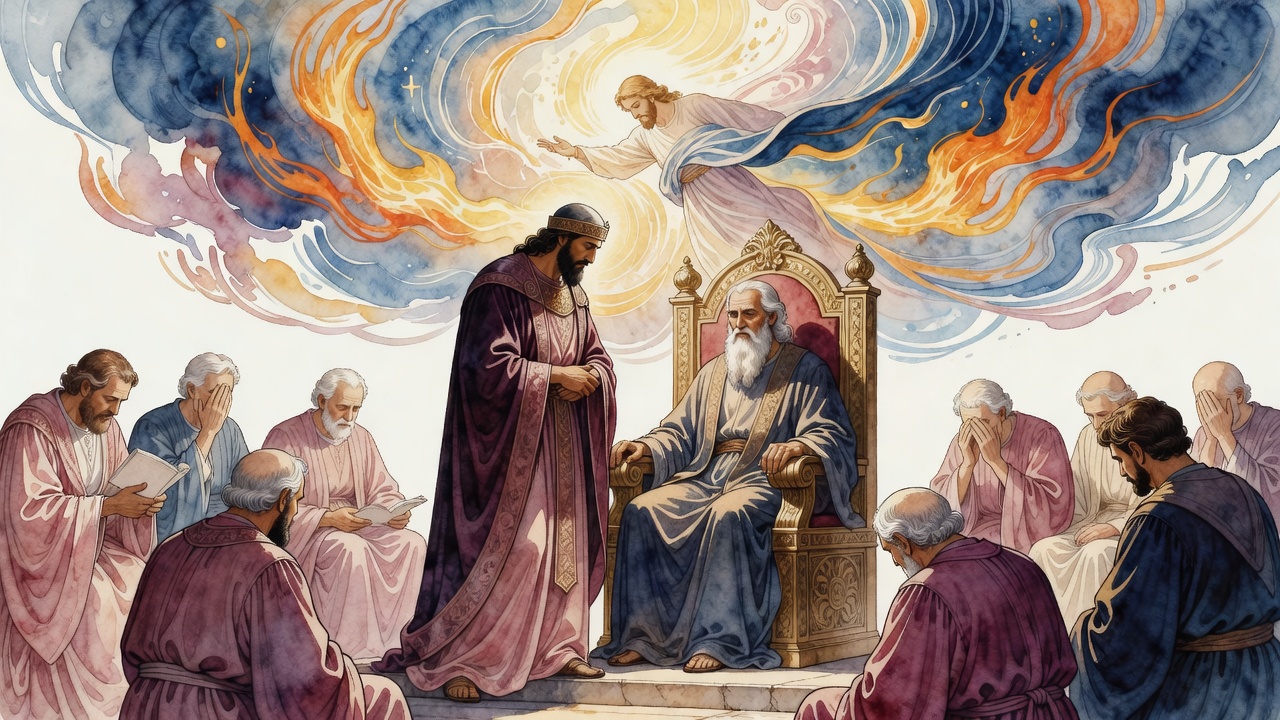
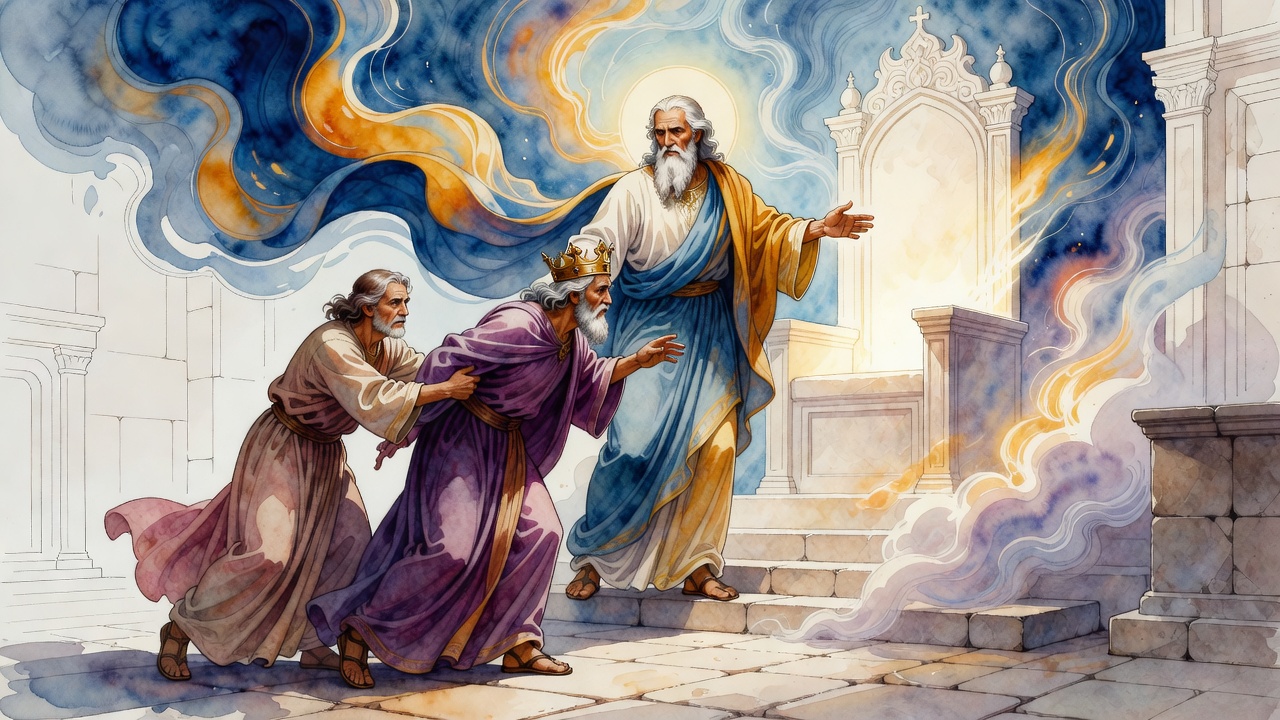
The king came. He did not come as a defendant. Servants carried in a throne and set it down at the side of Simeon ben Shetah, level with the bench, as if the law were inviting a guest rather than summoning a litigant. The king sat. Around him the air had the stillness of men who know exactly how much one wrong word can cost.
Simeon ben Shetah looked at the seated king and spoke as he would to any other man brought before the court. "Stand on your feet and submit to judgment." The Torah was clear. Two parties to a dispute stand together before the bench, neither one raised above the other. A throne at the side of the room made the verse impossible.
The King's Answer
The king did not stand. He answered the sage with a question of his own, and the question was a wall. "But does one judge the king?" Behind it lay the whole weight of the crown. Kings give verdicts. They do not receive them. A monarch does not rise for a plaintiff, does not testify, is not testified against. The king had stated the law of power, and against the law of power Simeon ben Shetah had only a verse.
So he turned to the judges seated at his right, the men who had promised to rebuke the king with him. They pressed their faces into the ground. He turned to his left. Those judges pressed their faces into the ground as well. Every man who had said yes now studied the floor. The throne stood. The king sat. The plaintiff watched his case die in a room full of bowed heads, and Simeon ben Shetah stood alone with the sentence still in his mouth.
The Visitor Who Settled the Room
Then the angel came. In one telling it is Gabriel who descends, and he does not argue, does not persuade, does not weigh the crown against the verse. He strikes. The judges who had hidden their faces were thrown to the ground, and their souls left them where they lay. The men who had chosen the throne over the bench were simply gone.
The king felt the floor change beneath the room. He trembled. The cleverness drained out of the question he had asked, because the angel had answered it. A king does not rise for a plaintiff, true. But the plaintiff was not the one summoning him.
Before the One Who Spoke and the World Was
Simeon ben Shetah said it again, and this time he finished the sentence the king had cut off. "Stand on your feet and submit to judgment, for you are not standing before us, but before the One who spoke and the world came into being." The throne at the side of the room meant nothing. The judges on the floor meant nothing. The court was not the men on the bench. The court was the verse, and behind the verse stood its Author, and a Hasmonean crown weighed nothing against that.
The king stood on his feet. The monarch who answered to no one rose like a defendant, and he submitted to judgment. The dead lay where the angel had left them. The plaintiff had his hearing. A man who commanded armies had been made to obey a line of Deuteronomy, because the sage who summoned him had never been bluffing about whose courtroom it was.
This is why a man with a grievance against power was told, in that tradition, to come to court with awe in him as if he stood before Heaven. King Jehoshaphat had warned his own judges of the same thing. "Know what you are doing, for you do not judge for man but for the LORD." The bench is borrowed. The verdict belongs to Someone else.
← All myths