The Torah Was Offered to Every Nation and Only One Said Yes
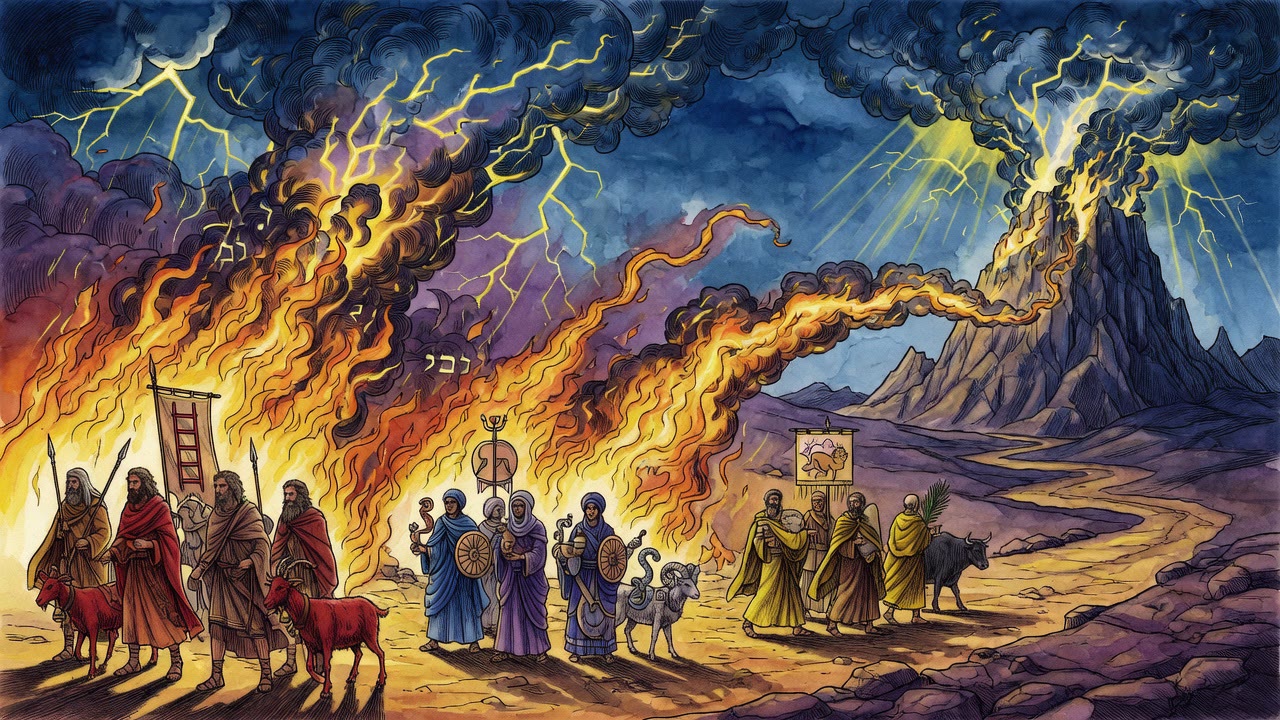
Cedars cracked and the hills ran. Houses filled with light that had no lamp behind it. The nations went looking for Balaam to ask what was coming.
Table of Contents
 Click for full size
The Sound That Emptied the Houses
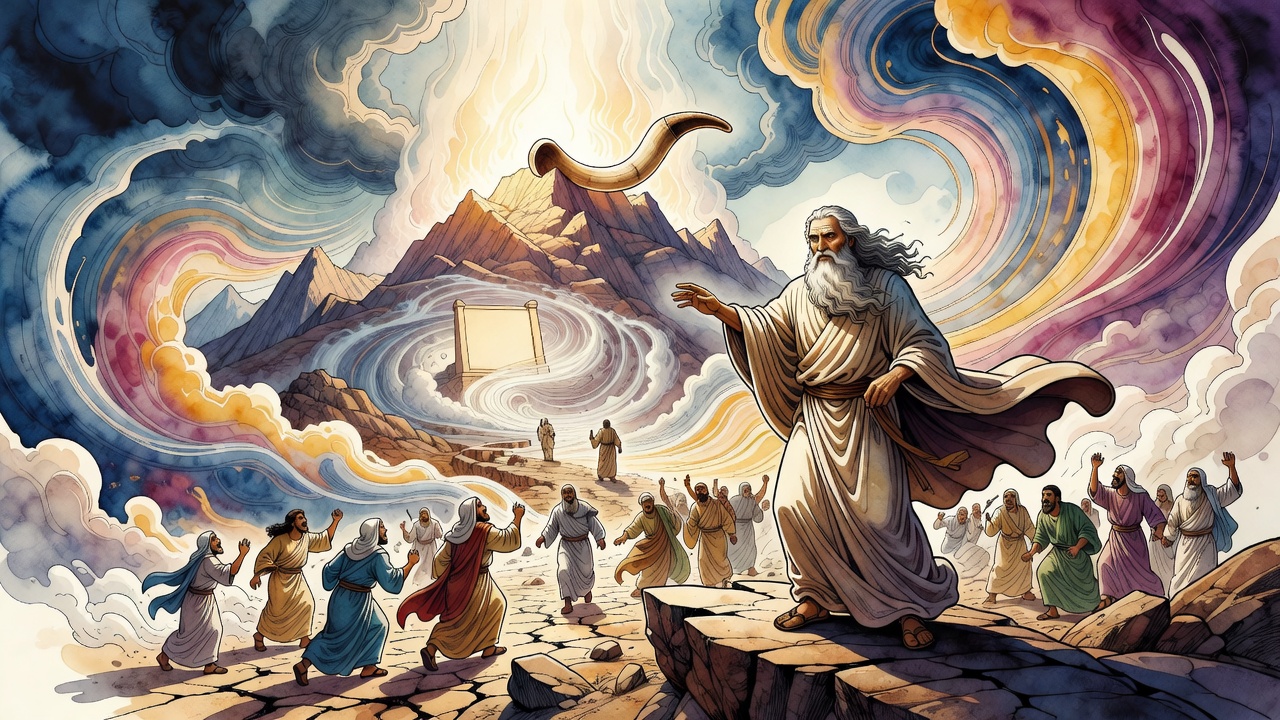
The ground went first. God stood over the mountain and said, "I am the Lord your God," and the earth under every foot on it started to move.
The hills came apart and ran. Cedars a thousand years old cracked down the middle and went over. Deer dropped their young early from the sound of it. And in villages hundreds of miles from Sinai, in places that had never heard of Sinai, people came out of their doorways because their own houses had filled up with light and there was no lamp in them and no fire and no reason.
Nobody thought it was a revelation. Everybody thought it was the end.
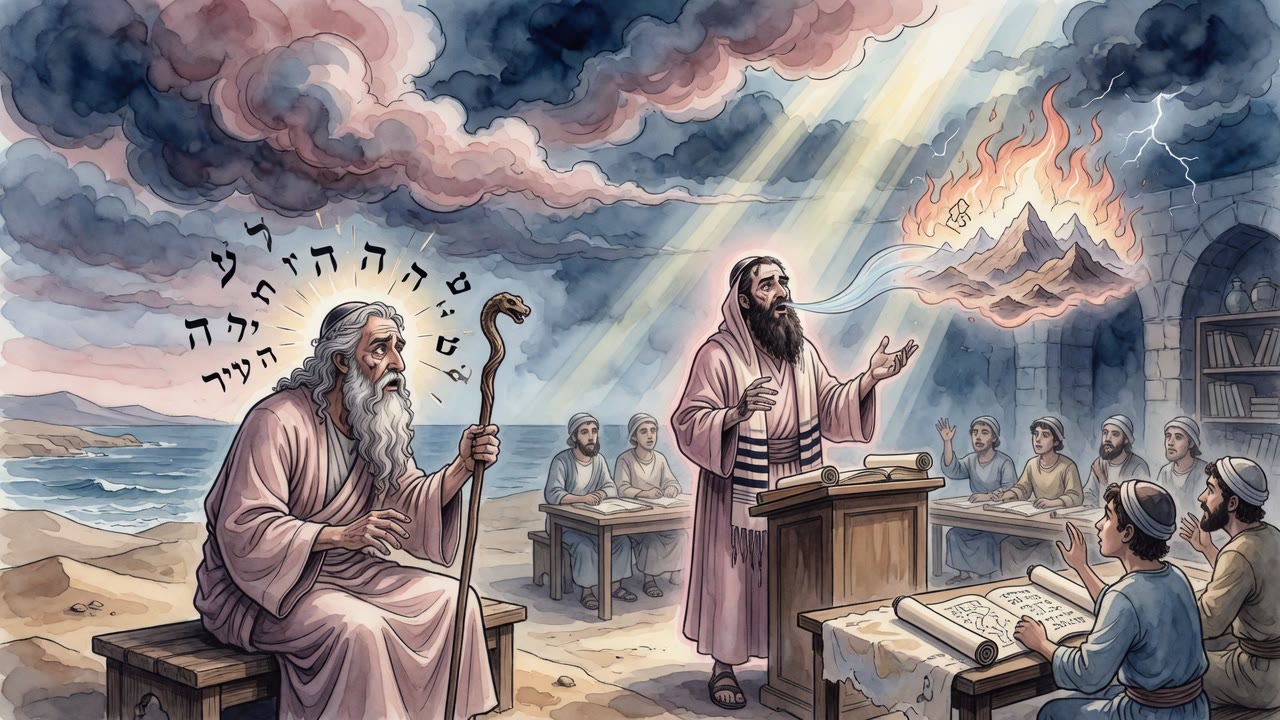
They Ran to Balaam
The nations of the world went looking for the one man they believed could read a sky like that, and they found Balaam, and they got straight to it.
"Is He bringing a flood on the world?"
Balaam had an answer ready. "He swore He would not. The waters of Noah were the last of that. He gave His oath and He does not go back on it."
They were not comforted. "Fine. Not water. What if it is a flood of fire?"
"Not water and not fire," Balaam said. "The Holy One wants to give the Torah to His people. That is all this is. The Lord will give strength to His people."
And when they heard that, every one of them turned around and went home. Not one of them stayed to watch. The most terrifying morning in the history of the world turned out to be somebody else's family business, and they walked back to their own countries relieved.
Knocking on Every Door
Then God came after them.
He went to the children of Esau first and offered them the Torah, and asked whether they would take it on themselves.
"What is written in it?"
"You shall not murder."
They did not even pretend to think about it. "The whole of our father is in that. The hands are the hands of Esau. He was told to his face that he would live by his sword, and that was not a curse, it was what he was given. Take it somewhere else."
He went to the children of Ammon and Moab.
"What is written in it?"
"You shall not commit adultery."
"Every one of us in this room comes from a night in a cave. The two daughters of Lot conceived by their own father. That is our whole line. You are asking us to be a different people."
He went to the children of Ishmael.
"What is written in it?"
"You shall not steal."
"That is the blessing our father was given. A wild man, his hand against every man. Ask Joseph what the men of our caravans do for a living. You are offering us a law against our own inheritance."
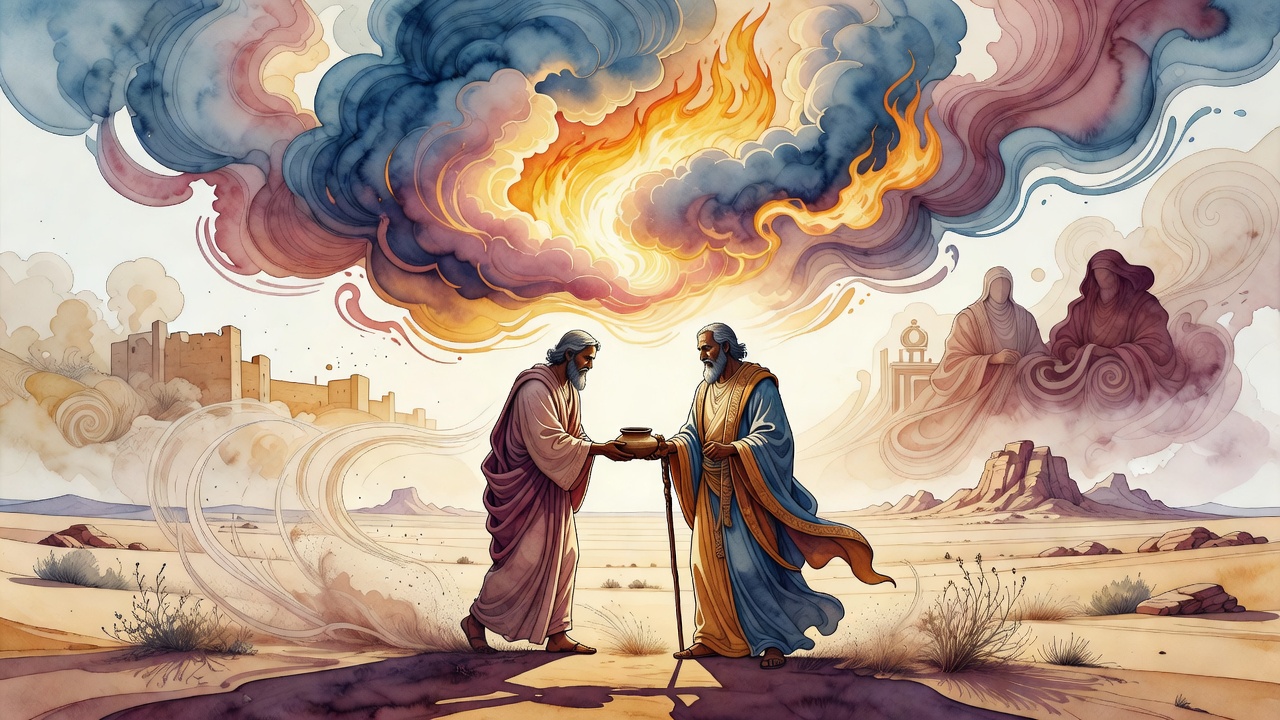
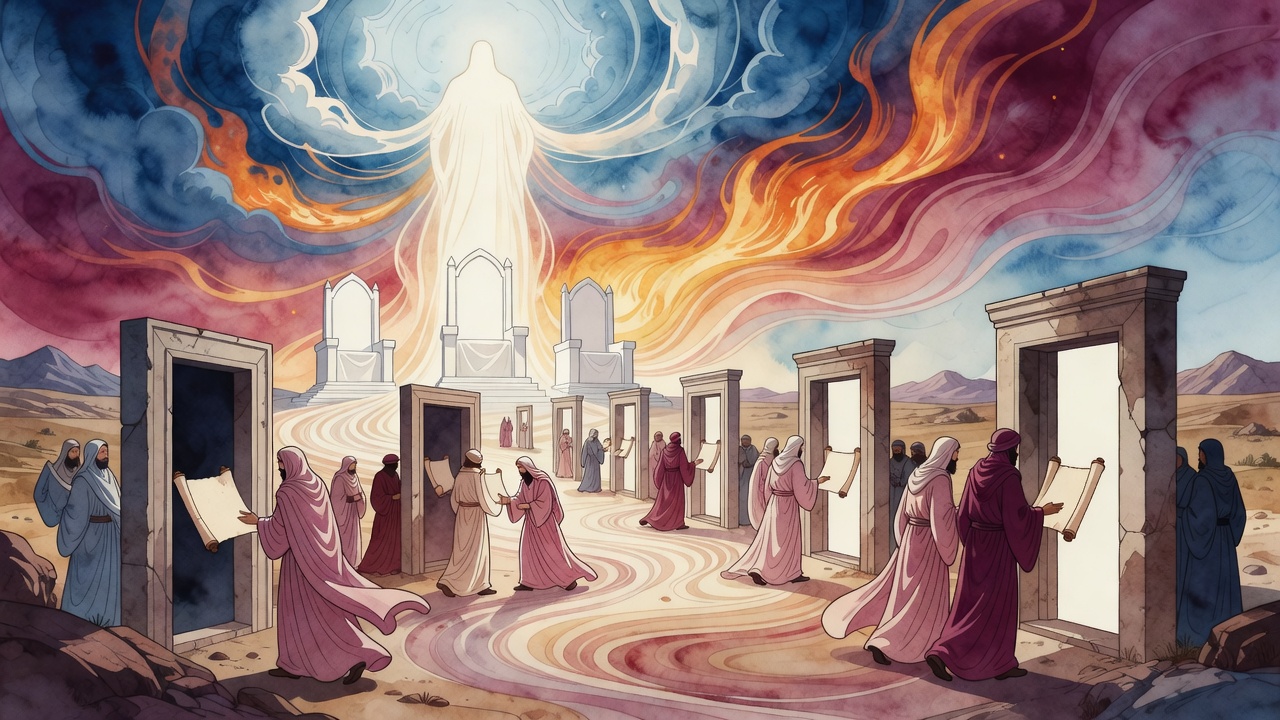
There was not a nation on the earth He skipped. He went to each one, spoke to them, and knocked at the door, and every king on the map heard the words come out of His mouth, and every one of them heard them and did not do them.
Fire at His Right Hand
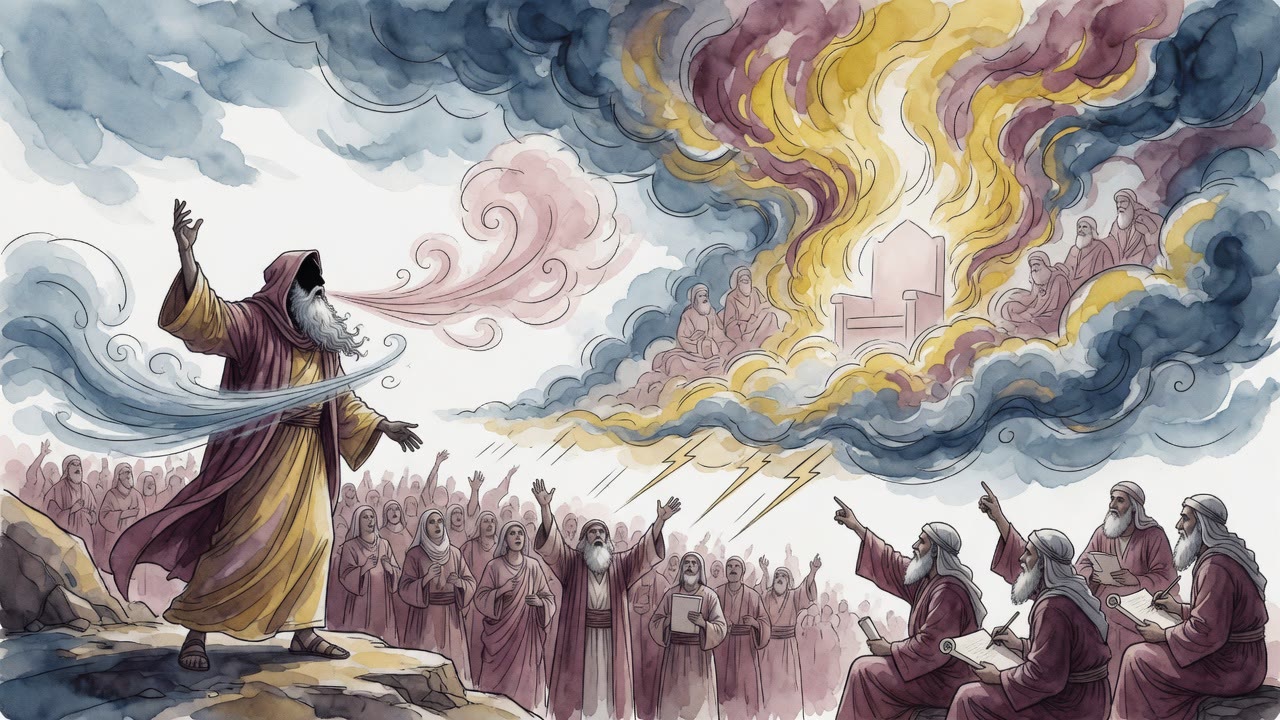
Then He came to Israel, standing at the foot of the mountain with the smoke still on it, and there was fire in His right hand.
They did not ask what was in it.
They opened their mouths, all of them, at the same moment, and said, "Everything the Lord has spoken, we will do, and we will hear."
It was the only yes He got. Do first, hear afterward. They agreed to carry a thing before anyone had told them what it weighed, and the nations who had asked the sensible question and gone home were, at that moment, exactly as far away as they had been the day before.
The Dog That Buckled
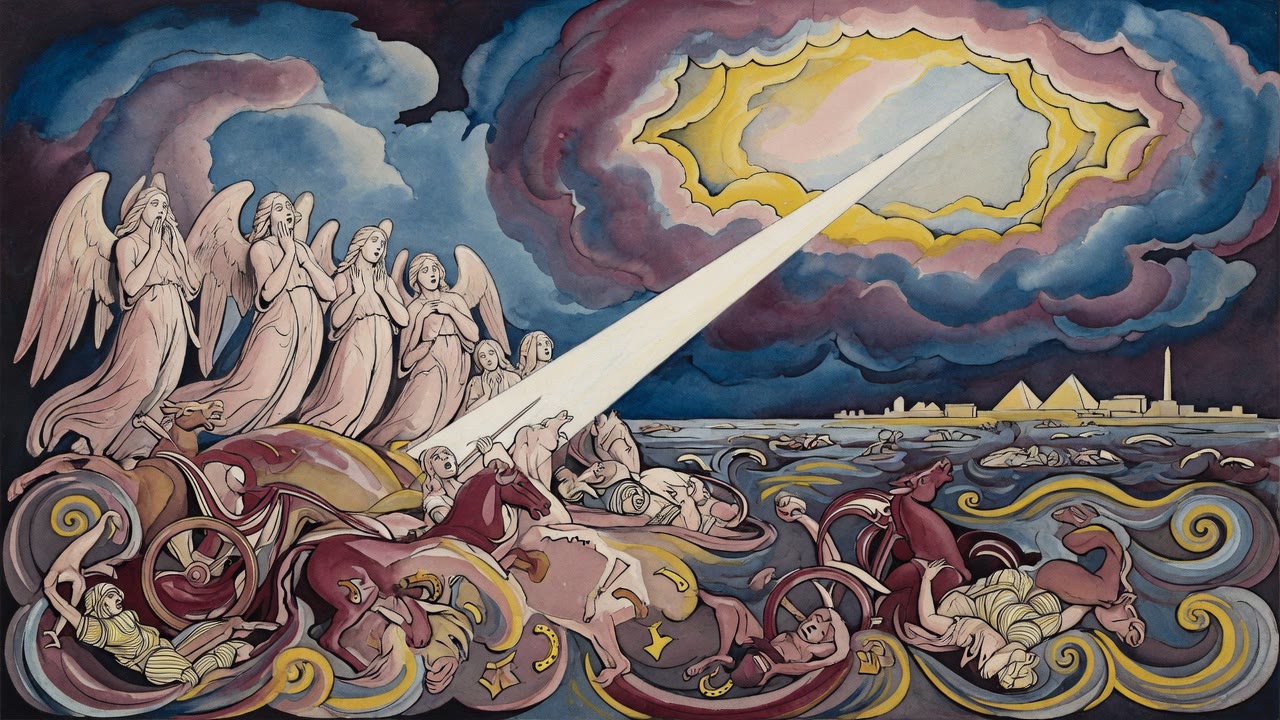
Seven commandments had been laid on the children of Noah long before any of this. Seven, out of six hundred and thirteen. They could not hold even those.
Picture a man sending his donkey and his dog to the threshing floor. He loads the donkey with a full measure and the dog with three smaller ones, because the dog is not a donkey and he knows it. The donkey walks off down the road. The dog gets ten paces and its legs start to go, so the man lifts one measure off its back and puts it on the donkey. The dog goes another few paces and sags again, so he moves the second. Then the third. By the end of the road the dog is walking free and the donkey is carrying everything.
Israel took the Torah with all its arguments and all its fine distinctions. The others put down even the seven, one at a time, and handed them over.
Why Not in His Own Land
Rabbi Shimon ben Elazar told it another way. A king had two stewards. One kept the treasury of silver and gold and one kept the barn where the straw was stored. The straw man was caught short in his accounts, and then had the nerve to complain that he had never been trusted with the silver.
They said to him, "You empty man. You were suspected over straw. Who is going to hand you gold?"
And there is a reason the mountain stands in a wilderness that belongs to nobody, and not in the land God had promised. If the Torah had been given at home, in His own country, every nation that walked away could have said afterward that they were never really asked, that it was given on his ground, among his own people, and no wonder they did not accept it.
So it was given in open desert, in front of everyone, with the doors knocked on first.
← All myths