The Two Scribes Who Name Your Seat Before You Die
Two scribes write every name over a place in fire and in the garden before the soul is judged, and the verdict only decides which room you keep.
Table of Contents
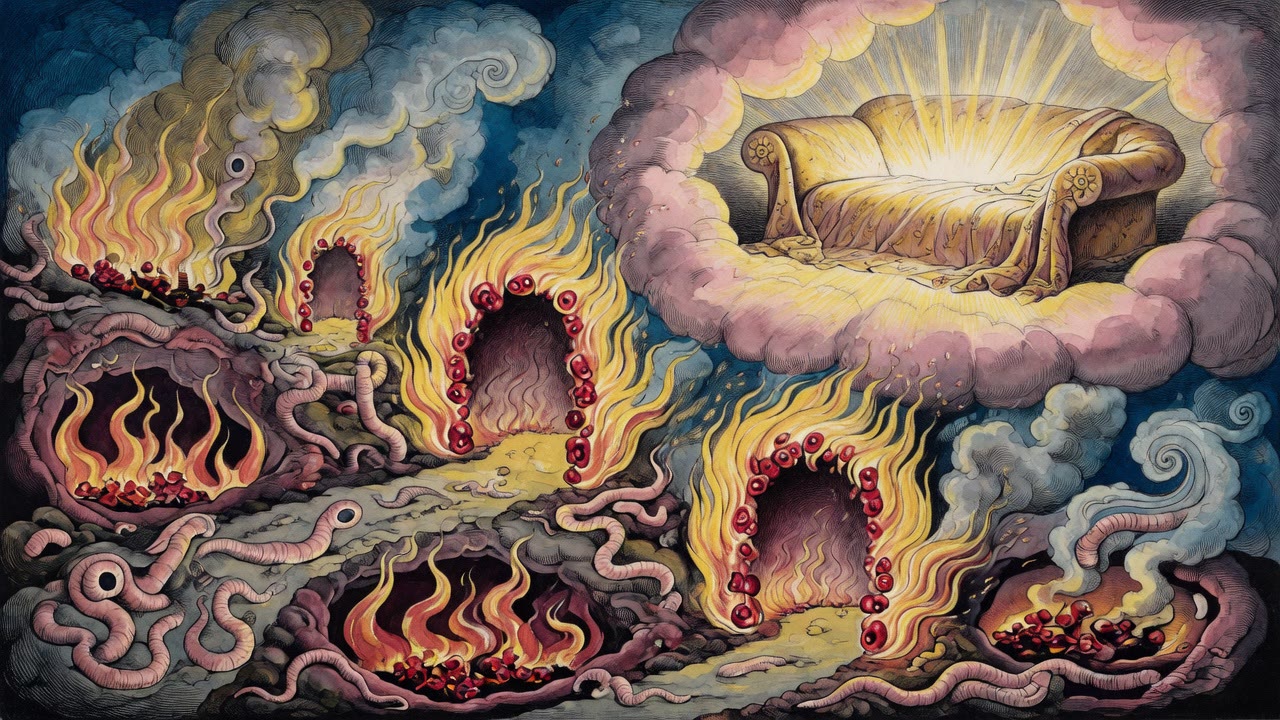
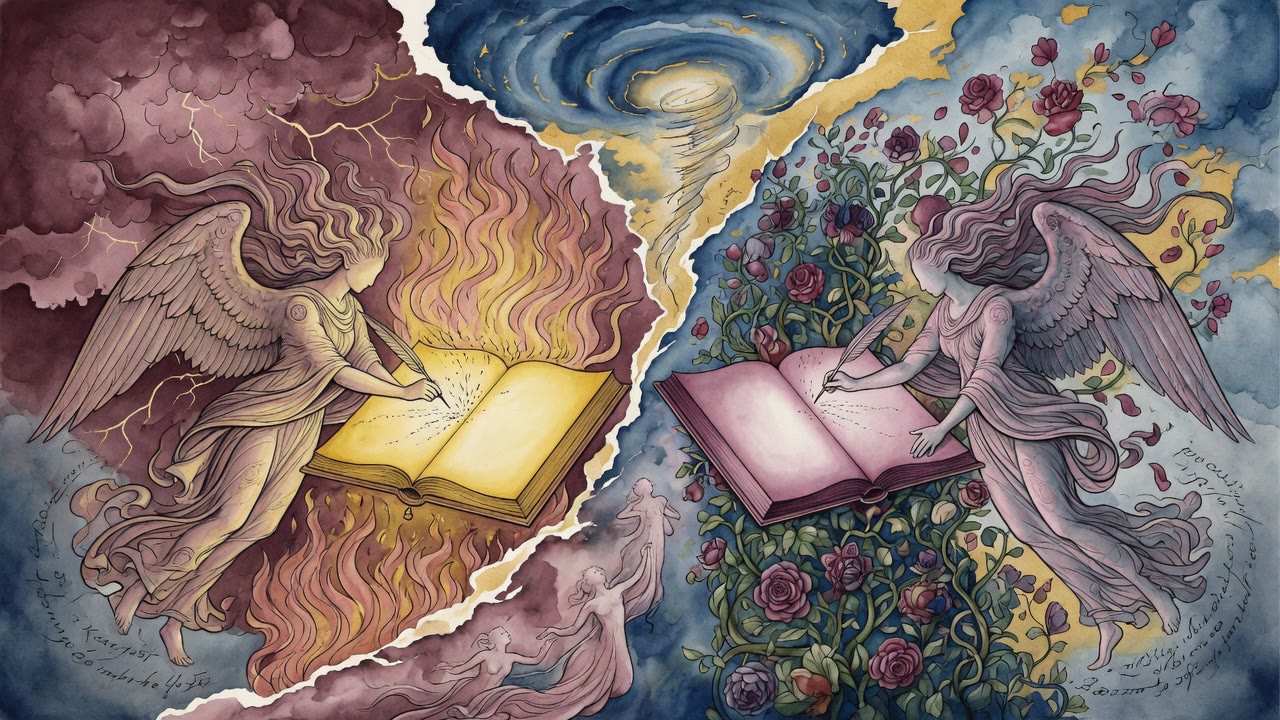
Two scribes sit in Gehinnom (the fiery place of punishment after death) with reed pens, and they are not writing the names of the dead. They are writing the names of the living.
 Click for full size
One bends over a ledger of fire and sets down a place. "This is so-and-so's place," he writes, and beside it, in the cool ledgers of Gan Eden (the Garden of Eden), another hand sets an empty seat with the same name above it. No one has died yet. The man named in both books is still in the world below, eating his bread, hating his neighbor, never suspecting that a chair waits for him in the garden and a pit waits for him in the fire, both already labeled, both already his.
For every person who has ever drawn breath, good or bad, the scribes prepare two rooms. A place above and a place below. The names go up before the deeds are done, the reservation made before the soul is judged. All the verdict decides, when it finally comes, is which of the two booked rooms the soul keeps, and which it surrenders to the one it wronged.
The Wicked Man Reaches a Seat That Is Not His
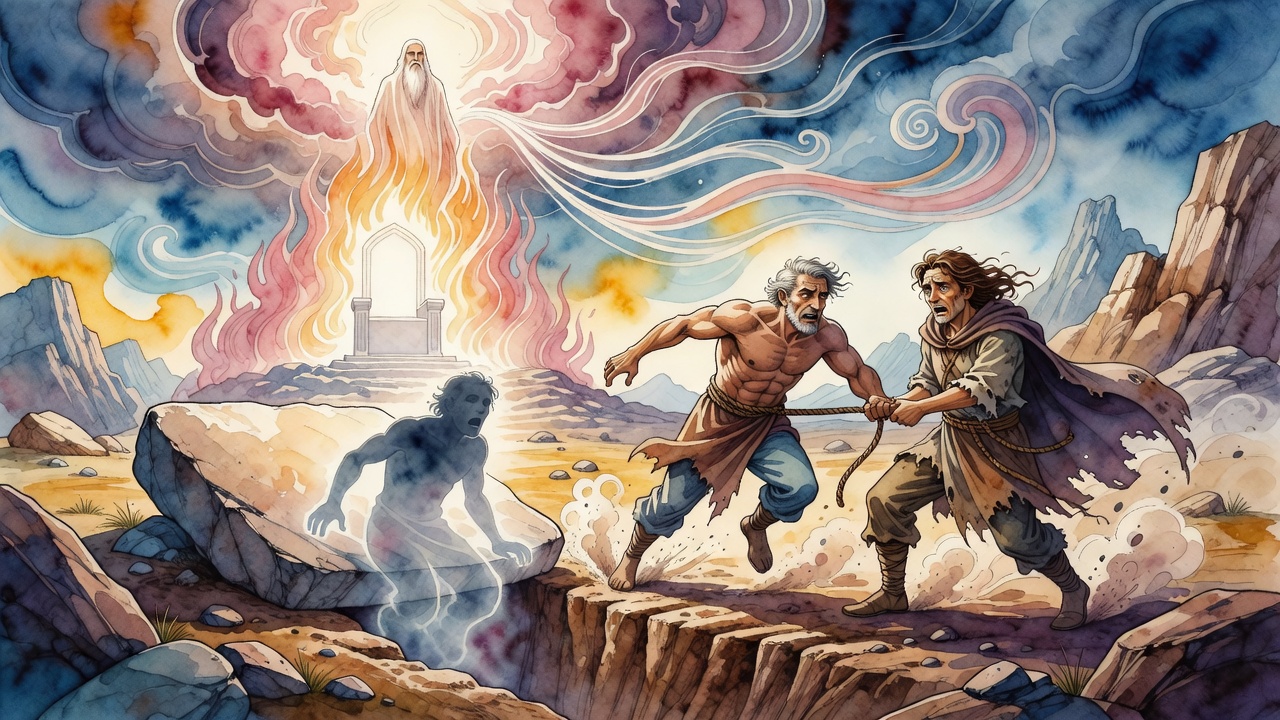
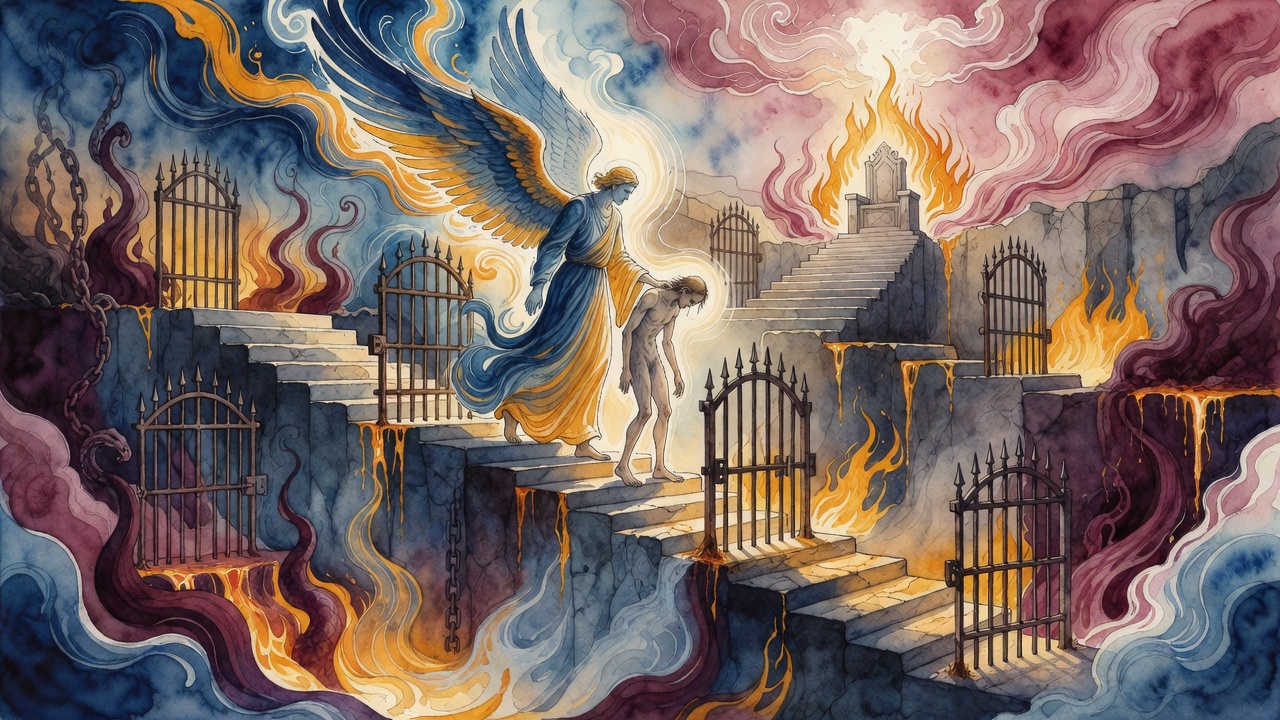
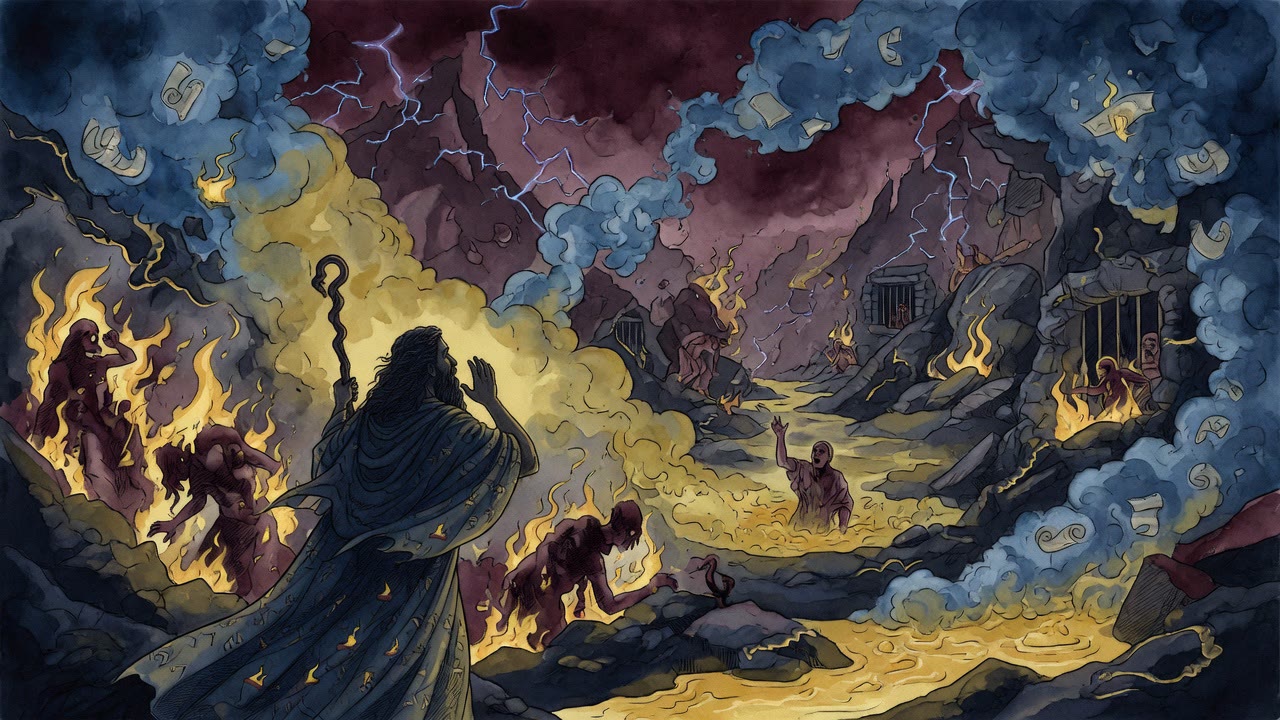
When the wicked man dies, they bring him down to be seated in Gehinnom, and they walk him to the place the scribes prepared. But the name written over that place is not his name.
He reads it and stops. The letters spell another man, a righteous man, a quiet neighbor he had cheated and crushed and finally broken in the world above. The place is labeled with the good man's name.
"Why are you seating me in a place that is not mine?" the wicked man demands.
The scribes do not look up. "Because he was harmed by you," they answer, "you will sit in his place, and he will be released." The pit the righteous man earned by his own sins is handed to the one who tormented him. The torment buys the victim out. The tormentor moves into the cell reserved, long ago, in someone else's name.
The Righteous Man Inherits the Garden of His Enemy
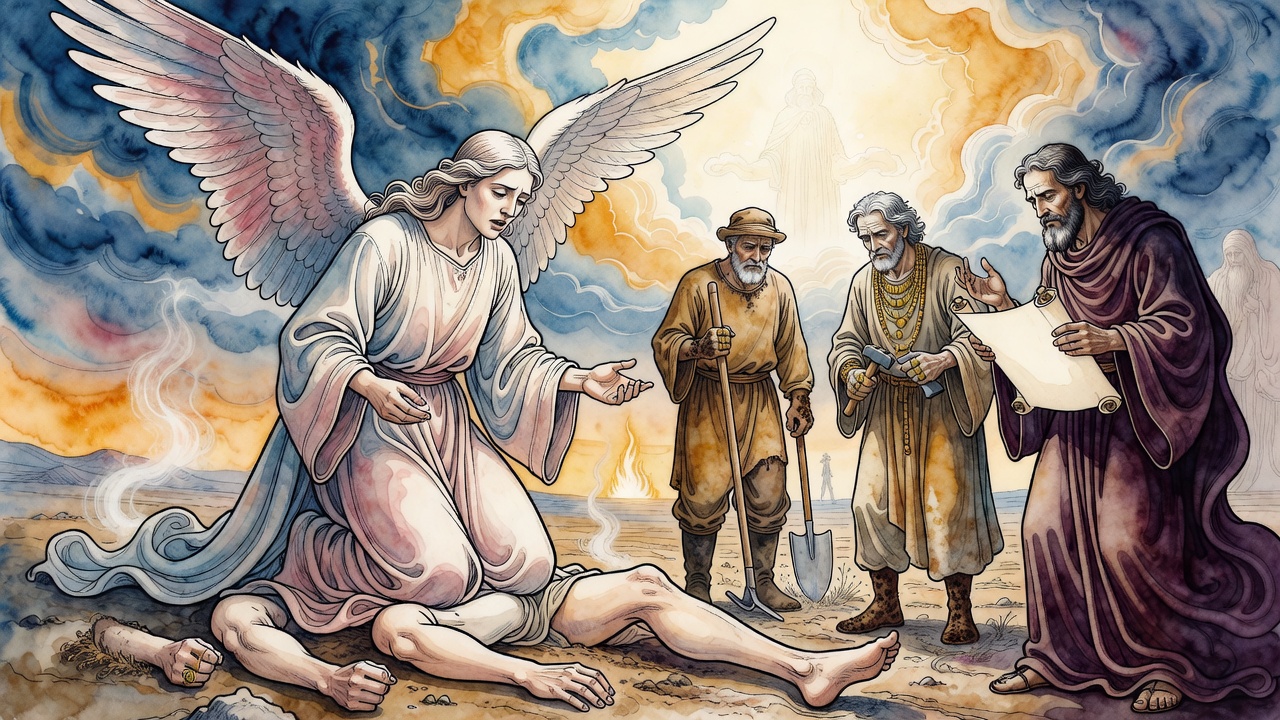
In the same hour, far above, they bring the righteous man to Gan Eden. They lead him through the bright rooms to a seat, and over that seat too there is a name, and again it is the wrong one.
It is the name of the very man who ruined him. The wicked neighbor's place in paradise, the chair that wickedness should have forfeited, stands waiting with the good man being led toward it.
"Why are you seating me in a place that is not mine?" the righteous man asks, exactly as his enemy asked below.
"Because you were harmed by him," they tell him. This was the whole reason the suffering was allowed. The good man was afflicted so that, in the end, he would walk into the share of glory the wicked man threw away. The wound was a deed. The deed bought the seat. The two men, who never agreed on anything in life, trade places forever in death.
The Verse That Refuses an Easy Answer
So the books are closed, and the soul is left with one terror the scribes never explained. If the map was finished before the judgment, what is the soul that gets sorted into it? Does it rise, or does it fall?
The question is old. It sits in the mouth of Kohelet, the son of David in Jerusalem, who looked at every grave and asked, "Who knows the spirit of the sons of man, whether it goes upward, and the spirit of the beast, whether it goes downward to the earth?" Man and animal breathe the same breath and lie down in the same dust. From the outside, no one can tell which spirit climbs and which one sinks.
A Noblewoman Presses the Rabbi for the Direction of the Dead
A Roman noblewoman put that very verse to Rabbi Yosei ben Halafta and would not let it go. If both man and beast go down to the dust, she pressed, then where is the difference, and where does the human spirit actually go?
Rabbi Yosei did not soften it. The souls of the righteous and the wicked both ascend on high, he told her, but they are not received the same way at the gate. The souls of the righteous are gathered into a treasury, stored like jewels. He gave her the words Avigail once spoke to King David: "May the soul of my lord be bound in the bond of life." Bound, kept, knotted into the living so they can never be lost.
"And the wicked?" she asked.
He gave her the rest of Avigail's line, the part people forget. "And the souls of your enemies, may He sling them out as from the hollow of a sling." Not laid down. Flung. The same hand that ties the righteous into the bond of life hurls the wicked soul out like a stone, down to Gehenna, down to the descent the prophet Ezekiel mourned when he said God covered the deep and made it dark on the day that soul went down.
The Breath That Climbs and the Breath That Drops
And there the two ledgers meet. The treasury and the pit. The seat in the garden labeled with an enemy's name, the cell in the fire labeled with a victim's name. The wicked man falls into the cell of a man he wronged and lets that man go free. The righteous man climbs into a glory his tormentor squandered. One breath is slung downward like a beast into the dust. One breath is knotted upward into the bond of life.
The scribes blot their pens. Somewhere in the world below, two more names are already being written over two empty rooms.
← All myths