Parshat Bereshit6 min read

The Women Who Painted Their Eyes and Drew Heaven Down

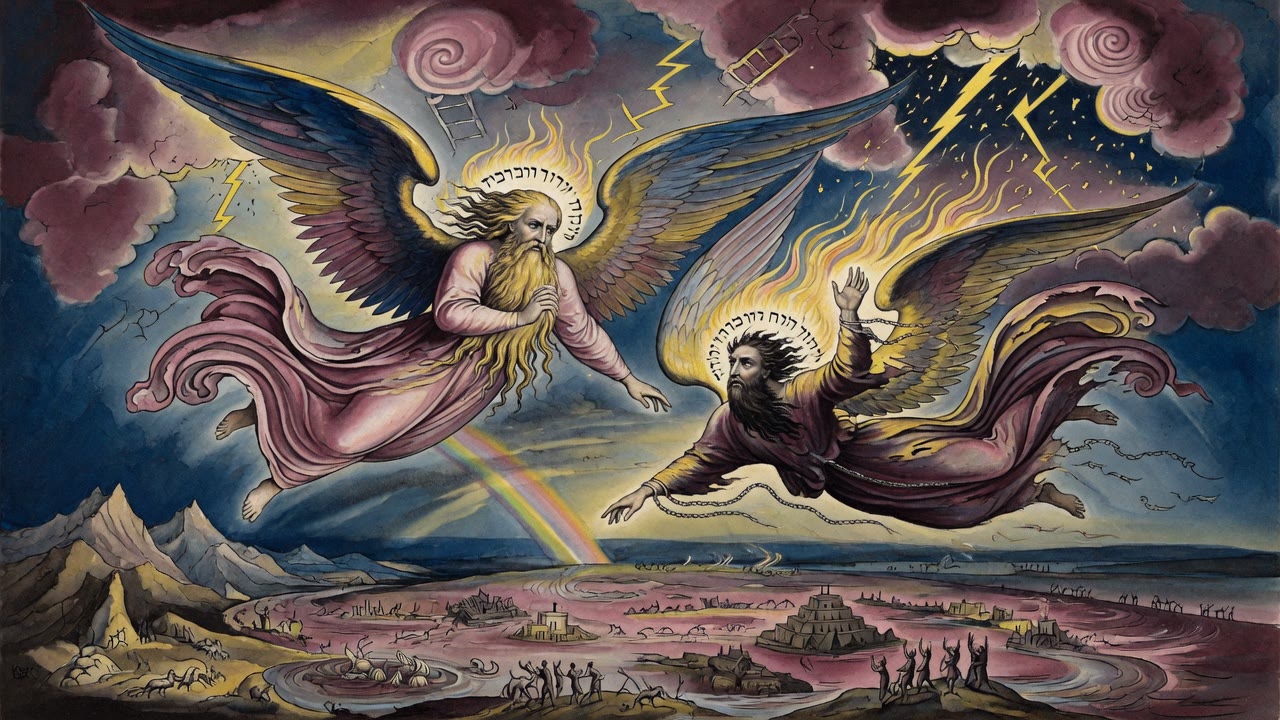
The women lined their eyes with kohl and walked to be seen, and the Watchers leaned over heaven's edge until they were no longer leaning but falling.

Curated by Arthur · Told by Maggid ·
Table of Contents
  1. The Watchers Leaned Over the Edge of Heaven
  2. The Great Ones Took Whatever Pleased Them
  3. The Marriage Contracts Grew Monstrous
  4. The Giants Filled the Earth With Their Footprints
  5. Heaven Set a Door at One Hundred and Twenty Years

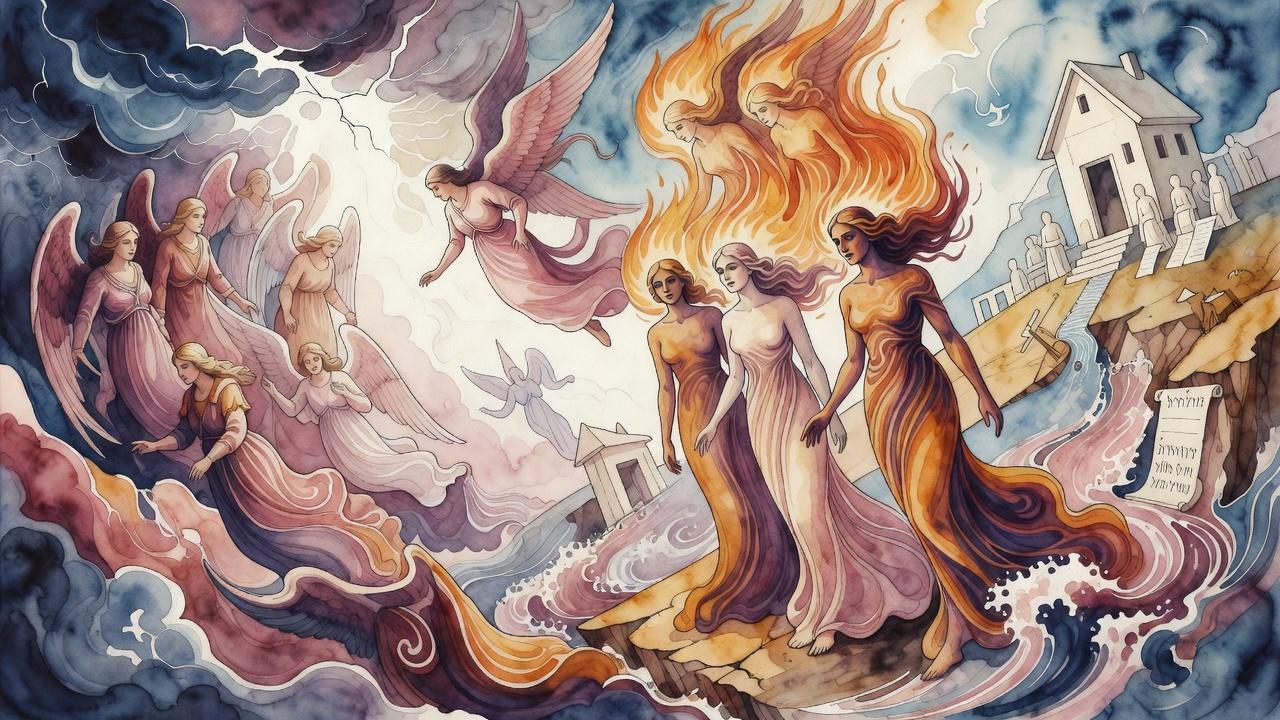
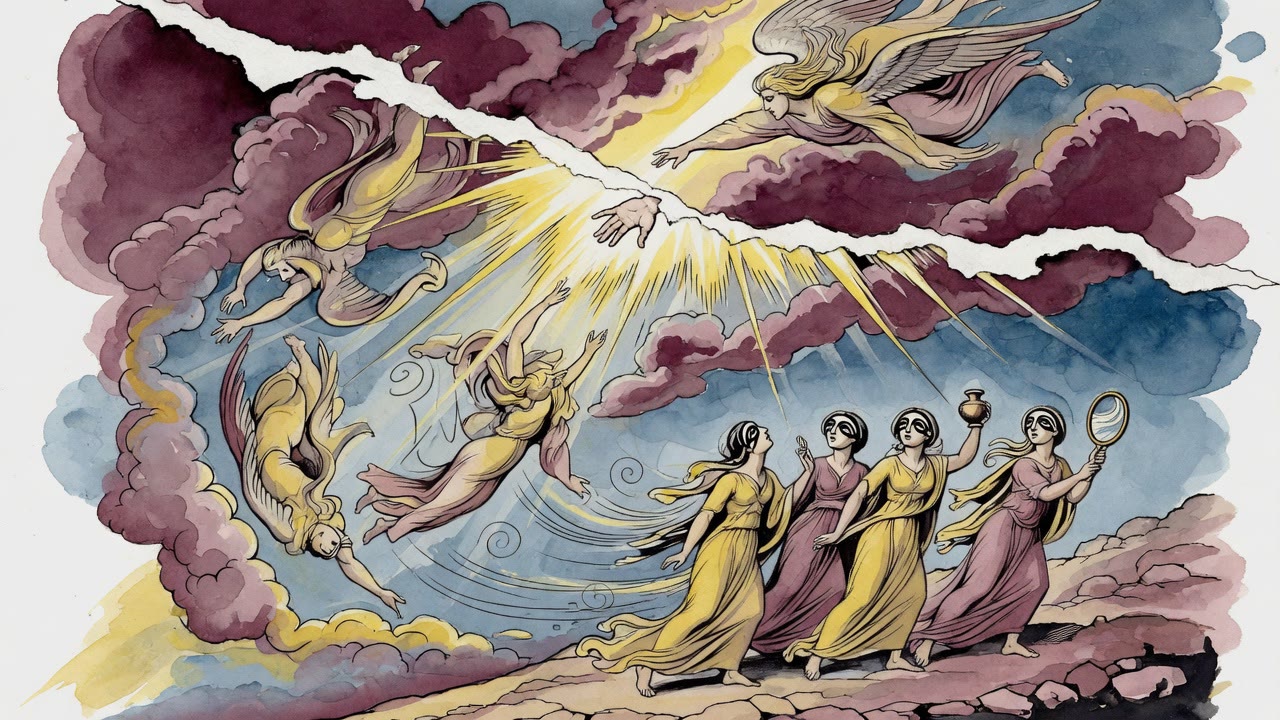
In the days before the rivers rose, the daughters of men learned to be looked at. They lined their eyes with kohl until the dark of them widened and deepened. They curled their hair and oiled it until it caught the light. They wore their garments loose at the shoulder and loose at the thigh, so that flesh showed where flesh had not shown before, and they walked through the streets of the cities with their chins lifted and their minds already turned, secretly, toward wickedness. They did not walk to go anywhere. They walked to be seen walking.
The Watchers Leaned Over the Edge of Heaven

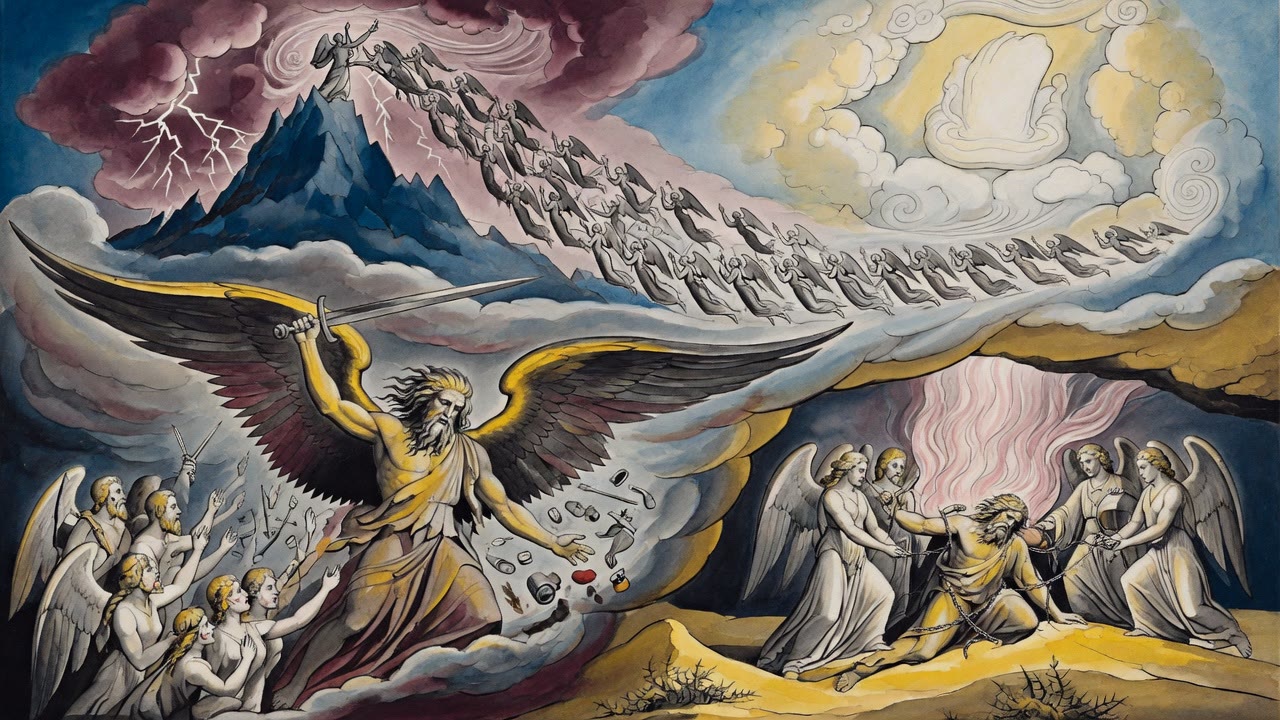
High above them, at the rim of the firmament, the great ones of heaven looked down. Among them were Schamchazai and Uzziel, mighty in the upper world, accustomed to standing in the brightness near the throne and not yet accustomed to longing. They saw the women below moving through the dust, painted and curled and half bare, and something turned over in them that had no name in heaven.

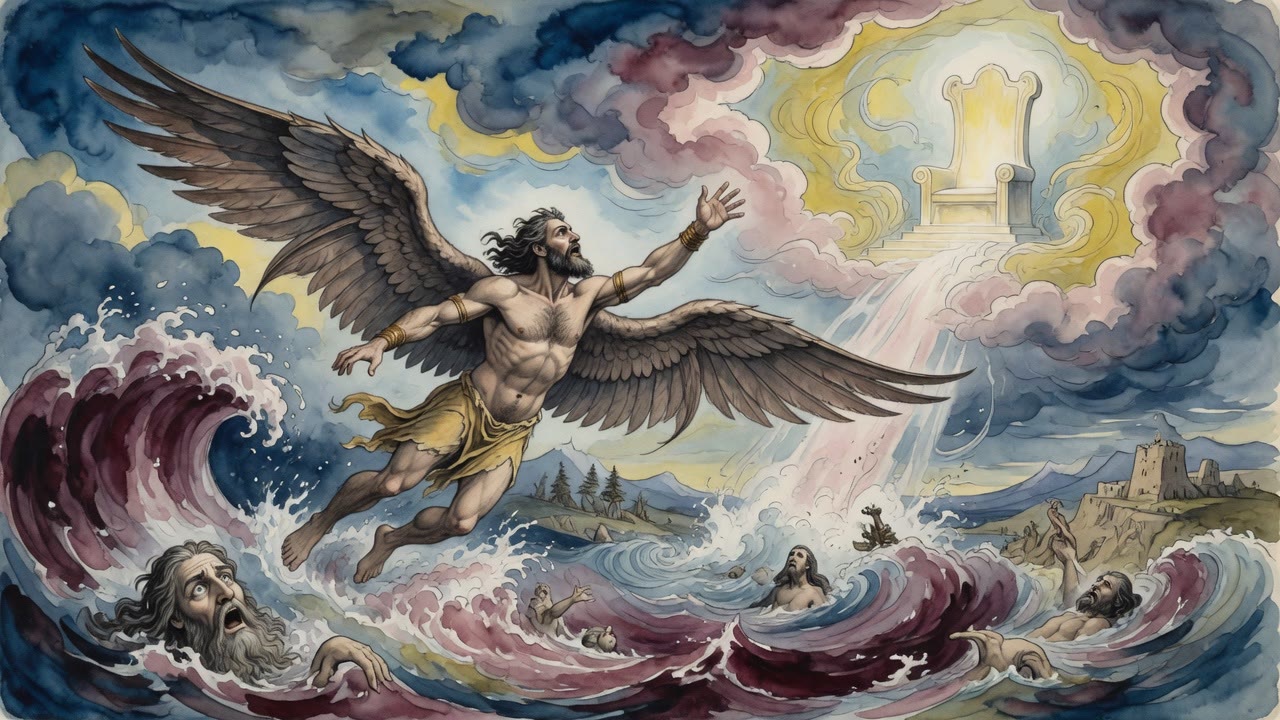
They had watched the earth for a long age without falling. They had seen famine and they had seen feasting and neither had pulled them out of their stations. But desire is not like the other temptations. The patience that holds against violence and theft and pride breaks first at this one place. The Watchers leaned further over the edge than any of them had leaned before, and then they were no longer leaning. They were descending.

The Great Ones Took Whatever Pleased Them

On the earth there were already men who behaved like swallowed gods. They were the sons of the great, the judges and the powerful, and they had made a custom of their power. When a bride was adorned for her wedding, washed and perfumed and brought to the threshold of her husband's house, a great one would enter the chamber first and take her before the bridegroom ever touched her. The fair ones, the virgins prepared for other men, were taken this way as a matter of course. Then the powerful reached past the unmarried and took wives who already had husbands, of all whom they chose, because choosing was the only law they recognized.

Into this the Watchers came down, and the line between the great men and the great angels blurred until no one could say where the one corruption ended and the other began. Both took. Both pleased themselves. The women had painted their eyes to draw down the powerful, and the powerful had come, from the high cities and from heaven itself, and the wanting flowed in both directions at once until the whole earth was a single act of taking.

The Marriage Contracts Grew Monstrous

It did not stop at men and women. Once choosing was the only law, choice spread past every boundary that had held the world in its shape. They chose males for males. They chose beasts. And they did not do these things in the dark and call them shameful afterward. They wrote contracts. They drew up marriage documents, formal and witnessed, between a man and a man, between a man and an animal, and they hung them where everyone could read them, proud of what they had made lawful.

That was the threshold. A generation can sin in secret for a long time and the world will bear it, because shame is a kind of fence and even the wicked lean on it. But when the deeds were written down and celebrated, when the documents made the monstrous ordinary, the fence was gone. There was nothing left to climb back over.

The Giants Filled the Earth With Their Footprints

From the unions of the descended ones and the painted women came children who were too large for the world. They grew faster than children should grow and they grew without sorrow and without the suffering that teaches restraint, and so they learned nothing. They filled the valleys with their bodies and the roads with their footprints. Where they walked, the smaller people scattered. They took food, they took flocks, they took whatever their fathers had taught them was theirs by the right of being strong, and they killed without weighing it, because nothing in their making had ever told them no.

The earth that had been planted as a garden was now packed with violence from the mountains to the sea. And the violence did not sort the good from the wicked. Where harlotry takes hold of a place, disorder comes in after it like floodwater through a broken wall, and it drowns the upright in the same wave as the guilty. The few who still walked straight were jostled and trampled and taken along with the rest.

Heaven Set a Door at One Hundred and Twenty Years

And the Holy One, who had borne the theft and the violence and the pride with a long patience, would not bear this. There was one breach above all the others that closed the gate of mercy, and it was not bloodshed. It was this. Heaven is slow to anger over every crime except the corruption of desire, and over that it does not wait.

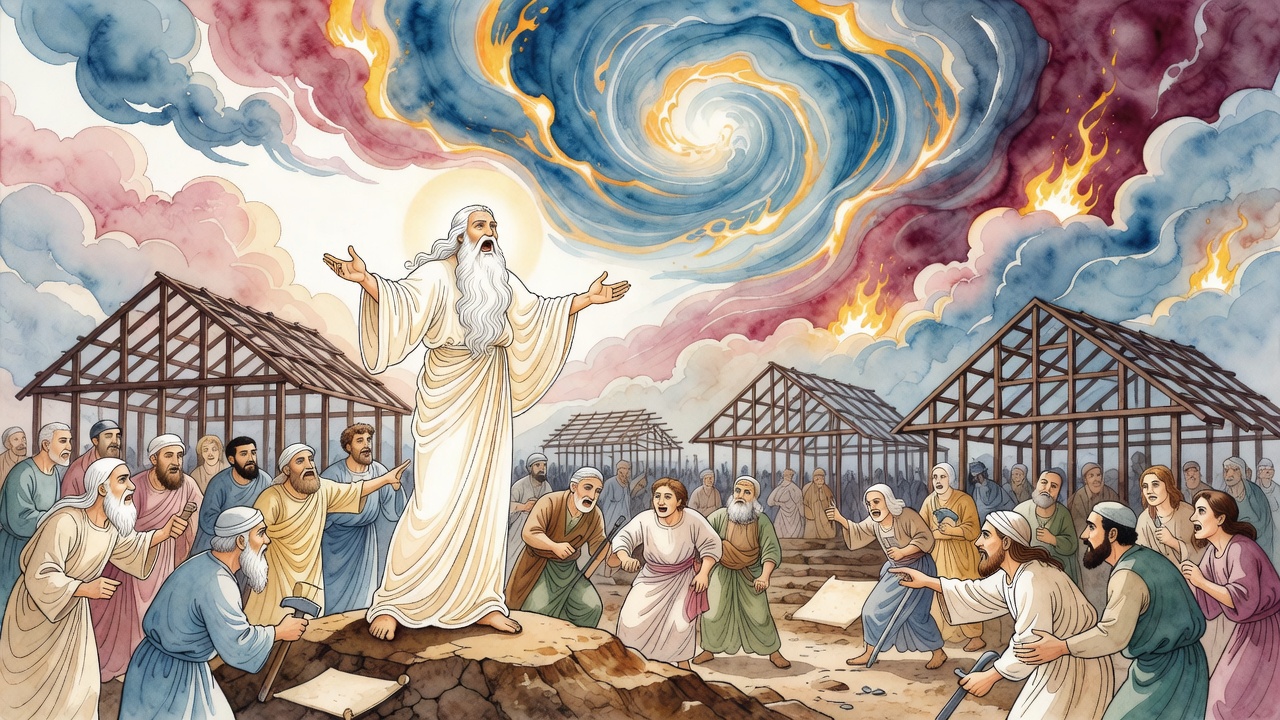
But even now a door was left open, a narrow one. By His Word the decree went out that the breath of these creatures would not strive in flesh forever. A span was set, one hundred and twenty years, not as a countdown to drowning but as a held breath, a length of time given so that the painted generation might wash off the paint, tear up the contracts, and turn back. The waters were not yet gathered. The clouds had not yet bruised. For a hundred and twenty years the sky stayed dry above a world that had stopped being able to feel ashamed, waiting to see whether anyone at all would look up from the streets and lift their eyes to something other than each other.


← All myths
From the tradition

Sources

3 sources

The texts this telling draws on, in full. Open a card to read inline, or expand it for a wider, quieter read.

Targum Jonathan on Genesis 6Targum Jonathan

The Hebrew Bible says the "sons of God" saw that human women were beautiful, and took wives from among them (Genesis 6:2). That's all it says. The Targum Jonathan rewrites the scene entirely, and the details it adds reveal what ancient Aramaic translators actually thought happened before the Flood.

First, the Targum changes "sons of God" to "sons of the great." This is a deliberate theological move. The Hebrew bene elohim could imply divine beings, which raises uncomfortable questions about angels having children. The Targum hedges, but then names the Watchers anyway: Schamchazai and Uzziel, "who fell from heaven." The translators wanted it both ways, downplay the divine parentage in one verse, then confirm the angelic descent two verses later.

The women get a makeover too. The Hebrew just says they were "beautiful." The Targum says they were "beautiful, and painted, and curled, walking with revelation of the flesh, and with imaginations of wickedness." This is not translation. This is commentary dressed as scripture. The translators blamed the women's appearance for the angels' fall, adding cosmetics and exposed skin to a text that never mentioned either.

Then there is the Memra. Every time God acts in this chapter, the Targum inserts "by His Word", Memra in Aramaic. "The Lord said by His Word." "It repented the Lord in His Word." This is the Targum's signature theological invention: God never acts directly on the world. He acts through His Word, a kind of divine intermediary that shields God from direct contact with imperfect creation.

The 120 years in (Genesis 6:3) become an explicit grace period: "I will give them a prolongment of a hundred and twenty years, that they may work repentance, and not perish." The Hebrew is ambiguous. The Targum is not. And Noah's ark gets a precious stone from the river Phison to illuminate it instead of a window, because the translators apparently decided a gem from Eden made more sense than a skylight on a boat.

Full source
Targum Pseudo-Jonathan on Genesis 6:2Targum Pseudo-Jonathan on Genesis

One of the Torah's most mysterious verses, (Genesis 6:2), talks about "the sons of God" taking "the daughters of men." The Targumist keeps the image but sharpens it.

Targum Pseudo-Jonathan renders it: "The sons of the great saw that the daughters of men were beautiful, and painted, and curled, walking with revelation of the flesh, and with imaginations of wickedness; that they took them wives of all who pleased them."

The Targum describes the daughters in harsh social detail: they were beautified artificially, painted, coiffed, dressed provocatively, minds turned to wickedness. The blame in the Targum is distributed. The "sons of the great", aristocratic men, or in the Targumist's next verse, Watchers, took whatever women they wanted. But the women are not innocent either. This is a generation that has turned its entire public life toward seduction.

The Targumist is describing social collapse, not just individual sin. When the powerful take whomever they want, and when public culture celebrates display and lust, the entire moral fabric tears. The Flood does not come out of nowhere. It is drawn down by a world that has made desire its only god.

Full source
Bereshit Rabbah 26:5Genesis Rabbah

"And the sons of God saw" (Genesis 6:2). Rabbi Shimon ben Yochai called them "the sons of the judges." Rabbi Shimon ben Yochai used to curse anyone who called them "the sons of the gods." Rabbi Shimon ben Yochai taught: Any breach that does not come from the great ones is not a breach. The priests stole gods; who can swear by it, or who can offer to it? And why does Scripture call them "the sons of God"? Rabbi Chanina and Rabbi Shimon ben Lakish both say: Because they prolonged their days without sorrow and without suffering. Rabbi Chana in the name of Rabbi Yose said: So that they might determine the seasons and the calculations. The Rabbis say: So that they might take what was theirs and what belonged to the generations that would come after them. "That they were fair" (Genesis 6:2): Rabbi Yudan said, It is written "fair" [tovot]: when they would beautify a bride for her husband, a great one would enter and have relations with her first. This is what is written, "that they were fair": these are the virgins. "And they took for themselves wives of all whom they chose" (Genesis 6:2): these are married women. "Of all whom they chose": this refers to a male and an animal. Rabbi Huna in the name of Rabbi said: The generation of the flood was not blotted out of the world until they wrote marriage documents for a male and for an animal. Rabbi Simlai said: In every place where you find harlotry, mass disorder comes into the world and kills good and bad alike. Rabbi Azaryah and Rabbi Yehudah bar Rabbi Simon in the name of Rabbi Yehoshua ben Levi said: The Holy One, blessed be He, is patient over everything except harlotry. What is the reason? "And the sons of God saw" and so forth, and what is written after it? "And the LORD said, I will blot out man" (Genesis 6:7). Rabbi Yehoshua bar Levi in the name of Pedayah said: All that night Lot was seeking mercy for the people of Sodom, and they would accept it from his hand. As soon as they said to him, "Bring them out to us that we may know them" (Genesis 19:5) for intercourse, they said to him, "Whom else have you here" (Genesis 19:12) to teach a defense on their behalf? From now on you have no right to plead a defense for them.

Full source