They Cut the Barley While the Sun Still Stood
The omer demanded ripe barley offered by day. While Israel slept a wind dried the land, and the first sheaf taught that the count to Sinai begins in light.
Table of Contents
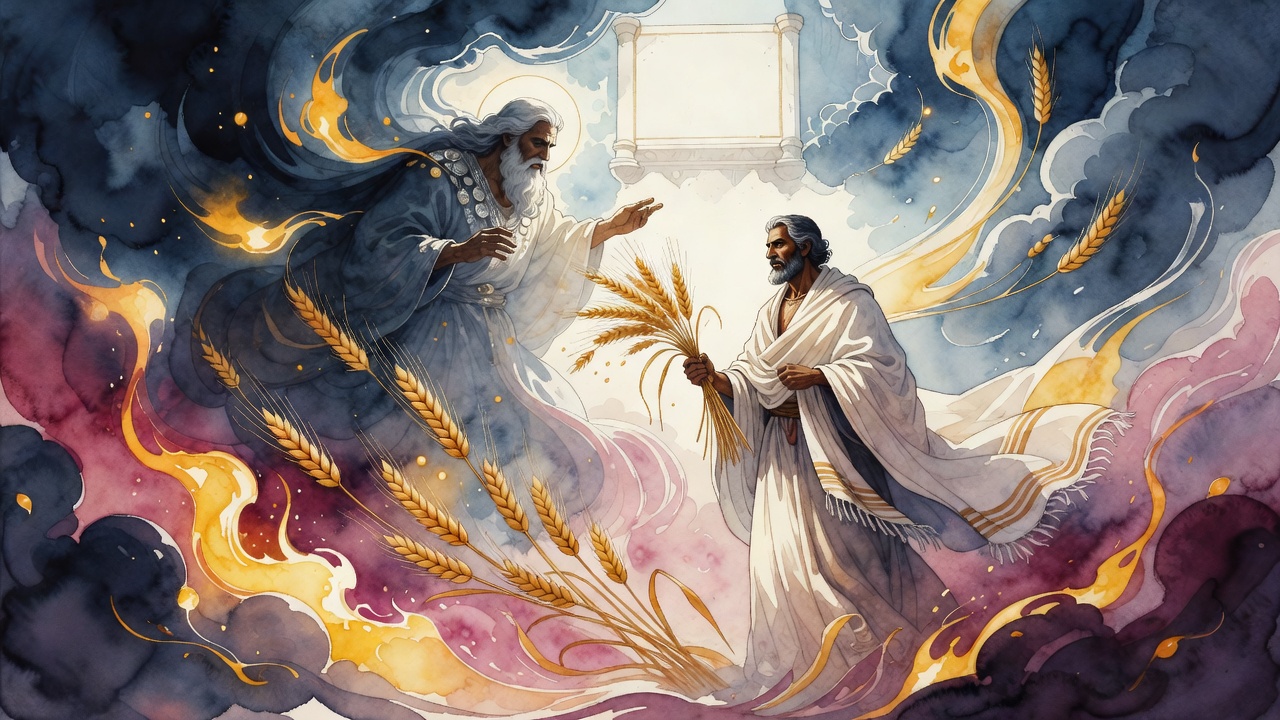
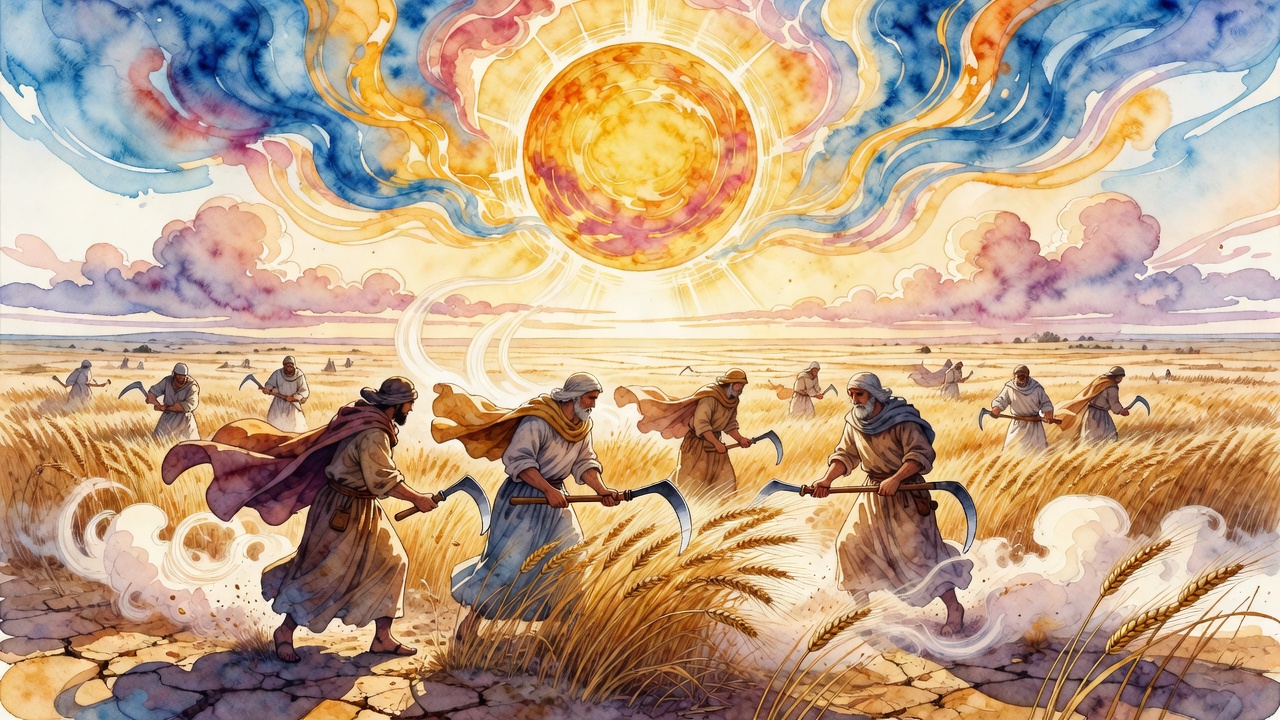
The reapers waited for light on the edge of a barley field still damp with night. Behind them the count toward Sinai had not yet begun. Before them the first sheaf had to be cut under an open sky, not under stars that hide a man's face from his neighbor and hide a false measure from a court.
 Click for full size
Someone always asked why not work faster in the dark and sleep when the sun rose. The answer was as old as the offering itself and as public as a field beside a road.
Day for the Sheaf
Sifrei Devarim refuses a clever farmer who wants to harvest at night, count at night, and bring the omer (the first barley sheaf offering) at night to save daylight for other work. The omer marks the start of forty-nine days toward Shavuot (the festival of weeks, marking Sinai). The text insists the offering is a daylight act. Night may be efficient for a man who loves speed. Night is not the hour appointed for this first public cut that begins the nation's climb toward the mountain of speech.
Efficiency is not holiness. A people learning to wait for revelation must also learn to wait for sun. The field looks the same at midnight to tired eyes. The command does not look the same, because command is not only crop. It is time made visible.
Bring the sheaf when faces can be seen. Let the count begin when no one can pretend the hour was private.
Barley That Is Not Ordinary Grain
The Yalkut Shimoni presses the barley itself until it confesses it is not a casual sack from the market. Rabbi Judah hears in a small "if" a hint that the offering, like Jubilee, can lapse and return across history's gaps. Rabbi Shimon answers that the offering is still obligatory, because elsewhere the Torah simply commands, you shall bring the omer, without leaving the matter to mood. Ripe grain, roasted, measured. The firstfruits of a people who plant under law, not under panic that grabs whatever is green.
Hands that cut that barley are not only feeding a ritual calendar. They are announcing that the year has a spine. Weeks will be counted aloud. Sinai will be approached on foot, day by day, not grabbed in a night of impatience that wants the mountain without the walk.
Roasted ripe grain smells like a promise kept in fire. The smell itself is part of the teaching. This is food that has passed through attention, not grain stolen from the dark.
Wind That Works While Sleep Comes
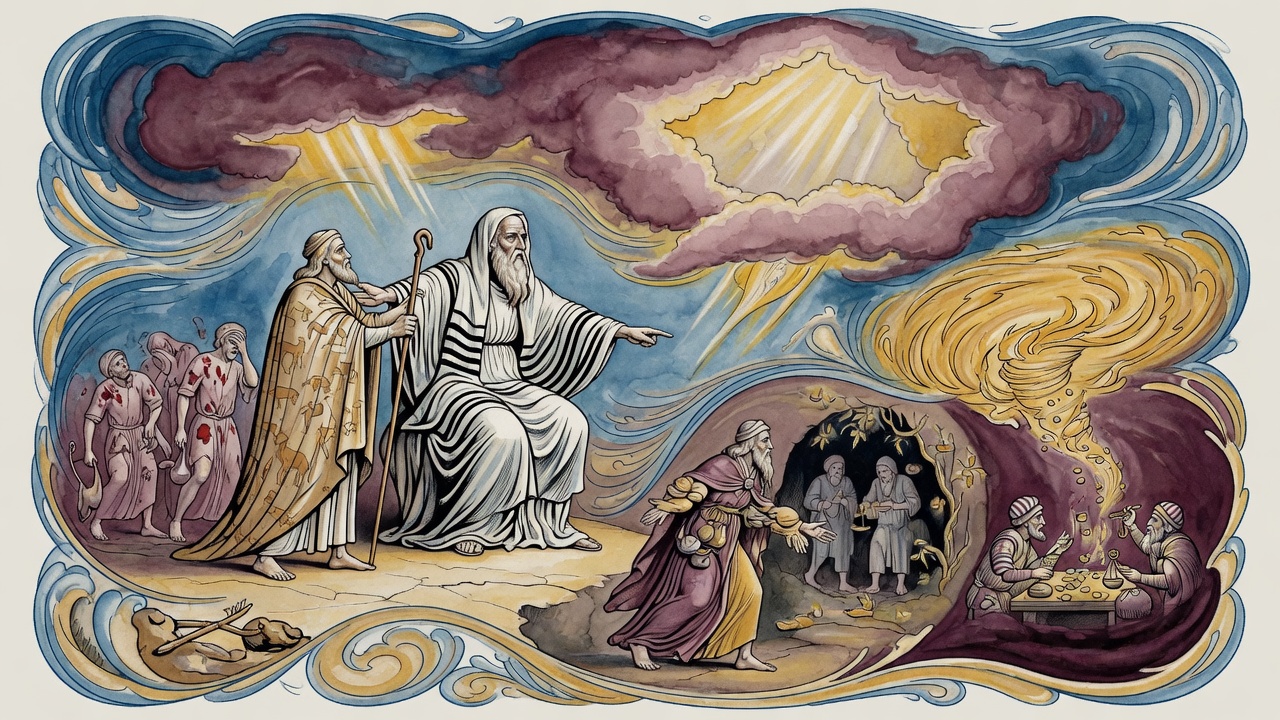
Vayikra Rabbah sets a simple picture beside the omer and refuses to apologize for its simplicity. Wash clothes on a rainy day and you labor to dry them with every scrap of weak sun. Sleep, and the Holy One sends a little wind that dries the whole land while your eyes are closed. The ordinary gift is still a gift. The people who bring a sheaf by day also live under a sky that works when their hands go still.
That wind is not an excuse for laziness in the field. It is a rebuke to the fantasy that only human haste keeps the world from rotting. Bring the sheaf when commanded. Then rest enough to notice that heaven has been farming the moisture off the stones without your permission and without your wage.
A nation that can receive wind can also receive weeks of counting without demanding the revelation arrive early to match its anxiety.
Why the Count Needs Light
Night hides mistakes. Day exposes the measure of the sheaf and the honesty of the hour. The omer's publicity is part of its truth. Neighbors see the cut. Courts can challenge the time. A community counting toward Torah cannot begin the count in a private dark where no one can say whether the sheaf was real or only a story told after the fact.
When the sun stood and the barley fell, Israel began again the old walk from grain to speech, from field to mountain. The reapers went home with chaff on their arms and a calendar alive in their mouths. Forty-nine days later they would not remember the night they skipped for speed. They would remember the light they obeyed, and the wind that dried the land while they finally slept without fear of a false start to the count.
A child watching from the path would only see men with sickles and a sheaf lifted like any other farm work. The child would not yet know that the sheaf was a door into weeks of measured waiting. Adults knew. That is why they waited for the sun even when their backs ached for bed.
Cut by day. Count in the open. Let heaven do the night work that is already its habit, drying cloth and land while human haste learns to sit down.
← All myths