5 min read

Thirteen Years Ended When She Fell at the Door

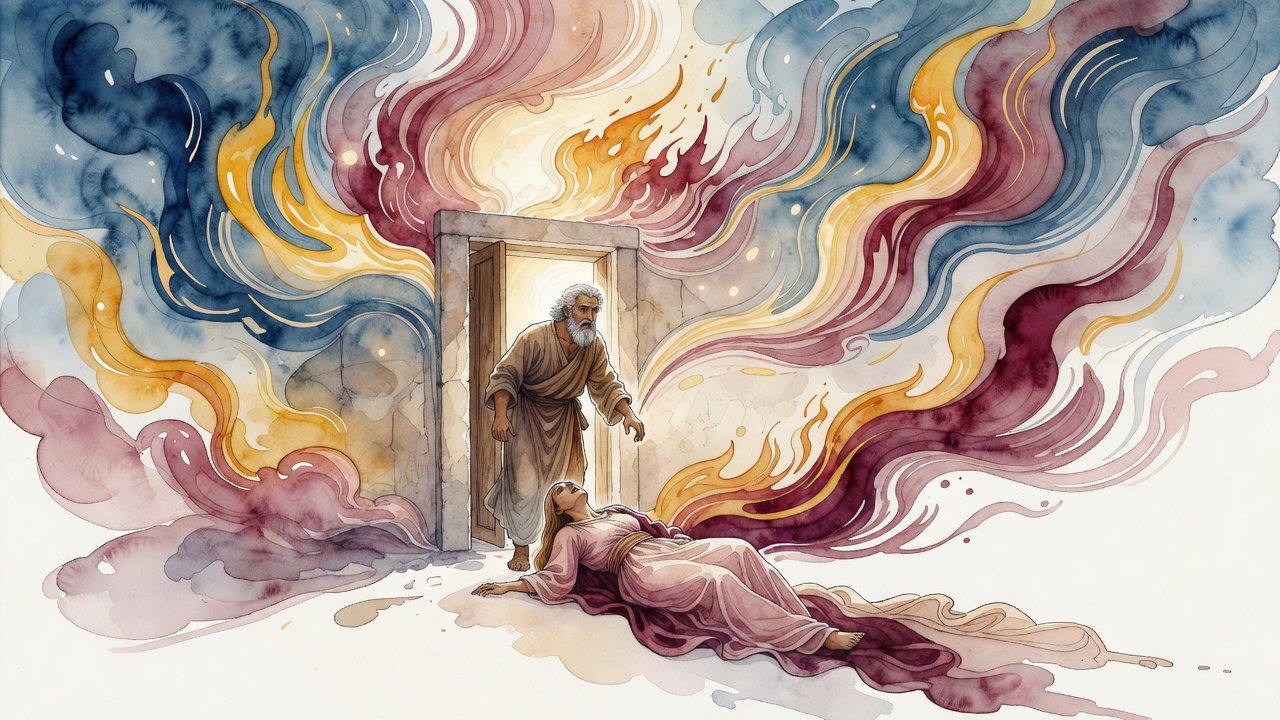
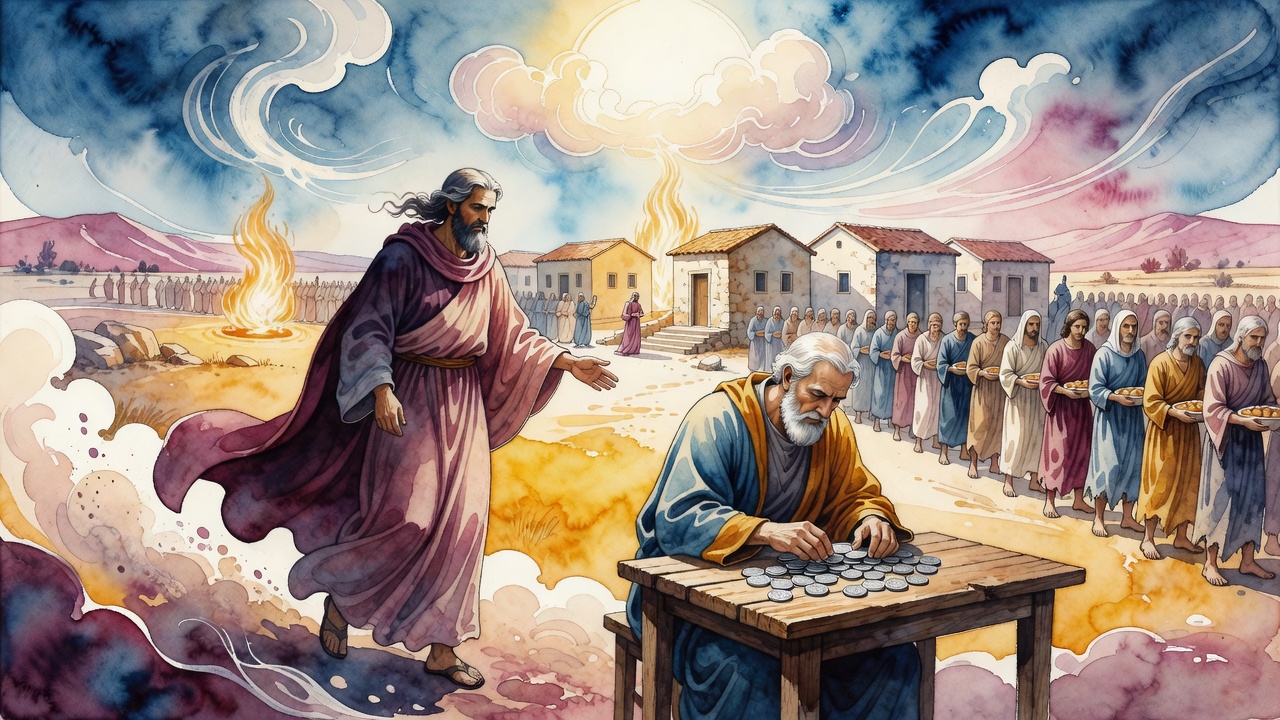
Hananya came home to streets full of new houses. At the well he heard a girl called daughter of Hanina and followed her to a door he did not recognize.

Curated by Arthur · Told by Maggid ·
Table of Contents
  1. Thirteen Years in Bnei Brak
  2. A City He Could Not Recognize
  3. Bells Before the Holy
  4. When Skipping Is Love
  5. Study Without a Knock
Thirteen Years Ended When She Fell at the Door Click for full size

Thirteen Years in Bnei Brak

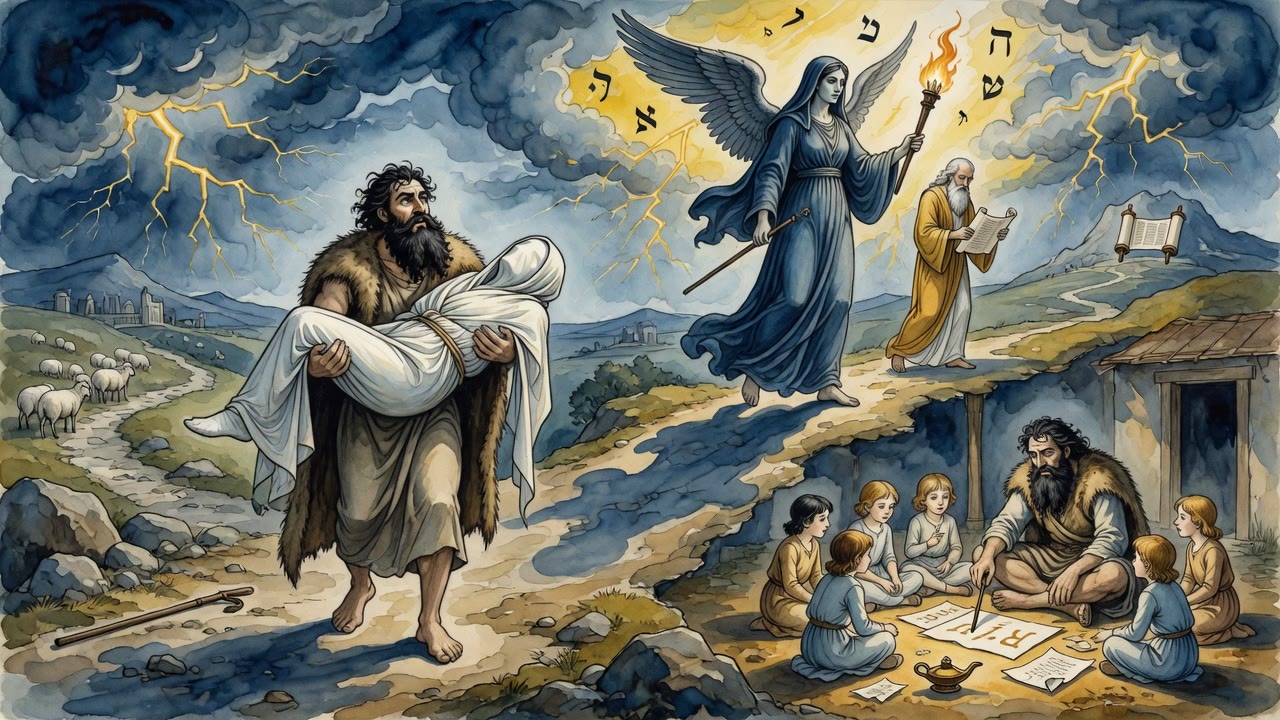
Rabbi Hananya ben Hakhinai and Rabbi Shimon ben Yochai went down to Bnei Brak to learn under Rabbi Akiva. Thirteen years they stayed. Shimon sometimes sent word home. Hananya sent none. The study hall swallowed the calendar. His daughter grew from child to woman without a father's letters on the road.

At last a message reached him: your daughter has grown; come marry her off. Still he remained. Then Akiva, by the Divine Spirit, perceived the grown daughter and announced to the students that anyone with a grown daughter should go and arrange her marriage. Only then did Hananya understand the word was aimed at him. He took leave and walked toward a house he no longer knew how to find.

A City He Could Not Recognize

When he arrived, the streets had changed. New houses. New courtyards. Construction had redrawn the map of his own life. He went to the place where women drew water and heard a girl called "daughter of Hanina." He followed her jug until she entered a house, and he entered after her without a sound.

His wife looked up, saw the husband of thirteen silent years, and her soul left her body. Shock killed her in the doorway of her own home. Hananya cried out to the Master of the universe: is this her reward after thirteen years of waiting? Heaven returned her soul. She lived. The midrash does not treat the revival as a trick. It treats the sudden entrance as a wound that required a miracle to close.

Bells Before the Holy

The commentators bind the story to the High Priest's robe, whose bells must be heard when he enters the sanctuary. Sound before presence. Warning before approach. Rabbi Shimon ben Yochai lists things the Holy One hates, and among them is entering one's house suddenly, and all the more another's house. Rabbi Yochanan, visiting Rabbi Hanina, would make a sound before he crossed the threshold.

Torah study that forgets the doorway can kill the person who kept the house. The bells are not only ritual metal. They are the ethics of arrival after long absence.

When Skipping Is Love

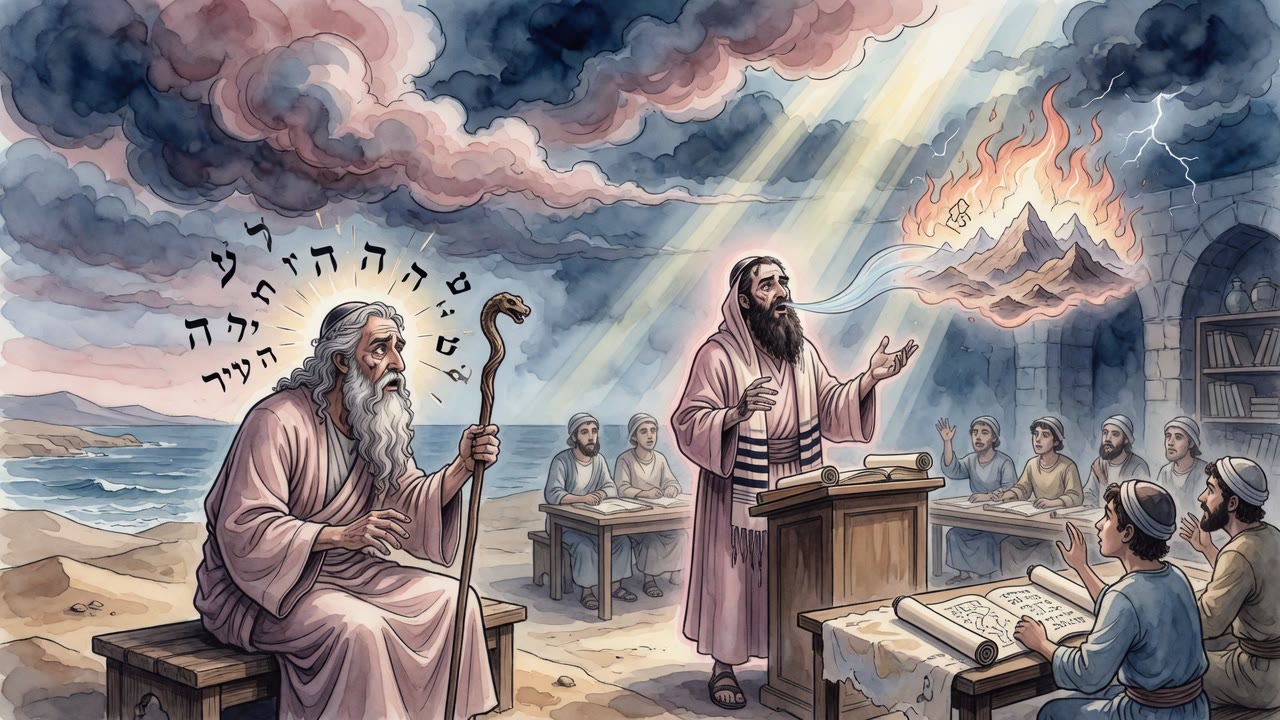
Rabbi Issachar reads a line from the Song of Songs: "his banner over me is love." He pictures a learner bent over Torah who cannot sit still, leaping from law to law and verse to verse before each is finished. By strict reckoning such study looks scattered. But the Hebrew for "his banner," diglo, shares its letters with "his skipping," dilugo. Heaven rearranges the letters and says: he is dear to Me. The skipping itself is a flag of love.

Hold that beside Hananya's thirteen years. Eager leaping can be love. Silent disappearance can be love's distortion. The Holy One reads restless study as devotion. The midrash also reads a wife's death at a silent threshold as a cost too high. Love of Torah does not cancel the need to announce yourself when you come home.

Thirteen years is long enough for a city to rebuild and a daughter to become a woman and a wife to learn the sound of a house without a husband's step. The study hall counts pages. The doorway counts heartbeats. When those two clocks finally meet without a warning knock, the midrash stages a death and a resurrection so that later students will never treat arrival as a small thing.

Study Without a Knock

Hananya's thirteen years under Akiva are not mocked by the midrash. The Torah he gained is real. Shimon ben Yochai's occasional letters home are not offered as the only correct model so much as a contrast that makes Hananya's silence visible. Total immersion has a cost that does not appear in the page count of the tractate mastered. It appears in a wife who waited and a daughter who had to summon her father by rumor and in a city that rebuilt itself while he sat in Bnei Brak.

When her soul leaves and returns, the miracle does not erase the indictment. It underlines it. Heaven answers his cry because the waiting woman did not deserve death as the price of his learning. The rule that follows, sound before entry, binds High Priest bells to ordinary doors. Sacred space and domestic space share a grammar of approach. You do not crash into either as if the people inside were furniture.

Rabbi Issachar's skipping learner still belongs here. Heaven can love restless study. Heaven can also hate a sudden shadow in a doorway. The banner of love is not a blank check for neglect. It is a reading of eager motion inside the text, not a license to vanish from the people who keep your house standing for thirteen winters.


← All myths

From the tradition

Sources

2 sources

The texts behind this telling. Some cards carry a translation of the source; others are our own retelling of it, and each card says which. Every card links out to the original.

Vayikra Rabbah 21:8Vayikra Rabbah

Retold in our words. Read the original at the link below.The Sefaria Midrash Rabbah, 2022 · CC-BY

It's a story about dedication to Torah study, unexpected homecomings, and maybe, just maybe, the importance of knocking before you enter.

The story begins with two renowned scholars, Rabbi Ḥananya ben Ḥakhinai and Rabbi Shimon ben Yoḥai, who journeyed to Bnei Brak to immerse themselves in Torah study under the guidance of the great Rabbi Akiva. Thirteen years they remained there, dedicating themselves to learning. Now, Rabbi Shimon ben Yoḥai, as the story goes, would occasionally send messages home, checking in on his family. But Rabbi Ḥananya? He was completely absorbed in his studies, not sending word or seeking news from his household.

His wife's situation. Years pass. Their daughter grows up. Finally, she sends a message: "Your daughter has grown; come and marry her off!" Still, Rabbi Ḥananya remained.

Then, something remarkable happens. Rabbi Akiva, through what the text calls "the Divine Spirit," perceives that Rabbi Ḥananya has a grown daughter. He announces to his students, "Anyone who has a grown daughter should go and marry her off." Only then does Rabbi Ḥananya realize the message is meant for him. He seeks permission from Rabbi Akiva, and finally, after thirteen long years, sets off for home.

But here’s where the story takes a strange turn. When Rabbi Ḥananya arrives, he can't find his house! The city has changed so much. New houses, new courtyards... he's completely disoriented. The Midrash (rabbinic interpretive commentary) tells us there had been significant construction, making it impossible for him to locate his residence. Can you imagine that feeling of utter displacement?

So, what does he do? He goes to where the women draw water, hoping to glean some information. He overhears young women saying, "Daughter of Ḥanina, fill your jug and go up." Aha! He follows her until she enters a house. He enters right after her, unexpectedly.

And here’s the tragic moment: His wife, startled by his sudden appearance, sees him, and… her soul departs. She dies of shock.

Rabbi Ḥananya is understandably distraught. He cries out to God, "Master of the universe, this poor woman, is this her reward after thirteen years that she waited for me?" And in a moment of divine intervention, her soul returns to her body. She is revived.

The Etz Yosef commentary notes that this incident teaches us a crucial lesson: it's improper to enter even one's own home without warning. This is related to the bells on the robe of the High Priest (Kohen Gadol), as it says, "Its sound shall be heard when he goes into the Sanctuary before the Lord" (Exodus 28:35). The idea is that just as the High Priest announces his presence before entering the sacred space, we too should announce our presence before entering any space, even our own homes.

The story continues with Rabbi Shimon ben Yoḥai listing four things that the Holy One, blessed be He, hates (and that he, too, dislikes): improper acts, indiscreet behavior, and – you guessed it – entering one's house suddenly, "and it goes without saying the house of another." Rav echoes this sentiment, advising against entering a city or a house unexpectedly.

Finally, the Midrash concludes with an example: Rabbi Yoḥanan, when visiting Rabbi Ḥanina, would always make a sound before entering, in accordance with the verse about the High Priest's bells.

So, what are we to take away from this intriguing story? It's more than just a cautionary tale about startling your spouse. It's a reminder to be mindful of others, to respect boundaries, and to announce our presence – both physically and perhaps even emotionally – before barging into any situation. And maybe, just maybe, it's a gentle nudge to stay connected with loved ones, even when we're deeply immersed in our own pursuits. After all, sometimes the greatest discoveries are not in the study hall, but in the familiar faces and voices waiting for us at home.

Full source
Midrash Tanchuma Buber, Bamidbar 10:4Midrash Tanchuma Buber, Bamidbar

Translation of the source text.Midrash Tanchuma (Buber), Public Domain, on Sefaria · CC-BY-SA

[Rabbi Issachar said: What is the meaning of "and his banner over me is love" (Song of Songs 2:4)? Even when a person sits and occupies himself with the Torah, and skips [medaleg, from the root DLG] from one halakhah to another and from one verse to another, the Holy One, blessed be He, says: He is dear to Me, and "his banner [diglo, from the root DGL] over Me is love," and his skipping [dilugo, from the root DLG] over Me is love.

Full source