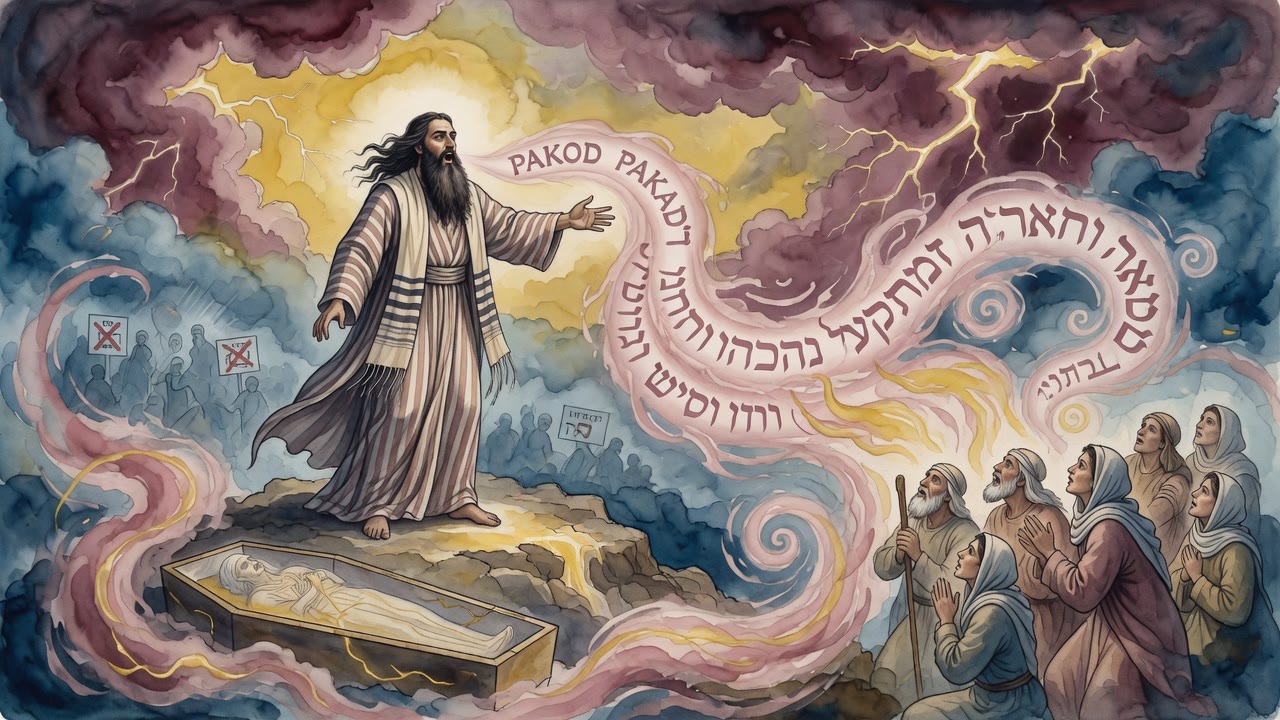
She Carried Him Home From the Divorce Feast
A childless couple of Sidon comes for a bill of divorce. Rabbi Shimon sends them to feast first, and she chooses the only treasure that matters.
Table of Contents
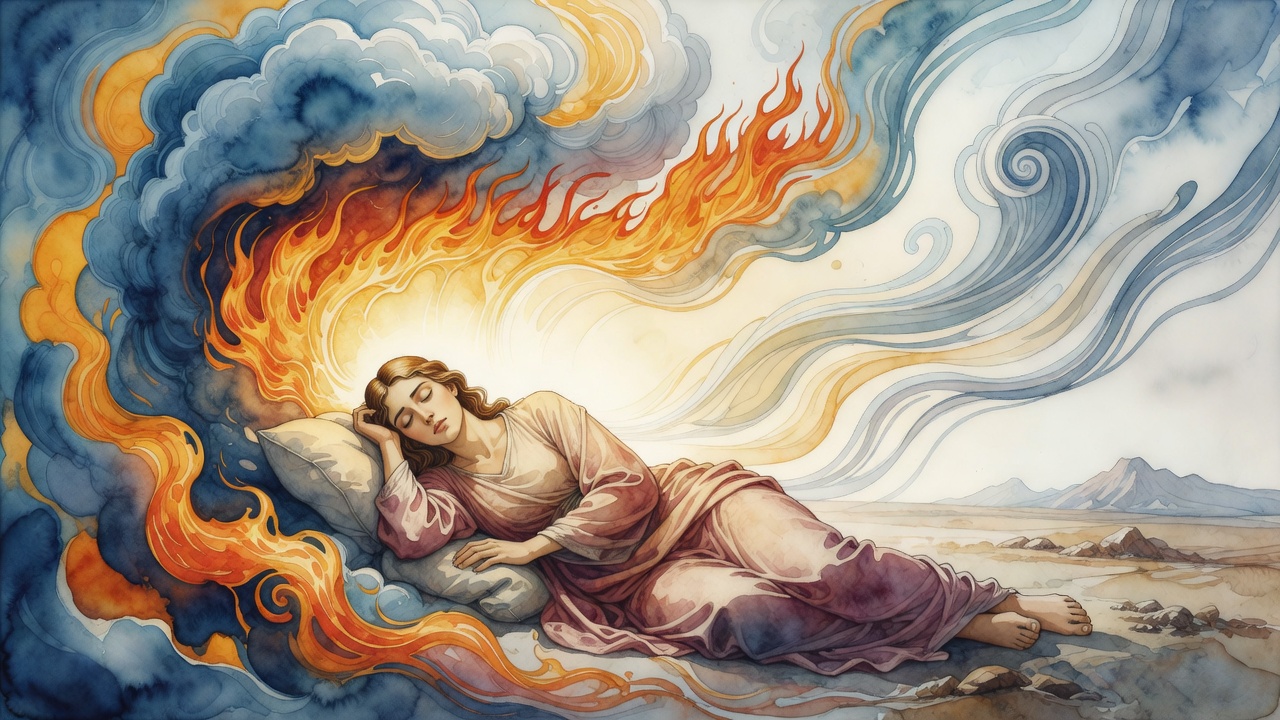
They stood before Rabbi Shimon ben Yochai already half gone from each other. Ten years of marriage, no child in the cradle, and the custom of their time allowed the cut. The man of Sidon wanted the bill written before the sun moved much farther across the court. His wife did not argue in the doorway. Grief had already done the arguing at home, in rooms where the quiet of a missing voice had become furniture.
 Click for full size
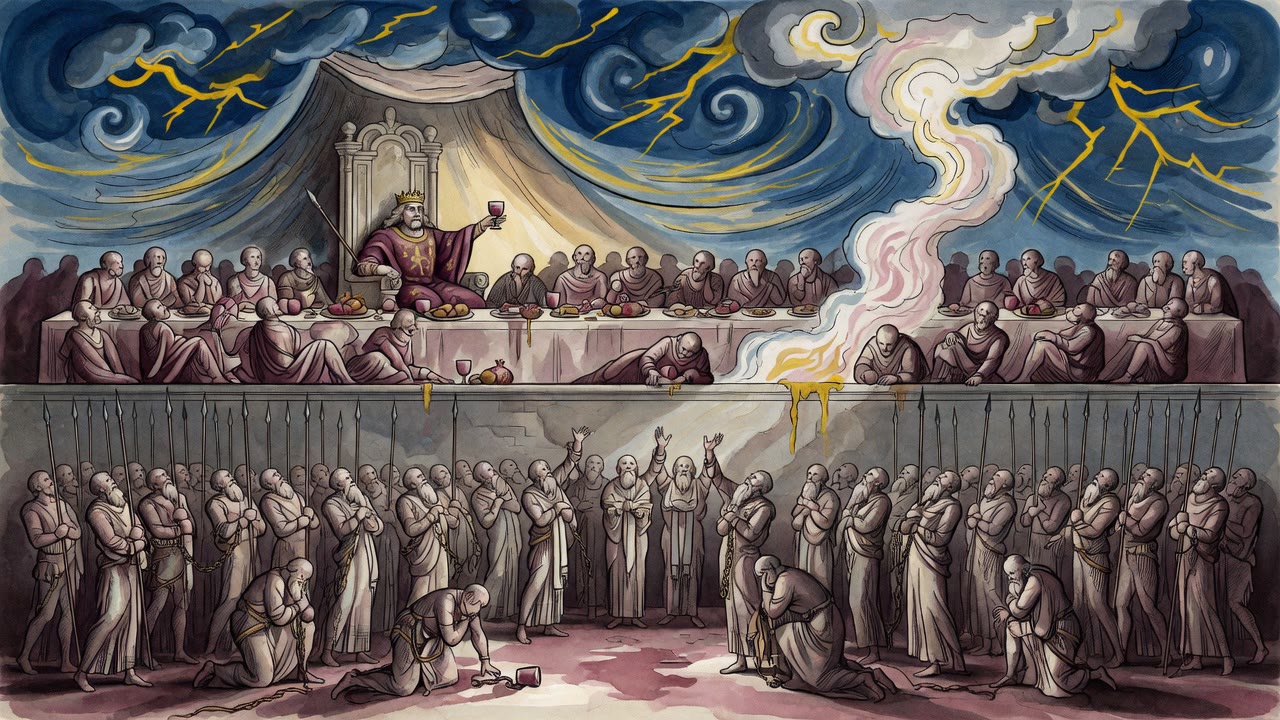
"My children," the rabbi said, and the word landed hard on a pair who had none, "do not part in a storm. If you leave angry, the street will invent a shame that never happened. People will say she was faithless, or he was cruel, and the lie will outlive you both. Go home. Prepare a feast. Invite friends. Celebrate one last evening as you began. Come tomorrow, and I will write what you ask."
They could have refused. The law was on their side if they wanted speed. Something in his voice, or in their own exhaustion, sent them back through the gate together.
Wine on the Table of Ending
They cooked. They poured. Guests filled the room with the noise of people who do not know they have been invited to a funeral dressed as a meal. Someone told a story from their wedding year. Someone else remembered a journey along the coast when they were still young enough to walk without counting the cost of each mile. Somewhere between the second cup and the third, the old affection rose like heat from a banked fire that had never fully gone out.
The husband looked at the woman who had shared his years of waiting and spoke with the generosity of a man already free in his own mind. "We have lived lovingly together all this time. Now that we part, take whatever you most value in this house, and carry it to your father's home."
He thought he was being kind. He thought kindness could be silver, cloth, a chest of linen folded for another life. She waited until he slept.
The Bed Leaves the House
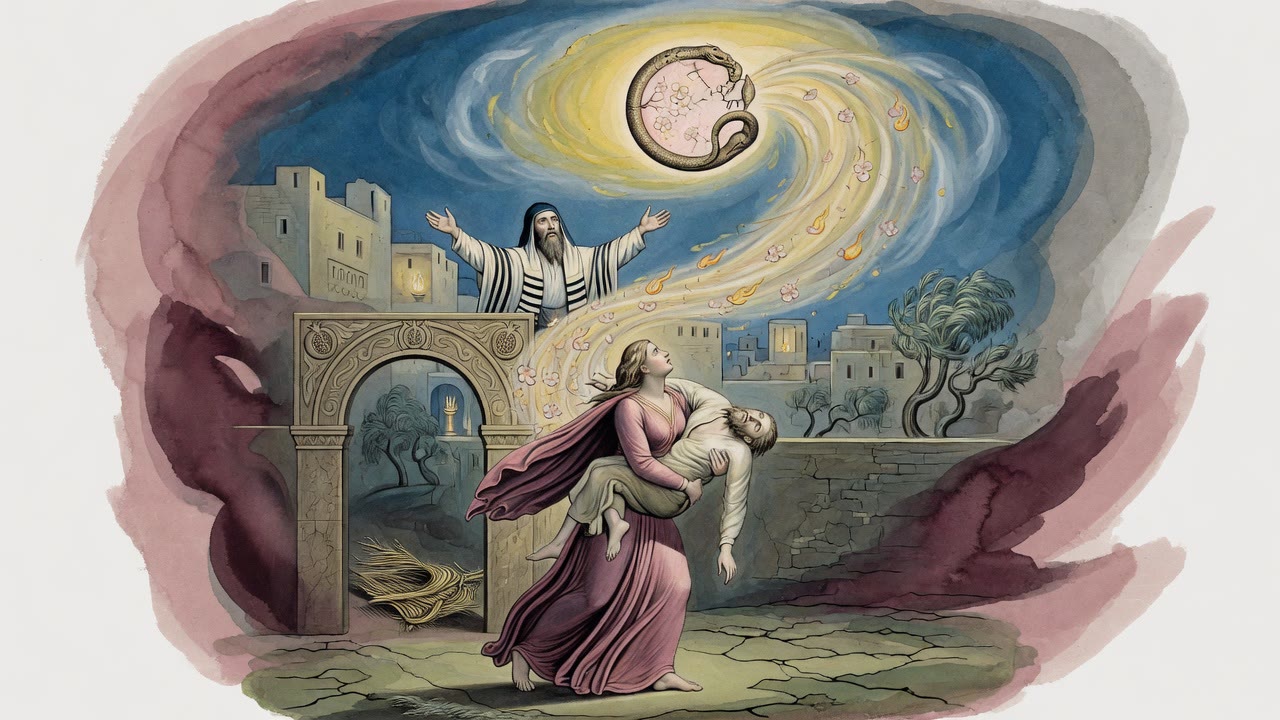
In the night she had him lifted, bed and all, by servants who knew her face better than they knew the law of divorce. They carried him through dark streets to her father's door. What she valued most was him. When he woke among strange beams and asked what was happening, she only repeated his promise, word for word, until he heard what he had offered.
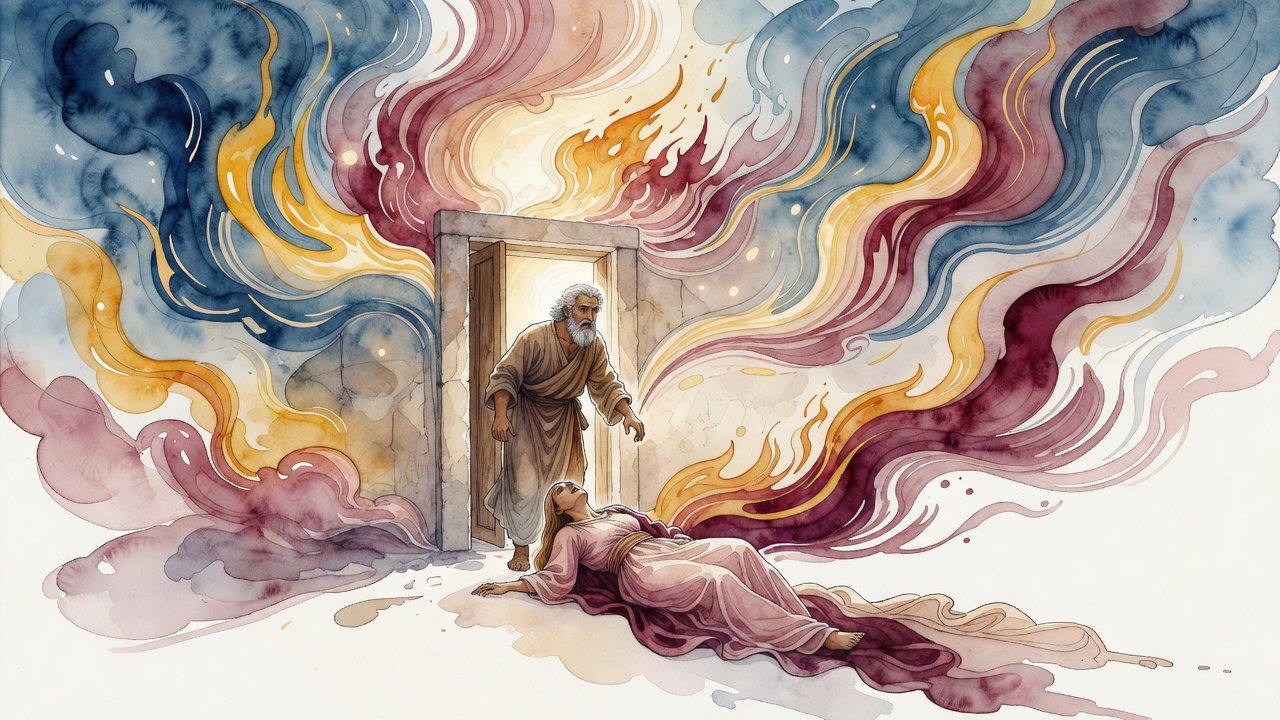
He took her home before dawn fully owned the alleys. They returned to Rabbi Shimon not for a bill but for a blessing that tasted like embarrassment and relief mixed. Within the year a child was born. The divorce that had seemed as inevitable as the tide had been undone by one feast, one night, and one woman who refused to choose furniture over a life still breathing beside her.
Neighbors would later say the rabbi worked a miracle. The miracle was smaller and sharper. He refused to let law become a weapon for fatigue.
A Hundred Cries on the Birthing Stool
The midrash that explains a mother's offering after birth remembers the same terror from the other side of the door. On the birthing stool a woman cries out a hundred times. Ninety-nine lean toward death, and only one toward life. So narrow is the gate through which every child enters the world. In that grip she may vow anything, swear anything, bargain with heaven for a living breath that is not her own. Later the Torah asks for a lamb when her days of purification are fulfilled, not as cold payment for blood, but as a return from the edge where vows are made under pressure no midwife can fully share.
Sidon's couple had lived for years on the wrong side of that gate, listening for a cry that never came. The feast did not invent fertility the way a charm invents luck. It restored the bond without which no blessing would land, the willingness to stay in the room when staying hurt.
Four Kinds of Listeners
Elsewhere the sages sort the people who hear a vow in labor into kinds as different as weather. Some answer with pity and forget by morning. Some answer with scorn, as if pain were a performance. Some offer empty comfort that vanishes when the screaming stops. Some actually keep the woman in mind when the danger has passed, and help her keep whatever promise she made to heaven or to herself in the narrow place.
Rabbi Shimon belonged to the fourth kind without ever standing in a birthing room that day. He did not rush the bill. He forced a pause long enough for memory to speak louder than despair. A bill of divorce is easy to write when the room is cold and the witnesses are ready. A second wedding is harder. It requires the husband to wake in the wrong house and discover he has already been chosen again by the person he was prepared to release.
What Remained on the Table
In the morning the guests were gone, the wine flat, the story already starting to travel along the coast. People would say Rabbi Shimon always knew how to turn a hard law soft. Better to say he knew when a hard law was being asked to do the work of impatience. He made them eat together once more, and trust that love, given one clean night without the court waiting outside, might still know its own name.
The child who came later would never remember the feast, the bed in the street, or the rabbi's refusal. The parents would. Every year of that child's life answered the question the law had almost answered for them with a blank parchment and a closed door. Sometimes the holiest act in a court is the delay that lets a house choose itself again.
← All myths