6 min read

The Feast That Saved the Barren Couple of Sidon

After ten childless years in Sidon, a wife carried her sleeping husband home as her only treasure, and a rabbi's prayer opened the sealed year.

Curated by Arthur · Told by Maggid ·
Table of Contents
  1. Ten Years Without a Child
  2. The Treasure Taken Home
  3. A Staff for the Hand
  4. Where the Presence Lands
  5. The Day That Remembers
The Feast That Saved the Barren Couple of Sidon Click for full size

Ten Years Without a Child

The woman of Sidon counted the years on her fingers and ran out of fingers twice. Ten years of shared bread, shared bed, and no cradle in the corner. Dust settled on the hope she refused to name out loud. She and her husband walked the road to Rabbi Shimon ben Yochai the way people walk toward a knife they hope is a surgeon's, not an executioner's. They came for a divorce.

The rabbi looked at them and did not reach for parchment. The room held their silence like a bowl holds water. "Just as you were joined amid food and drink," he said, "you shall not part except amid food and drink." The law could wait on a table. The table would have to speak first.

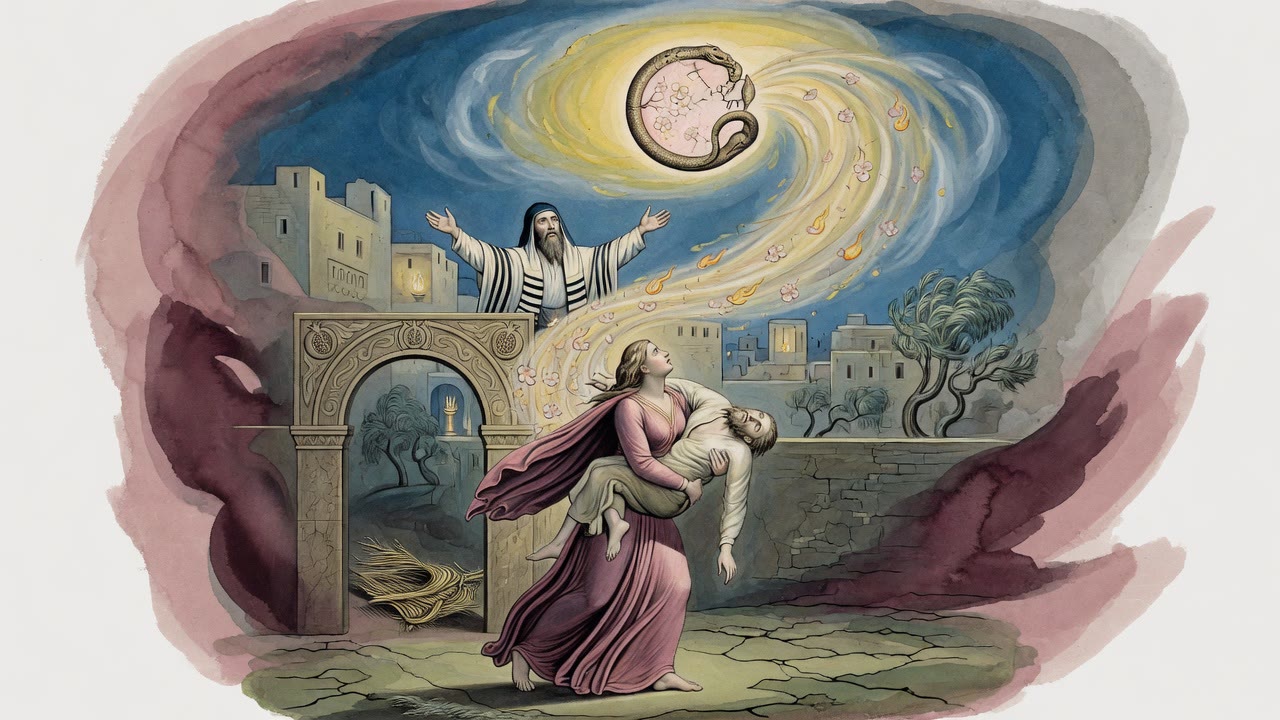
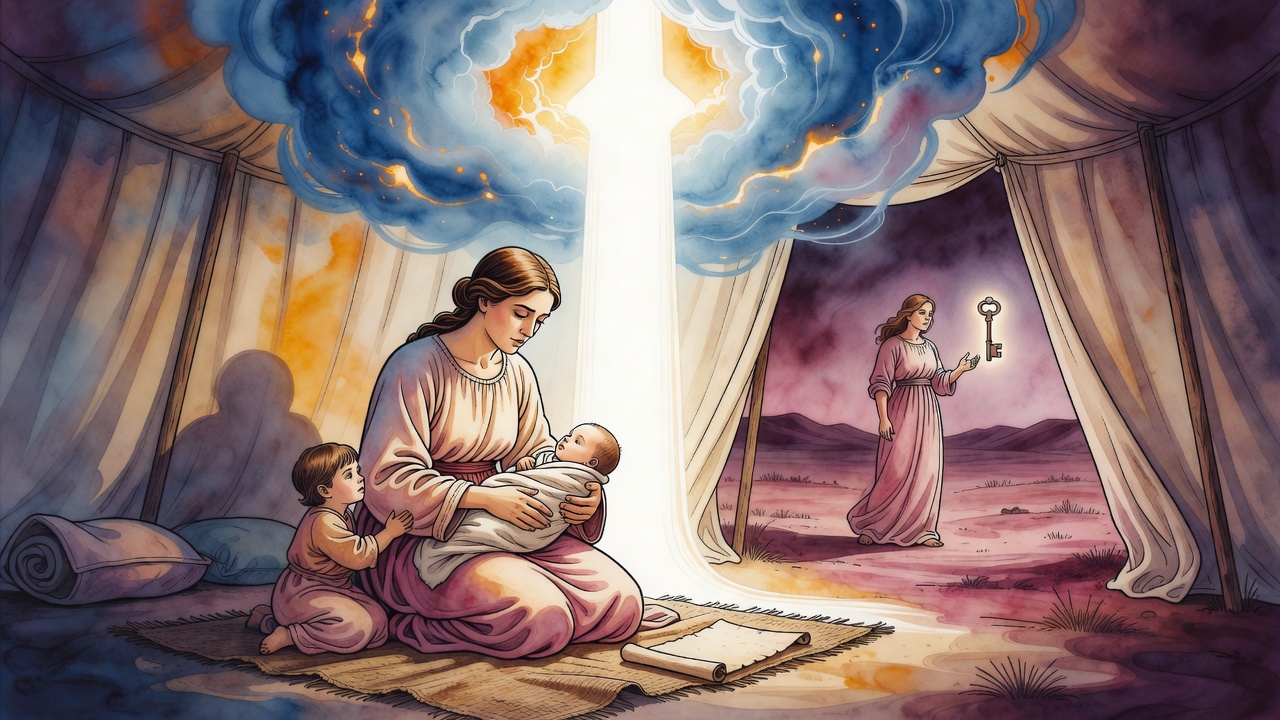
She threw a feast that filled the house with steam and spice. Cups went around. Neighbors heard music and assumed a celebration. Her husband's face loosened, then slipped into sleep the way a rope slips from a tired hand. She nodded to the servants. They lifted him as carefully as a Torah scroll and carried him through the dark to her father's house.

The Treasure Taken Home

He woke in a room that was not his and asked, thick-tongued, where he was. She sat near enough that he could hear her breath and smell the feast still on his clothes. "You told me to take the most precious thing in your house," she said. "I have nothing more precious than you."

The divorce papers waited somewhere like a cold blade under cloth. She had not stolen silver. She had stolen him back into the center of her life and forced him to name what he still wanted. The servants stood in the doorway with empty hands, as if they too were waiting for a verdict.

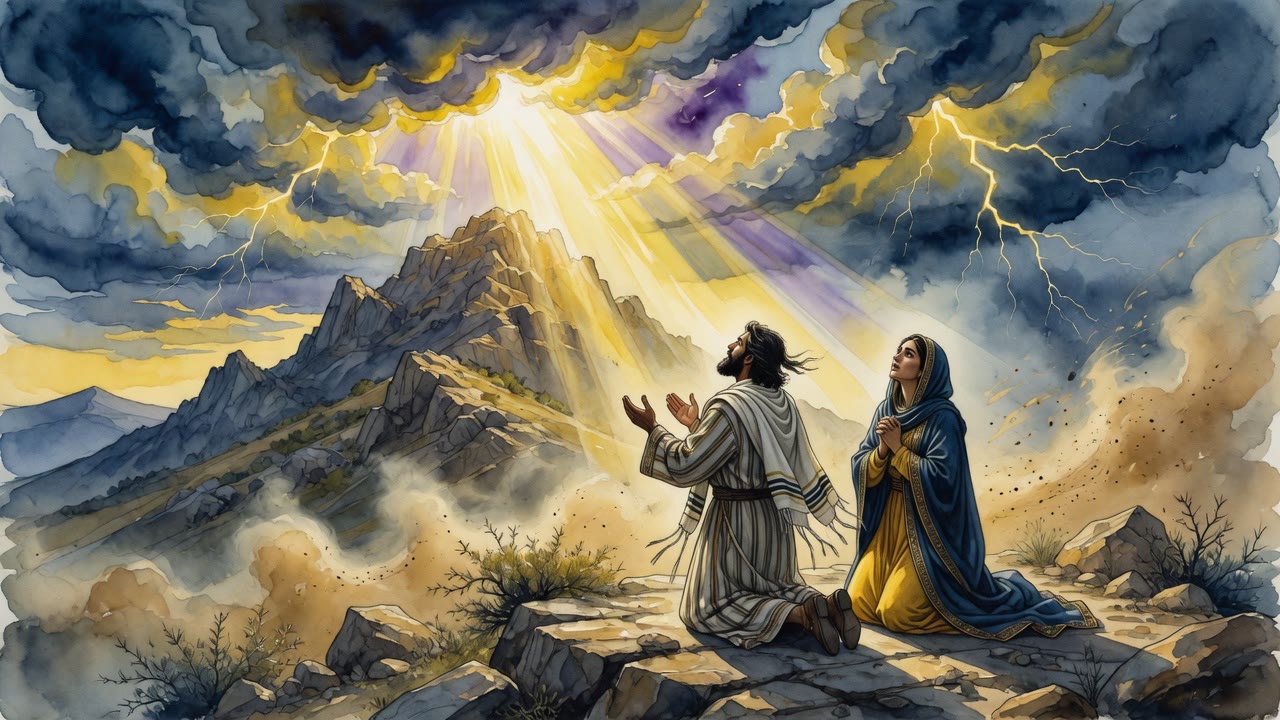
When Rabbi Shimon heard how she had answered, he did not lecture. He prayed. Heaven remembered the couple with a child the way rain remembers cracked ground. The sealed year opened. A cradle finally took weight that had been waiting ten years to land.

A Staff for the Hand

Another woman stood before Rabbi Yehudah HaNasi generations later and heard the cold edge of law. Women, he said, are not commanded to bear children the way men are. The verse that binds Jacob alone, "be fruitful and multiply," speaks in the singular. She pressed him with a picture no schoolroom can soften. Does she not want a staff for her hand and a hoe for her burial, a child to lean on in age and to lay her in the ground?

The rabbi's face changed. In such a case the court would compel. Exemption on the page is not the same as emptiness in a house. The longing for a staff can drag mercy out of a ruling the way a feast can drag truth out of a sleeping man.

Yehudit, wife of Rabbi Chiyya, worn raw by the agony of birth, once disguised herself and asked the same question. Hearing she was exempt, she drank a potion that ended her fertility. When the truth came out, her husband sighed for one more set of twins, remembering how they had come in pairs. Law and longing sat at the same table and would not share a plate. The Sidon wife chose the feast. Yehudit chose the end of pain. Both decisions left a mark on the house.

Where the Presence Lands

God told Abraham, "I will be a God to you and to your seed after you" (Genesis 17:7). The last three words do not let a single life freeze the promise. Without seed after you, where does the Divine Presence settle? On trees? On stones? A covenant stretched across generations needs links. Refuse the next link, and the chain has nowhere to hang.

Abba Hanan, citing Rabbi Eliezer, read the death of Nadab and Abihu against the note that they had no children (Numbers 3:4). Had they had children, the teaching says, they would not have died. Neglect of the future is its own erasure. The Sidon wife who refused to treat her husband as surplus knew this in her bones before any academy wrote it down.

A child is not only comfort. In this telling a child is a landing place for a Name that refuses to rest only on rock and branch. The feast was theater. The prayer was engine. The cradle was covenant made audible at night.

The Day That Remembers

"This is the day the Lord has made; let us be glad and rejoice in it." Rabbi Avin asked whether the joy is in the day or in God. Solomon answered with Torah and salvation. Rabbi Yitzchak added the twenty-two letters written into the scroll. But the warmest proof is not a letter count. It is a feast where a woman carries a sleeping man home and names him her treasure while divorce waits unused in a corner.

The Holy One remembers the barren. The righteous remember them too. If a human joy can run that wide in Sidon, how much greater the day God comes to gladden Jerusalem (Isaiah 61:10). The couple walks home under a sky that has changed its mind. The rabbi's prayer still hangs in the air like the smell of spice after the cups are washed.

Ten years had taught them the grammar of empty rooms. One night taught them that a table can reverse a road. They had come to end a marriage and left with a memory Heaven would not ignore. The staff for the hand, the hoe for the burial, the child for the covenant: all three waited inside the answer she gave in the dark.


← All myths

From the tradition

Sources

3 sources

The texts behind this telling. Some cards carry a translation of the source; others are our own retelling of it, and each card says which. Every card links out to the original.

Pesikta DeRav Kahana 22:2Pesikta de-Rav Kahana

Translation of the source text.Pesikta de Rav Kahana according to an Oxford manuscript, Dov Mandelbaum ed., N.Y. 1987 · CC-BY

"This is the day the LORD has made; let us be glad and rejoice in it" (Psalms 118:24). Rabbi Avin said: We do not know in what to rejoice, whether in the day or in the Holy One, blessed be He. Solomon came and explained, "let us be glad and rejoice in You" -- in You, in Your Torah; in You, in Your salvation. Rabbi Yitzchak said: In You -- in the twenty-two letters that You wrote for us in the Torah. Bet is two, kaf is twenty.

As we have learned there: If a man married a woman and remained with her ten years and she did not give birth, he is not permitted to neglect procreation. If he divorced her, she is permitted to marry another, and the second husband may remain with her ten years. If she miscarried, he counts from the time she miscarried. The man is commanded concerning procreation, but not the woman. Rabbi Yochanan ben Beroka says: Concerning both of them it says, "And God blessed them, and God said to them, Be fruitful and multiply" (Genesis 1:28).

There was an incident in Sidon concerning a man who married a woman and remained with her ten years and she did not give birth. They came before Rabbi Shimon ben Yochai to be divorced. He said to her: Any precious thing I have in my house, take it and go to your father's house. Rabbi Shimon ben Yochai said to them: Just as you were joined together amid food and drink, so you shall not part from one another except amid food and drink. What did she do? She made a great feast and got him very drunk and signaled to her maidservant, saying to them: Take him to my father's house. In the middle of the night he awoke from his sleep. He said to her: Where am I placed? She said to him: Did you not say, any precious thing I have in my house, take it and go to your father's house? And now I have no thing more precious than you. When Rabbi Shimon ben Yochai heard this, he prayed for them and they were remembered. The Holy One, blessed be He, remembers the barren, and the righteous remember the barren.

And are these things not a matter of inference from minor to major? If a human being rejoices with joy and gives joy to all, then when the Holy One comes to gladden Jerusalem, how much more so. And Israel awaits the salvation of the Holy One, blessed be He, how much more so. "I will greatly rejoice in the LORD" (Isaiah 61:10).

Full source
Yalkut Shimoni on Torah 81:9Yalkut Shimoni on Torah

Translation of the source text.Torat Emet (Yalkut Shimoni) · CC-BY-NC

(Genesis 17:7) Others say: Anyone who does not engage in the duty of being fruitful and multiplying causes the Divine Presence to depart from Israel, as it is said, "to be a God to you and to your seed after you", at a time when your seed comes after you, the Divine Presence rests; when there is no seed after you, upon whom does the Divine Presence rest? Upon the trees or upon the stones? Abba Hanan, in the name of Rabbi Eliezer, says: He is liable to death, as it is said (Numbers 3:4), "and they had no children", implying that had they had children, they would not have died.

Full source
Yalkut Shimoni on Torah 16:7Yalkut Shimoni on Torah

Translation of the source text.Torat Emet (Yalkut Shimoni) · CC-BY-NC

Rav Yosef said: It is derived from here, "I am God Almighty, be fruitful and multiply" (Genesis 35:11), where it is written "be fruitful and multiply" [in the singular, addressed to Jacob alone] and not "be fruitful and multiply" [in the plural]. Rabbi Yochanan ben Beroka says: Concerning both of them it says, "and God blessed them" (Genesis 1:28). And the law does not follow Rabbi Yochanan ben Beroka. For a certain woman came before Rabbi [Yehudah HaNasi]; he said to her, "You are not commanded." She said to him, "Does this woman not want a staff for her hand and a hoe for burial [a child to support her old age and bury her]?" He said, "In such a case we certainly compel." Yehudit, the wife of Rabbi Chiyya, suffered the pains of childbirth. She changed her garment and came before him [in disguise] and said to him, "Is a woman commanded concerning being fruitful and multiplying?" He said to her, "No." She went and drank a sterilizing potion. In the end the matter was revealed to him. He said to her, "Would that you had borne me one more belly!" For the master said: Yehudah and Hizkiah were brothers, Pazi and Tavi were sisters.

Full source