5 min read

Crowns of Egyptian Gold on Hebrew Children

The child was already asleep when her mother fastened the gold band on her. It had come out of an Egyptian chest an hour before, across a shared wall.

Curated by Arthur · Told by Maggid ·
Table of Contents
  1. The Order Came at a Thornbush in Midian
  2. Crowns for Heads That Small
  3. The Mouth That Ordered the River
  4. They Left in Daylight

She went out into the street with the blood still tacky on her own doorpost.
Crowns of Egyptian Gold on Hebrew Children Click for full size

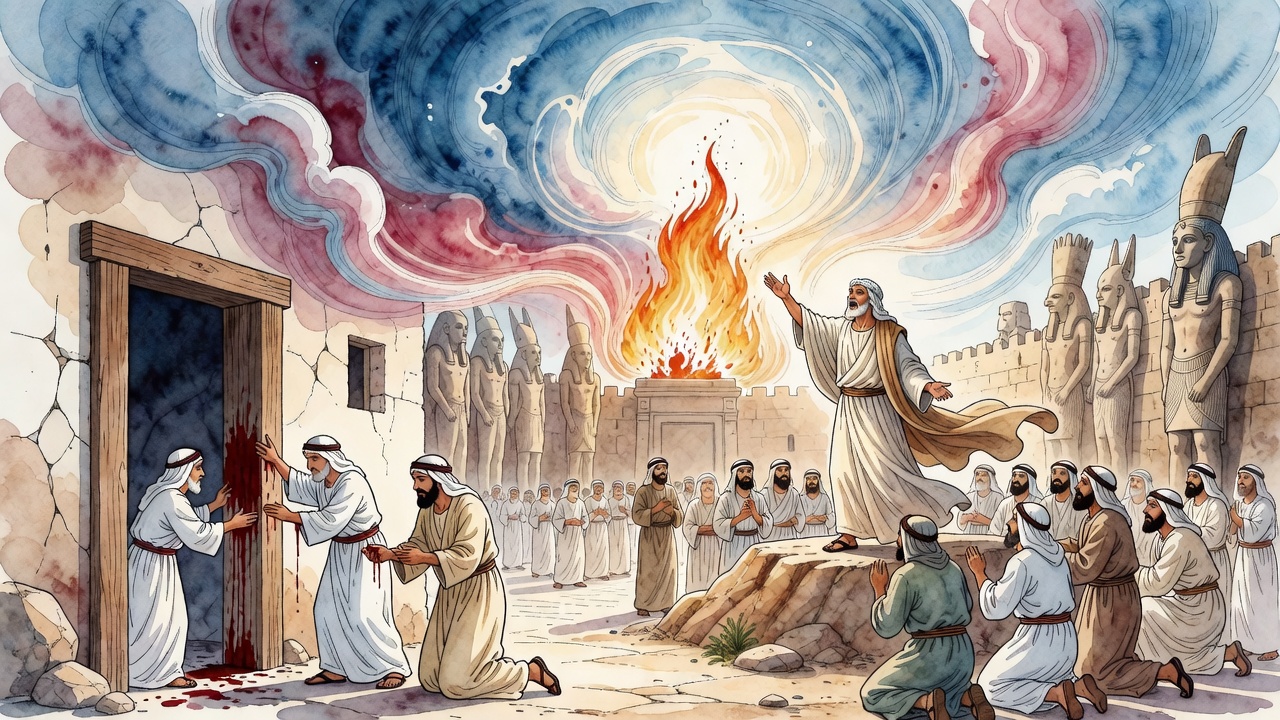
Four houses down, then the one across the alley, then the woman who lived against the other side of her own wall, close enough that for eleven years each had heard the other's children crying through the mud brick. She knocked. She asked for silver. She asked for gold. She asked for the good clothes folded in the chest at the foot of the bed.

The Egyptian woman brought out all of it and did not look at her once while she was doing it.

The Order Came at a Thornbush in Midian

Months before any of that, a long way east, God had told Moses exactly how the last hours would go, and the instruction had sounded almost domestic. Every woman is to ask her neighbour, and the woman who lives against the wall of her house, for vessels of silver and vessels of gold and clothing.

Then the part that is not domestic at all. You shall set them as crowns upon your sons and your daughters. And you shall leave the Egyptians empty.

Not carry them. Not sew them into a hem for the road. Crowns. On children.

Moses had argued with almost everything else at that bush. He does not appear to have argued with this.

Crowns for Heads That Small

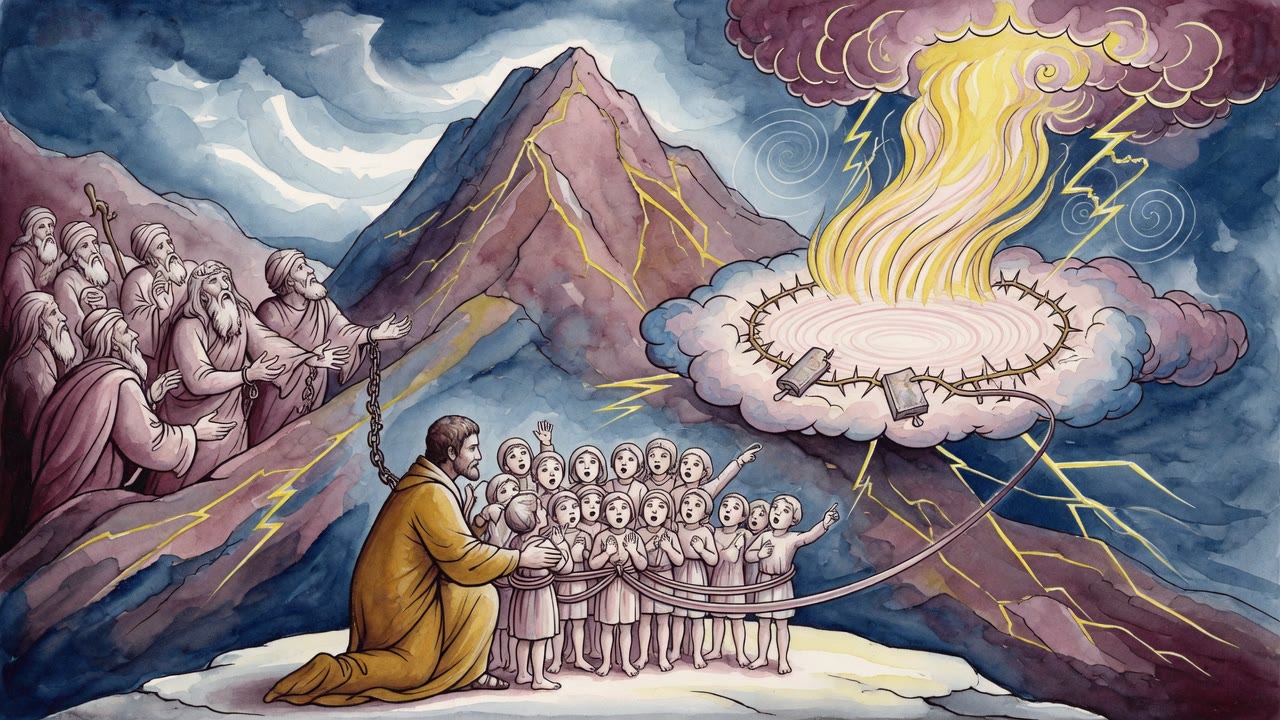
So on the last night the women came home with their arms full and started fitting metal to skulls that were nowhere near the size of it.

A girl of five felt cold weight settle on her hair and laughed out loud, because a child laughs at anything that comes down on her head in the dark. Her mother did not laugh. She turned the band twice to find where it would sit, listened past the doorway for whatever was moving through the street, and pressed her thumb once against her daughter's forehead.

A boy across the room got a hand under his and pulled. His father put it back and said nothing. Some things are taught by weight and not by speech.

The gold on those children had bought bricks. It had gilded the doorframes of temples they had been marched past. The silver had gone through the hands of the men who counted their fathers' quotas. None of it was a gift and none of it was theft. It was four centuries of wages walking out on the heads of the smallest people in the house.

The Mouth That Ordered the River

Hannah would sing about it long afterward, in a shrine in the hill country, with a child of her own finally in her arms: let no arrogance come out of your mouth.

She meant it as a warning and the sages heard it as a verdict on Egypt. Proud words do not evaporate. They come back with the same shape they went out with. The arm Egypt raised over Israel got raised over Egypt. The plan Egypt cooked got served at Egypt's own table, measured out with the care the Torah uses on a man who schemes against his neighbour.

Pharaoh had once opened his mouth and said: every son that is born, throw him into the river.

That was the sentence. It went out of his mouth and it stayed on the books, and on the night the women were fastening crowns, the firstborn of Egypt were dying in the same houses the gold had just come out of. God gives bread to the hungry and judgment to the ones who have been ground down, and the ones who had been ground down were sleeping under borrowed metal three streets away.

They Left in Daylight

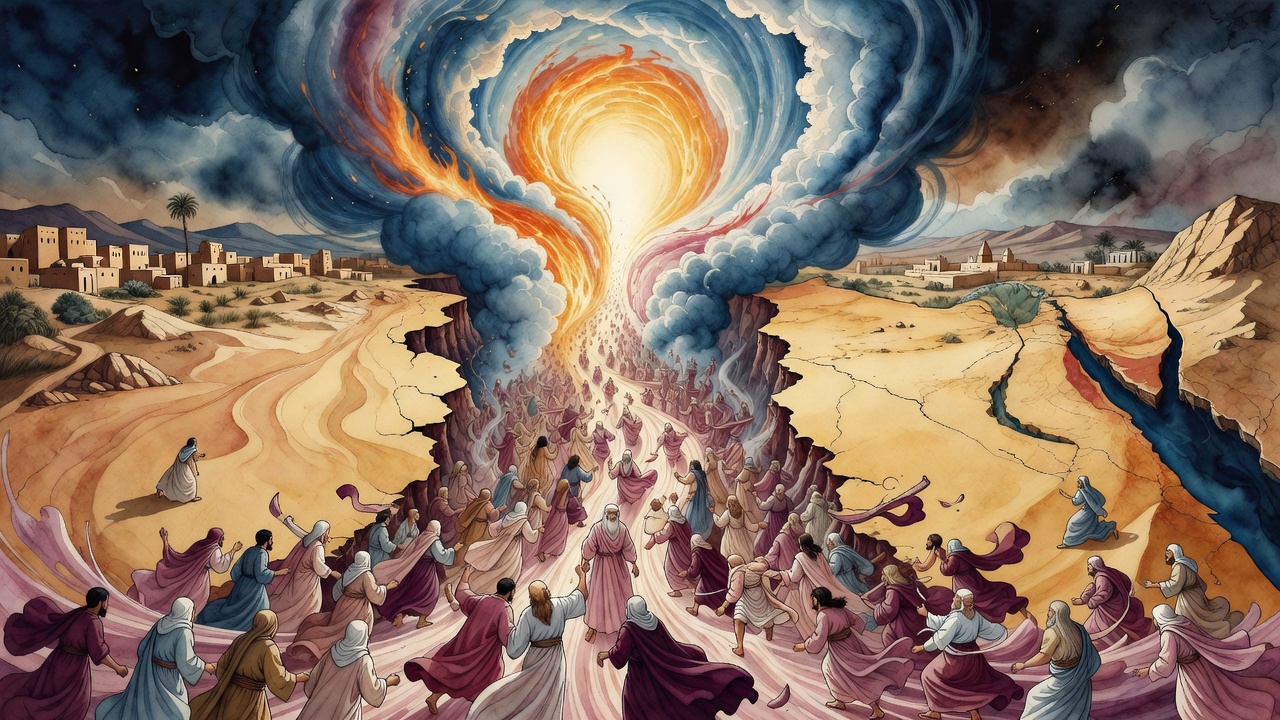
One line says the Lord took Israel out of Egypt at night. Another says they marched on the morrow of the Passover, in the open, in the sun, with everyone watching.

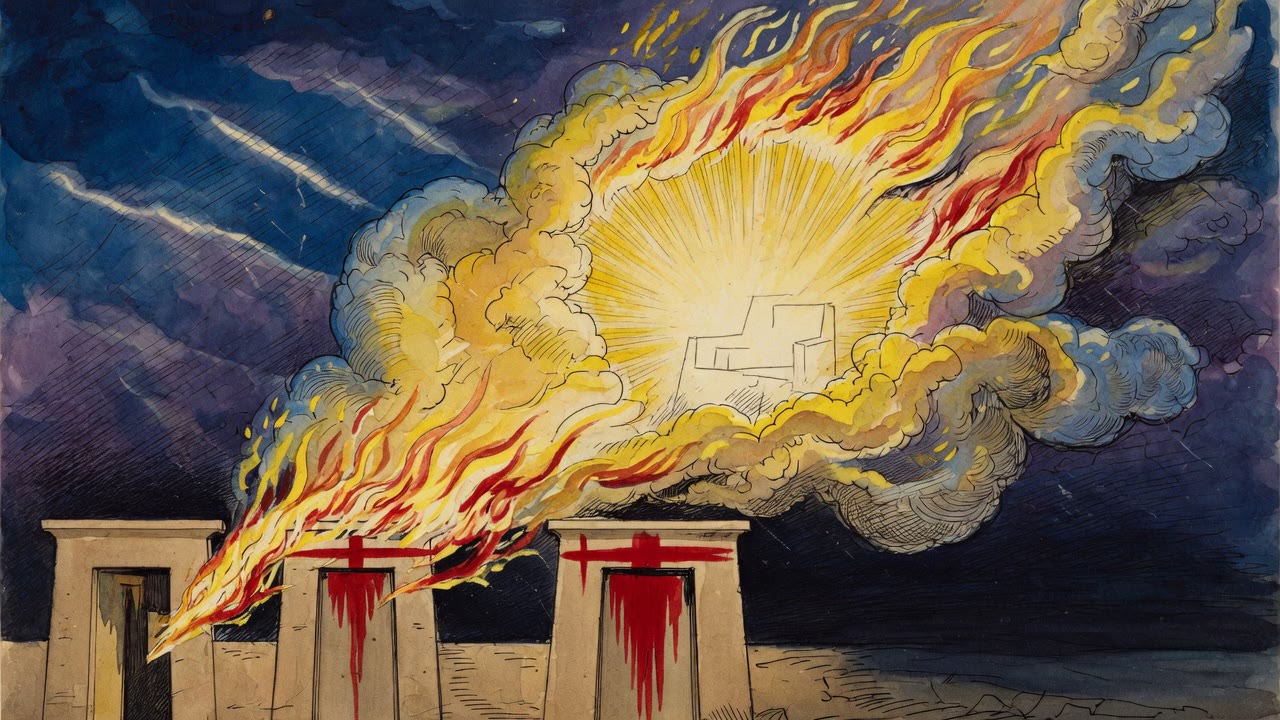
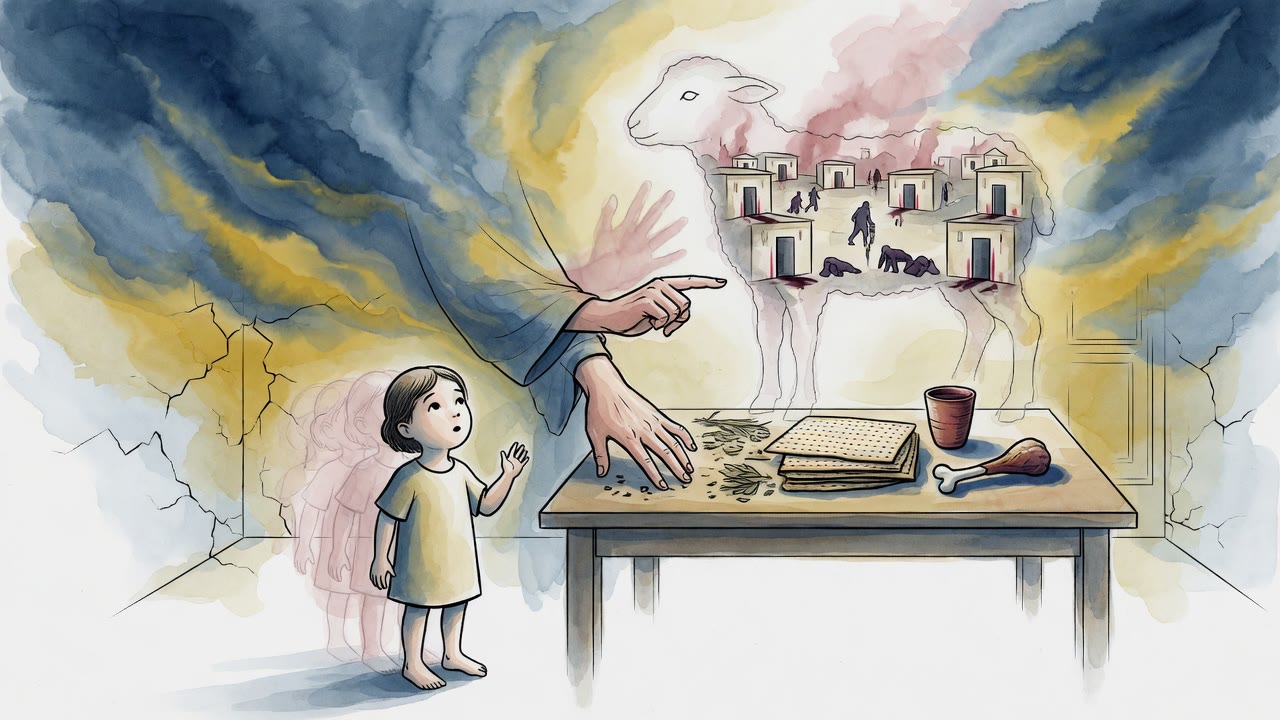
Both stand. The walking happened by day. The redemption started in the evening, in the dark, in the smell of roasted lamb and hurried bread, in a doorway marked with blood, at the moment a woman knocked on a neighbour's door and asked for the gold.

By the time the road filled, the child had been asleep for hours with a crown pushed crooked over one ear and the metal gone warm against her hair. Behind her, chests stood open all over Egypt with nothing in them.


← All myths
From the tradition

Sources

3 sources

The texts behind this telling. Some cards carry a translation of the source; others are our own retelling of it, and each card says which. Every card links out to the original.

Targum Pseudo-Jonathan on Exodus 3:22Targum Pseudo-Jonathan on Exodus

Retold in our words. Read the original at the link below.The Targum of Jonathan ben Uzziel, trans. J. W. Etheridge, London, 1862 · Public Domain

The Torah's Hebrew tells the Israelite women to ask their Egyptian neighbors for silver, gold, and clothing before the Exodus. Targum Pseudo-Jonathan adds something unforgettable: the plundered jewelry is not for adult adornment. You shall set them as crowns upon your sons and your daughters.

The image is tender and defiant at once. The same gold that had been forged into Egyptian idols, the same silver that had bought the bricks the slaves were forced to make, now becomes a crown on the head of a Hebrew child. The Targum turns looted wealth into royalty.

Emptying Egypt, Not Stealing From It

The Aramaic closes with the phrase make the Mizraee empty. The sages are careful on this point: this is not theft. It is back wages. Egypt had enslaved Israel for generations (Exodus 12:40); the silver and gold are lo tachmod in reverse, the dignity owed to a people whose labor had built the storehouses of Pithom and Raamses.

The Targum's detail about neighbors and those next to the wall of her house emphasizes proximity. These are women who had lived side by side, borrowed flour, watched each other's children. The Exodus reshuffles that relationship overnight.

The takeaway: redemption is material, not only spiritual. The Jewish imagination refuses to let freedom be abstract. It must arrive with crowns on children's heads and the weight of back wages in a freed people's hands.

Full source
Sifrei Devarim 129:1Sifrei Devarim

Retold in our words. Read the original at the link below.Sifrei by Rabbi Shraga Silverstein · CC-BY

It turns out, the seeds of their monumental freedom were sown not under the blazing sun, but under the cloak of night. We read in Sifrei Devarim – a collection of early Jewish legal interpretations on the book of Deuteronomy – that the verse says "the L-rd your G-d took you out of Egypt at night." Seems straightforward. Except… didn't they leave in the daytime? The book of Numbers (Bamidbar) is pretty clear: "On the morrow of the Pesach (Passover) the children of Israel went out, etc." (Numbers 33:3). So, what's going on here? A contradiction? Hardly.

The sages weren't easily stumped. They weren't looking for simple historical accounts, but deeper truths. The Sifrei Devarim offers a beautiful resolution: "We are hereby taught that the redemption began in the evening."

Isn’t that profound? The Exodus, the defining moment of Jewish history, didn't just happen at dawn. Its roots, its initial spark, ignited in the darkness. Think of that last Pesach Seder in Egypt. The fear, the anticipation, the secret preparations… the sense that something momentous was about to unfold. All of that happened at night. It's a reminder that even in our darkest moments, when we feel trapped and hopeless, the seeds of liberation can be taking root. The promise of a new dawn is already there, waiting to bloom.

Speaking of Pesach, the Passover offering, Sifrei Devarim gives us a crucial instruction about that, too. "And you shall slaughter a Pesach." Okay, pretty simple. But here's the kicker: "Its slaughtering must be in the name of Pesach; otherwise, it is unfit." In other words, the intention behind the act matters. You can go through the motions, perform the ritual perfectly, but if you're not doing it with the specific intention – the kavanah – of offering the Passover sacrifice, it's not valid.

What does this tell us? It's a reminder that rituals aren't just empty actions. They're meant to connect us to something deeper, to remind us of the meaning behind the tradition. It's not just about following the rules, but about understanding the "why" behind them. About making a conscious choice to participate in the story of redemption, to remember our history, and to renew our commitment to freedom.

So, next time you're feeling stuck in a dark place, remember the night of the Exodus. Remember that even in the deepest darkness, redemption can begin. And next time you're participating in a ritual, ask yourself: what am I really doing here? What am I hoping to achieve? Because sometimes, the most important part of the journey is the intention we bring to it.

Full source
Pesikta DeRav Kahana 11:5Pesikta de-Rav Kahana

Translation of the source text.Pesikta de Rav Kahana according to an Oxford manuscript, Dov Mandelbaum ed., N.Y. 1987 · CC-BY

"Do not multiply talk so very proudly; let no arrogance come from your mouth" (I Samuel 2:3). Rabbi Eleazar and Rabbi Joshua ben Levi and the Rabbis differed. One said: With the rod with which they extended their hand against Israel, it was extended against them; by the kneeling with which they bent Israel down, He bent them down. And another said: With the dish in which they cooked, it was cooked for them, as you say, "And Jacob cooked a stew" (Genesis 25:29). And the Rabbis said: With the scheme they devised, He devised against them, as you say, "And if a man schemes against his neighbor" (Exodus 21:14).

"He executes judgment for the oppressed, He gives bread to the hungry" (Psalms 146:7). "He executes judgment for the oppressed", these are Israel, "Thus says the LORD of hosts, the children of Israel and the children of Judah are oppressed together" (Jeremiah 50:33), "their Redeemer is strong, the LORD of hosts is His name, He will surely plead their cause" (ibid.). The mouth that said, "Every son that is born you shall cast into the river" (Exodus 1:22),

The rest of the passage is as written above.

Full source