6 min read

God Pulled a Nation From Inside a Nation

Egypt and Israel looked the same until the night God tore one people out of the other and began a new calendar from the rescue.

Curated by Arthur · Told by Maggid ·
Table of Contents
  1. The Word That Refused Delay
  2. Two Kings and One Rescue
  3. The Week That Cuts the Soul
  4. Hours That Became Millennia
  5. What the Night Still Demands

Israel stood in Egyptian streets wearing Egyptian hair. The same lock hung over the forehead. The same uncircumcised bodies walked the same brick roads. When the angel of justice looked down, the two crowds blurred into one word: nation.
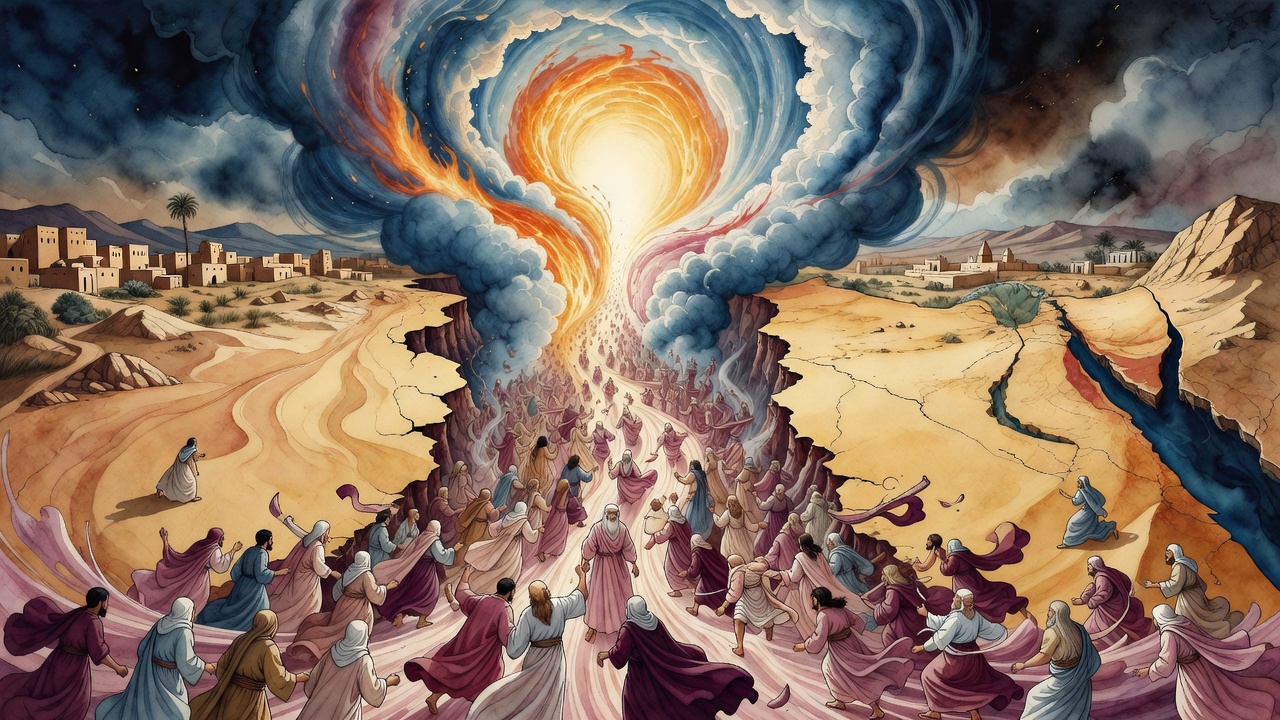
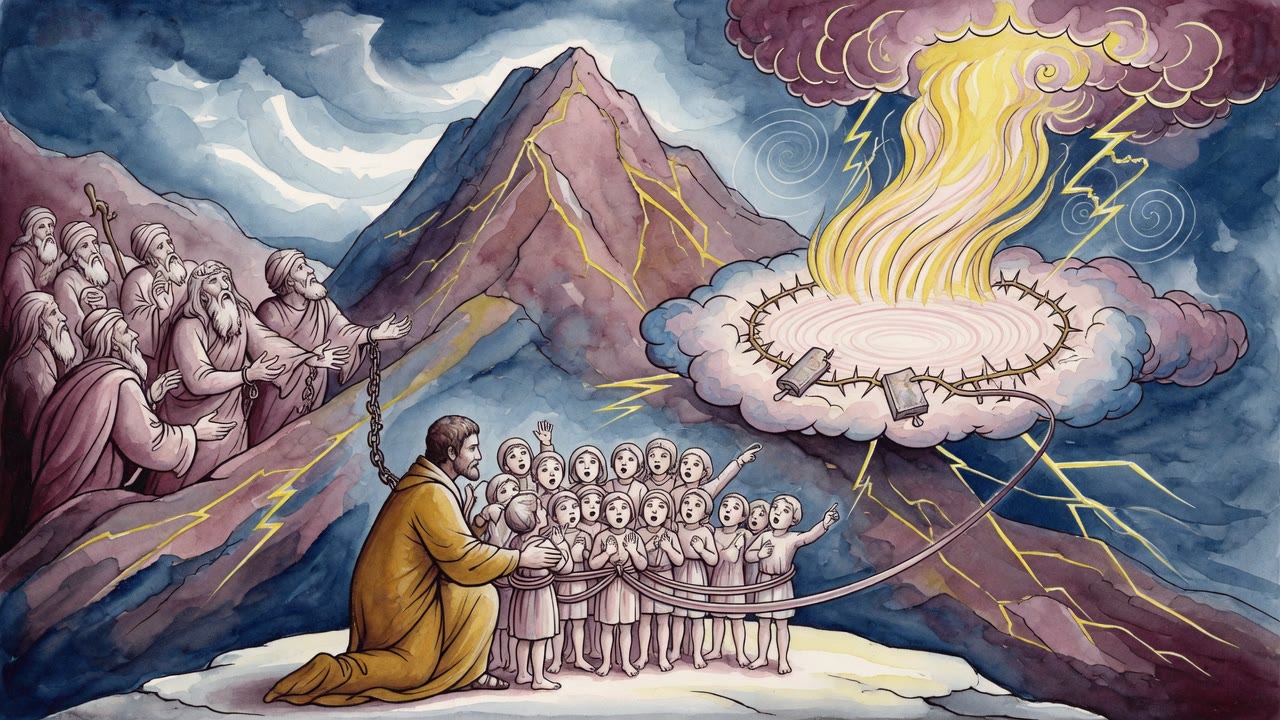
God Pulled a Nation From Inside a Nation Click for full size

That was the shame of the night. Not the taskmasters. Not the mud. The sameness. If justice alone had ruled, no doorpost blood would have marked a difference worth keeping.

The Word That Refused Delay

"This month shall be for you" (Exodus 12:2). The voice did not wait for Israel to become prettier. The calendar snapped open at midnight, and God spoke a deed no one had seen: a whole people drawn out from the middle of another people.

Scripture later asked the question as proof: has God ever tried to take a nation from the midst of a nation (Deuteronomy 4:34)? Rabbi Yohanan bar Pazi heard the double use of "nation" and flinched. Egypt and Israel were not written as beast and flock. Both were called goy. On the surface they matched. Circumcision had not yet divided them. Fashion had not yet divided them. By the strict measure of justice, Israel had no claim to be set free.

Rabbi Shemuel bar Nahman answered with an oath. God had bound Himself with "therefore," and a "therefore" that falls from the Holy One is a vow that will not break. The letters of the verse were counted until they reached seventy-two, the number of the great Name. He redeemed them with His own Name, not with their polish.

Two Kings and One Rescue

A king ransoms his captive son and orders the kingdom to count years from the day of rescue. Another king writes a marriage contract only for the bride of noble line. So God told Israel to number months from the exodus and bound Himself to one people alone.

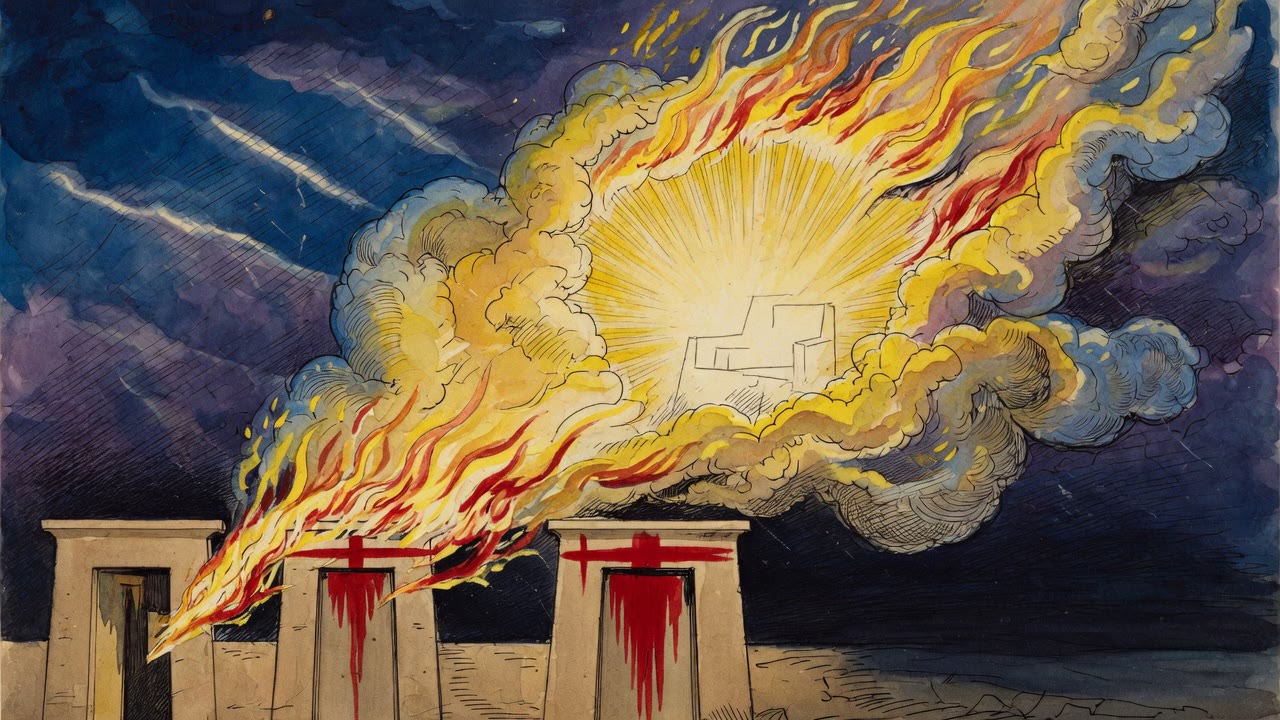
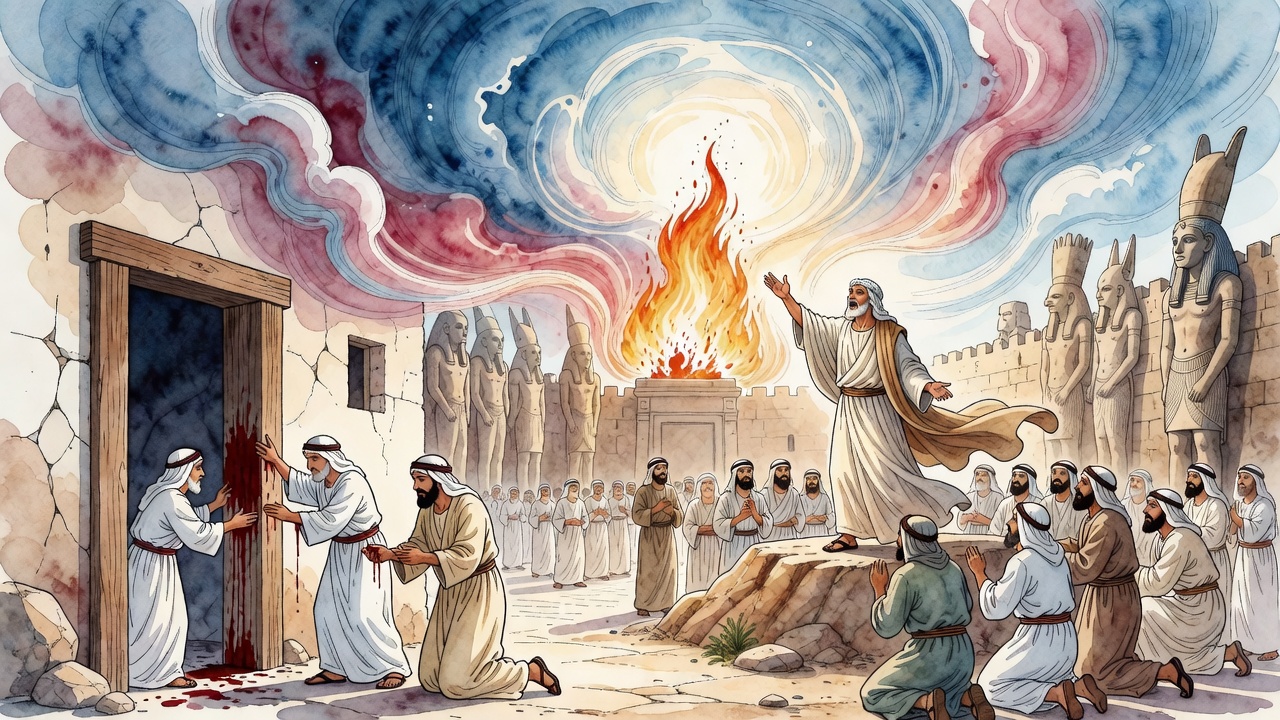
In the houses, lambs bled. On the doors, blood dried in the night wind. The destroyer passed. Firstborns fell on the other side of the paint. Israel walked out carrying dough that had not risen, bread flattened by haste, bodies still smelling of brick dust.

They did not look holy. They looked like people who had been pulled.

The Week That Cuts the Soul

Seven days of unleavened bread followed the night. Targum Pseudo-Jonathan on (Exodus 12:15) names the cost of forgetting: whoever eats leavened bread in those days shall be destroyed from Israel. The word is karet, excision, the soul cut off from the people.

A loaf becomes a crisis because chametz is not only flour and water. It is the slow puff of the self, the fermentation of pride, the little Pharaoh rising inside the free person. To celebrate liberation while chewing the old inflation is to miss the point of the rescue. One cannot walk out of Egypt and keep Egypt in the mouth.

Before the first night, leaven is hunted by candle. Crumbs on a wooden spoon. Corners under beds. The house shrinks itself on purpose so it can receive what freedom asks.

Hours That Became Millennia

Later mystics read the Mishnah's clock of the Passover offering as a map of ages. Four hours for eating, a fifth held in suspense, a sixth for burning. In the Tikkunei Zohar those hours stretch into millennia. The fifth becomes a long wait. The sixth becomes reckoning. The calendar does not only remember bricks. It presses the present age against a cosmic deadline.

Separation between the six and the seven is not a numbers game. It is the Middle Pillar and its partner, balance and coupling, the fear of living halfway through a festival while the heart remains leavened.

What the Night Still Demands

The month begins because God keeps an oath, not because Israel passed inspection. A nation was pulled from the midst of a nation while both still looked like one crowd. The bread stays flat so the ego cannot rise. The soul that re-inflates during the week of matzah risks being cut off from the people who walked out.

On the first night the difference was blood on wood. On the days that follow, the difference is a house without crumbs and a heart that refuses to swell.

Moses did not argue that Israel had become pure overnight. He pointed at the oath and at the blood. The people still carried Egyptian names on their tongues and Egyptian mud under their nails. The difference was not a sudden halo. The difference was a Name that refused to break its own word.

In the dark, someone checked the doorpost with a fingertip and found the paint still sticky. A child asked why the bread would not rise. The answer was not a lecture. The answer was feet already pointed toward the sea. Dough on the back. Staff in the hand. A calendar beginning while the city behind them still screamed.

Years later, when matzah returns each spring, the same pressure returns with it. Search the house. Flatten the ego. Remember that freedom was not earned by looking different from Egypt. Freedom was granted by a vow, and the week of unleavened bread is how a free people refuse to swell back into the shape of their masters.

The cosmic clock of the later mystics does not cancel the first night. It sharpens it. If the sixth hour is reckoning, then every Passover is a rehearsal for not being found swollen with chametz when the fire comes. The nation pulled from the midst must keep choosing the flat bread, or the midst will claim it again.


← All myths
From the tradition

Sources

3 sources

The texts behind this telling. Some cards carry a translation of the source; others are our own retelling of it, and each card says which. Every card links out to the original.

Pesikta DeRav Kahana 5:11Pesikta de-Rav Kahana

Translation of the source text.Pesikta de Rav Kahana according to an Oxford manuscript, Dov Mandelbaum ed., N.Y. 1987 · CC-BY

"This month shall be for you" (Exodus 12:2). Rabbi Berekhiah in the name of Rabbi Yudan son of Rabbi Shimon: the Holy One, blessed be He, said to Israel, "My children, you have a renewal of redemption now, and so in the time to come. In the past I did not redeem a nation from the midst of a nation, but now I am redeeming a nation from the midst of a nation," as it is written, "or has God ever tried to come and take for Himself" and so forth (Deuteronomy 4:34).

Rabbi Yehoshua son of Rabbi Nehemiah in the name of Rabbi Yohanan bar Pazi: it does not say here "a nation from the midst of a people" or "a people from the midst of a nation," but "a nation from the midst of a nation" (ibid.), for these were uncircumcised and these were uncircumcised, these grew a lock of hair and these grew a lock of hair. If so, the attribute of justice would not have allowed Israel ever to be redeemed from Egypt. Rabbi Shemuel bar Nahman said: had the Holy One, blessed be He, not bound Himself by an oath, Israel would never have been redeemed from Egypt. And what is the reason? "Therefore say to the children of Israel, I am the LORD, and I will bring you out" and so forth (Exodus 6:6), and "therefore" [lakhen] means nothing other than an oath, as it says, "and therefore I have sworn to the house of Eli" (1 Samuel 3:14).

Rabbi Berekhiah said: "You redeemed Your people with an arm" (Psalms 77:16) - by force. Rabbi Yudan said: from "to come and take for Himself a nation" (Deuteronomy 4:34) until "great terrors" (ibid.) there are seventy-two letters. And if a person says to you there are seventy-five, say to him: subtract the second "nation," which is not part of the count. Rabbi Avin said: He redeemed them by His name, for the name of the Holy One, blessed be He, has seventy-two letters.

Rabbi Yehoshua ben Levi said: it is like a king whose son was taken captive, and vengeance clothed the king, and he went and ransomed his son, and said, "Let them count by the era of my son's redemption." So the Holy One said, "Let them count by the era of the exodus from Egypt." Rabbi Levi in the name of Rabbi Hama son of Rabbi Hanina said: it is like a king who married many wives and wrote them neither a marriage gift nor a marriage contract, but when he married a woman of good family and noble lineage he wrote her a marriage gift and a contract. So of all the women Ahasuerus married he wrote neither gift nor contract, but when he married Esther, of good family and noble lineage, he wrote her a marriage gift and a contract. He wrote her the gift, "in the tenth month, which is the month of Tevet" (Esther 2:16), and he wrote her the contract, "in the seventh year of his reign" (ibid.).

Full source
Tikkunei Zohar 56:10Tikkunei Zohar

Retold in our words. Read the original at the link below.Sefaria-hosted English translation · CC-BY

Jewish mysticism is full of these moments, these cosmic turning points. to one found in the Tikkunei (spiritual repair) Zohar, a central text of Kabbalah. It speaks of time, specifically the relationship between different millennia and the urgency of spiritual preparation.

The Tikkunei Zohar focuses on a verse from the Mishnah, the earliest written compilation of Jewish oral law (Mishnah Pesaḥim 1:4). This verse discusses the eating of the Paschal sacrifice (the Korban (a sacrificial offering) Pesach (Passover)) on Passover. It states that one may eat the whole of the sacrifice during the first four hours of the day, keep it in suspense all the fifth, and burn it at the beginning of the sixth hour. Simple enough. But

The Tikkunei Zohar takes this seemingly straightforward instruction and elevates it to a cosmic level. It interprets these hours as corresponding to millennia! The "fifth millennium" becomes a period of suspense, a time of waiting and preparation. And the "sixth millennium," well, that's where things get critical. It's when the "burning," the final reckoning, takes place. The Jewish calendar places us squarely in the sixth millennium right now. What does that mean? According to this interpretation, we are living in a time of profound consequence.

The Tikkunei Zohar doesn't stop there. It introduces another layer of complexity, speaking of the need to avoid separation between "the six" (shesh) and "the seven." What are these numbers referring to?

In Kabbalistic thought, numbers aren't just numbers. They're symbols, representing different aspects of the divine. Here, "the six" symbolizes the Middle Pillar on the Tree of Life, a central channel of balance and harmony. "The seven" represents its "coupling partner," hinting at the need for union and integration.

So, what threatens this union? What could cause a separation between these vital forces?

The text identifies the culprit as "yeast and leaven," which represent the mixed multitude. Now, the mixed multitude isn't just about bread-making! It symbolizes the negative impulses, the ego-driven desires, that can cloud our judgment and lead us astray. These forces, the Tikkunei Zohar warns, must be "destroyed" – not literally, of course, but through spiritual refinement and self-awareness. They must not be allowed to come between the "six" (represented by the Hebrew letter Vav, ו, which has the numerical value of 6) and the "seven."

Why this emphasis on not separating six and seven? The text alludes to (Psalm 119:164), "Seven times in the day I praise you..." This verse emphasizes the importance of constant devotion and connection to the divine. By keeping the "six" and "seven" united, we maintain this connection, ensuring that our actions are aligned with a higher purpose.

This idea that we're living in a crucial moment, a time when the choices we make have profound implications. The Tikkunei Zohar isn't just offering a historical or theological lesson. It's offering a call to action. A call to examine our own lives, to identify the "yeast and leaven" that might be holding us back, and to strive for greater unity and connection with the divine.

So, as we navigate this sixth millennium, let’s remember the wisdom of the Tikkunei Zohar. Let's strive to bridge the gaps, to purify our intentions, and to live each day with mindfulness and purpose. Because, as the text suggests, the clock is ticking. And the time for action is now.

Full source
Targum Pseudo-Jonathan on Exodus 12:15Targum Pseudo-Jonathan on Exodus

Retold in our words. Read the original at the link below.The Targum of Jonathan ben Uzziel, trans. J. W. Etheridge, London, 1862 · Public Domain

The law of unleavened bread contains one of the sharpest penalties in the Torah. Targum Pseudo-Jonathan on (Exodus 12:15) says that anyone who eats leavened bread during the seven days of Passover, from the first through the seventh day, shall be destroyed from Israel. The Hebrew term is karet, spiritual excision, the severing of the soul from the people.

That is a heavy punishment for a loaf of bread. The rabbis treated the severity as deliberate. Chametz is not only a food. It is a symbol of the slow expansion of ego, the fermented self, the small corruption that puffs itself up. To eat it during the week when Israel remembers its liberation is to miss the whole point of the festival. One cannot celebrate freedom while quietly re-inflating the inner Pharaoh.

The Targum also specifies the preparation: on the daytime before the first festival night, leaven must be removed from every house. This is the bedikat chametz, the search for leaven, which became an elaborate ritual in rabbinic practice (Mishnah Pesachim 1:1). The householder walks through every room with a candle, sweeping the crumbs onto a wooden spoon.

The severity is proportional to the meaning. The Torah is not trying to police bread. It is trying to keep the symbolic system coherent. A week without leaven is a week in which Israel agrees to be smaller, flatter, less puffed-up. And so more able to receive what freedom actually asks.

Takeaway: Chametz is easy to overlook and catastrophic to ignore. The Torah treats a crumb as a spiritual crisis because, during Pesach, it is.

Full source