Three Harsh Dreams Became Three Good Signs
A student could not learn after dreaming of death in Adar. Rabbi Yoḥanan reread every omen, while other Jews read a whole camel from a road.
Table of Contents
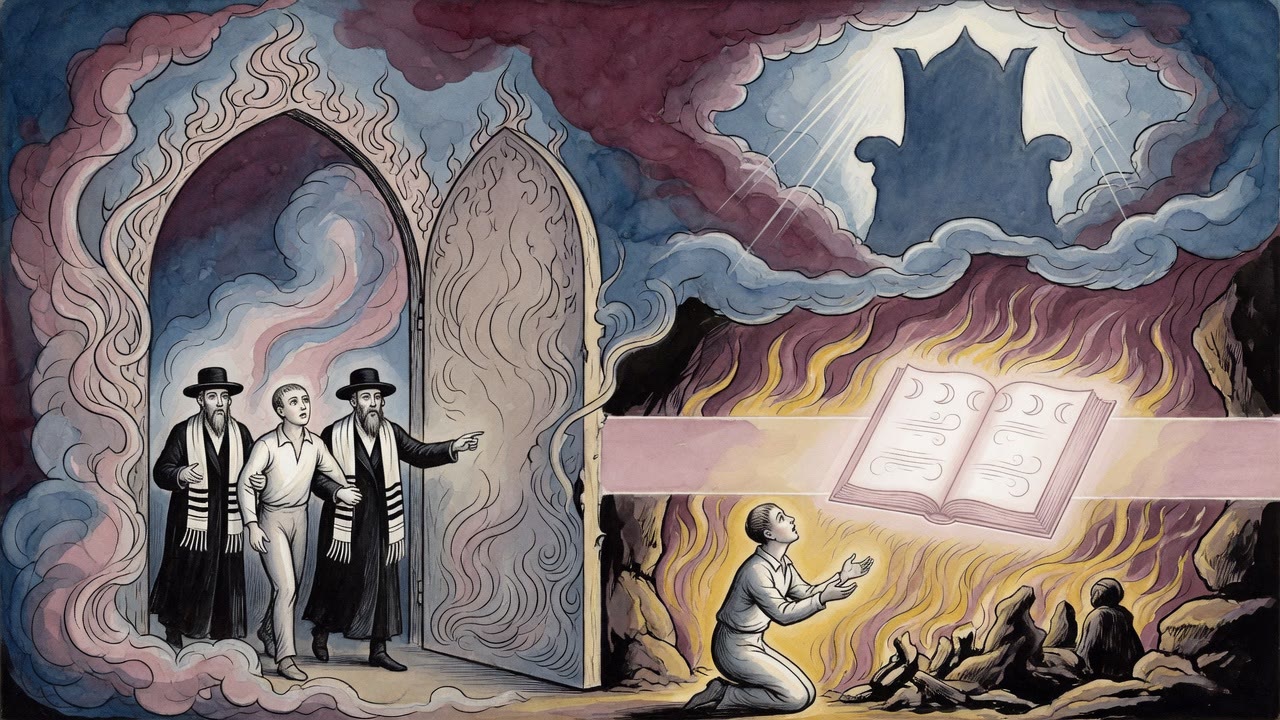
The student sat before Rabbi Yoḥanan and could not hold a single line of the teaching. The teacher's voice went on, careful and clear. The young man's eyes stayed fixed on something that had happened in the dark between midnight and dawn.
 Click for full size
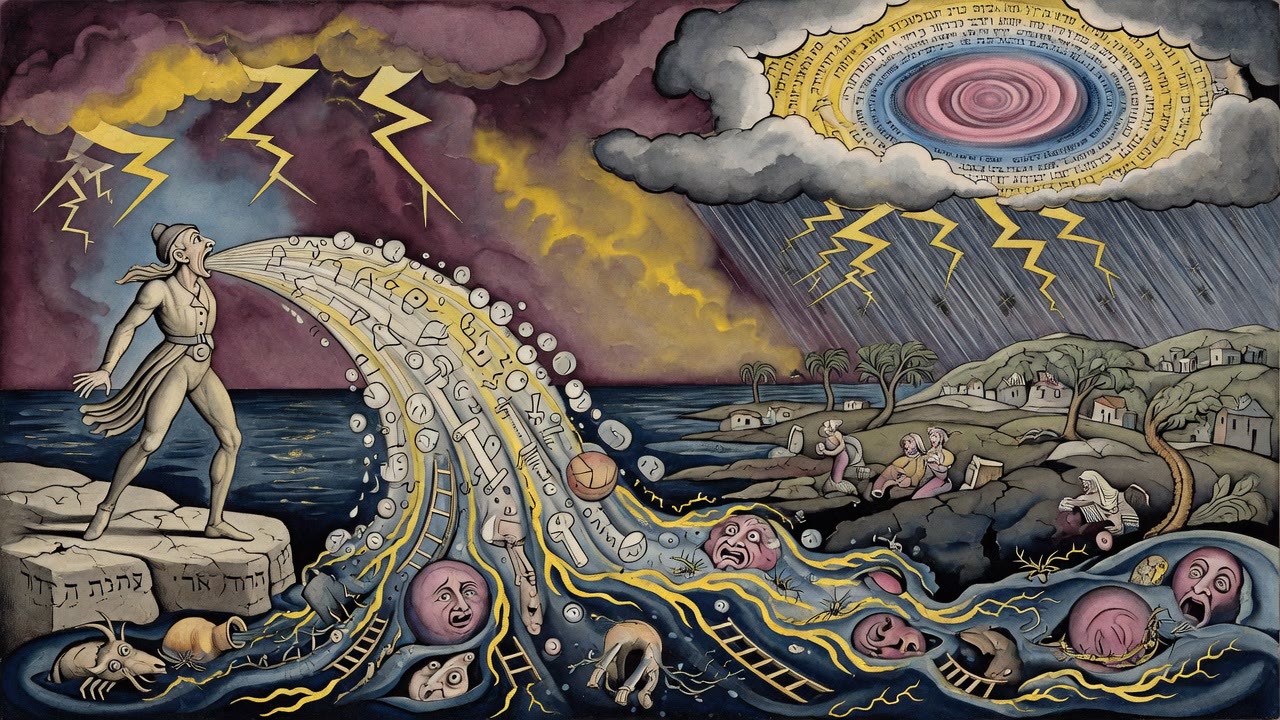
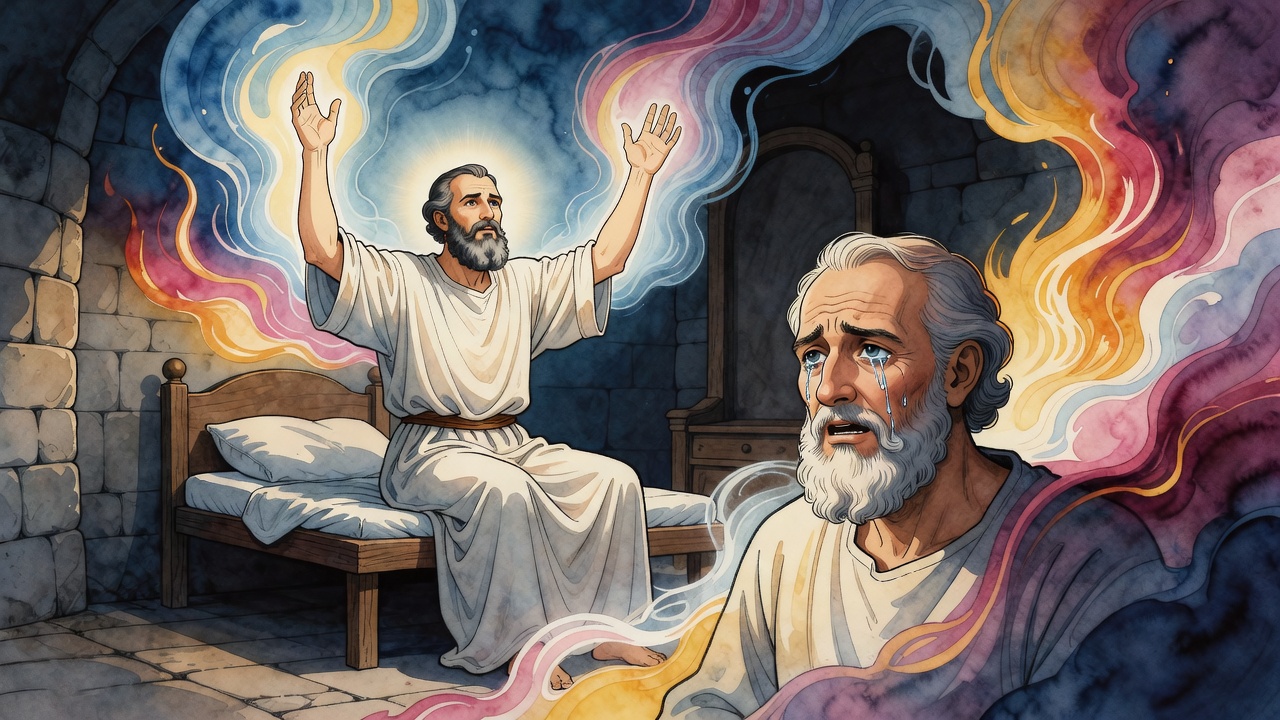
"Why do you not understand?" Yoḥanan asked, not unkindly. The answer came flat and scared, the way truth comes when sleep has already done its damage. "I saw three harsh matters last night, and I do not know what they mean." The room waited. Dreams had entered the study hall like uninvited guests.
In Adar You Will Die
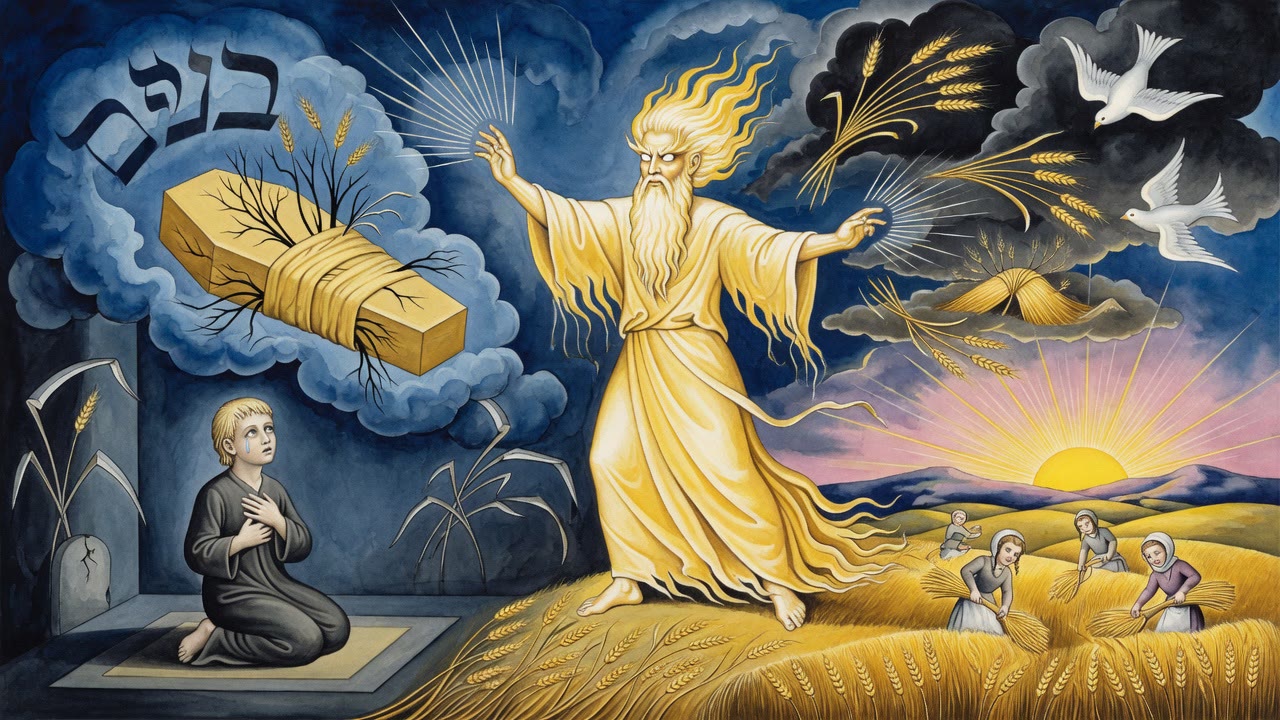
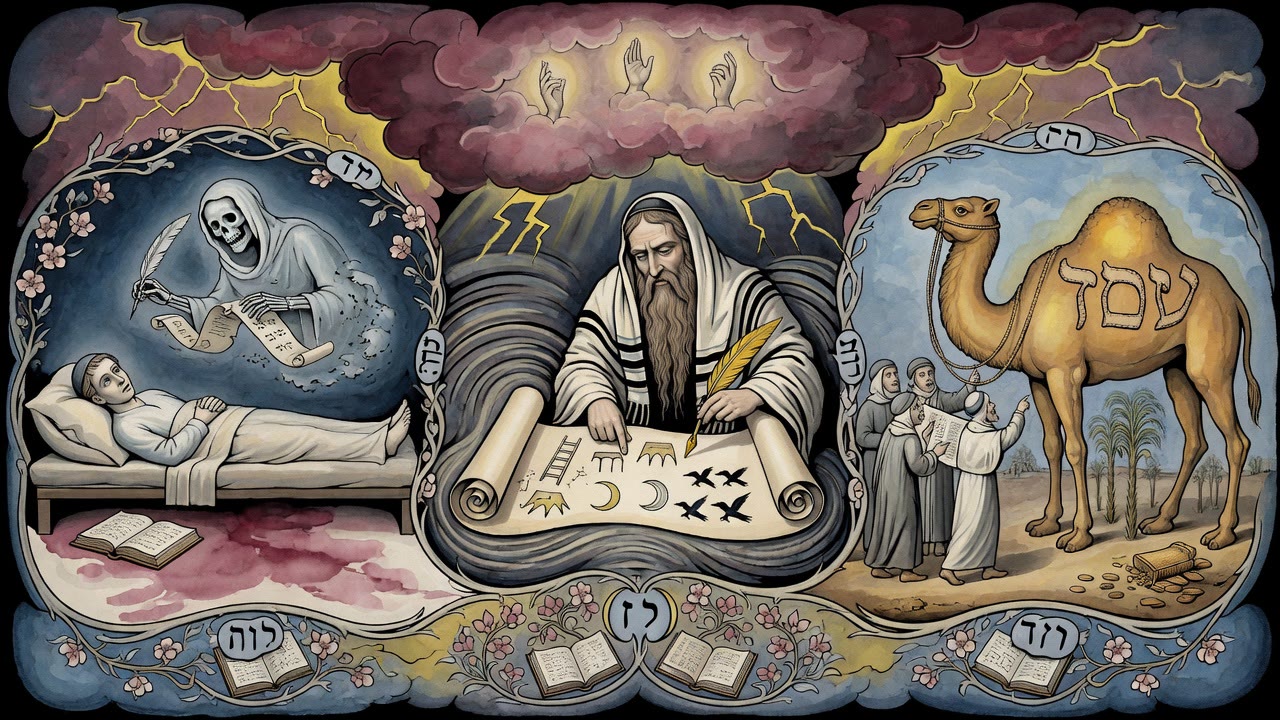
"Tell me," the teacher said. The student listed them like sentences already carved on a stone he carried in his chest. "They said to me: In Adar you will die. You will not see Nisan. You will sow but you will not reap." Each line had sounded like a verdict when the night said it. In daylight they still smelled of the grave.
Yoḥanan did not flinch. He took the first word and turned it. "All three are good. You will die in Adar: you will die with the glory of Torah, hadar that lasts a life, or you will spend your strength in Torah until effort itself is a kind of death into the work." He took the second. "You will not see Nisan: you will not see nisyonin, ordeals that break a body." He took the third. "You will sow but not reap: what you beget, you will not bury." The calendar of dread became a calendar of mercy under a master who knew how to turn a dream the way a key turns a lock that the dreamer thought was sealed forever.
No Breeches on the Legs
Another dreamer spoke up, emboldened by the first reading. "I saw that there were no breeches on my legs." Shame colored the report. Yoḥanan answered, "As you live, that is not bad. It is good. The festival will come and this man will not have anything," meaning no troubles waiting for him at the gate of the holy day, or a poverty that still leaves a man alive when the regel, the pilgrimage festival, arrives. Regel is leg and regel is festival. The same Hebrew word carried the body and the holy day, and the teacher walked that bridge without fear while the student still felt the night air on bare skin.
Students who only collect nightmares leave the room heavier than they entered. Students who bring nightmares to a reader of signs sometimes leave lighter than they came, as if someone had taken a stone from their pocket and set it on the table where it could be examined.
Two Slaves Who Read the Road
Elsewhere Rava told, in the name of Rabbi Yochanan, of two Jewish slaves walking a road with their master trailing behind, listening for insolence. One said to the other, "There is a camel ahead of us, though I have not seen it. It is blind in one eye. It is laden with two skin-bottles, one of wine and one of oil. Two drivers attend it, one Israelite and one gentile." The details stacked like a case in court.
The master exploded at the invention and the nerve of men in chains who claimed to know what lay beyond the bend. The slave answered quietly, as if explaining a verse. "The grass is cropped on only one side of the track, so the camel is blind on the other and eats what it can find. Wine that dripped has soaked into the earth on the right; oil that trickled rests on the left. One driver stepped aside from the road to relieve himself, as a Jew is required to do; the other did not even leave the path." The master ran ahead until his lungs burned. Every detail was true. He came back, praised their sharpness, and freed them on the spot. Attention that sharp is already a kind of Torah. A person who reads the road this carefully has begun to read the world.
Signs Under Pressure
The dreamer in the study hall and the slaves on the road share one skill the tradition prizes and fear often blocks: refuse the first, panicked reading. Death-month becomes glory. Bare legs become a festival without trouble. Cropped grass becomes a blind camel and a difference between two nations' manners written in dust and waste. The world is full of signs that look like doom until a trained eye rearranges them.
Yoḥanan sits at the center of both tellings as a teacher of sight. Fear still arrives at night and on dusty roads. The question is whether anyone in the room knows how to look twice before the heart finishes its sentence. The student who could not learn left with three good signs. The slaves left with their freedom. The road and the dream both rewarded those who refused to stop at the first terror.
← All myths